

Other
- +5
Frances Z. Brown, Zainab Usman, Erin Jones, …
{
  "authors": [
    "Aqil Shah"
  ],
  "type": "other",
  "centerAffiliationAll": "dc",
  "centers": [
    "Carnegie Endowment for International Peace"
  ],
  "collections": [],
  "englishNewsletterAll": "ctw",
  "nonEnglishNewsletterAll": "",
  "primaryCenter": "Carnegie Endowment for International Peace",
  "programAffiliation": "SAP",
  "programs": [
    "South Asia"
  ],
  "projects": [],
  "regions": [
    "South Asia",
    "Pakistan"
  ],
  "topics": [
    "Democracy",
    "Security",
    "Military",
    "Foreign Policy",
    "Civil Society",
    "Religion"
  ]
}
Source: Getty
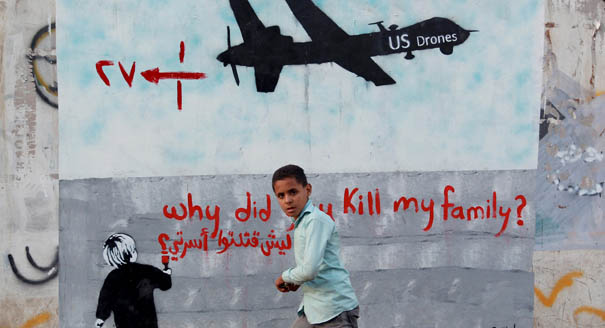
New interview and survey data from Pakistan provide little or no evidence to support the claim that U.S. drone strikes generate blowback and contribute to the radicalization of local populations.
Source: International Security
Many analysts argue that U.S. drone strikes generate blowback: by killing innocent civilians, such strikes radicalize Muslim populations at the local, national, and even transnational levels. This claim, however, is based primarily on anecdotal evidence, unreliable media reports, and advocacy-driven research by human rights groups. Interview and survey data from Pakistan, where, since 2004, the U.S. Central Intelligence Agency has launched more than 430 drone strikes, show little or no evidence that drone strikes have a significant impact on militant Islamist recruitment either locally or nationally. Rather, the data reveal the importance of factors such as political and economic grievances, the Pakistani state's selective counterterrorism policies, its indiscriminate repression of the local population, and forced recruitment of youth by militant groups.
Similarly, trial testimony and accounts of terrorists convicted in the United States, as well as the social science scholarship on Muslim radicalization in the United States and Europe, provide scant evidence that drone strikes are the main cause of militant Islamism. Instead, factors that matter include a transnational Islamic identity's appeal to young immigrants with conflicted identities, state immigration and integration policies that marginalize Muslim communities, the influence of peers and social networks, and online exposure to violent jihadist ideologies within the overall context of U.S. military interventions in Muslim countries.
This article was originally published in International Security.

Former Visiting Scholar, South Asia Program
Aqil Shah was a visiting scholar in the South Asia Program at the Carnegie Endowment for International Peace.
Recent Work



Frances Z. Brown, Zainab Usman, Erin Jones, …
Aqil Shah
Carnegie does not take institutional positions on public policy issues; the views represented herein are those of the author(s) and do not necessarily reflect the views of Carnegie, its staff, or its trustees.

Before the next wave of EU enlargement takes place, the union needs to grapple with thorny questions of how power is distributed among its members.


Emil Sondaj Hansen, Ditte Brasso Sørensen

The real test may come after the leaders leave the room.



Sheena Chestnut Greitens, Oriana Skylar Mastro, Yukon Huang, …

The Horn of Africa countries are among those facing a new security calculus.


Andrew Leber, Lesley Anne Warner

The European far right might fail to steer EU policy in the direction Russia wants, but they will create enough chaos inside Europe to benefit the Kremlin.

Dimitar Bechev

The new U.S.–Denmark–Greenland agreement will help Washington exert political, economic, and financial dominance under the guise of security. Yet, it acknowledged Copenhagen’s and Nuuk’s sovereignty on the island.

Marc Pierini