

Commentary
The induction of INS Aridhaman, which features several technological enhancements, now gives India the third nuclear ballistic missile submarine to ensure continuous at-sea deterrent.
Dinakar Peri
{
  "authors": [
    "R. Shashank Reddy"
  ],
  "type": "legacyinthemedia",
  "centerAffiliationAll": "dc",
  "centers": [
    "Carnegie Endowment for International Peace",
    "Carnegie India"
  ],
  "collections": [
    "Artificial Intelligence"
  ],
  "englishNewsletterAll": "ctw",
  "nonEnglishNewsletterAll": "",
  "primaryCenter": "Carnegie India",
  "programAffiliation": "TIA",
  "programs": [
    "Technology and International Affairs"
  ],
  "projects": [
    "Technology and Society"
  ],
  "regions": [
    "India",
    "South Asia",
    "Iran"
  ],
  "topics": [
    "Technology",
    "Economy"
  ]
}
Source: Getty
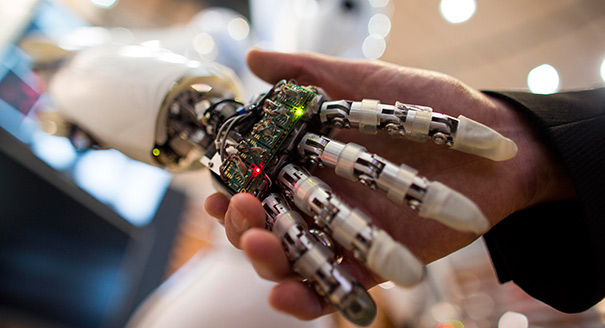
India cannot and will not compete with China in the AI realm—instead it will play to its advantages by becoming a global AI hub for non-Chinese and non-Western markets.
Source: BBC
India is the latest country to join the race to lead the AI revolution, which is still in the making. The world's richest - and most powerful - countries have long been in this competition. It cuts across all spheres of national power, from the economy to the military, because the idea is that leadership in AI will enable global dominance.
The two biggest powers so far have been the United States and China, with each investing heavily in AI and its applications. So does India stand a chance?
Yes, according to a report released this month by think tank Niti Aayog.
The report - which has been drafted as a "national strategy on AI" - admits that India lags significantly behind the superpowers in fundamental research and resources. Compared to the United States, it has fewer researchers and only a handful of dedicated laboratories and university departments. India also does not have tech giants such as Google and Amazon or behemoths like Baidu and Alibaba - all companies that can afford to invest in cutting-edge research.
But India enjoys crucial advantages too. It has a vast engineering workforce, a burgeoning start-up scene and an increasing amount of data as more people buy smartphones and go online.
The report itself is the latest in a slew of recent endeavours by the Indian government to encourage AI research. The federal government has created special committees to explore the possibilities AI offers in various sectors, from commerce to defence, as well as the issues that could arise from its widespread use. This year's budget allocated money to develop a national AI strategy.
Part of that strategy envisions India becoming an "AI garage" of sorts for most of the developing world - a platform for AI-led social innovations, what the report describes as #AIforAll. The report identifies five areas that would benefit most from AI intervention: healthcare, agriculture, education, "smart cities" and infrastructure, and urban transport.
The report also understands the challenge in deploying AI on a massive scale. For one, it is expensive. Secondly, there is a dearth of resources. India currently lacks the expertise to do the research and apply it - and it also doesn't have the vast networks of data to enable AI. Lastly, there is little awareness about the technology and the risks it poses to privacy and security. Regulation of data - how it is collected and used - is still at a nascent stage, which makes powerful technologies like AI vulnerable to misuse.
But the report sets out a two-tier plan to overcome these barriers and boost AI research. It envisages that top Indian universities will take charge of fundamental research while specialised centres will collaborate with the private sector to lead the application of AI.
This is ultimately expected to lead to the founding of a national "AI marketplace" that will aid innovation - an Indian version of what has been called a "Cern for AI", a reference to the world's largest particle physics laboratory in Switzerland.
What stands out about the report is its suggestion that India cannot and will not compete with China in the AI realm - instead it will play to its advantages by becoming a global AI hub for non-Chinese and non-Western markets.
What about AI's potential impact on jobs? The report is silent on this issue and with good reason.
A lot of the arguments in favour of and against AI are still speculative, especially in relation to India. It is possible that the use of AI could eliminate certain jobs that exist now. But, as has happened elsewhere, it is also highly likely that AI will create a new class of jobs. It is too early to know either way.
The report declares India's ambition to carve a niche for itself in an increasingly AI-driven world. It should not be seen as the government's final strategy but only as a credible first step in a drawn-out, and potentially transformative, policy.
R. Shashank Reddy
Former Research Analyst
R. Shashank Reddy was a research analyst at Carnegie India. His research focuses on the implications of emerging technologies and their governance for international and Indian security.
Carnegie does not take institutional positions on public policy issues; the views represented herein are those of the author(s) and do not necessarily reflect the views of Carnegie, its staff, or its trustees.

The induction of INS Aridhaman, which features several technological enhancements, now gives India the third nuclear ballistic missile submarine to ensure continuous at-sea deterrent.

Dinakar Peri
The conflict is exposing the flaws and fissures of their domestic governance and social cohesion.

Frederic Wehrey, Charles H. Johnson
AI could hollow out jobs, reshape them gradually, create entirely new ones—or do all three at once. The case for starting to act now doesn’t depend on knowing which.

Teddy Tawil

The Russian state has opted for complete ideological control of the internet and is prepared to bear the associated costs.

Maria Kolomychenko

In an interview, Jim Lamson discusses the ongoing regional conflict and sees an unclear picture when it comes to winners and losers.

Michael Young