

Commentary
Andrei Kolesnikov
{
  "authors": [
    "Andrei Kolesnikov"
  ],
  "type": "commentary",
  "centerAffiliationAll": "",
  "centers": [
    "Carnegie Endowment for International Peace",
    "Carnegie Russia Eurasia Center"
  ],
  "collections": [
    "Inside Russia"
  ],
  "englishNewsletterAll": "",
  "nonEnglishNewsletterAll": "",
  "primaryCenter": "Carnegie Endowment for International Peace",
  "programAffiliation": "",
  "programs": [],
  "projects": [],
  "regions": [],
  "topics": [
    "Economy"
  ]
}
Source: Getty
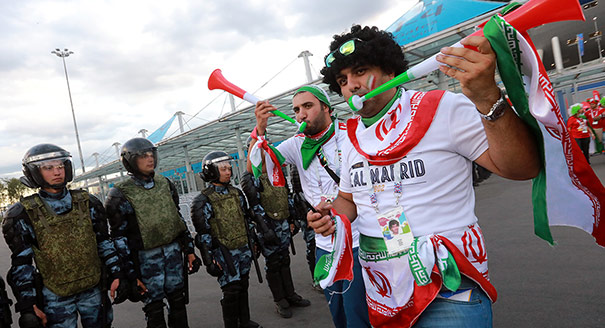
Russia has opened its doors to thousands of foreigners for the World Cup, but the realities of Putin’s Russia are bigger than the feel-good spirit provided by the football.
Thanks to football, the world has discovered Russia again. It’s been 30 years since Russia experienced its last such feel-good encounter with the world, with the start of Mikhail Gorbachev’s perestroika.
Russians, the football fans of the world have learned, do not just drink vodka, wear fur caps with red stars and play the balalaika or lead a bear on a rope. They are normal people. Many of them are no different from the European citizens of Athens, London or Paris.
This really should come as no surprise. More than 26 years since Russia’s first post-Communist government freed prices and legalized free trade, the country has become a market economy, even if the state still dominates business. Plenty of people live like Westerners, even if they are not always Western-minded. Russians are citizens of the world nowadays, and in practice that means the Western world.
So much for the fans. The pundits’ conclusion is that Russia is now a country that knows how to use soft power, and that everything is about to change, from Moscow’s relations with the West to the police’s relations with ordinary citizens. Vladimir Putin has won again, but this time without resorting to force but by merely kicking a ball on Red Square.
It’s a nice idea but it’s not the case.
Let’s not forget that Russia has always put its best side on show for visiting foreigners. This is the country which invented the Potemkin Village in the 18th century. In 1957, Russia half-opened a window onto the world when it held the World Festival of Youth and Students. This time the window has been flung wide open and there are thousands of foreigners walking the streets of Russian cities. But as far as ordinary Russians are concerned, this only confirms that they live in a country that is at peace with the rest of the world. They don’t believe that they are aggressors in international affairs. They do believe that they have repulsed many attacks by foreign powers on their besieged fortress.
Besides, take a wider look at what else is happening in Russia as the football championship advances towards the finals.
Ukrainian film director Oleg Sentsov is on a hunger strike in a Russian prison. Yury Dmitriev, human rights activist and Gulag historian, has again been arrested. Top energy executive Karina Tsurkan was also arrested for allegedly being a Romanian spy. The Moscow School of Social and Economic Sciences, better known as “Shaninka,”—one of the few remaining bastions of quality independent higher education in Moscow—has had its accreditation revoked. Opposition candidates were barred from the Moscow mayoral elections in September.
The news on the economic front is no less gloomy. The government announced a rise in the rate of VAT from 18 to 20 percent and even the Ministry of Economic Development has said that economic growth is will be curtailed next year. The announcement of the extension of the pension age has evoked mass discontent. The approval and electoral ratings of the president and the government have fallen sharply.
As a result of the World Cup, Russians will not become more free, the police will not stay friendly, and the regime will be no less authoritarian. That is largely because this championship was actually more about football than about politics. The positive emotions the home fans have about their team will not make them forget the rise in the pension age, and the foreign fans with positive impressions of Russia will not change world public opinion on their own.
It is impossible for a country to suddenly switch to soft power after years of using force. And the issues that divide Russia and most Western governments—Crimea, Donbass, MH-17, the Skripal case—are not going away.
In short, nothing has changed in Russia, even as the country joyfully celebrates the festival of football and Russians hail their incredible victory over Spain. On the day after the World Cup final on July 15, everything will get back to normal. And that is before we even mention that that day will also be the one on which Putin and Donald Trump meet in Helsinki. For Putin that meeting could be a second World Cup Final. He annexed Crimea after the Sochi Olympics, now he will get a meeting with the president of the United States.
“Take care, the doors are closing!” Foreign fans are hearing that message every day on the Moscow metro. The doors in Russia’s besieged fortress are about to close once again. That fortress is more mental than physical nowadays—if you want to enter the fortress, all you need to do is apply for a visa. Once the doors close again, things will return to normal—to the middle of yet another Putin presidential term.
Former Senior Fellow, Carnegie Russia Eurasia Center
Kolesnikov was a senior fellow at the Carnegie Russia Eurasia Center.
Recent Work
Andrei Kolesnikov
Andrei Kolesnikov
Carnegie does not take institutional positions on public policy issues; the views represented herein are those of the author(s) and do not necessarily reflect the views of Carnegie, its staff, or its trustees.
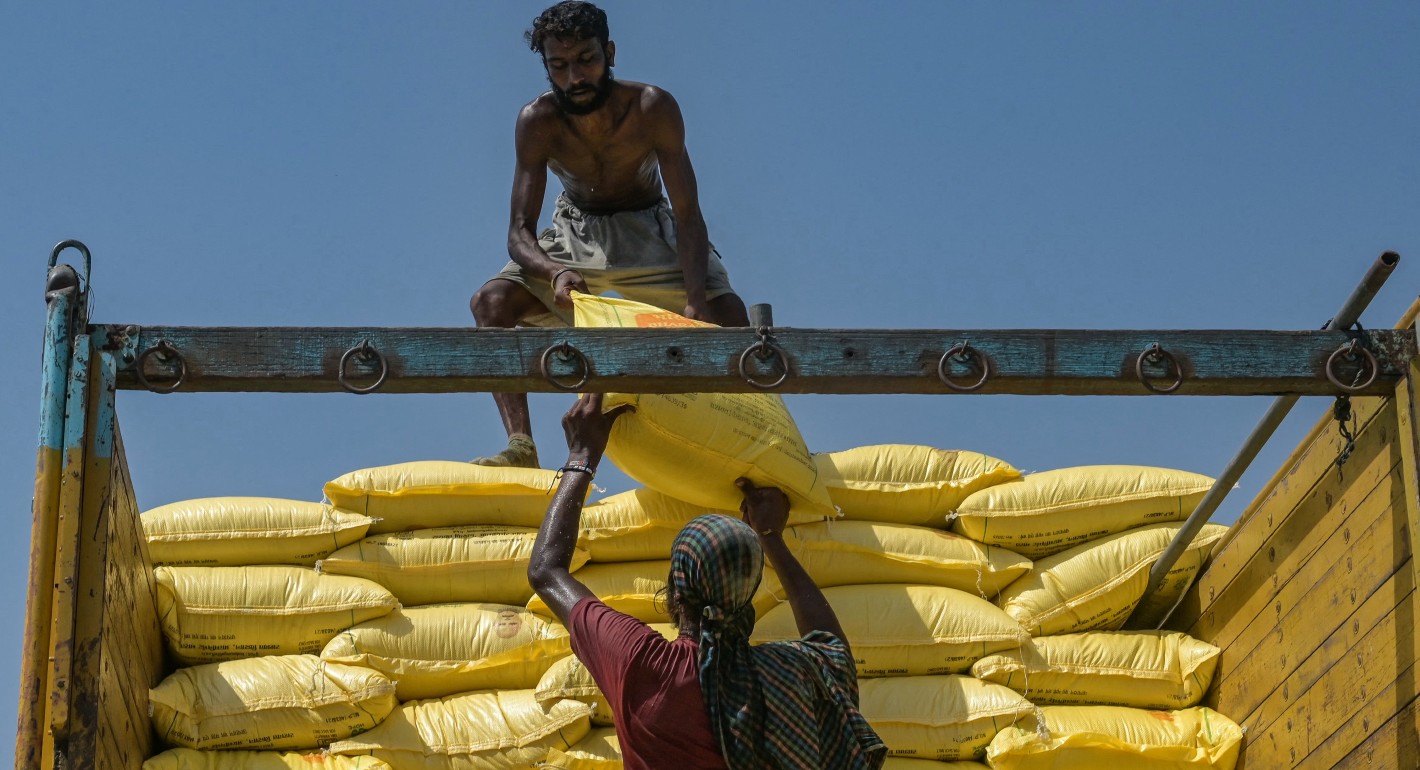
Even if the Iran war stops, restarting production and transport for fertilizers and their components could take weeks—at a crucial moment for planting.
Noah Gordon, Lucy Corthell
Tehran’s attacks are reshaping the security situation in the Middle East—and forcing the region’s clock to tick backward once again.

Amr Hamzawy
Only collective security can protect fragile economic models.

Andrew Leber
In a volatile Middle East, the Omani port of Duqm offers stability, neutrality, and opportunity. Could this hidden port become the ultimate safe harbor for global trade?
Giorgio Cafiero, Samuel Ramani
Arguing that Chinese policy is hung on alliances—with imputations of obligation—misses the point.

Evan A. Feigenbaum