

Article
Marc Pierini
{
  "authors": [
    "Marc Pierini"
  ],
  "type": "legacyinthemedia",
  "centerAffiliationAll": "dc",
  "centers": [
    "Carnegie Endowment for International Peace",
    "Carnegie Europe",
    "Malcolm H. Kerr Carnegie Middle East Center"
  ],
  "collections": [
    "Turkey’s Transformation"
  ],
  "englishNewsletterAll": "ctw",
  "nonEnglishNewsletterAll": "",
  "primaryCenter": "Carnegie Europe",
  "programAffiliation": "EP",
  "programs": [
    "Europe"
  ],
  "projects": [],
  "regions": [
    "Europe",
    "Türkiye",
    "Middle East",
    "Iran"
  ],
  "topics": [
    "EU",
    "Economy",
    "Political Reform",
    "Democracy"
  ]
}
Source: Getty
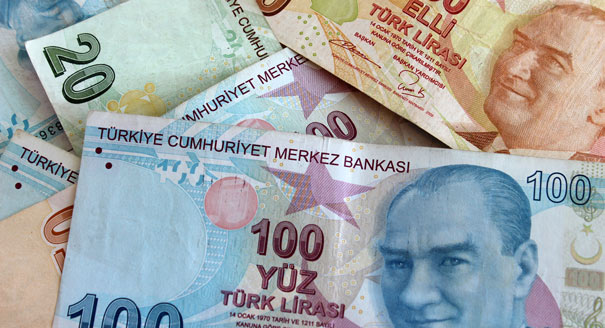
The troubles of the Turkish lira have deep roots. Turkey’s president has driven the economy into a narrow, dead-end alley.
Source: Axios
Details about the U.S–Turkey crisis have been unfolding over the past few days: a pastor as stage hostage, frozen assets for ministers on both sides, tariffs on Turkish exports of aluminum and steel to the U.S., a Trump tweet here, a fiery Erdogan speech there. But this is only the spectacular side of the story.
The big picture: The troubles of the Turkish lira have deep roots. Turkey is a structural-deficit country: It needs both short-term money on a daily basis and foreign direct investment in the long run. While the ruling Justice and Development Party (AKP) initially managed these fundamentals fairly well after it came to power in late 2002, doing so has become incompatible with President Erdogan's autocratic governance.Autocratic countries can survive the absence of rule of law if they sit on a wealth of oil or gas (Saudi Arabia, for example). But Turkey has neither, and its economic survival depends on exports, short-term funding, long-term direct investment, and extensive foreign borrowing. All of these economic lifelines presuppose confidence on international markets, especially in Europe and the U.S.
President Erdogan has done much to undermine that confidence since his first election in 2014, drastically shifting Turkey's political system away from liberal democratic fundamentals toward one-man rule. Erdogan has been fighting the Turkish Central Bank for years, at great risk, against high interest rates, while his desire to create an Islamic class of entrepreneurs has distorted public tenders. With a weakened parliament, a judiciary under political influence, a compromised media, and a permanent propensity to blame all the country’s woes on imaginary enemies, Turkey has seen its international financial rating sharply deteriorate.
The bottom line: Turkey’s president has driven the economy into a narrow, dead-end alley, where measures taken on currency and interest rates run counter to what’s needed, and where the narrative about resisting the U.S. economic “war” will only squeeze the country further.

Senior Fellow, Carnegie Europe
Marc Pierini is a senior fellow at Carnegie Europe, where his research focuses on developments in the Middle East and Turkey from a European perspective.
Recent Work
Marc Pierini
Marc Pierini
Carnegie does not take institutional positions on public policy issues; the views represented herein are those of the author(s) and do not necessarily reflect the views of Carnegie, its staff, or its trustees.

To remain effective, organizations need to master new media and legitimacy markers to make a once-in-a-century shift.

Renée DiResta, Rachel Kleinfeld, Margot Treadwell

An overwhelming victory by a far-right-wing party in a small state in eastern Germany will have major repercussions for Chancellor Friedrich Merz’s coalition.

Judy Dempsey
Amid celebrations of bilateral ties was a deeper focus on stability in the Middle East.

Amr Hamzawy

Canadian Prime Minister Mark Carney has twice inspired praise for standing up to U.S. President Donald Trump: at the 2026 World Economic Forum in Davos and on Canada-U.S. trade negotiations. Is Carney showing a third way better than the EU has in dealing with the Trump administration?

Rym Momtaz, ed.
Moscow is testing Europe’s defenses with drone incursions and could decide to use drones against the continent on a much larger scale once the war in Ukraine pauses. European countries will need Kyiv to help them prepare for such a possibility.
Pavlo Zvenyhorodskyi