

Commentary
Tatiana Stanovaya
{
  "authors": [
    "Tatiana Stanovaya"
  ],
  "type": "commentary",
  "centerAffiliationAll": "",
  "centers": [
    "Carnegie Endowment for International Peace",
    "Carnegie Russia Eurasia Center"
  ],
  "collections": [
    "Inside Russia"
  ],
  "englishNewsletterAll": "",
  "nonEnglishNewsletterAll": "",
  "primaryCenter": "Carnegie Endowment for International Peace",
  "programAffiliation": "",
  "programs": [],
  "projects": [],
  "regions": [],
  "topics": [
    "Economy"
  ]
}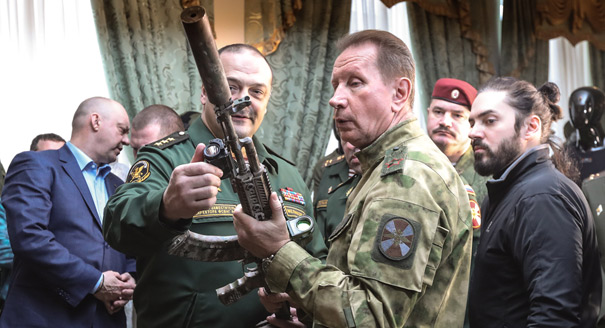
Source: Getty
Viktor Zolotov’s video message to Alexei Navalny—a crude and highly personal address for an influential national security official—underscores the increasing incoherence of the authorities’ strategy for dealing with Navalny. More important, it points to the emergence of a state of “every man for himself” and the splintering of Vladimir Putin’s inner circle.
Viktor Zolotov, commander in chief of the National Guard, recently released a video message challenging opposition leader Alexei Navalny, who has accused Zolotov of corruption, to a duel. Zolotov, one of the most formidable and secretive representatives of the security services and a former bodyguard of President Vladimir Putin, is viewed as close to the president. The very idea of such a video message, as well as its substance and style, runs counter to standard protocol in a political system where conflicts are usually resolved in a very different way.
The most striking thing about Zolotov’s video message is how inappropriate it is for an influential national security official to directly address, especially in an unpolished and stylistically clumsy manner, an opposition leader whom the government stubbornly refuses to acknowledge as an important political player and views as a U.S. government-funded criminal determined to rise to power. The authorities avoid mentioning him by name, and Putin is no exception, having never uttered Navalny’s name in public.
Indeed, Zolotov came under fire for being politically irrational, in no small part for resorting to the threat of violence. Observers wondered why Zolotov drew attention to Navalny’s investigations and addressed him as an equal, elevating the opposition leader’s status and veering from the Kremlin line.
The video message also appeared to be highly personal and not that of an institution, which would have had enough resources to prepare an adequate response. The video message put Zolotov’s private emotions on display and revealed his personal vulnerability to someone like Navalny. It is surprising that Zolotov—a former head of the Federal Protective Service, which serves as a major counterweight to the Federal Security Service, or FSB, and a silovik striving to turn the National Guard into an institution of political significance—would want to enter into a public conflict of this sort.
Yet no matter how illogical and spontaneous Zolotov’s video message may appear to be, it has a rational component and offers many insights into the current state of Russia’s political system.
It is clear that the authorities’ policy on Navalny in particular, and the non-systemic opposition more generally, is growing increasingly incoherent. Should Navalny be allowed to participate in elections? Should he go to prison? Should he be permitted to organize unsanctioned rallies? Should these rallies be harshly suppressed? The president’s various allies offer contradictory answers to these questions. As Navalny becomes an instrument of elite infighting and in turn a part of Russia’s political system, the authorities will become further divided and their efforts to contain him less effective.
Zolotov has essentially reproached the political system and criticized its inability to curb Navalny’s activities and counter the threat he poses to regime security. Crucially, he observed in his video message that “no one has ever hit you back, Mr. Navalny,” a veiled attack on those responsible for managing the challenge from the non-systemic opposition, from the FSB to those Kremlin officials who oversee domestic politics.
Zolotov, however, would not have recorded his video message just because he felt that the government was too lenient toward Navalny. His appeal reveals not only Zolotov’s political solitude but also his lack of access to Putin. To be sure, it is not that Putin’s attitude toward his former bodyguard has soured. Rather, no matter how tight their personal and professional relations may be, the president is preoccupied with foreign affairs and has little time to spare for domestic politics.
Zolotov undoubtedly enjoys a privileged position, as indicated by the moral support he received from Kremlin spokesman Dmitry Peskov. The video message’s style and substance, however, underlined that it was Zolotov’s personal initiative and not something that Putin requested or approved. Perhaps it was Navalny’s direct appeal to rank-and-file National Guard servicemen that angered Zolotov, making him fear that at a critical moment, he could lose control of the situation and let Putin down.
Another conclusion follows from the conspicuous mismatch between Zolotov’s status in Russia’s political system and a video message that appears to have been recorded from a position of weakness. The National Guard is not just an institution that protects the authorities from color revolutions. It is a repressive body with sophisticated levers of pressure. In a way, Zolotov’s challenge nullifies this institutional advantage, making the head of one of the most influential power structures in Russia look helpless—worse yet, helpless before a man that Zolotov himself calls part of the “political rot.” The National Guard, which once had lofty ambitions, has settled instead for a purely auxiliary role.
When the National Guard was established in 2016, its top brass set its sights on more than just becoming Russia’s main anti-revolutionary force. In fact, Zolotov reportedly tried to have the Interior Ministry’s main directorates for combating extremism and preserving public order, and even the entire Emergencies Ministry, brought under his control. Most of Zolotov’s proposals, however, did not materialize. Meanwhile, civilian officials began to seize the initiative from the siloviki. For example, Sergei Kiriyenko, who oversees domestic politics within the presidential administration, is diligently working to displace the siloviki from the fight against domestic political threats.
Zolotov’s video message shows that Putin’s inner circle is splintering and losing a common understanding of priorities and threats. The president is finding it increasingly difficult to act as arbiter and patron, focusing exclusively on strategic issues, and ceding control over day-to-day matters. Zolotov’s video message came out shortly after nationwide elections that cast doubt on United Russia’s future and undermined its political dominance. The resulting sense of growing chaos, spun by the Kremlin as managed adaptation to harsh realities, points to the emergence of a state of “every man for himself” in Russia’s political system, whose various players will have to determine their own exit strategies

Senior Fellow, Carnegie Russia Eurasia Center
Tatiana Stanovaya is a senior fellow at the Carnegie Russia Eurasia Center.
Recent Work
Tatiana Stanovaya
Tatiana Stanovaya
Carnegie does not take institutional positions on public policy issues; the views represented herein are those of the author(s) and do not necessarily reflect the views of Carnegie, its staff, or its trustees.

The Bureau of Industry and Security needs to adjust its focus and practices to maintain its position as the U.S. government’s primary champion of international technological competition.

Geoffrey Irving

Depleted financial reserves and a shrinking tax base mean it is no longer possible to simultaneously deliver high defense spending, price stability, and economic growth.

Alexandra Prokopenko

U.S. trading partners in Asia are closely watching the dispute for signs of how it may affect their own interests.

Barbara Weisel
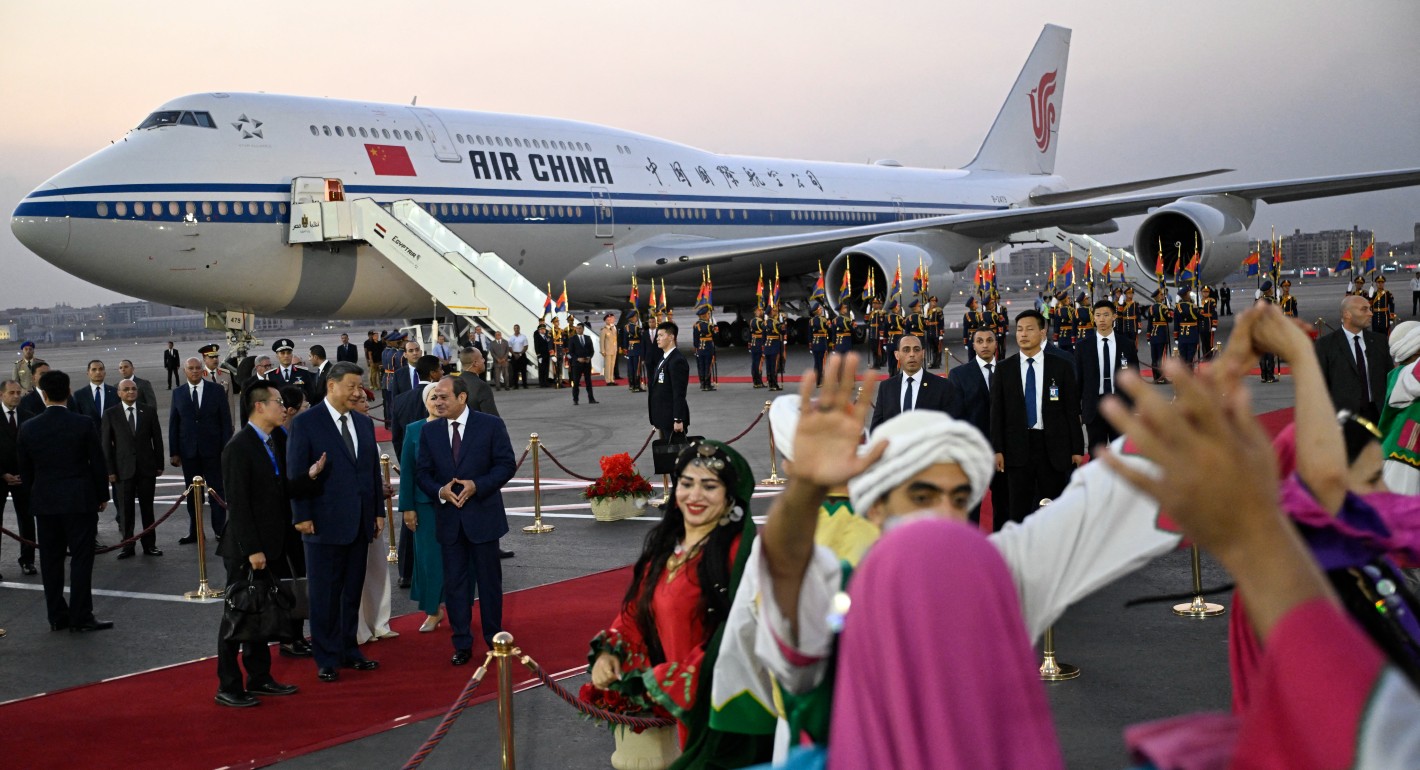
Amid celebrations of bilateral ties was a deeper focus on stability in the Middle East.

Amr Hamzawy
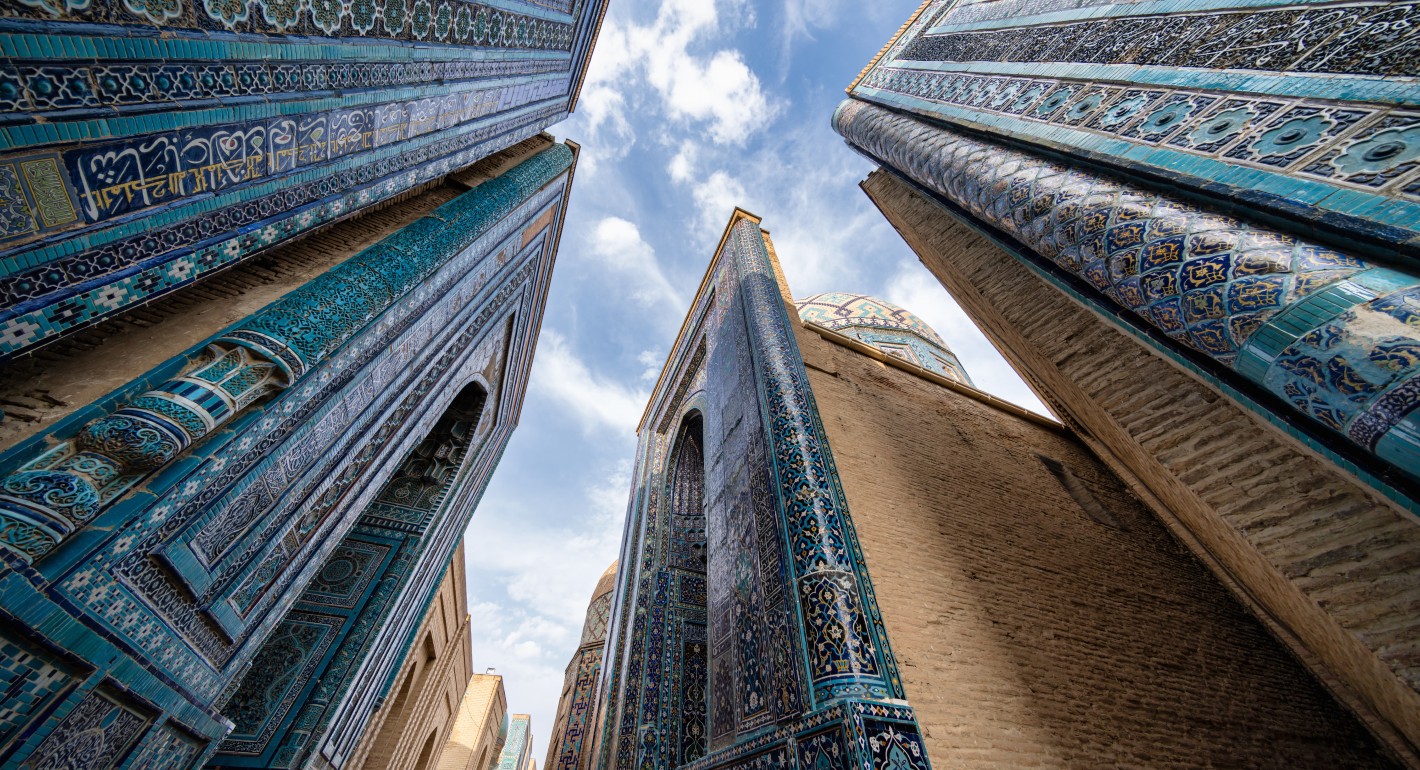
Xi, Putin, and other regional leaders are back-slapping in Bishkek, but the SCO has yet to answer the most serious questions about continental Asia's economic future.

Evan A. Feigenbaum