

Paper
Eugene Rumer, Richard Sokolsky
{
  "authors": [
    "Richard Sokolsky"
  ],
  "type": "other",
  "centerAffiliationAll": "",
  "centers": [
    "Carnegie Endowment for International Peace"
  ],
  "collections": [],
  "englishNewsletterAll": "",
  "nonEnglishNewsletterAll": "",
  "primaryCenter": "Carnegie Endowment for International Peace",
  "programAffiliation": "",
  "programs": [],
  "projects": [],
  "regions": [
    "East Asia",
    "North Korea"
  ],
  "topics": [
    "Political Reform",
    "Security",
    "Military"
  ]
}
Source: Getty
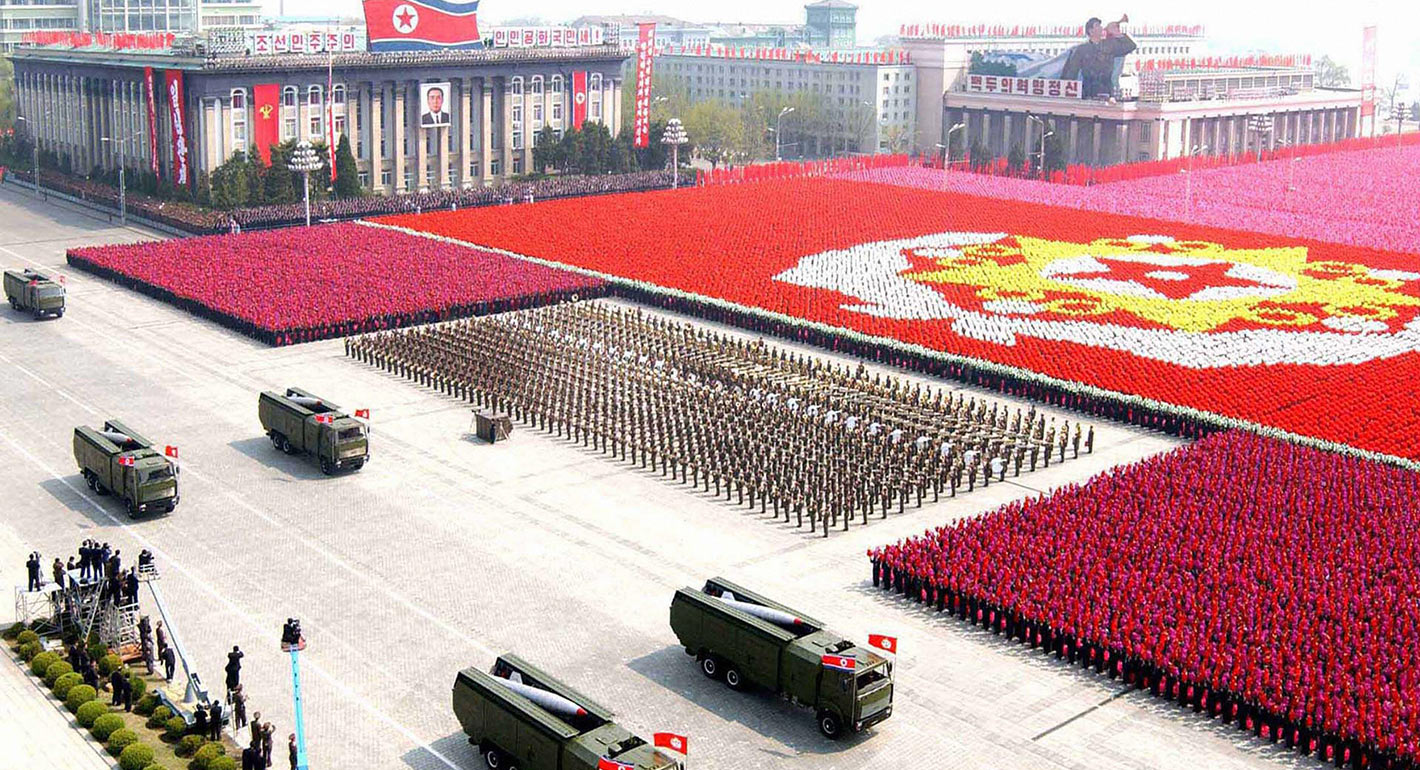
Whether Pyongyang has the capacity and the resources for large-scale demobilization and reintegration—and is prepared to implement market reforms that would be required to make the most efficient use of these resources—remains an open question.
Source: 38 North
Kim Jong Un has used military personnel in the past to carry out civilian construction and infrastructure projects and in his 2019 New Year address, the North Korean leader mentioned the importance of the military in the country’s construction projects. Kim has also reportedly expressed his desire to reallocate resources from the military to the civilian sector, which could include future manpower reductions if North Korea decides that peace and security on the peninsula would allow it to downsize its conventional forces. Whether Pyongyang has the capacity and the resources, however, for large-scale demobilization and reintegration—and is prepared to implement market reforms that would be required to make the most efficient use of these resources—remains an open question. South Korea might be willing and able to help Pyongyang develop a viable plan to deactivate many of its troops and reintegrate them into the civilian economy, but a multilateral effort will likely be required depending on the scope and pace of the effort.

Nonresident Senior Fellow, Russia and Eurasia Program
Richard Sokolsky is a nonresident senior fellow in Carnegie’s Russia and Eurasia Program. His work focuses on U.S. policy toward Russia in the wake of the Ukraine crisis.
Recent Work
Eugene Rumer, Richard Sokolsky
Eugene Rumer, Richard Sokolsky
Carnegie does not take institutional positions on public policy issues; the views represented herein are those of the author(s) and do not necessarily reflect the views of Carnegie, its staff, or its trustees.

A summer of escalation in the Black Sea has hurt Ukraine economically and is exacerbating world food security. A truce is needed—as is a broader reframing of Europe’s Ukraine strategy.

Thomas de Waal

If the Russian-speaking community in Latvia cannot articulate their interests without being seen as disloyal, they could end up embracing a pro-Kremlin agenda.

Sergejs Potapkins

Are Germany’s economic, industrial, and political struggles becoming a liability for the EU’s ability to rise to the geopolitical moment?

Rym Momtaz, ed.

Russia’s ruling party would have benefited from Putin appearing as its distant patron, but as an active frontman imposing his views on the public, he has done nothing but harm both the party’s election campaign and the ruling system overall.

Andrey Pertsev

The world is at a critical inflection point, where a combination of ever more powerful AI systems, accelerating proliferation, and a corresponding norms vacuum is setting up a dangerous set of conditions.

Steve Feldstein