

Commentary
Despite its flop at the box office, the film raises important questions for the climate community to answer.
Leonardo Martinez-Diaz
{
  "authors": [
    "Nicholas Szechenyi",
    "Yuichi Hosoya"
  ],
  "type": "other",
  "centerAffiliationAll": "dc",
  "centers": [
    "Carnegie Endowment for International Peace"
  ],
  "collections": [
    "The United States and Japan in Asia"
  ],
  "englishNewsletterAll": "asia",
  "nonEnglishNewsletterAll": "",
  "primaryCenter": "Carnegie Endowment for International Peace",
  "programAffiliation": "AP",
  "programs": [
    "Asia"
  ],
  "projects": [],
  "regions": [
    "North America",
    "United States",
    "East Asia",
    "China",
    "Japan"
  ],
  "topics": [
    "Security",
    "Foreign Policy",
    "Global Governance"
  ]
}
Source: Getty
Washington and Tokyo should continue to ensure that their shared values of transparency and openness are reflected in their regional postures.
This brief is part of the China Risk and China Opportunity for the U.S.-Japan Alliance project.
Japan and the United States share a fundamental interest in maintaining prosperity, security, and a rules-based order in the world’s most dynamic region: the Indo-Pacific. The region is a hallmark of diversity. It encompasses both developed and developing economies, democracies and authoritarian governments, continental and maritime powers, and a wide spectrum of alignments. These alignments range from formal alliances and small groups of like-minded countries to multilateral institutions aiming for broad consensus on the economic and political norms that should govern the region.
With such high stakes, Tokyo and Washington are grappling with thorny challenges facing the Indo-Pacific. The region’s balance of power is increasingly contested as China seeks to enhance its economic and political influence and has employed coercive tactics that threaten to undermine enduring principles that Japan, the United States, and other countries hold dear.
Shaping dynamics in the Indo-Pacific requires Tokyo and Washington to adopt a comprehensive strategy that accounts for regional diversity, encourages adherence to shared principles, and incorporates tools to manage strategic competition with Beijing—no small task. Interactions in the region will ultimately exhibit elements of competition and cooperation with China, a delicate balance between deterrence and reassurance that presents both risks and opportunities for the allies. To tackle this challenge, Japan and the United States have used the umbrella term Free and Open Indo-Pacific (FOIP) as a framework for their respective regional strategies.
But the two countries’ views on the inherent risks and opportunities are not aligned completely. Japanese Prime Minister Shinzo Abe in 2016 formally introduced the FOIP strategy as a network of nations and regional organizations that value freedom, the rule of law, and market economics that are “free from force or coercion” and serve as a foundation for peace and prosperity. The Japanese government often emphasizes that FOIP is not meant to counter Beijing’s strategic inroads in the area of infrastructure development or contain China’s rise more broadly.
Despite this caution, veiled references to Japan’s concerns about China’s aggressive behavior suggest FOIP arguably contains elements of an effort to manage regional strategic competition. The Abe administration recently released a new defense strategy that prioritizes advanced capabilities and places security cooperation with the United States and other countries under the FOIP framework. Yet the narrative about FOIP in Japan has generally shifted away from the term strategy toward descriptions of a “vision” or “concept,” in part to facilitate bilateral diplomacy with China but also due to a lack of consensus on exactly how FOIP should be defined.
Washington’s response to date has been more forceful. U.S. President Donald Trump’s administration signaled its embrace of FOIP in 2017 in a speech by then secretary of state Rex Tillerson, a speech that echoed Abe’s goals for the region including peace, security, freedom of navigation, and the rule of law. But unlike Japanese descriptions of FOIP, Tillerson’s speech portrayed the China challenge as an overt threat to the interests of the international community. For example, he characterized China’s development financing as “predatory economics.” The administration’s subsequent National Security Strategy and National Defense Strategy both stressed geostrategic competition with China as a battle between free and repressive visions of world order in the Indo-Pacific. Vice President Mike Pence further amplified the administration’s views in another speech in October 2018.
Yet the Trump administration has also outlined an economic vision for the Indo-Pacific echoing the Abe government’s emphasis on trade and investment, open access to sea lanes, and freedom from coercion. And despite the emphasis on strategic competition with China, U.S. officials have also stated that the FOIP vision conceptually need not preclude cooperation with China where possible. In fact, when Trump himself was asked to characterize the U.S.-China relationship after a June 2019 meeting with Chinese President Xi Jinping at the G20 summit in Osaka, Japan, he said, “I think we’re going to be strategic partners.”
Despite this lack of clarity on FOIP’s definition, the framework can be useful as a coordination mechanism for exploring ways Japan and the United States can align their respective strategic priorities in the Indo-Pacific. Less certain is the extent to which recent FOIP initiatives will ultimately support an integrated FOIP strategy for the U.S.-Japan alliance that reflects a shared approach to the China challenge and clearly defined objectives to guide alliance cooperation in the years ahead. U.S.-Japan dialogue and outreach to other regional stakeholders could prove critical in developing the FOIP concept and determining whether it can help shape Chinese behavior in favor of the existing rules-based international order.
The dilemma Japan and the United States face is that they benefit from economic interdependence with China but are concerned about Chinese assertiveness in the security and economic realms that could potentially shift the regional balance of power in the direction of a Sino-centric order. While Tokyo and Washington share the same overarching challenge and the same broad objectives, their responses have differed in notable ways, especially in the economic realm, as the policy debate in Washington now centers mainly on economic competition with China.
Japan’s broad core FOIP objectives foster inclusiveness, in part to balance against China’s rising power. These priorities include:
While the Japanese government has stressed that FOIP is not intended to contain China’s rise, the Abe administration is striking a delicate balance between cooperation and competition with Beijing, while encouraging other regional stakeholders to embrace rules and norms presumably aimed at shaping China’s behavior. From Tokyo’s perspective, it is not yet clear whether Washington shares the same sense of subtlety required to successfully implement FOIP, or whether a constructive synergy can be created between the U.S. and Japanese approaches.
In contrast, the Trump administration’s generally more confrontational approach could entail utilizing the FOIP construct to present a competing vision for regional order that strengthens U.S. alliances. But the sharp edge to the administration’s rhetoric on China notwithstanding, the U.S. FOIP objectives are broadly reflective of Japan’s priorities and include:
An attendant challenge for the United States is to instill confidence in the sustainability of these objectives and the U.S. commitment to the region. The Asia Reassurance Initiative Act of 2018 documents U.S. support for FOIP and the rules-based international order. But Trump’s absence from the East Asia Summit and Asia-Pacific Economic Cooperation (APEC) Forum in November 2018 arguably raised questions about the U.S. commitment to regional institutions as a platform for shaping diplomatic engagement on rules and norms under FOIP. The president’s announcement that the United States was suspending bilateral military exercises with South Korea after the June 2018 summit with North Korean Supreme Leader Kim Jong Un, and his comments about potentially withdrawing U.S. troops from the Korean Peninsula, cast doubt on the U.S. commitment to maintaining a forward military presence and honoring alliance treaty obligations. And the administration’s distaste for multilateral trade agreements in favor of bilateral negotiations could complicate efforts to generate consensus on FOIP’s economic tenets.
Nonetheless, the overlap in FOIP principles suggests potential to enhance U.S.-Japan cooperation across the diplomatic, economic, and security domains. Bilateral dialogue on FOIP could also improve understanding of each other’s perspectives on the risks and opportunities stemming from China’s rise, and the extent to which FOIP should become an arena for both cooperation and competition with China. That process should begin by identifying both the issue areas where Japanese and U.S. approaches could diverge and those that might be ripe for further examination as possible FOIP initiatives. The following list, while not exhaustive, illustrates some of the core themes that could animate bilateral discussions on FOIP going forward.
It may prove difficult to perfectly align the FOIP visions of Japan and the United States, but a bilateral process that helps identify areas of convergence and divergence could give Tokyo and Washington more flexibility to engage in novel ways and explore FOIP-related initiatives with other like-minded countries. Viewing FOIP as a coordinating mechanism rather than a formal, joint framework that defines specific alliance objectives might also heighten flexibility with respect to balancing strategic competition and engagement with China. FOIP’s greatest strength could therefore be its ambiguity. Though the concept’s ultimate composition may be unclear at this stage, it has already demonstrated promise as a means of developing mutually reinforcing if not identical approaches to various challenges in the Indo-Pacific.
Nicholas Szechenyi is a senior fellow and deputy director of the Japan Chair at the Center for Strategic and International Studies.
Yuichi Hosoya is a professor in the Department of Politics at Keio University, where he focuses on post–World War II international history, Japanese diplomacy, and contemporary international security.
1 Yuichi Hosoya, “FOIP 2.0: The Evolution of Japan’s Free and Open Indo-Pacific Strategy,” Asia-Pacific Review, Institute for International Policy Studies, 2019 (forthcoming).
Nicholas Szechenyi
Nicholas Szechenyi is a senior fellow and deputy director of the Japan Chair at the Center for Strategic and International Studies.
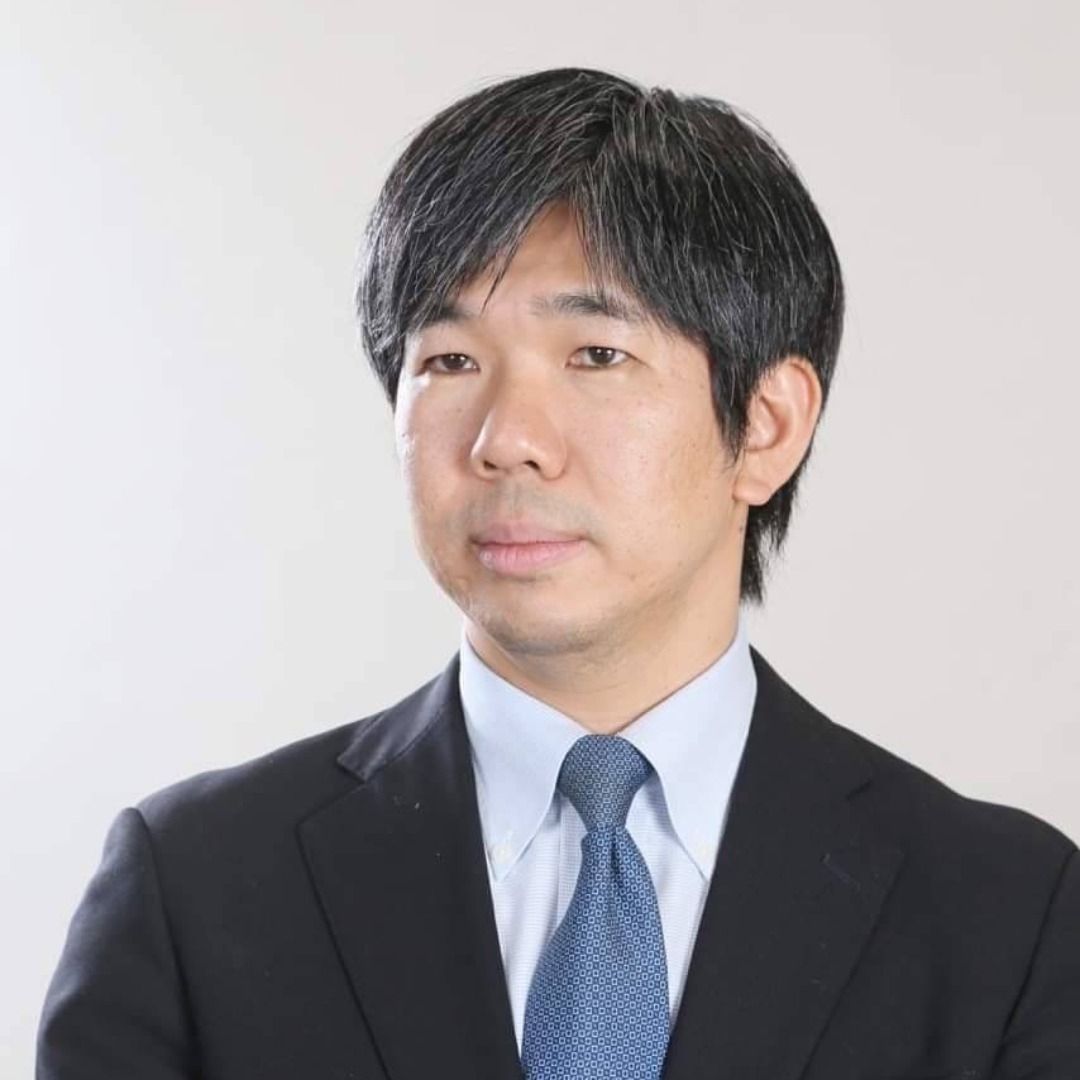
Yuichi Hosoya
Professor in the Faculty of Law at Keio University where he focuses on post-war international history, Japanese diplomacy, and contemporary international security.
Carnegie does not take institutional positions on public policy issues; the views represented herein are those of the author(s) and do not necessarily reflect the views of Carnegie, its staff, or its trustees.

Despite its flop at the box office, the film raises important questions for the climate community to answer.

Leonardo Martinez-Diaz

Funding Ukraine remains a priority for European leaders. As Russia’s war of aggression heads into another winter, two feasible options to mobilize support for Kyiv should be fast-tracked.


Vladyslav Rashkovan, Gregory P. Wilson

Russian strikes are weakening the economy sustaining Ukraine’s war effort. Closing the growing funding gap will require more European support and politically contentious reforms in Kyiv.

Balázs Jarábik

In an interview, Rozina Ali discusses her new book on the rise and manifestations of Islamophobia in the United States.

Michael Young

While the EU and European governments are embracing the much-lauded middle-power moment, this entails three difficult conundrums.

Richard Youngs