

Paper
Ashley J. Tellis
{
  "authors": [
    "Ashley J. Tellis"
  ],
  "type": "other",
  "centerAffiliationAll": "dc",
  "centers": [
    "Carnegie Endowment for International Peace"
  ],
  "collections": [],
  "englishNewsletterAll": "ctw",
  "nonEnglishNewsletterAll": "",
  "primaryCenter": "Carnegie Endowment for International Peace",
  "programAffiliation": "SAP",
  "programs": [
    "South Asia"
  ],
  "projects": [],
  "regions": [
    "South Asia",
    "India",
    "Pakistan"
  ],
  "topics": [
    "Nuclear Policy",
    "Arms Control"
  ]
}
Source: Getty
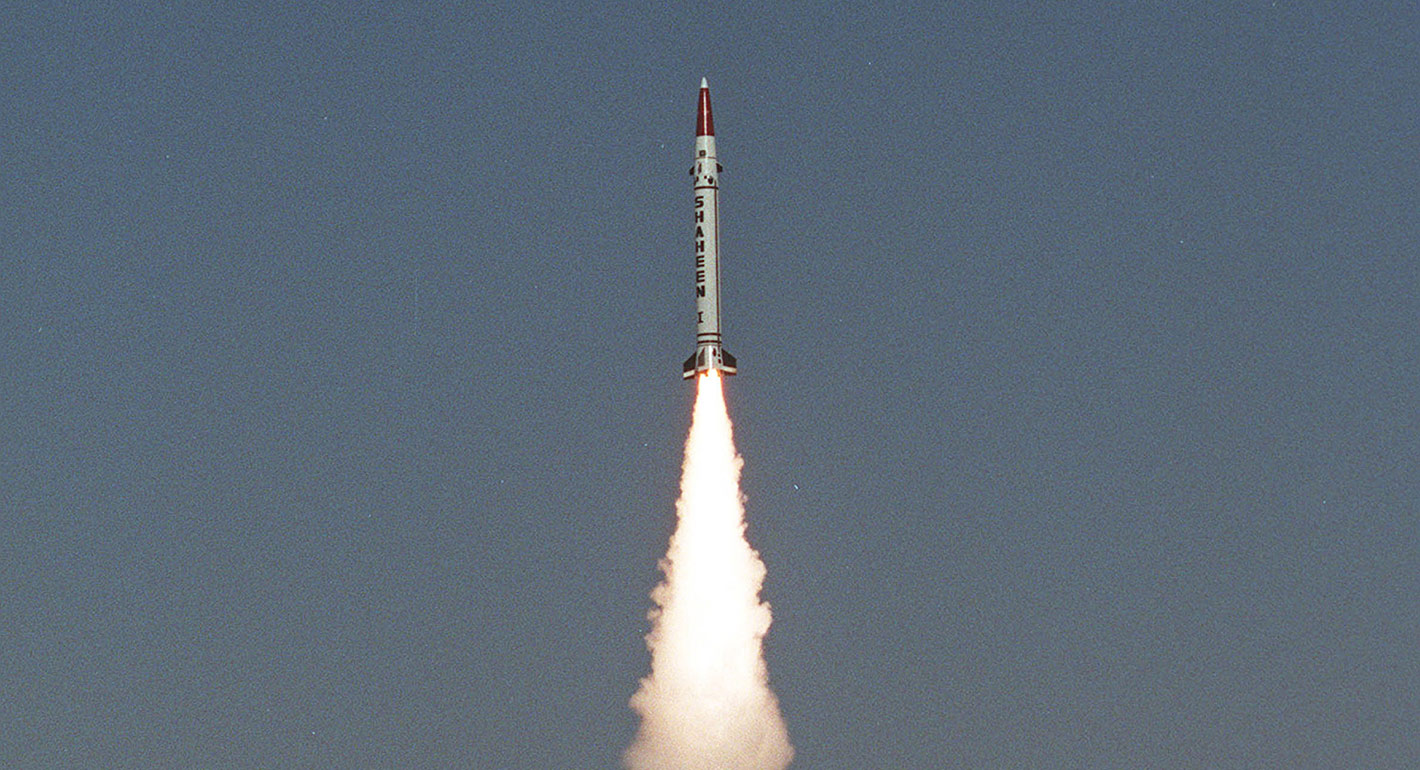
Current patterns of nuclearization in South Asia amply confirm the conclusion that although India and Pakistan have, at various points historically, supported the idea of abolishing nuclear weapons with various degrees of enthusiasm, that position has now been consigned to the dust heap of history.
Source: Hoover Institution
The competitive and often antagonistic relationships between China and India and between India and Pakistan have deep historical roots that predate their possession of nuclear weaponry. The Indo-Pakistani rivalry dates back to 1947 when both emerged as newly independent states from the erstwhile British Raj in the Indian subcontinent.1 Although India survived the crises leading up to Partition as a more or less satisfied state, Pakistan’s dissatisfactions—rooted initially in its claims over the disputed state of Jammu and Kashmir—were acutely intensified by its wrenching defeat in the 1971 war with India. The loss of the eastern half of Pakistan (now Bangladesh) in this conflict drove Islamabad’s desire for new forms of security and vengeance, which resulted in the immediate pursuit of nuclear weapons and later a concerted campaign of terrorism—conducted under the protective shadow of its nuclear weaponry—against India.2
Just as Pakistan settled for nuclear weapons in the aftermath of a major conventional defeat against India, New Delhi too took the first steps toward acquiring a nuclear weapons capability in the aftermath of a major defeat against China. Although China and India are physically located near each other, the two nations had thin political interactions for centuries. The core of the traditional Chinese state faced East Asia —far away from the Indian subcontinent— while the Indian kingdoms were preoccupied for most part with security competition among themselves and had little time or capability for rivalries with their Chinese neighbors. This pattern of mutual neglect began to change during the British Raj, when the British Indian empire became increasingly sensitive to the need to protect its northern frontiers against Russian and Chinese penetration. A series of incomplete border agreements with Tibet—a functionally independent but suzerain Chinese state—was negotiated, but as long as there was no active Chinese presence in Tibet, these controversial agreements had no deleterious consequences for India.3
The Chinese invasion of Tibet from 1950 onwards changed this situation completely: it brought Chinese military power for the first time in close proximity to India, accentuated the Sino-Indian disagreement over their boundaries, and eventually precipitated a short but intense border war in 1962—which India lost decisively. The Indian defeat in this conflict roughly coincided with China’s own efforts to develop a nuclear weapon with Soviet assistance, and the first Chinese nuclear test in 1964, then, spurred the Indian interest in exploring its own nuclear option—an effort that was magnified because of the Indian rout two years earlier.4
By the 1980s, therefore, the Southern Asian region was well on the way to nuclearization, albeit at a different pace in each country. China was already a mature nuclear power, having conducted a series of nuclear tests since 1964. It was recognized as a legitimate nuclear weapon state under the 1967 nuclear non-proliferation treaty (NPT). India had tested a nuclear device in 1974, but then abruptly slowed the development of its nuclear program for several years, before accelerating its efforts again after 1988 when it became clear that Pakistan had become a threshold nuclear weapons power.5 In 1998, both India and Pakistan openly tested their nuclear weapons and called themselves “nuclear weapon states,” thus joining China as declared nuclear powers and making transparent the nuclear rivalries that had been largely clandestine for several decades earlier.
This paper briefly surveys the current state of nuclear weapons developments in India and Pakistan some two decades after their dramatic 1998 nuclear tests with a view to identifying the principal challenges to strategic stability arising from the presence of nuclear weapons in the Indian subcontinent and to explore what, if anything, the international community might do to aid both countries in mitigating these dangers....
1 For an excellent overview of the India-Pakistan conflict, see Sumit Ganguly, Conflict Unending: India-Pakistan Tensions since 1947 (New York: Columbia University Press, 2001).
2 Ashley J. Tellis, Are India-Pakistan Peace Talks Worth a Damn? (Washington, DC: 2017), 25-42.
3 A good summary can be found in John W. Garver, Protracted Contest: Sino-Indian Rivalry in the Twentieth Century (Seattle: University of Washington Press, 2001), 3-109.
4 George Perkovich, India’s Nuclear Bomb (Berkeley: University of California Press, 1999), 60.
5 K. Subrahmanyam, “Indian Nuclear Policy—1964-98,” in Nuclear India, ed. Jasjit Singh (New Delhi: Knowledge World, 1998), 26-53.
This article was originally published by the Hoover Institute.
Former Senior Fellow
Ashley J. Tellis was a senior fellow at the Carnegie Endowment for International Peace.
Recent Work
Ashley J. Tellis
Ashley J. Tellis
Carnegie does not take institutional positions on public policy issues; the views represented herein are those of the author(s) and do not necessarily reflect the views of Carnegie, its staff, or its trustees.

China has showcased its engineering prowess with small modular reactor demonstration projects. But turning these technological achievements into commercial success will be a greater challenge.

Tong Zhao
Why Pakistan, Saudi Arabia, and Turkey are joining forces on regional security.


Alper Coşkun, Amr Hamzawy

Despite public disputes over trade and immigration, the strategic partnership’s foundations remain sturdy.

Sameer Lalwani
Economic recovery has brought Sri Lanka a modicum of stability, but domestic strains and great-power rivalry could test how long it lasts.

Avinash Paliwal

The acknowledgment has sparked fears of a new arms race with China and Russia.

Chris O’Meara