

Paper
Christopher S. Chivvis, Rohan Mukherjee, Milan Vaishnav
{
  "authors": [
    "Milan Vaishnav"
  ],
  "type": "other",
  "centerAffiliationAll": "dc",
  "centers": [
    "Carnegie Endowment for International Peace"
  ],
  "collections": [],
  "englishNewsletterAll": "ctw",
  "nonEnglishNewsletterAll": "",
  "primaryCenter": "Carnegie Endowment for International Peace",
  "programAffiliation": "SAP",
  "programs": [
    "South Asia"
  ],
  "projects": [],
  "regions": [
    "South Asia",
    "India"
  ],
  "topics": []
}
Source: Getty
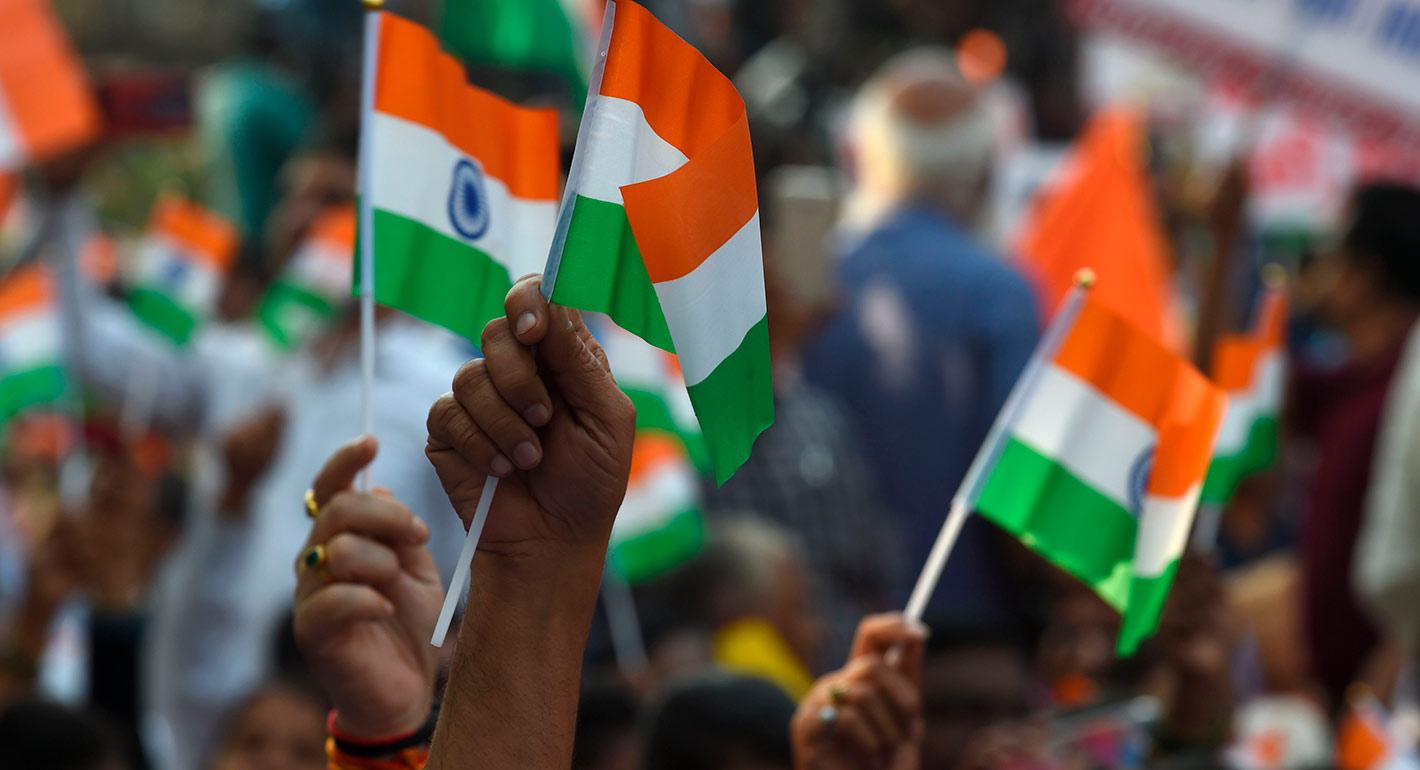
Covid-19 measures prevent large gatherings during the upcoming state elections, pushing more campaigns online. The BJP has a more pervasive presence online, but opposition parties like Congress are catching up.
Source: Business Standard
Covid-19 is pushing Indian political parties to quickly look for alternative ways of mobilisation. Does this mean a new kind of politics is in the offing? Milan Vaishnav, director of the Carnegie Endowment’s South Asia programme and author of several books on Indian politics, tells Aditi Phadnis some things will remain the same but some will change.
What we have seen so far is that Covid-19 is further entrenching some key political trends we were already witnessing in the pre-pandemic era — heightened degree of social polarisation, centralisation of power, and emaciation or atrophy of accountability institutions. Similarly, the pandemic is helping to consolidate previously apparent trends in political mobilisation. Since 2014, we have seen a pretty significant shift towards digital campaigning, micro-targeting, and online mobilisation, be it on Facebook, Twitter or perhaps most consequentially WhatsApp. The pandemic will push all parties further in the direction.
I would not be so quick to sound the death knell of the traditional campaigning, consisting of large rallies and jan sabhas. Look at what is happening in the United States. For weeks on end, Americans were locked in their homes, observing social distancing and home quarantining norms. And yet in the wake of gruesome police brutality against African-Americans, we are seeing thousands throw caution to the wind and line the streets of major cities in protest day after day. In India, the combination of economic dislocation caused by the pandemic and the communal polarisation simmering beneath the surface means that one cannot write off the possibility of large mass gatherings, even in the near future. The balance of digital and physical might tilt towards the former, but I would be extremely cautious in dismissing the importance of the latter. At the end of the day, many parties and politicians in India derive authority from street power — think of the Shiv Sena in Maharashtra, the Rashtriya Janata Dal in Bihar or the Aam Aadmi Party in Delhi. I don’t think this link will be severed easily.
Let’s stipulate one important fact: the Bharatiya Janata Party (BJP) has an enormous digital advantage over its rivals, both national and regional. The BJP has embraced technology in a manner no other party has and it can use its control of the central government, resource advantage, and its organisation — both official and unofficial (the Sangh Parivar) — to further build upon this advantage. We are seeing some signs of catch-up — look at how the Congress is using social media, for example — but the BJP has a clear first mover’s advantage. I would expect convergence over time, but we are not there yet. What does this mean for the opposition, which seeks to displace the BJP? It has a unique opportunity to go hammer-and-tongs at the ruling party on the economy. Anyone who looks at Indian data can see the slowdown preceded the pandemic, which has made a bad situation truly awful. I don’t think caste and identity are going to give the opposition the ammunition they need — if 2014 and 2019 are any guide. We have seen an exhaustion of the Mandal politics that prevailed over the last three decades. The real question is whether the opposition has the wherewithal to articulate two things: a simple economic critique of the (Narendra) Modi economy and a viable future alternative. Right now, to be fair, we are seeing neither. I would refer here to Neelanjan Sircar’s brilliant argument that 2019 was an election about vishwas (faith), not vikas (development). The people have a faith that Prime Minister Modi will take the right calls for the country on the economy, and foreign and domestic policy. The opposition has to undermine this premise — caste and identity alone will not get you there.
Undoubtedly, we are already seeing that. The rise of the ‘campaign consultant,’ who is a ubiquitous character in most Western democracies, is apparent in India too — albeit with a lag. The new digital politics will accelerate the creation of this relatively new career pathway but could also lead to, frankly, a lot of charlatans flooding the space. It is pretty easy, with the kinds of big data available today, to develop a kind of data-driven certitude that is totally devoid of history, politics, culture, and context. Again, coming back to the American experience, consider the lessons of the 2016 election. The Clinton campaign used big data in a way no other campaign had to date. Each night, they were running hundreds of thousands of simulations of the election, with a clear majority of those showing a Clinton victory. And yet, we know what happened in the final analysis; many of our conventional political assumptions were outdated or simply out-of-touch.
This is a great example. Perhaps the best way of thinking about technology is that it can be an enabler or force multiplier, but ultimately it depends on the quality of the product you have. It reminds me a bit of the debates social scientists used to have about the role of social capital and civil society networks. At first, social capital was hailed as a sure-fire positive. But, at the end of the day, social capital empowered fascism in inter-war Germany but it also fuelled American democracy in the 18th and 19th centuries. Similarly, we can get a bit carried away with the allure of “techno-governance.” Think about many of the welfare schemes the Government of India has rolled out in recent years — if you create an elaborate data dashboard to track toilet construction, this is not necessarily the same thing as tracking modern sanitation practices. You are completely missing out on the behavioural dimension to the problem. So perhaps we are entering an era where technology is necessary, but ultimately insufficient for good governance.
In the realm of electoral politics, I think what the BJP has done is to leverage technology in service of a product — Modi, a very popular product. But technology has not saved the BJP in countless states — be in Rajasthan or Chhattisgarh — where the electorate did not view the product favourably. One case that merits closer study is West Bengal, where the BJP used technology as essentially a substitute for a robust party organisation in the 2019 Lok Sabha election. Even the BJP officials admit this now. I would love to see a case study of the party’s approach and some thinking about whether it is replicable elsewhere. But again, the product they were selling was Modi (not a state-level figure) and the ground was fertile for such a ploy.
I think we’re looking at a spectrum of activity — from digital to physical. In the political domain, India is moving toward the former but we should not ignore the latter. If you look at other walks of life — sports, film, music, work — data and digital applications are all the rage. Why should politics be exempt?
But let’s also not forget the realities of India. There are still barriers to digital communications. Smartphone penetration is highly uneven. There is a tremendous potential to misuse digital platforms, which could spark a backlash. If technology were the determining factor, the BJP would not have lost major state elections going back to 2017
This article was originally published in The Business Standard.

Director and Senior Fellow, South Asia Program
Milan Vaishnav is a senior fellow and director of the South Asia Program and the host of the Grand Tamasha podcast at the Carnegie Endowment for International Peace. His primary research focus is the political economy of India, and he examines issues such as corruption and governance, state capacity, federalism, and electoral behavior. He also conducts research on the Indian diaspora.
Recent Work

Christopher S. Chivvis, Rohan Mukherjee, Milan Vaishnav



Sophia Besch, Eric Ciaramella, Steve Feldstein, …
Carnegie does not take institutional positions on public policy issues; the views represented herein are those of the author(s) and do not necessarily reflect the views of Carnegie, its staff, or its trustees.

Despite public disputes over trade and immigration, the strategic partnership’s foundations remain sturdy.

Sameer Lalwani
Economic recovery has brought Sri Lanka a modicum of stability, but domestic strains and great-power rivalry could test how long it lasts.
Avinash Paliwal

A deep dive into the policy ecosystems behind battery development in China, South Korea, Japan, the European Union (including some of its member states), the United States, Canada, and India.



Milo McBride, Herbert Crowther, Darcie Draudt-Véjares, …

With the growth in points of friction between the great powers, organizations like the SCO will continue to play a role in the strategic adaptation of the smaller powers caught between them.

Temur Umarov

Xi, Putin, and other regional leaders are back-slapping in Bishkek, but the SCO has yet to answer the most serious questions about continental Asia's economic future.

Evan A. Feigenbaum