

Article
Marc Pierini
{
  "authors": [
    "Marc Pierini"
  ],
  "type": "commentary",
  "centerAffiliationAll": "dc",
  "centers": [
    "Carnegie Endowment for International Peace",
    "Carnegie Europe",
    "Malcolm H. Kerr Carnegie Middle East Center"
  ],
  "collections": [
    "Turkey’s Transformation",
    "Europe’s Southern Neighborhood",
    "Coronavirus"
  ],
  "englishNewsletterAll": "ctw",
  "nonEnglishNewsletterAll": "",
  "primaryCenter": "Carnegie Europe",
  "programAffiliation": "EP",
  "programs": [
    "Europe"
  ],
  "projects": [],
  "regions": [
    "Middle East",
    "Europe",
    "Türkiye",
    "Iran"
  ],
  "topics": [
    "Political Reform",
    "Foreign Policy"
  ]
}
Source: Getty
Faced with no shortage of domestic challenges, Erdogan is expanding Turkey’s role in the Eastern Mediterranean—and antagonizing Europe in turn.
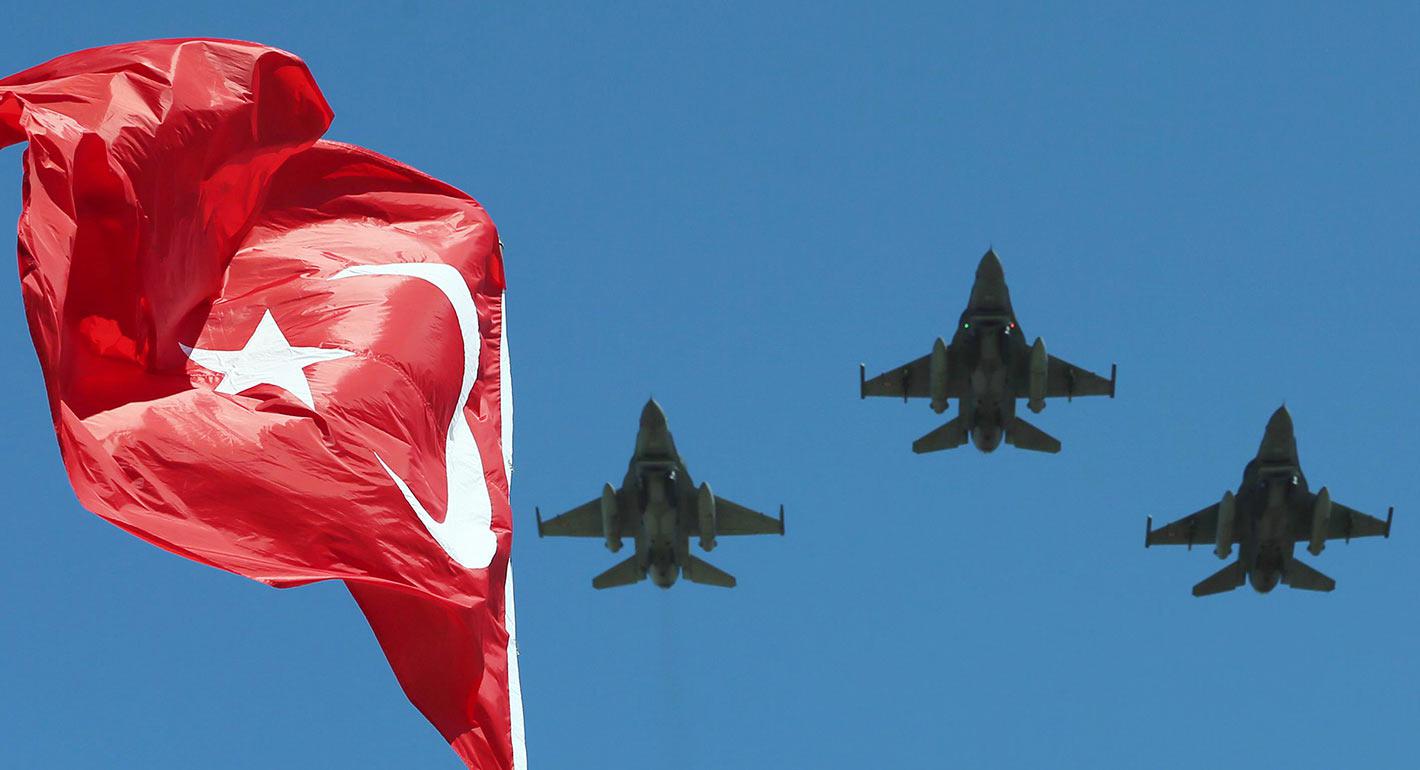
Turkey has been swift to implement its own brand of diplomacy during the coronavirus pandemic, including deliveries of medical supplies and plans for long-term cooperation on medical equipment. This cooperative diplomacy goes hand in hand with an assertive foreign policy, illustrated by military interventions and challenges to the legal order in the Eastern Mediterranean. While consistent with the government’s strategy for 2023—when Turkey will hold both a presidential election and celebrations of the country’s centennial—this policy is bound to create increasing difficulties for Ankara’s partners.
Turkey has been sending supplies of medical equipment to countries and regions chosen for a variety of strategic ends—whether to maintain stable ties (as with Italy, Spain, and the United Kingdom), further geopolitical interests (as with the Western Balkans and various African partners), or attempt to win favors (as with the United States). Using its long-haul military cargo planes, Turkey was able to promote these deliveries to 116 countries through ceremonies carefully choreographed by Turkish diplomats.
The country’s next step is to position itself as an alternative to China for supplying medical equipment and supplies to European countries, taking advantage of adaptive industry, especially within the defense sector. The diplomatic objective is clear: use the pandemic to support countries in need and improve Turkey’s image on the international stage.
The domestic opportunities Turkey sees, however, are quite different. Like other world leaders, Turkish President Recep Tayyip Erdoğan has pressed ahead with repression at home. The national government has clamped down further on opposition figures and dissenters, such as mayors from the left-wing Peoples’ Democratic Party, lawmakers and mayors from the social-democratic Republican People’s Party, lawyers, and journalists. After a special law was enacted to allow for the early release of prisoners to help contain the virus’s spread, mafia bosses and other violent criminals were prioritized while prisoners of opinion were left in jeopardy behind bars.
Neither urgent calls from the Council of Europe nor appeals from Amnesty International have derailed this political strategy. Prominent figures such as journalist Ahmet Altan, Kurdish politician and former presidential candidate Selahattin Demirtaş, and philanthropist Osman Kavala remain jailed only because they are seen as opposing the president. Moreover, a new law under discussion within the ruling parliamentary coalition—comprising Erdoğan’s conservative Justice and Development Party (AKP) and the far-right Nationalist Movement Party—aims to prevent vote transfers that would help stave off competing coalitions of new political parties formed by former AKP deputy prime minister Ali Babacan and former AKP prime minister Ahmet Davutoğlu. For Erdoğan and his allies, political dominance remains the objective.
Meanwhile, Turkey has pushed itself further onto the global stage. First, it is building a more powerful defense sector to beef up its military forces. For example, the country’s military industry has been promoting its high-altitude, long-endurance Bayraktar Akinci armed drone, a type of unmanned craft formerly made only by the United States and China; it will soon become a critical asset in the Turkish Air Force.
Second, Turkey is more than willing to project military might in Libya, Qatar, Somalia, and Syria and make its power felt across and beyond former Ottoman territory, in what it now considers its zone of influence. This policy involves challenging Russia in Syria, where Turkey seeks to avenge the humiliation inflicted last February by Russian and Syrian air forces on a Turkish battalion in Idlib Province, and in Libya, where Turkey’s recent military successes have earned it the moniker “kingmaker” from the New York Times. That said, the rivalry between Turkey and Russia in Libya is far from over.
Third, Turkey is challenging the Eastern Mediterranean order both by redefining maritime boundaries through a deal with Libya’s Government of National Accord and by conducting gas drilling operations in contested areas off Cyprus. Turkey is seeking to negotiate new rules in the region on the basis of one fait accompli after another. As Foreign Minister Mevlüt Çavuşoğlu said in May: “Turkey is here. You have to work with Turkey.”
Fourth, Turkey is resorting to provocation and even belittling. The Interior Ministry has targeted Greece by shepherding refugees to the border, and Erdoğan has gone so far as to call the Greek government “Nazis” when it has tried to turn them away. In official statements, the Turkish government has labeled the EU’s position on maritime borders a “repetitive and . . . barren discourse” and has alleged that France has become “the patron of [an] axis of malice,” having “fallen into a delirium” with Cyprus and Greece on regional disputes. It repeatedly has depicted the EU as a “failed” organization, especially during the coronavirus pandemic.
Overall, Turkey is angling for a return to prominence in its neighborhood. Despite hopes to the contrary, Turkey appears unlikely to alter its policy in Syria for the sake of mending ties with the EU. As one progovernment columnist recently explained, “The Turkish geopolitical power axis is now felt from the Persian Gulf to North Africa and the Red Sea, from the Balkans to the Caucasus and Central Asia.”
Turkey’s hostility to the EU comes as Erdoğan’s popularity wanes, Turkey’s domestic political malaise deepens, and the country’s economic outlook grows more dismal. In part, fiery foreign policy statements help hide domestic woes.
What may sound inconsistent to Western policymakers has a more compelling rationale in the Turkish context—shaped principally by the next presidential election, scheduled in principle for June 2023, ahead of the Republic of Turkey’s centennial that October. The president intends to surpass—and in some ways erase—Kemal Atatürk’s legacy, making the next election one he cannot afford to lose. The centennial must similarly affirm Turkey’s modernity and power and restore its influence in the former Ottoman arena.
To that end, the Turkish leadership’s critical decisions—from new hospitals, bridges, tunnels, and airports to a light aircraft carrier, new submarines, Turkish-manufactured armed drones, and foreign troop deployments—follow a single thread, that of a 2023 strategy.This outcome was not inevitable. Such a campaign could indeed have been implemented on the basis of different principles—whether an improved human rights record, deeper economic cooperation with Europe, or a stronger role for Turkey in NATO—but domestic political alliances and Erdoğan’s personal proclivities have pushed the country in the opposite direction.
In confronting the many problems Turkey raises for EU governments and the EU itself, some members of the European Council may be tempted to accommodate Ankara’s requests, while others will count on EU solidarity to block Turkey’s adverse moves. Given that Turkey is effectively governed by one-man rule, any positive overture the EU makes (assuming the European Council agrees) would reinforce and legitimize the Turkish system’s lack of rule of law and would likely be construed in progovernment circles as support for Erdoğan.
Among the many questions worth asking, one demands of Europe a considered answer: What would be the EU’s long-term interest in shouldering an autocracy on its doorstep? This question is especially striking for a country that conducts foreign policy at odds with that of the EU in the Western Balkans, the Maghreb, and Africa; undermines NATO; assaults its neighbors; and intervenes in EU politics.
For the immediate future, the EU has a strategic interest in adhering firmly to its principles: the rule of law, nonaggression, peaceful dispute resolution, and good neighborly relations. It will have to publicly articulate the limits implied by these principles, while maintaining an open dialogue with Turkey. A major reset in EU-Turkey relations may have to wait, but continuing to support debate, liberty, and freedom of thought in Turkey remains paramount.

Senior Fellow, Carnegie Europe
Marc Pierini is a senior fellow at Carnegie Europe, where his research focuses on developments in the Middle East and Turkey from a European perspective.
Recent Work
Marc Pierini
Marc Pierini
Carnegie does not take institutional positions on public policy issues; the views represented herein are those of the author(s) and do not necessarily reflect the views of Carnegie, its staff, or its trustees.

It should address the shortcomings of previous crisis communication efforts and adapt to the demands of frontier AI.

Lucy Luo

If the Russian-speaking community in Latvia cannot articulate their interests without being seen as disloyal, they could end up embracing a pro-Kremlin agenda.

Sergejs Potapkins

Washington’s decision to support some UN functions while letting others wither is pulling the organization apart at the seams.

Stewart Patrick, Theodore Zaritsky

Are Germany’s economic, industrial, and political struggles becoming a liability for the EU’s ability to rise to the geopolitical moment?

Rym Momtaz, ed.

Russia’s ruling party would have benefited from Putin appearing as its distant patron, but as an active frontman imposing his views on the public, he has done nothing but harm both the party’s election campaign and the ruling system overall.

Andrey Pertsev