

Commentary
A leak of Russian gas price data helps establish that China is paying Russia far less than Central Asian countries and Gazprom’s former European customers.
Sergey Vakulenko
{
  "authors": [
    "Rachel Kleinfeld",
    "Aaron Sobel"
  ],
  "type": "legacyinthemedia",
  "centerAffiliationAll": "dc",
  "centers": [
    "Carnegie Endowment for International Peace"
  ],
  "collections": [
    "U.S. Democracy in Comparative Perspective"
  ],
  "englishNewsletterAll": "democracy",
  "nonEnglishNewsletterAll": "",
  "primaryCenter": "Carnegie Endowment for International Peace",
  "programAffiliation": "DCG",
  "programs": [
    "Democracy, Conflict, and Governance"
  ],
  "projects": [],
  "regions": [
    "North America",
    "United States"
  ],
  "topics": [
    "Political Reform",
    "Democracy",
    "Global Governance",
    "Foreign Policy"
  ]
}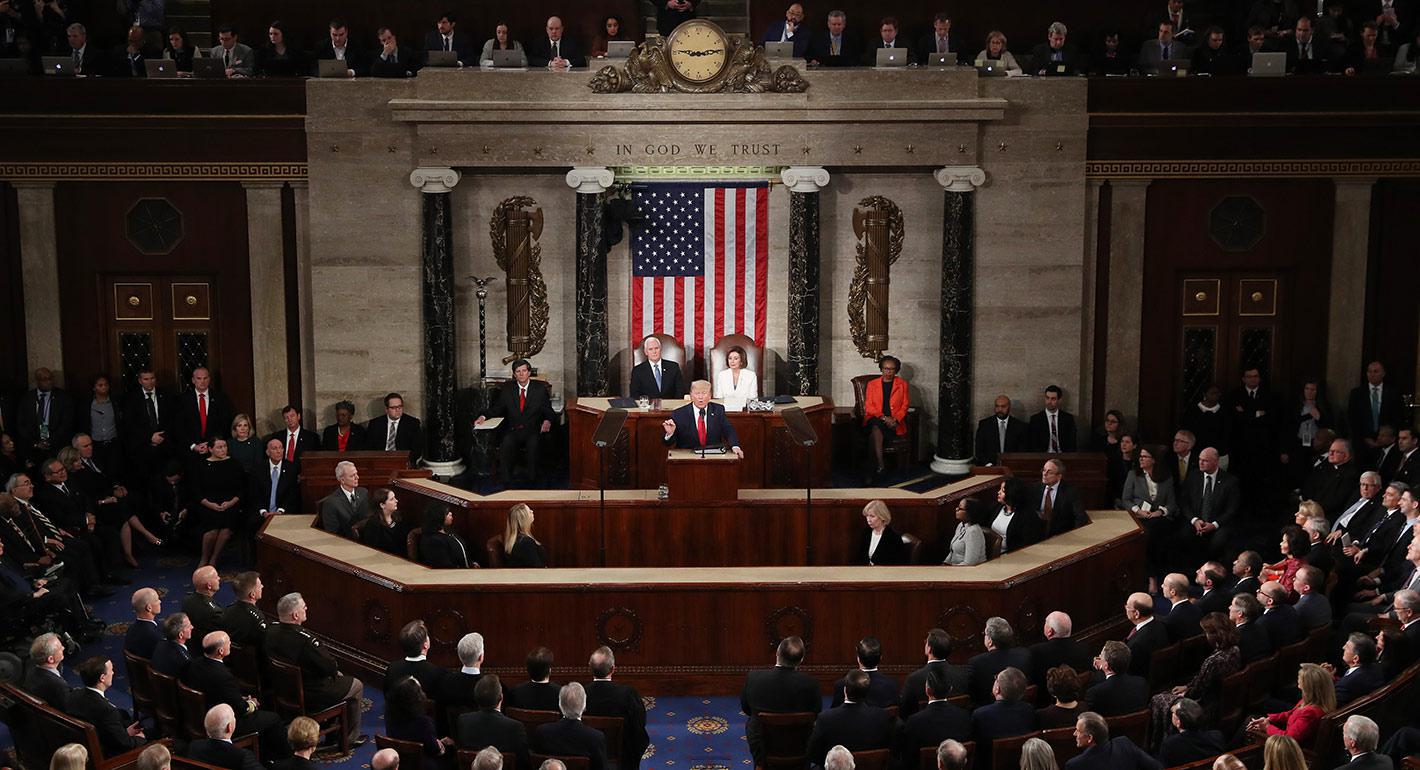
Source: Getty
How can we heal our country’s toxic polarization? Here are seven research-backed ideas for pundits, politicians, reporters and regular citizens to bring down the temperature.
Source: USA Today
Few countries face polarization as deep as America’s.
Democrats and Republicans used to disagree on policy issues — that’s the normal, useful tension that drives democracy. Today, each side fears the other will destroy the nation if they achieve power. Partisanship becomes equated with patriotism, and destroying the other side becomes the ultimate goal. This is how democracies fall apart.
How can we heal our country’s toxic polarization? Here are seven research-backed ideas for pundits, politicians, reporters and regular citizens to bring down the temperature.
1. Call out your own party. Humans are social creatures — we want to belong, and are highly attuned to popularity. We look to those with status to tell us what it takes to be part of the in-crowd.
That means if politicians, pundits and ideological leaders stand vocally against polarizing and hateful language and actions (as Virginia’s Republican leadership did by declaring they wanted no “white supremacist garbage” at their gun rally), it can change partisans’ perceptions, by making such behavior appear unacceptable to that group.
Professors at New York University, Harvard and UCLA have found that it is most influential to criticize one’s own “tribe,” since critiquing one’s own group signals what is acceptable to group members in a way that potshots at the other side doesn’t.
2. Avoid bad jokes. You might never dream of condoning partisan murder, but you might still share a really funny meme that makes the point. Watch it: jokes have a particularly strong effect on normalizing prejudice — far more than an overtly prejudiced argument.
Particularly dangerous are jokes that employ violent rhetoric or dehumanize by comparing people to animals or insects. A slew of research shows that dehumanizing language removes inhibitions to perpetrating violence, especially when the language cultivates pre-existing grievances and the speaker is respected by his or her group.
3. Make social media kinder. You may not be able to alter someone’s deeper beliefs, but there are three ways regular people on social media can get others to remove hateful messages, reduce the spread of hateful memes, and curb prejudiced or polarizing speech.
First, reminding users that online speech has real-world, off-line consequences (both to the writer, since employers can see posts, as well as to the person or group targeted) can lead users to recant a post. Second, making a personal or empathetic connection with the speaker can have the same effect. Finally, humorous words or images that make fun of the original idea can also defuse the spread of hateful speech.
4. Downplay the fringes and highlight the median. Americans are more polarized emotionally than ideologically — we actually disagree on policy far less than people think.
Stunningly, a majority of Americans agree on the broad strokes of abortion, immigration and gun legislation.
Because partisans tend to have distorted views of who composes the other party and how many people believe stereotypical views attributed to that party, providing real information that overturns these beliefs can reduce polarization.
5. Emphasize disagreement within parties. Reminding people that partisans have a range of opinions can dial back polarization. Immigration policy can be framed as left versus right, or as a complex issue that pits some right-wing business owners against others, some left-wing unions against more progressive activists, established immigrants against newer arrivals, and so on.
The Difficult Conversations Lab at Columbia University found that when people read nuanced articles on policy issues that underscored this kind of intra-party disagreement, their conversations with people from the other party were of higher quality.
6. Help others imagine empathy. Helping people to imagine a disliked group in an empathetic way can reduce malicious beliefs about that group. Thus, stories that encourage people to take the perspective of or empathize with the other party can reduce people’s prejudice.
Research in Europe and America on immigration found that even stories that simply linked immigrants to cultural issues, such as cooking, rather than border-crossing, decreased negative attitudes, while stories that linked immigrants to crime were polarizing.
7. Avoid repeating misinformation, even to debunk it. Repetition leads our brains to think things are true, regardless of the accuracy of the information being repeated. This tendency is even stronger when people want to believe a piece of false information, because our brains seek out information we want to hear.
So, if people read that “Obama is not a Muslim,” many will remember “Obama is Muslim, maybe?” The best way to avoid deepening misinformation is to simply state alternative information: “Obama is Christian.”
Many hoped the coronavirus pandemic would unite us. Instead, deep divisions over race and the role of government are intensifying and could even lead to political violence.
The polarization we face today isn’t just about believing the other side is wrong. Partisans now see opposition party members as malevolent, immoral forces.
Can America fix itself? The stakes are high. As a start, let’s give these seven ideas a try.

Senior Fellow, Democracy, Conflict, and Governance Program
Rachel Kleinfeld is a senior fellow in Carnegie’s Democracy, Conflict, and Governance Program, where she focuses on issues of rule of law, security, and governance in democracies experiencing polarization, violence, and other governance problems.
Aaron Sobel
Former James C. Gaither Junior Fellow, Democracy, Conflict, and Governance Program
Aaron Sobel was a James C. Gaither Junior Fellow with the Democracy, Conflict, and Governance Program.
Carnegie does not take institutional positions on public policy issues; the views represented herein are those of the author(s) and do not necessarily reflect the views of Carnegie, its staff, or its trustees.

A leak of Russian gas price data helps establish that China is paying Russia far less than Central Asian countries and Gazprom’s former European customers.

Sergey Vakulenko

China’s political future will be shaped between now and next October. As the Communist Party enters its intense “campaign season” to prepare for a major political transition in 2027, reading Beijing's actions and responses may become more difficult as domestic politics weigh on its behavior more than usual.

Damien Ma

The EU can impose sanctions but struggles to enforce them without the United States. With Washington increasingly disinterested in backing European interests, the bloc must now fend for itself.


Nicu Popescu, Tiago Antunes
Global and rising powers will need to engage with Africa’s priorities and agency in order to secure the continent’s increasingly attractive partnerships.

Fonteh Akum

Rubio’s recent visit brought welcome attention, but more capital requires governance changes that may be a hard sell for regional governments.

Jennifer B. Murtazashvili