

Commentary
Judy Dempsey
{
  "authors": [
    "Judy Dempsey"
  ],
  "type": "commentary",
  "centerAffiliationAll": "dc",
  "centers": [
    "Carnegie Endowment for International Peace",
    "Carnegie Europe"
  ],
  "collections": [
    "Europe’s Eastern Neighborhood"
  ],
  "englishNewsletterAll": "ctw",
  "nonEnglishNewsletterAll": "",
  "primaryCenter": "Carnegie Europe",
  "programAffiliation": "EP",
  "programs": [
    "Europe"
  ],
  "projects": [],
  "regions": [
    "Asia",
    "Russia",
    "Europe",
    "Eastern Europe",
    "Iran"
  ],
  "topics": [
    "Foreign Policy"
  ]
}
Source: Getty
The European Union's reactions to the crises in Belarus, Hong Kong, and Lebanon reveal a reluctance to abandon the status quo and defend its values. Authoritarian leaders must be relieved.
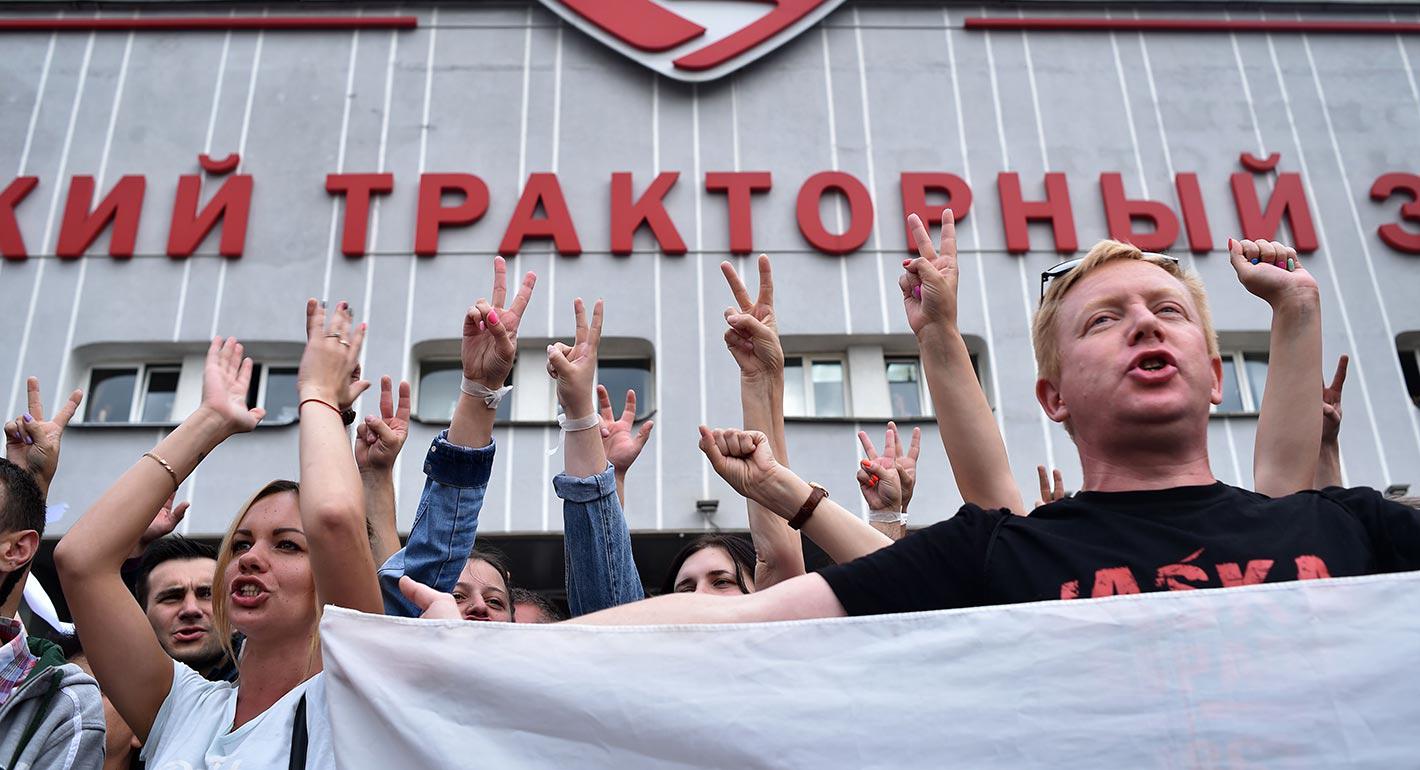
It’s an opportunity European foreign ministers should seize. When they virtually meet on August 14, they have a chance to agree on tough measures against the president of Belarus, Alexander Lukashenko. The strongman, in power since 1994, claimed an overwhelming victory in last Sunday’s election.
Forget the fact that the polls were rigged. Or how bags with ballots cast for the opposition candidate, Svetlana Tikhanovskaya, were taken away. Or how over 6,000 people have been arrested and two already have been killed by the country’s heavily armed security forces. And that Tikhanovskaya was forced to leave the country. She is now in neighboring Lithuania, whose leadership, particularly Foreign Minister Linas Linkevičius, has shown unflinching support for the pro-democracy demonstrations.
Other EU ministers should follow suit. They could support Belarusian civil society on social media. They could assist independent news outlets. They could financially help Belsat, the feisty television network operating from Warsaw. They could visit Minsk and speak to opposition leaders and the regime. This is not the time to stay away or remain ambiguous about Europe’s values.
But the EU’s record on confronting authoritarian leaders or corrupt regimes in its own backyard has been consistently weak. The bloc as a whole has opted not to rock the boat, and the member states have been highly divided over how to deal with such regimes.
Supporting the status quo was a policy most European governments pursued in the Middle East, where they propped up regimes that suppressed human rights and any independent opposition movements. The Arab Spring of 2011 exposed the shortsightedness of that policy. Yet the EU’s perceptions have still not fundamentally shifted.
For instance, European leaders rarely take to task Egyptian President Abdel Fattah el-Sisi for his record on governance and human rights. That has been the case even though Egyptian opposition figures have been silenced and activists have been imprisoned in appalling conditions and often have been tried before military courts. Many have disappeared altogether.
In Belarus, meanwhile, over the years pro-democracy activists have been imprisoned. The EU pursued a sanctions policy for a while, only to lift it in 2016 when Lukashenko freed some political prisoners. Yet the autocrat’s system of societal control and political power was kept intact.
In Hong Kong, China is using its new national security law to arrest those campaigning for democracy and in defense of the city’s special autonomy. While the United States has imposed sanctions on Chinese-backed Hong Kong leaders and the UK is expected to offer citizenship to some Hong Kong residents, the EU has not yet adopted such measures. Several European governments don’t want to upset their economic relations with China.
In Lebanon, which has been mired in endemic corruption and sectarian violence for several years, the security forces have beaten citizens campaigning for an end to this state of affairs. This repression follows the huge explosion at Beirut’s port in early August 2020 that killed more than 200 people and left 300,000 homeless.
In all these cases, the EU has opted for the status quo. In doing so, it has eschewed its commitment to values. Even if some EU leaders would argue they are pursuing their interests, this is a flawed argument. It is not in the interests of Europe to have authoritarian regimes as neighbors. Over time, such regimes are not sustainable or stable, as Belarus proves. Its citizens want the values that the EU professes to represent.
If their leaders won’t share power or respect human rights, sooner or later the citizens will try to change the system. This is what they are trying to do in Belarus. They need a response from Europe.
Josep Borrell, the EU’s foreign policy chief, said the elections in Belarus were “neither free nor fair.” The EU, he added, could conduct “an in-depth review of . . . [its] relations with Belarus.” He hinted at sanctions. That’s hardly going to rattle Lukashenko. And while Borell called on the Belarusian leadership to “initiate a genuine and inclusive dialogue with broader society to avoid further violence,” at the moment it is hard to see that happening. Judging from the use of force and propaganda, Lukashenko is unwilling to consider a dialogue. That is a common trait of authoritarian leaders. The longer they are in power, the more likely it is that the very idea of a dialogue is absent. Instead, repression replaces the language of negotiation or compromise.
The peaceful alternative—making the transition from an autocratic regime to a democracy, which is messy, difficult, and dangerous—is not on Lukashenko’s agenda. For some European governments, dealing with the status quo is predictable and stable. History, however, has repeatedly shown this to be a disingenuous argument. Look at how the communist systems across Eastern and Central Europe collapsed in 1989.
Lithuanian President Gitanas Nausėda has suggested that Belarus establish a national council for dialogue with citizens and society. Others, such as a major German trade lobby, have proposed a roundtable, similar to what took place in Poland in 1989 when the ruling Communist party negotiated a peaceful transition with the independent Solidarity trade union movement.
No doubt Lukashenko—but also Russian President Vladimir Putin, who faces big anti-Kremlin demonstrations in the far eastern city of Khabarovsk—would oppose such an idea. Lukashenko’s hope is that he can sit this out. But the genie is out of the bottle. Citizens have found their voices and are speaking out. Will European foreign ministers unambiguously answer them?

Nonresident Senior Fellow, Carnegie Europe
Judy Dempsey is a nonresident senior fellow at Carnegie Europe
Recent Work
Judy Dempsey
Judy Dempsey
Carnegie does not take institutional positions on public policy issues; the views represented herein are those of the author(s) and do not necessarily reflect the views of Carnegie, its staff, or its trustees.
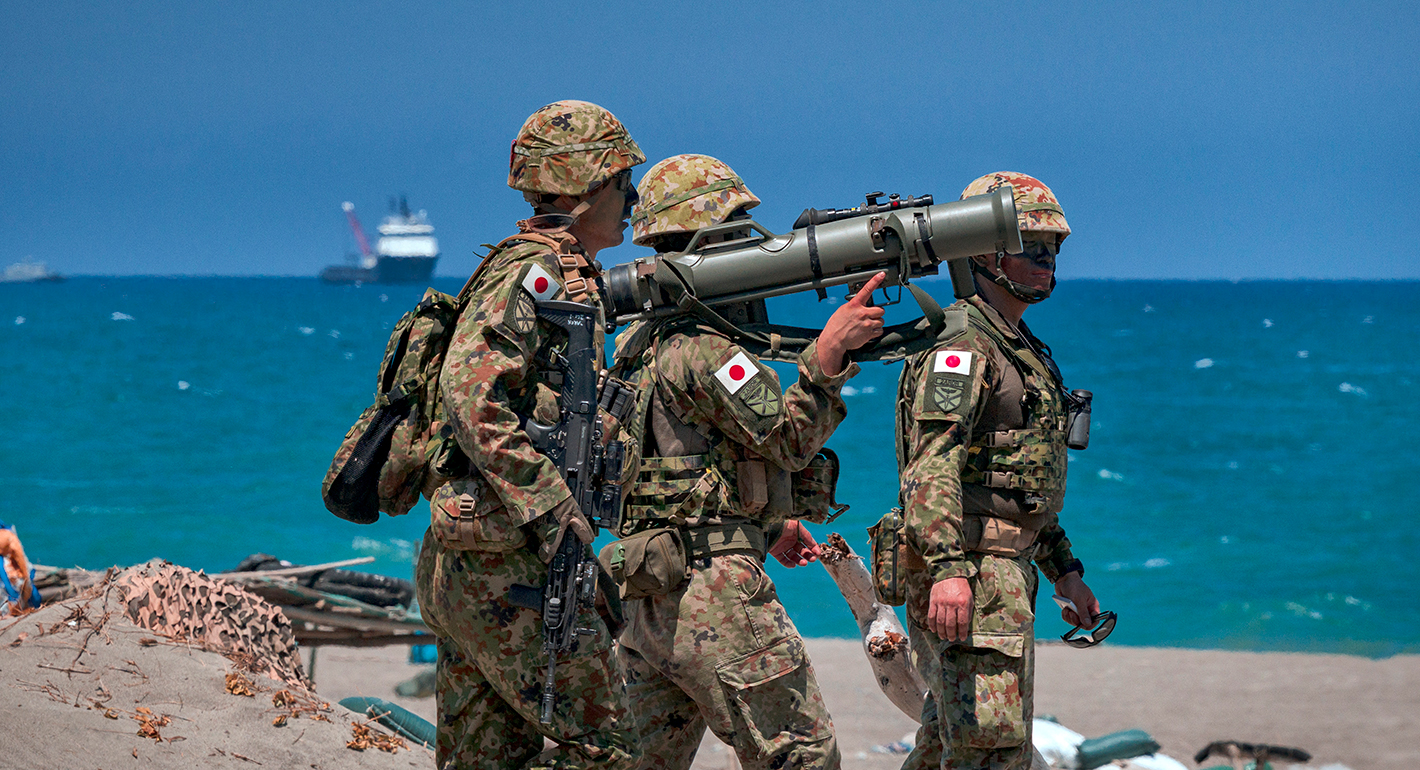
Japan’s revision of its three strategic documents reflects an intention to keep the United States engaged in the region while Japan fills any vacuums of U.S. power to preserve the Indo-Pacific order.
Ryo Sahashi

Chinese biotech companies have been on the receiving end of U.S. economic coercion. Yet their responses have differed significantly because firm and state interests are not uniformly aligned. For Washington, treating all Chinese tech firms the same, irrespective of their actual interests, risks pushing them farther into Beijing’s corner.

Xue Gong
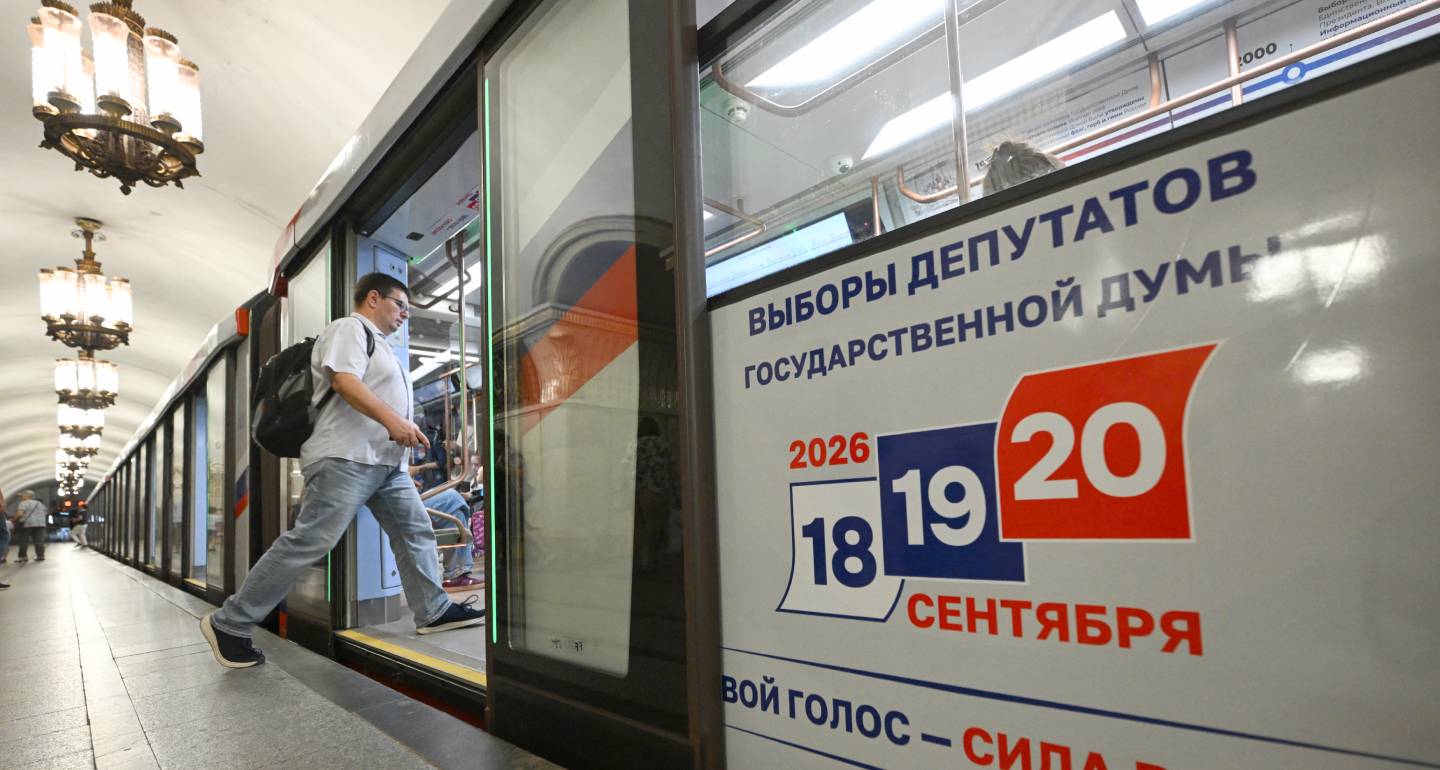
In the discussions made possible by the State Duma election campaign, one question is being asked more and more loudly. “What next?”

Andrey Pertsev
Over the past decade, China has moved from marginal player to major producer of all things batteries. The United States, Europe, and others are aiming to balance the market.

Milo McBride
While the Nazis rushed ahead in a revolutionary fervor, Russia’s modern crusaders against enemies of the state work methodically, giving their targets time to adjust to restrictions before closing the loopholes.

Leonid Bershidsky