

Paper
James M. Acton, Ankit Panda
{
  "authors": [
    "Ankit Panda"
  ],
  "type": "legacyinthemedia",
  "centerAffiliationAll": "dc",
  "centers": [
    "Carnegie Endowment for International Peace"
  ],
  "collections": [
    "Korean Peninsula"
  ],
  "englishNewsletterAll": "ctw",
  "nonEnglishNewsletterAll": "",
  "primaryCenter": "Carnegie Endowment for International Peace",
  "programAffiliation": "NPP",
  "programs": [
    "Nuclear Policy"
  ],
  "projects": [],
  "regions": [
    "East Asia",
    "North Korea"
  ],
  "topics": [
    "Nuclear Policy",
    "Arms Control"
  ]
}
Source: Getty
Preventing an inadvertent nuclear disaster on the Korean Peninsula will depend not only on Kim Jong Un upgrading his nuclear software but on the United States better understanding the choices and circumstances that have driven North Korea’s nuclear posture.
Source: Wall Street Journal
As Americans mark Thanksgiving this year amid the pandemic, North Korea will be recalling a special anniversary of its own. On Nov. 28, 2017, dictator Kim Jong Un oversaw the launch of the largest missile ever flight-tested by the world’s last Stalinist country. Called the Hwasong (or “Mars”) 15, the missile showed that North Korea is capable of striking any part of the continental U.S.—from Los Angeles to New York—with a thermonuclear weapon.
This article was originally published in the Wall Street Journal.

Stanton Senior Fellow, Nuclear Policy Program
Ankit Panda is the Stanton Senior Fellow in the Nuclear Policy Program at the Carnegie Endowment for International Peace.
Recent Work

James M. Acton, Ankit Panda
Ankit Panda
Carnegie does not take institutional positions on public policy issues; the views represented herein are those of the author(s) and do not necessarily reflect the views of Carnegie, its staff, or its trustees.

China’s political future will be shaped between now and next October. As the Communist Party enters its intense “campaign season” to prepare for a major political transition in 2027, reading Beijing's actions and responses may become more difficult as domestic politics weigh on its behavior more than usual.

Damien Ma
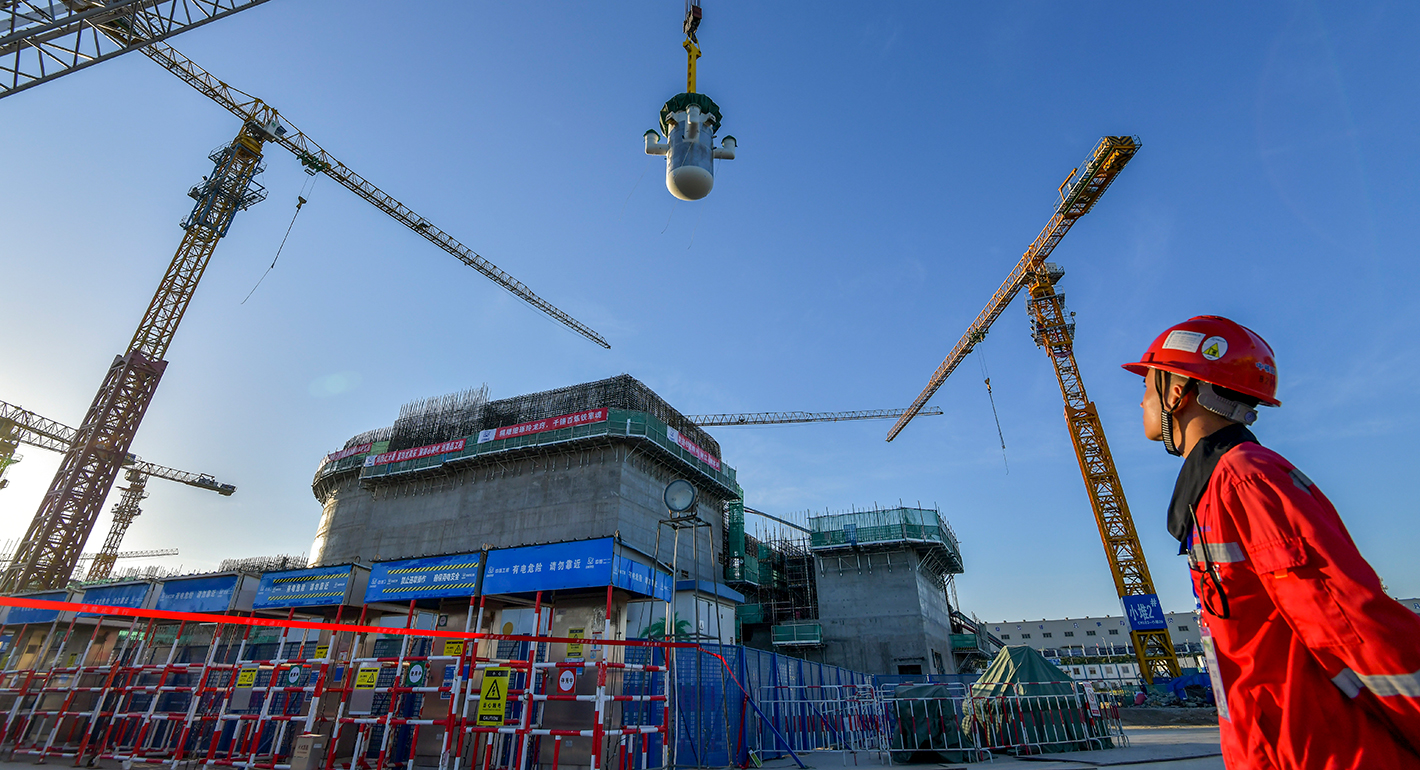
China has showcased its engineering prowess with small modular reactor demonstration projects. But turning these technological achievements into commercial success will be a greater challenge.

Tong Zhao

The acknowledgment has sparked fears of a new arms race with China and Russia.

Chris O’Meara

The nuclear relationship between China and the United States is increasingly shaped by widening perception gaps rather than deliberate strategic design.
Tong Zhao

A look at why states without nuclear weapons are seeking naval nuclear propulsion, whether they can legally and technically deliver it, what it will cost them, and what responsible stewardship of the capability would look like.

Jamie Kwong