• Research
  • Emissary
  • About
  • Experts
Carnegie Global logoCarnegie lettermark logo
DemocracyIran
  • Donate
{
  "authors": [
    "Steve Feldstein"
  ],
  "type": "commentary",
  "centerAffiliationAll": "dc",
  "centers": [
    "Carnegie Endowment for International Peace"
  ],
  "collections": [],
  "englishNewsletterAll": "democracy",
  "nonEnglishNewsletterAll": "",
  "primaryCenter": "Carnegie Endowment for International Peace",
  "programAffiliation": "DCG",
  "programs": [
    "Democracy, Conflict, and Governance"
  ],
  "projects": [],
  "regions": [
    "Southern, Eastern, and Western Africa"
  ],
  "topics": [
    "Security"
  ]
}
Source: Getty

Commentary

Ethiopia’s Conflict in Tigray Presents Hard Decisions

Ethiopia’s leader has gained the upper hand in confronting an uprising in the country’s northernmost region of Tigray. But his tough actions have unleashed a torrent of problems.

Link Copied
By Steve Feldstein
Published on Dec 1, 2020
Program mobile hero image

Program

Democracy, Conflict, and Governance

The Democracy, Conflict, and Governance Program is a leading source of independent policy research, writing, and outreach on global democracy, conflict, and governance. It analyzes and seeks to improve international efforts to reduce democratic backsliding, mitigate conflict and violence, overcome political polarization, promote gender equality, and advance pro-democratic uses of new technologies.

Learn More

After several weeks of fighting, Ethiopia’s federal government seized control of the Tigray region’s capital city of Mekelle and declared victory over the ruling Tigray People’s Liberation Front (TPLF) on November 28. Yet, despite Ethiopian Prime Minister Abiy Ahmed’s apparent military success, troubling questions remain regarding what happens next—and whether peace and stability can be restored to the region.

There is little question that the TPLF leadership has carried out a strategy of provocation meant to undermine and weaken Abiy. Their disdain for him and their corresponding resentment of their diminished political stature is well known. The TPLF’s armed attack against the Ethiopian army’s northern command headquarters in early November forced Abiy’s hand. If Abiy had not responded forcefully to the TPLF’s latest incursion, not only would he have risked emboldening a key rival, but it would have signaled weakness to other groups desiring further autonomy. Unfortunately, Abiy now finds himself embroiled in a conflict that has killed hundreds—possibly thousands of people—without a clear resolution in sight.

Not Such a Peacemaker After All

Abiy’s actions reveal a troubling pattern that the international community (including the Norwegian Nobel Committee) has chosen to overlook. In particular, Abiy has started to embrace many of the same repressive tactics used by prior regimes in Ethiopia. While his freeing of political prisoners and liberalization agenda have engendered real reforms in the country, more recently there has been a worrying regression. The government’s crackdown following the assassination of Oromo singer and activist Hachalu Hundessa—which included locking up prominent opposition figures such as Jawar Mohammed, Bekele Gerba, and Eskinder Nega—reflects a growing trend of coercion.

The military’s continued operation in the western Oromia region, entailing widespread imprisonments and a persistent internet shutdown, provides further evidence that Abiy’s peacemaker reputation is exaggerated. Ultimately, Abiy is more than willing to use force and coercion to accomplish his aims and ensure his political survival. The international community should be clear-eyed about his motivations.

Three Ways the International Community Can Help

The coming weeks will be critical to determining Ethiopia’s trajectory and mitigating the worst harms. The international community should consider the following steps:

  1. Call out the government’s alleged targeting of ethnic Tigrayans, including those who are being detained or harassed outside of Tigray. There are credible reports, highlighted by the UN’s special advisor on the prevention of genocide, that the government is rounding up individuals across the country and implementing “targeted attacks against civilians based on their ethnicity or religion.” While government representatives have taken pains to depict the current activities as a law enforcement operation focused on apprehending ninety-six TPLF military generals and officials, the facts on the ground indicate otherwise. The more the perception grows that Abiy is targeting ethnic Tigrayans as a whole, rather than conducting limited operations against the TPLF’s leadership, the harder it will become to convince Tigrayans that they have a viable future in the country.
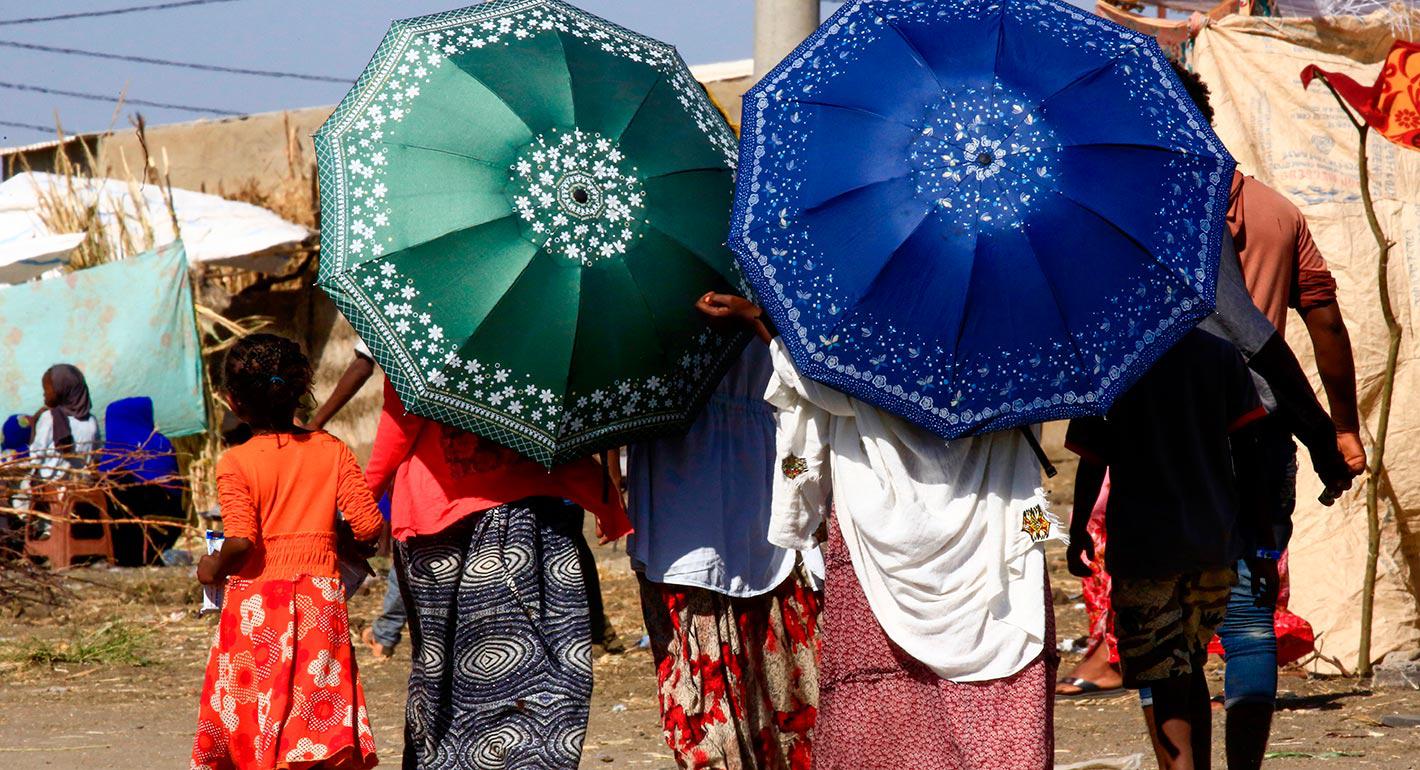
  2. Press Ethiopia’s government to end its communications blackout and restore humanitarian access to Tigray. One of the most troubling aspects of the military’s operations in Tigray is how little information is known about the scale of casualties and the scope of humanitarian need. Since November 4, the government has implemented a full shutdown of internet and phone communications and has denied humanitarian access to affected areas. As the shutdown persists, not only does this make it impossible for organizations like the International Committee of the Red Cross to ascertain where there is humanitarian need or to assess the damage accrued from the fighting, but it also prevents civilians from requesting urgent medical assistance. It is striking that in the aftermath of the Mekelle operation, journalists are unable to answer basic questions—the amount of civilian casualties, the level of physical destruction, or even whether fighting continues in certain areas. The communications blackout also enables violations of international humanitarian law to continue (there are credible allegations of war crimes committed by both TPLF units and government forces) with reduced prospects for future accountability.
  3. Push Abiy toward de-escalation. The longer Abiy drags out military operations, the likelier Tigray could metastasize into an even graver humanitarian crisis. While political survival is at the forefront of Abiy’s considerations, he has broadly staked his international reputation on being a reform-minded innovator who will usher in needed change to Ethiopia. A key issue is convincing Abiy to de-escalate the conflict —to bring military operations to a close and turn his attention to fostering reconciliation. The Ethiopian army’s convincing victory in Mekelle provides Abiy with a valuable off-ramp to pivot back to his reform agenda. If he doesn’t take advantage of this moment, he risks undermining Ethiopia’s fledgling economy, fostering a prolonged humanitarian crisis, getting stuck in a protracted armed conflict, and destroying his international reputation (not to mention imperiling millions of dollars in international aid, as the EU is threatening).

In other words, Abiy needs to be realistic about his end game. What can he realistically achieve? What are his underlying objectives? How can he achieve those aims without undue damage to his reputation, political stature, or the country’s economy?

Abiy may have only just started to work through these issues. Trusted interlocutors in the international community can play a vital role in nudging him toward medemer—an Amharic word that means “coming together,” which Abiy promotes as his political philosophy—and away from continued confrontation.

About the Author

Steve Feldstein

Senior Fellow, Democracy, Conflict, and Governance Program

Steve Feldstein is a senior fellow at the Carnegie Endowment for International Peace in the Democracy, Conflict, and Governance Program. His research focuses on technology, national security, the global context for democracy, and U.S. foreign policy.

    Recent Work

  • Article
    The Unintended Consequences of Iran’s Asymmetric Strategy and America’s AI War

      Steve Feldstein

  • Q&A
    What We Know About Drone Use in the Iran War

      Steve Feldstein, Dara Massicot

Steve Feldstein
Senior Fellow, Democracy, Conflict, and Governance Program
Steve Feldstein
SecuritySouthern, Eastern, and Western Africa

Carnegie does not take institutional positions on public policy issues; the views represented herein are those of the author(s) and do not necessarily reflect the views of Carnegie, its staff, or its trustees.

More Work from Carnegie Endowment for International Peace

  • Commentary
    Carnegie Politika
    Is Belarus Really Set to Return to the Ukraine War?

    By reminding the world that Lukashenko is a threat to NATO and Ukraine, Kyiv is trying to return the focus to why the Belarusian regime needs to be contained rather than rewarded.

      Artyom Shraibman

  • Recruit polices vow as they join in the police at Beijing Public Security Bureau on February 18, 2011 in Beijing, China. (
    Paper
    China’s Police and Security Cooperation Agreements

    China’s Ministry of Public Security is often portrayed as a domestic law enforcement agency, but it is also a global security actor. This paper explores how MPS has used international law enforcement and security cooperation agreements—over 200 since 2006—to advance China’s vision of security in a changing global environment.  

      • Sheena Chestnut Greitens

      Sophie Zhuang, Sheena Chestnut Greitens, Cameron Waltz

  • Photo of garment workers sewing jeans in Kenya.
    Article
    The Strategic Stakes of AGOA Reform and Renewal

    Strengthening U.S.-Africa trade and advancing U.S. interests aren’t conflicting goals.

      • Tyler Beckelman
      • Kholofelo Kugler

      Tyler Beckelman, Kholofelo Kugler

  • Commentary
    Can Europe Compete with the United States and China?

    Between the United States’ market-driven approach and China's state-led industrial strategy, Europe is reckoning with how it can remain competitive in the global economy. But is Europe in danger of becoming a U.S. or China colony?

      Noah Barkin, Anu Bradford

  • Commentary
    Carnegie Politika
    Russian Market Sours for Belarusian State Companies

    Minsk’s faith in the future of its larger neighbor’s economy is fading as Belarusian firms in Russia see record losses.    

      Olga Loiko

Get more news and analysis from
Carnegie Endowment for International Peace
Carnegie global logo, stacked
1779 Massachusetts Avenue NWWashington, DC, 20036-2103Phone: 202 483 7600
  • Research
  • Emissary
  • About
  • Experts
  • Donate
  • Programs
  • Events
  • Blogs
  • Podcasts
  • Contact
  • Annual Reports
  • Careers
  • Privacy
  • For Media
  • Government Resources
Get more news and analysis from
Carnegie Endowment for International Peace
© 2026 Carnegie Endowment for International Peace. All rights reserved.