

Report
- +4
Christopher S. Chivvis, Jennifer Kavanagh, Sahil Lauji, …
{
  "authors": [
    "Jennifer Kavanagh"
  ],
  "type": "commentary",
  "centerAffiliationAll": "dc",
  "centers": [
    "Carnegie Endowment for International Peace"
  ],
  "collections": [
    "Renewing American Statecraft"
  ],
  "englishNewsletterAll": "americanStatecraft",
  "nonEnglishNewsletterAll": "",
  "primaryCenter": "Carnegie Endowment for International Peace",
  "programAffiliation": "ASP",
  "programs": [
    "American Statecraft"
  ],
  "projects": [],
  "regions": [
    "North America",
    "United States",
    "East Asia",
    "Japan"
  ],
  "topics": [
    "Security",
    "Military",
    "Foreign Policy"
  ]
}
Source: Getty
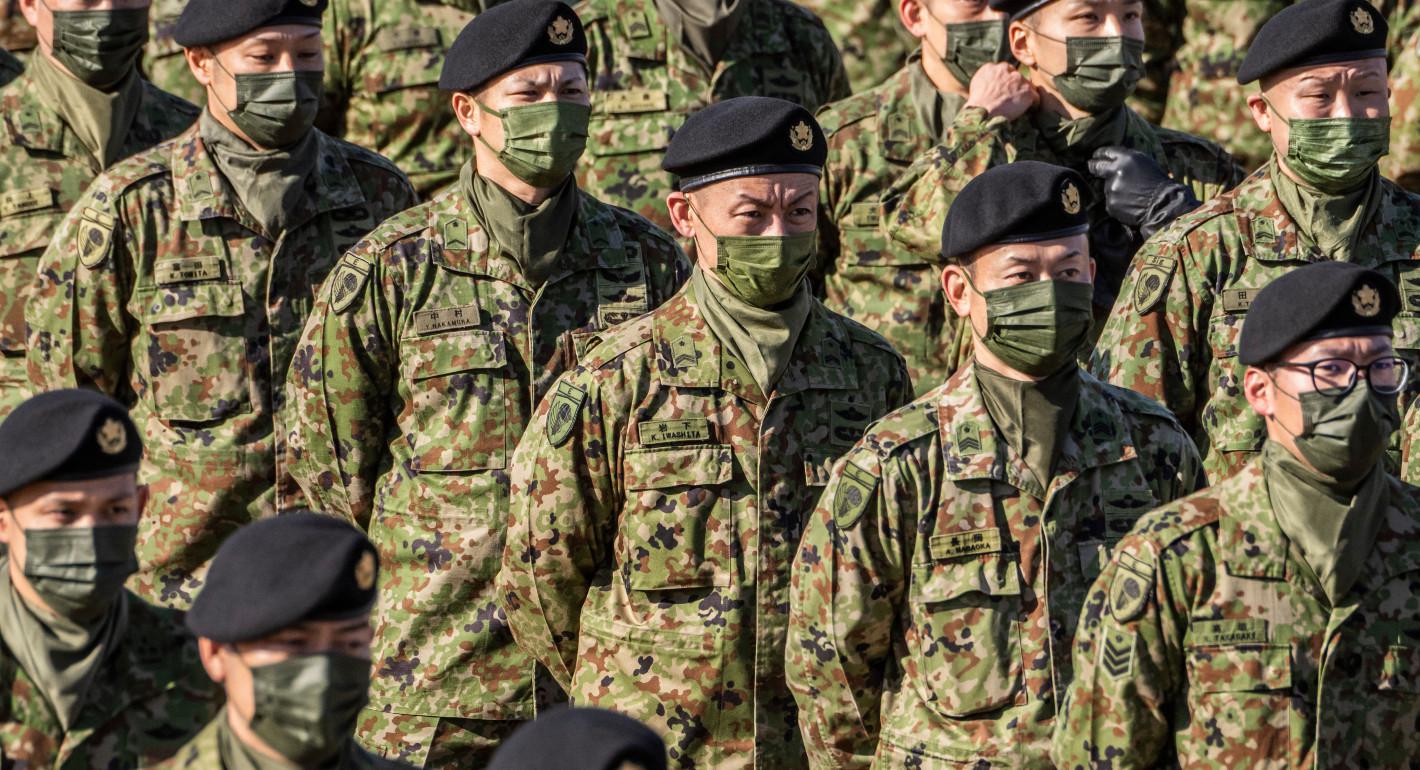
Despite Tokyo’s significant commitments to increased spending, its transition may be too slow to affect U.S. military planning or to reduce the U.S. regional defense burden.
Japan’s recent announcement that it plans to dramatically increase defense spending over the next five years was greeted with praise and relief by U.S. policymakers. But while some enthusiasm is warranted, Washington should keep its expectations in check.
Japan’s new commitments are undoubtedly significant. It intends to raise defense spending to 2 percent of GDP by 2027, or 60 percent over five years. This will give the country the third-largest defense budget in the world. Japan’s new national security strategy explains how it will take primary responsibility for its own defense within five years and assume a far more active role in Indo-Pacific security. For Washington, which is eager for more burden-sharing on efforts to deter Chinese aggression and respond to regional contingencies, these moves are encouraging: a Japan able to take responsibility for its self-defense would reduce demands placed on U.S. military forces in the region and allow the United States to focus and prioritize its investments in Asia more effectively.
However, the Japan Self-Defense Forces—while more capable by 2027 than they are today—will likely still be dependent on the United States in many ways and limited in their ability to contribute to any regional crises well into the 2030s. Given U.S. Defense and State Department expectations that China may consider taking aggressive military action against Taiwan or elsewhere in the theater on an accelerated timeline, possibly before the end of this decade, Japan’s transition may be too slow to affect U.S. planning for regional deterrence and contingency operations or to lessen the U.S. defense burden in the region.
Washington will need to keep the pressure on Tokyo to stick to and even expand its defense investment further—for example, by making U.S. military assistance to Japan conditional on continued, larger increases in Japan’s defense spending in coming years.
Japan faces a deep investment gap, and its currently planned budget increases are too small and gradual to address associated consequences in the near term. Over the past thirty years, Japan has maintained an annual defense budget of about 1 percent of its GDP. This is below the 2 percent NATO benchmark and even further from regional counterparts such as South Korea, India, and Taiwan, each of which averaged about 2.5 percent of GDP per year over this same period. Decades of low spending have left Japan’s defense force with aging physical infrastructure, low munitions stockpiles, old and insufficient air- and sealift and refueling capabilities, and too few personnel due to recruiting and retention issues.
Closing this investment gap will be difficult and take time. For example, the difference between Japan allocating 1 percent of GDP to defense rather than 2 percent from 2012–21 amounts to foregone spending on the order of $500 billion (in 2020 U.S. dollars). To fill this gap in the next five years, Japan would need to invest an additional 2 percent of GDP on top of planned increases just to offset one decade of underspending. An increase of this size would likely be politically unsustainable, but this comparison highlights how profound and long-lasting the effects of its low defense spending will be.
As it addresses shortfalls due to underspending, Japan will also need to build or acquire an extensive and expensive set of modernized and advanced systems, weapons, and infrastructure required for its self-defense against adversaries such as China and North Korea.
For example, Japan will need a reliable long-range strike capability and significantly increased numbers of long- and short-range air defense systems. U.S. Tomahawk missiles are likely to fill the long-range strike requirement in the near term, but Japan will also need to increase its supply of Type-12 missiles to bolster its defense against mobile naval targets for which Tomahawk missiles are ill-suited. Sizeable stocks of anti-aircraft and anti-ship munitions—which Japan has not typically maintained—will also be needed. Modernization of Japan’s amphibious capabilities and sea- and airlift assets will be essential for responding to Chinese aggression.
In terms of infrastructure, Japan will need to invest in advanced cyber and space capabilities, including new satellites. Airfields, ports, and highways require hardening and expansion to support more resilient operations. Resources to support enhanced capabilities and training for Japanese forces based in Southwest Japan and to stand up new command structures, including a permanent joint headquarters, will also be needed. Hardest of all, Japan will need to invest in rebuilding and restructuring its defense industrial base for indigenous production and export of arms.
This list of requirements is not complete, but it gives an indication of the enormity of demands Japan must fill if it is to take primary responsibility for its self-defense. For Japan to contribute credibly to regional contingencies like a defense of Taiwan, still greater investment—such as additional air defense to assist U.S. operations and sustainment and supply capabilities to enable logistical support—will be required.
Upgrades to and acquisition of new weapons and equipment, improvements to infrastructure, and reviving Japan’s defense sector will take years to complete, only yielding full benefits well-after 2027. Even with Japan’s new commitments, the United States should expect its defense burden in the Indo-Pacific to remain largely unchanged for some time.
This piece is part of the Renewing American Statecraft series.

Former Senior Fellow, American Statecraft Program
Jennifer Kavanagh was a senior fellow in the American Statecraft Program at the Carnegie Endowment for International Peace.
Recent Work

Christopher S. Chivvis, Jennifer Kavanagh, Sahil Lauji, …

Jennifer Kavanagh, Mariano-Florentino (Tino) Cuéllar
Carnegie does not take institutional positions on public policy issues; the views represented herein are those of the author(s) and do not necessarily reflect the views of Carnegie, its staff, or its trustees.

Understanding the climatic pain points is necessary for policymakers hoping to minimize the war’s negative environmental consequences.



Alejandro Martin Rodriguez, Joy Arkeh, Sarah Yerkes

Huawei pushed hard to enter the Egyptian data centers market, until the Americans made a better offer.

Angie Omar

Radical-right parties are expected to do well in upcoming elections in four of the EU's biggest member states. If successful, they could prevent the union from addressing key challenges ahead.

Stefan Lehne

The books, podcasts, and films that explain the world it made.

Andrew Leber
U.S. trading partners in Asia are closely watching the dispute for signs of how it may affect their own interests.

Barbara Weisel