

Paper
James M. Acton, Ankit Panda
{
  "authors": [
    "James M. Acton"
  ],
  "type": "commentary",
  "centerAffiliationAll": "dc",
  "centers": [
    "Carnegie Endowment for International Peace"
  ],
  "collections": [
    "Ukraine’s Long Shadow"
  ],
  "englishNewsletterAll": "ctw",
  "nonEnglishNewsletterAll": "",
  "primaryCenter": "Carnegie Endowment for International Peace",
  "programAffiliation": "NPP",
  "programs": [
    "Nuclear Policy"
  ],
  "projects": [],
  "regions": [
    "Russia",
    "Eastern Europe",
    "Ukraine"
  ],
  "topics": [
    "Nuclear Policy",
    "Nuclear Energy"
  ]
}
Source: Getty
The most acute threats to Zaporizhzhia have passed, at least for now, but the West should make greater efforts to wean itself off Russian nuclear exports.
A year ago, as Russian tanks rolled into Ukraine and seized the Chernobyl Nuclear Power Plant, I warned about the risks of an accident at Ukraine’s active nuclear reactors. Looking back, this concern seems prescient and also almost hopelessly naïve.
At that time, my main worry was that military operations outside Ukraine’s nuclear power plants would compromise their safety. For example, I was concerned (correctly, as it turned out) that attacks on Ukraine’s power grid could deprive reactors of the electricity they use for cooling, which would not spark an immediate accident but would strip away an important layer of safety protection. However, the idea that Russian troops might actually assault an operating nuclear power plant was one that I could not get my head around. “It seems exceedingly unlikely,” I wrote, “that Moscow would authorize deliberate attacks on these facilities.”
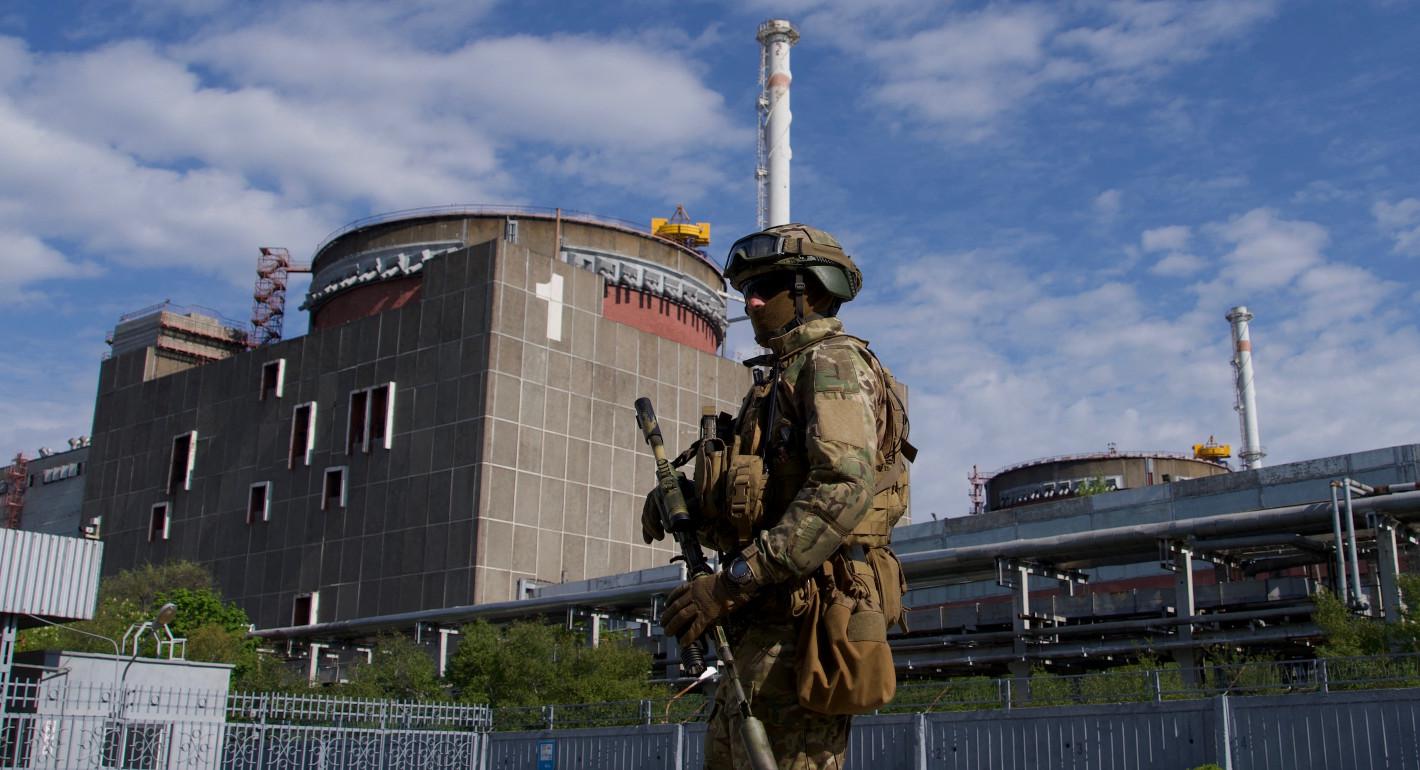
Just over a week later, on March 4, Russian forces shelled Zaporizhzhia Nuclear Power Plant, causing damage to a transformer and a fire in a training building, before seizing it. Over the next six months, as fighting raged around the plant, there were many times when a major nuclear accident—on the scale of the Fukushima disaster—may have been just one errant missile away.
The most serious moments of danger came when the plant lost external power because of shelling and had to rely on diesel generators for cooling. Ukraine and Russia blamed one another for each incident, and there was little independent evidence of which party was responsible. What is entirely clear, however, is the extent to which safety at the plant has been degraded by Russia’s occupation—as International Atomic Energy Agency (IAEA) inspectors risked their lives to document.
IAEA Director General Rafael Grossi has frequently expressed “grave concern” about the danger to Zaporizhzhia and assessed that all seven pillars of nuclear safety have been compromised there. Among Russia’s most egregious actions are the kidnapping of personnel, including the plant’s director; movement restrictions that prevent staff from being able to access safety critical systems; and the stationing of military personnel and equipment, including combat vehicles, inside the plant.
Russia’s state-owned nuclear power conglomerate, Rosatom, was instrumental to Russia’s attempt to take over the plant. The IAEA assesses that the presence of personnel from Rosatom and one of its subsidiaries, Rosenergoatom, “could lead to interference with the normal lines of operational command or authority and create potential frictions when it comes to decision-making.” Even more seriously, there are credible allegations that Rosatom employees “appeared to have directed some of the Russian artillery targeting the plant” and “may have been involved in the summary detentions of hundreds of the plant’s Ukrainian workers.”
The most acute danger has now passed—though perhaps only temporarily. Zaporizhzhia Nuclear Power Plant was placed into so-called cold shutdown in September, and it has remained there since—enabled in part by lower-than-expected electricity demand due to Europe’s unusually warm winter. As a result, a serious accident at Zaporizhzhia is currently unlikely, though it may rise again if Russia, which appears to have made preparations to steal the facility’s output, restarts it during this conflict. Moreover, although Ukraine’s other nuclear power plants are further from the fighting, there is undoubtedly an elevated risk of an accident at those.
The Ukrainian government has called for the United States and European Union to sanction Rosatom. Because Russia’s nuclear exports are a major earner for the country and help it to build long-term relationships with client states, such sanctions would also punish the Kremlin. Indeed, calls to sanction Rosatom predate its complicity in the takeover of Zaporizhzhia Nuclear Power Plant.
However morally justifiable sanctions on Rosatom would be, they are a nonstarter. The company is a key player in the nuclear fuel business and sells both goods and services to Europe and the United States. Ironically, the process of weaning itself off Russian fossil fuels has left Europe particularly reliant on Russian nuclear exports. For example, there are fourteen Russian-supplied VVER-440 reactors in the Europe Union that are entirely dependent on Russia for their fuel, since no non-Russian company can fabricate it. If Europe and the United States were to go cold turkey on nuclear imports from Russia, the global nuclear industry could not make up the shortfall.
The infeasibility of sanctions—which have become the primary and, all too often, only tool of U.S. foreign policy—does not obviate the need to act. The dependence of Europe and the United States on Russia for energy creates an obvious national security risk. Moreover, Rosatom’s actions should destroy international confidence in its nuclear safety credentials. Even if it didn’t aim to cause a nuclear accident, it has acted with such wanton disregard for safety that, in a domestic court of law, it would likely be found guilty of reckless endangerment.
What Europe and the United States need is a concrete plan to end their reliance on Rosatom. To this end, they should team up to foster a market-based alternative. They should identify by how much non-Russian conversion, enrichment, and fuel fabrication capabilities should be expanded so Russian capabilities are no longer needed. And they should ensure funding for that expansion by encouraging domestic reactor operators to agree to long-term contracts with non-Russian vendors and, where necessary, with public money.
This process is already underway. The U.S. company Westinghouse and the Spanish company Enusa are teaming up to fabricate fuel for VVER-440 reactors. While this partnership will address a critical vulnerability, it is only one element of the comprehensive program that will be needed to ensure that Europe and the United States can benefit from nuclear energy without Russia.
Realistically, developing a market-based alternative to Rosatom will probably take a decade or so, but the effort will be worthwhile. Sanctions imposed by Europe and the United States would be unlikely to reduce Rosatom’s exports to the rest of the world, but outcompeting Russia may well achieve this goal. U.S. and European firms are already competitive players in the nuclear fuel market and deserve to have a much better reputation than Rosatom. Expanding their capacity would both eliminate Europe’s and the United States’ dependence on Russia, and allow companies from other countries to choose not to deal with Rosatom. A market-based alternative would also punish Russia for its attacks on Zaporizhzhia Nuclear Power Plant and send the message to all states that such attacks will not be forgotten but will incur significant and long-term costs.
See more of Carnegie’s coverage of the Ukraine war’s long shadow.

Jessica T. Mathews Chair, Co-director, Nuclear Policy Program
Acton holds the Jessica T. Mathews Chair and is co-director of the Nuclear Policy Program at the Carnegie Endowment for International Peace.
Recent Work

James M. Acton, Ankit Panda
James M. Acton
Carnegie does not take institutional positions on public policy issues; the views represented herein are those of the author(s) and do not necessarily reflect the views of Carnegie, its staff, or its trustees.

In the discussions made possible by the State Duma election campaign, one question is being asked more and more loudly. “What next?”

Andrey Pertsev

A look at how public opinion influences the credibility of coercive nuclear threats,and how it enables and constrains strategies of nuclear coercion.

Lauren Sukin, Samuel Seitz
The DFC should focus on advanced, low-carbon energy sources, prioritizing areas where the United States has comparative advantages.

Noah Gordon, Liana Schmitter-Emerson

While the Nazis rushed ahead in a revolutionary fervor, Russia’s modern crusaders against enemies of the state work methodically, giving their targets time to adjust to restrictions before closing the loopholes.

Leonid Bershidsky
Media coverage suggests Kyiv’s fortunes have changed. That shift may be important, but it only goes so far.



Dara Massicot, Aaron David Miller, Andrew S. Weiss