

Commentary
In an interview, Ian Lustick and Eli Clifton discuss their new book on why a prominent ally has so much influence in America.
Michael Young
{
  "authors": [],
  "type": "scholarSpotlight",
  "centerAffiliationAll": "dc",
  "centers": [
    "Carnegie Endowment for International Peace"
  ],
  "collections": [],
  "englishNewsletterAll": "ctw",
  "nonEnglishNewsletterAll": "",
  "primaryCenter": "Carnegie Endowment for International Peace",
  "programAffiliation": "CC",
  "programs": [
    "Carnegie California"
  ],
  "projects": [],
  "regions": [
    "North America",
    "United States"
  ],
  "topics": [
    "Economy",
    "Climate Change",
    "Technology"
  ]
}
Source: Getty
California’s unique nature is derived as much from its influence, connections, and innovation as from its scale.
California is a unique creature. It is a subnational jurisdiction with an economy and population significantly larger than most nation-states. It has an ecosystem of innovation that impacts behavior patterns, economies, and governments around the world. And it’s a global actor, expanding the practice of subnational diplomacy. For all these reasons, the global issues shaping the twenty-first century affect—and are affected by—California and the West Coast of the United States.
To be sure, the scale—not to mention the style—of California necessitates attention by scholars and policymakers interested in issues such as the global economy, migration, democracy, technology, and climate change. If treated discretely, for example, the Californian economy would be the fourth-largest in the world, an economy powered by a workforce more than one-third of which was born outside of the United States. Meanwhile, California has long been a leader in climate action in terms of innovation and legislation and as a diplomatic actor in its own right.
But California doesn’t stand alone. Subnational diplomacy, connections, and networks, by their very definitions, suggest a greater sovereign, and California’s unique nature is derived as much from its influence, connections, and innovation as from its scale.
Carnegie centers and programs, and in particular the Asia and South Asia programs, have built out striking and important work that brings California into focus. Kenji Kushida’s research explores specific ways Japan and Silicon Valley can jointly drive new innovations. Matt Sheehan and Chung Min Lee are driving connections on issues like climate and technology between China and Korea, respectively, and California. Milan Vaishnav continues to add nuance to our understanding of the political and social behavior of Asian Americans in California, particularly around political behavior, policy preferences, identity and discrimination, civic and political engagement, and foreign policy.
The breadth of this work speaks to California’s connections but also to an obvious but important fact: the national capital does not sit in California, nor is the state synonymous with a single industry. It defies metonymy. And in that refusal can be found an important process point for research and policy development: communities, cities, states, and regions, as well as industry, all have an equal seat here.
This recognition applies to California, but also to wider development in the diplomatic landscape. Through collaboration and cooperation, cities have turned themselves into global voices on climate change, bringing urban voices into the G7, the G20, the United Nations Framework Convention on Climate Change, and Global Compact on Migration policy processes. Perhaps most importantly, California reflects the conclusion by the Intergovernmental Panel on Climate Change’s Sixth Assessment Report that there will be no limiting global warming to 1.5 degrees Celsius without collective action from a broad coalition that includes subnational actors, communities, and industry.
None of this is to say California sits easily in its influence and unique nature. To the contrary, for years, and until very recently, there was something resembling consensus that California's most visible industries—technology and entertainment—were intertwined with, and even advanced, not just U.S. interests but also liberal and democratic values. Consensus deserves to be questioned, and this one appears to have broken to pieces. All the more reason to build new conversations, relationships, and policies to further reconnect California, its communities, and its industries to global conversations. The new geopolitical moment and pressing global challenges, like climate change, require no less.
Carnegie does not take institutional positions on public policy issues; the views represented herein are those of the author(s) and do not necessarily reflect the views of Carnegie, its staff, or its trustees.

In an interview, Ian Lustick and Eli Clifton discuss their new book on why a prominent ally has so much influence in America.

Michael Young

Germany, India, and other middle powers can’t build frontier AI alone, and they risk being cut off if they depend on the United States or China. The way through is to build the capacity for a frontier sprint while hoping never to use it.


Anton Leicht, Sam Winter-Levy

The Plaza Accord was not an externally imposed punishment of Japan but part of a broader restructuring that Japanese economists and policymakers themselves recognized was necessary. Its effects were undermined, however, when Tokyo responded to the resulting slowdown with policies that exacerbated investment, credit expansion, and the very imbalances the adjustment was intended to resolve.

Michael Pettis

Trump has promised Belarus a massive potash deal. But Minsk is seeking something greater: restored Western transit and greater room for maneuver from Russia.

Balázs Jarábik
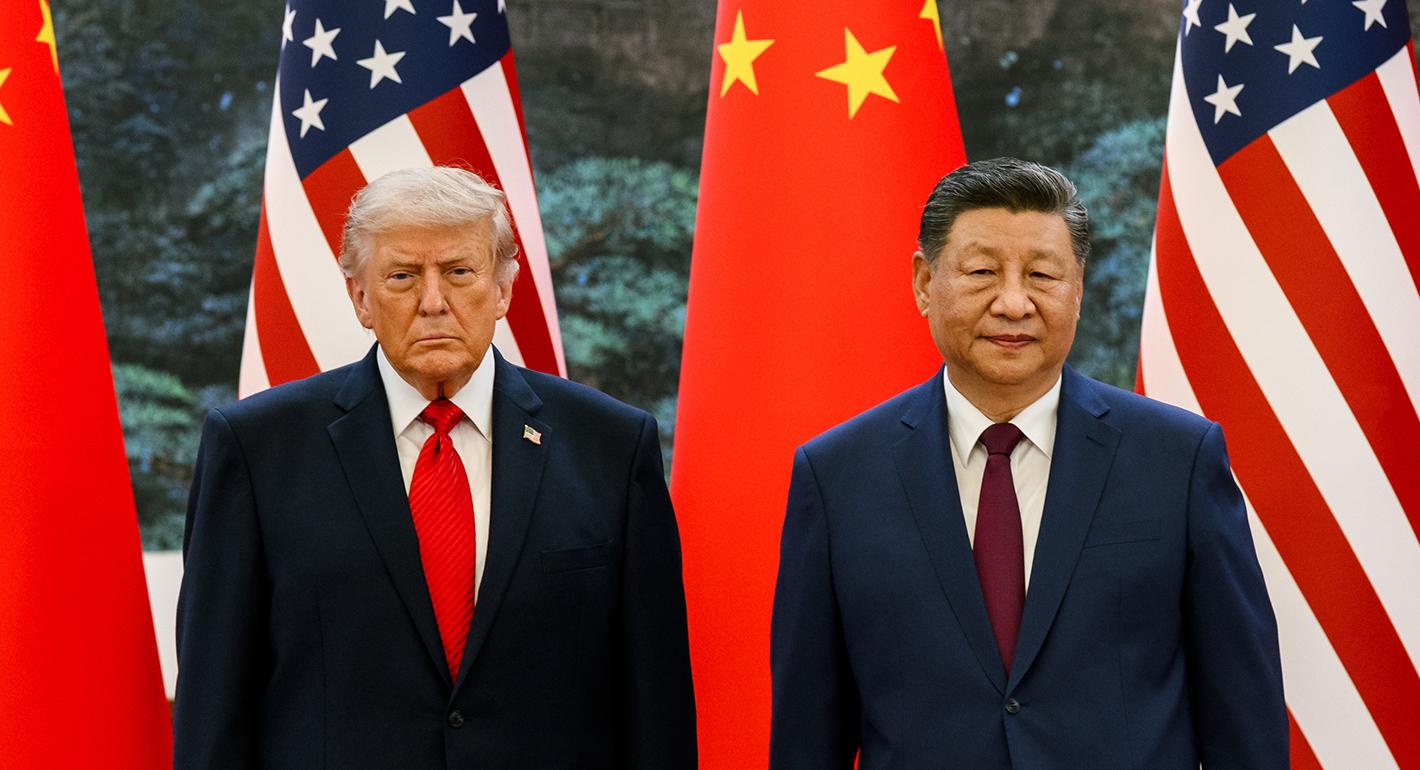
The real test may come after the leaders leave the room.



Sheena Chestnut Greitens, Oriana Skylar Mastro, Yukon Huang, …