

Commentary
Despite public disputes over trade and immigration, the strategic partnership’s foundations remain sturdy.
Sameer Lalwani
{
  "authors": [
    "Stefanie Kam"
  ],
  "type": "commentary",
  "centerAffiliationAll": "",
  "centers": [
    "Carnegie Endowment for International Peace",
    "Carnegie China"
  ],
  "collections": [
    "Carnegie China Commentaries"
  ],
  "englishNewsletterAll": "",
  "nonEnglishNewsletterAll": "",
  "primaryCenter": "Carnegie China",
  "programAffiliation": "",
  "programs": [],
  "projects": [],
  "regions": [
    "East Asia",
    "China",
    "Southeast Asia"
  ],
  "topics": []
}
Source: Getty
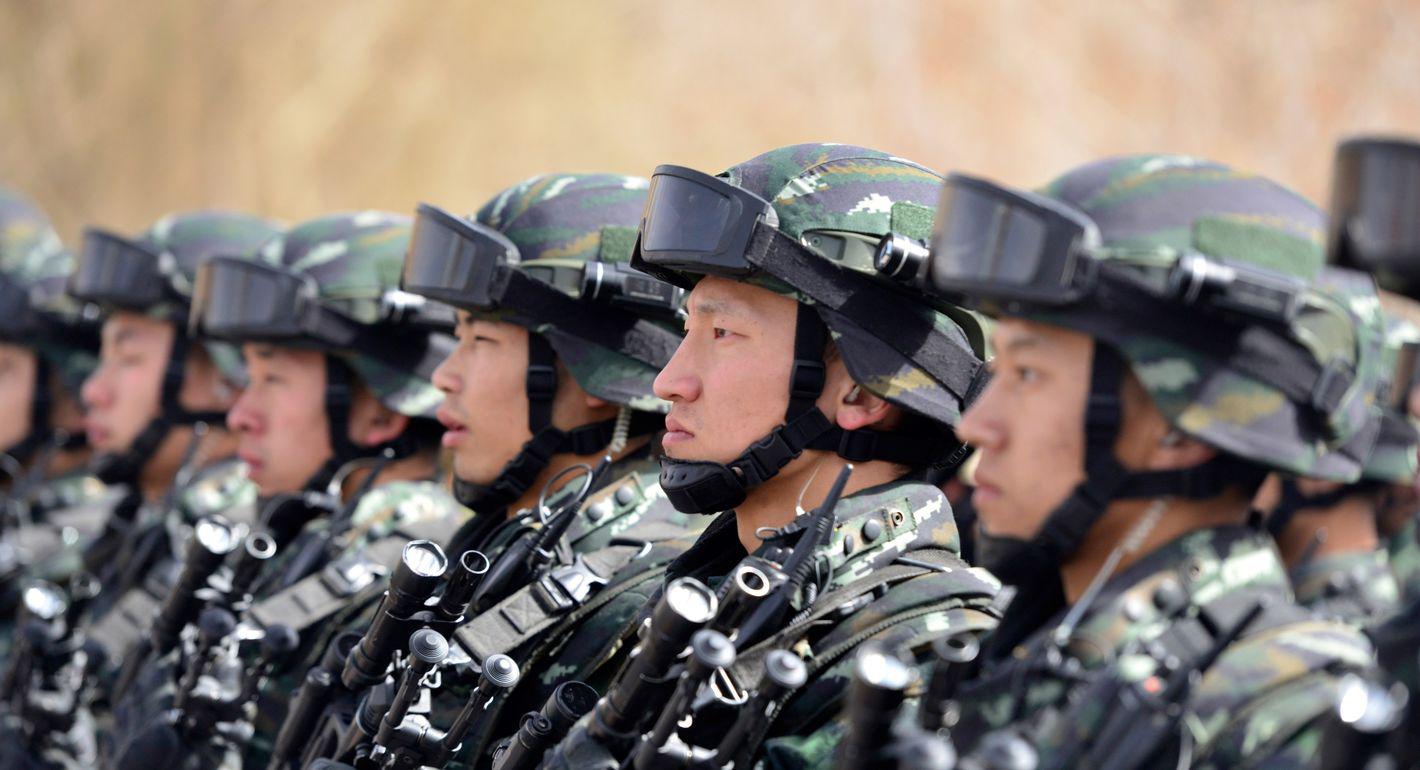
China’s counterterrorism efforts in Southeast Asia could change under the Global Security Initiative.
This publication is a product of Carnegie China. For more work by Carnegie China, click here.
In April 2022, President Xi Jinping announced the Global Security Initiative (GSI), outlining China’s overarching principles for managing global defense and security issues. Given the GSI’s emphasis on China’s international security engagement, its counterterrorism efforts in Southeast Asia could change under the initiative. China is seeking to increase exchanges and cooperation in the region, evident through efforts to expand university-level military and police academies in the region. In addition, China has built extensive security ties with Southeast Asian countries. These efforts have sparked some geopolitical anxieties about China’s growing security role in the region.
A dominant narrative is that China’s counterterrorism under the GSI will see Beijing advance a new security architecture to challenge the U.S.-led alliance system. Such a security architecture could facilitate the export of China’s security know-how, advance new norms for global security governance, and legitimize its domestic security model. However, this state-centric view overlooks the fact that China’s counterterrorism involvement in Southeast Asia often adapts to changes in the regional threat landscape as well as domestic political developments. While Southeast Asian countries are generally cautious about the GSI, some place more weight on counterterrorism cooperation with China due to their own security and political interests. In particular, changes in the regional threat landscape, variations in political regime type, and the need for Southeast Asian leaders to cement their domestic legitimacy have driven Southeast Asia’s receptivity to China’s counterterrorism efforts.
First, Southeast Asia’s changing threat landscape has influenced China’s initiatives. Over the last decade, the regional threat landscape shifted from one centered around al-Qaeda to one focused on al-Qaeda and the Islamic State, particularly with the emergence of Southeast Asia as a key focus for the latter’s plans. In a speech in April 2014, Xi made reference to the “interlocking” nature of threats, implying that external and internal threats to China’s security are inextricably linked. In the area of counterterrorism, shifts in threat perception have coincided with an increased exposure of China’s economic engagements in the region. In 2015, China’s counterterrorism law began to permit the People’s Liberation Army (PLA) to conduct overseas counterterrorism operations. The subsequent 2017 Marawi Siege by the ISIS-linked Maute group served to deepen Philippines-China counterterrorism cooperation. Under President Rodrigo Duterte, China pledged to provide the Philippines with counterterrorism assistance of RMB 150 million. During the Marawi Siege, Chinese counterparts supported the Philippine military’s urban battle against ISIS fighters. In the wake of the siege, Chinese and Filipino firms then formed a consortium for the rehabilitation of Marawi City.
Similarities in political regime type or shared security concerns with China also play a role in the type of counterterrorism cooperation between China and Southeast Asian host countries. Countries that place a premium on national security above human rights are more likely to engage in joint counterterrorism operations with China. In a military-run state like Myanmar, Chinese firms have provided capacity-building means to manage social and political instability issues within its own borders. The military junta has deployed Chinese technologies to surveil the population through facial recognition cameras, data management systems, and control centers. The 2015 Erawan Shrine bombing in Bangkok, which revealed a nexus between transnational human smuggling networks and militant Uyghur groups, also pushed the Thai government to cooperate more closely with China on counterterrorism training and capacity building.
Third, the need for Southeast Asian leaders to cement their domestic legitimacy has shaped variations in their response to Chinese pressure to extradite Uyghurs in the region. Since 2009, many Uyghurs have fled Urumqi via Pakistan and Afghanistan, Southeast Asia, and onward to Turkey. China has put pressure on these countries to extradite refugees, viewing them as dissidents or part of broader extremist networks. The range of responses by Southeast Asian governments—from ambivalence to support to resistance—reveals the mobilizational strength of domestic constituents in shaping the outcomes of Southeast Asian governments’ stance on the Uyghur extradition issue. For instance, the pushback by nongovernmental organizations and civil society movements in the Muslim-majority Indonesia is evident in the calls by groups like Muhammadiyah and Nadhatul Ulama that have been openly critical of Beijing’s stance toward the Uyghurs. Both of these groups have voiced concerns about the rights of Uyghurs, viewing them as innocent refugees. In 2018, Malaysia announced that it would not extradite eleven Uyghurs released from detention centers and would send them to Turkey instead of returning them to China.
Going forward, China’s counterterrorism efforts could change under the GSI, particularly as China seeks to expand the $60 billion China-Pakistan Economic Corridor into Afghanistan. Under the GSI framework, China’s counterterrorism approach in Afghanistan emphasizes respect for Afghanistan’s internal affairs, inclusive governance, support for humanitarian, refugee and anti-narcotics programs, and reconstruction efforts. China’s initiatives in Pakistan, moreover, could set a precedent for increased efforts to institutionalize cross-border counterterror security consultation in an effort to secure Belt and Road Initiative projects in the region. With increased development finance and direct investments in the Global South, Chinese interests have increasingly become embedded in the political, social, and security contexts in which they operate.
In sum, the state-centric narrative—that China’s counterterrorism cooperation with Southeast Asian countries through the GSI enables Chinese security actors to secure overseas investments, extend its extraterritorial reach to safeguard Chinese citizens, and expand its domestic counterterrorism efforts abroad—is an oversimplified framing. It is true that China has been expanding the use of international police liaisons, intelligence-sharing mechanisms, and bilateral extradition treaties.
Yet this incomplete picture of Chinese counterterrorism involvement in Southeast Asia glosses over endogenous and localized conditions, including the role of regional developments, political regime type, and the need for Southeast Asian leaders to cement their domestic legitimacy under pressure from grassroots civil society movements. Examining the role of regional and domestic developments in Southeast Asia paints a more balanced picture of Chinese involvement with Southeast Asian countries in the area of counterterrorism.

Stefanie Kam
Stefanie Kam is a research fellow at the China Program, Institute of Defense and Strategic Studies at Nanyang Technological University, Singapore.
Carnegie does not take institutional positions on public policy issues; the views represented herein are those of the author(s) and do not necessarily reflect the views of Carnegie, its staff, or its trustees.

Despite public disputes over trade and immigration, the strategic partnership’s foundations remain sturdy.

Sameer Lalwani

While the EU and European governments are embracing the much-lauded middle-power moment, this entails three difficult conundrums.

Richard Youngs

Europe is facing rising populism internally as well as external pressures from Russia, China, Turkey, and the United States.

Dimitar Bechev

The acknowledgment has sparked fears of a new arms race with China and Russia.

Chris O’Meara

The European Commissioner for Trade is headed to China. But after President Xi’s bridge-building visit to Washington, can a more isolated EU overcome Beijing’s stranglehold on critical raw materials? Who will blink first?

Rym Momtaz, ed.