

Commentary
Rahul Bhatia, Konark Bhandari
{
  "authors": [
    "Rahul Bhatia"
  ],
  "type": "commentary",
  "centerAffiliationAll": "",
  "centers": [
    "Carnegie Endowment for International Peace",
    "Carnegie India"
  ],
  "collections": [],
  "englishNewsletterAll": "",
  "nonEnglishNewsletterAll": "",
  "primaryCenter": "Carnegie India",
  "programAffiliation": "",
  "programs": [],
  "projects": [
    "Security Studies"
  ],
  "regions": [
    "South Asia",
    "India"
  ],
  "topics": [
    "Foreign Policy",
    "Defense",
    "Security"
  ]
}
Source: Getty
Start-ups can help India fulfill its goal of self-reliance in defense, but some fundamental challenges need to be overcome.
Defense start-ups serve as a driver of innovation and have the potential to become a key part of India’s renewed push toward self-reliance in the defense sector. While India’s state-owned Defence Public Sector Undertakings (DPSUs) will likely remain the mainstay of defense procurement for the foreseeable future, start-ups can play an increasing role in equipping the armed forces with niche capabilities.
Recognizing the value of defense start-ups, New Delhi has implemented a series of policy initiatives to propel their growth. Although these measures have had a positive impact, start-ups continue to face challenges in meeting the military’s requirements, navigating procurement processes, and securing funding. India will need to work toward the quick resolution of these issues in order to unlock the potential of its defense start-ups.
The emergence of the Indian defense start-up ecosystem is a recent phenomenon and is linked in no small part to Innovations for Defence Excellence (iDEX). Launched in 2018, the initiative is specifically designed to foster innovation and support the development of defense technologies by engaging start-ups. It does this by floating open challenges based on problem statements issued by India’s armed forces and inviting start-ups to pitch their solutions. The best pitch is then awarded a grant of up to Rs. 10 crore (about $1.2 million). iDEX has also partnered with incubators across the country to guide start-ups and provide them with technical support.
Since its inception, iDEX has aided numerous start-ups and enabled the creation of a budding defense start-up ecosystem in India. Today, there are 200-odd start-ups focused on building innovative solutions for the Indian armed forces. These range from advanced imaging capabilities and electro-optical surveillance systems to body armor and medical devices.
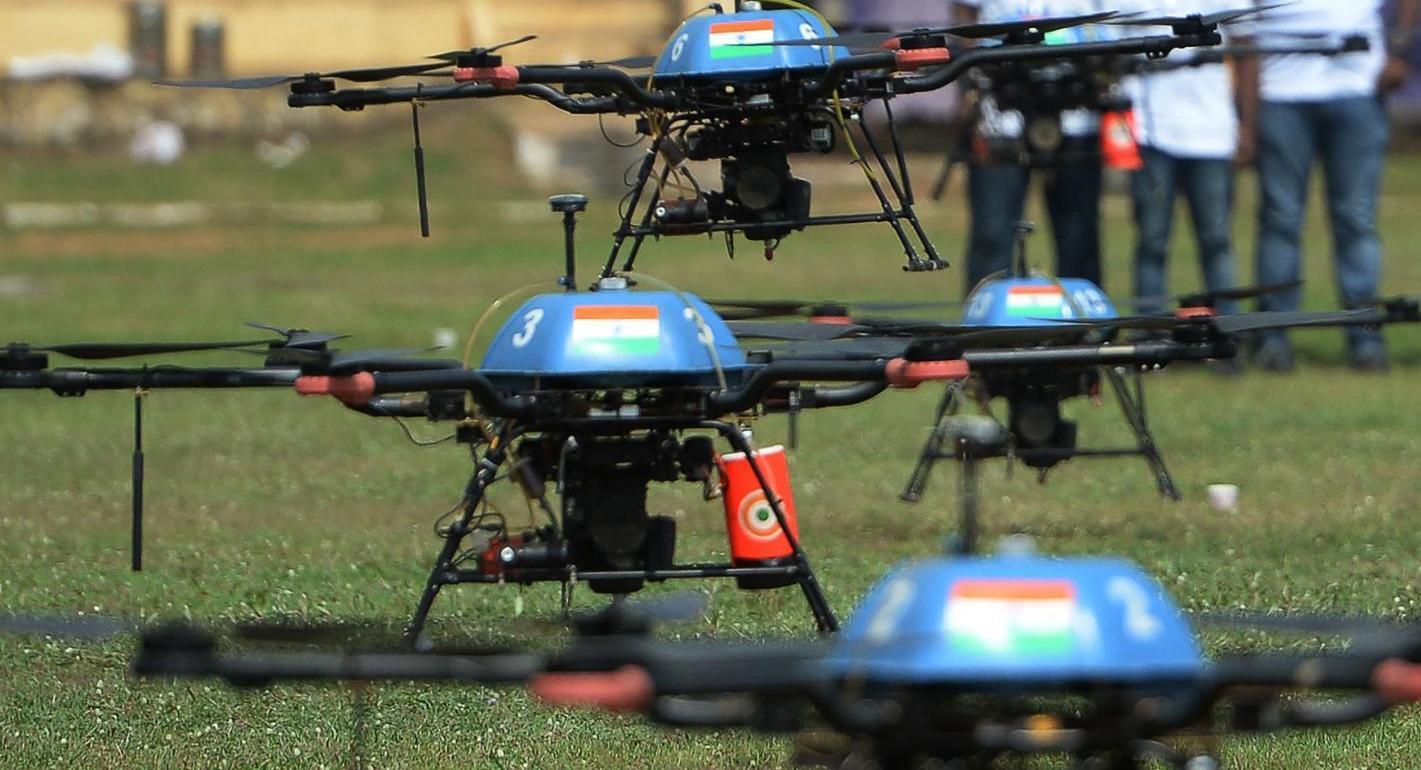
Defense start-ups have been particularly effective in equipping the armed forces with unmanned systems. For instance, start-ups such as ideaForge, NewSpace Research & Technologies, and Raphe mPhibr are supplying the Indian Army with unmanned aerial vehicles, or drones, for conducting surveillance along India’s borders and transporting supplies in high-altitude areas. Another start-up, Torus Robotics, is developing unmanned ground vehicles to help the army ferry heavy loads. Similarly, in the maritime domain, EyeROV is building remotely operated vehicles that can perform underwater inspections, while Sagar Defence Engineering is working on weaponized autonomous unmanned boats for the Indian Navy.
Although the defense start-up ecosystem is still in its infancy, it has demonstrated great promise. At the same time, start-ups face some fundamental challenges when it comes to developing defense applications.
One of the key challenges for start-ups involves the qualitative requirements (QRs) or the technical parameters laid down by the Indian armed forces for acquiring weapons or equipment. The armed forces are known to frame unrealistic QRs that are hard for any defense manufacturer to meet, let alone start-ups. They also have a tendency to amend QRs while a defense system is being built. This hits defense start-ups particularly hard, as they operate on limited resources and do not have the means to constantly rework their products. Thus, there is a clear need to formulate QRs more efficiently. Furthermore, given that start-ups are building innovative technologies from scratch, they would benefit if the armed forces were to communicate their short, medium, and long-term requirements in advance, a point that can be made for the broader defense private sector in India as well.
Start-ups also face difficulty when it comes to procurement processes. India has an infamously bureaucratic and lengthy procurement process, and start-ups often lack the know-how and resources to navigate it. In addition to this, procurement orders from state-owned defense manufacturers or the military are hard to come by, and many start-ups prefer to develop their products for the commercial market instead. To encourage more start-ups to develop defense applications, the government could consider streamlining the procurement process to make it more start-up-friendly.
Apart from this, defense start-ups also struggle with funding. While venture capitalists (VCs) have fueled the growth of start-ups in India, they sparingly invest in the defense sector. Many VCs are likely restricted from investing in defense technologies, and even those who can are apprehensive. This is because they deem investing in firms highly dependent on the government for orders to be risky. The opaque nature of defense procurement in India only serves to exacerbate this risk. Moreover, defense technologies also take many years to develop and have a high rate of failure. VCs would rather place their bets in a safer sector that offered quicker returns. That’s not to say that VCs aren’t investing in defense start-ups at all. For example, some start-ups developing dual-use technologies such as drones have been able to secure substantial funding.
In a bid to address this issue, the government launched the iDEX Investor Hub earlier this year, which has seen private investors pledge Rs. 200 crore (about $24 million). While this is a good start, the iDEX Investor Hub will need to be built over time.
India, the fourth-largest military spender, is currently undertaking a massive drive to upgrade its military equipment. According to top officials, New Delhi is slated to spend approximately Rs. 1.5 lakh crore (about $18 billion) a year until 2030 to modernize its military. With the focus firmly on procuring indigenous weapons and equipment, this presents a fantastic opportunity for Indian defense start-ups. But there may be some obstacles to overcome.
Although India’s defense start-up ecosystem is gradually being built, there are still questions about the capability of start-ups. For instance, most start-ups are yet to fulfill a major procurement order or even have their products tested in combat. This creates a sense of uncertainty about whether entities as small and inexperienced as start-ups can be relied upon for India’s defense needs. Nevertheless, promoting start-ups can energize India’s defense industrial base and bolster the innovation of defense technologies. Further, if adequately nurtured, India’s defense start-ups could play a central role in supplying the armed forces with cutting-edge technologies and take the country closer to its goal of self-reliance in defense.

Former Research Analyst Carnegie India
Rahul Bhatia was a research analyst with the Security Studies Program at Carnegie India. His research focuses on India’s borders and India’s foreign and defense policies.
Recent Work

Rahul Bhatia, Konark Bhandari
Rahul Bhatia, Konark Bhandari
Carnegie does not take institutional positions on public policy issues; the views represented herein are those of the author(s) and do not necessarily reflect the views of Carnegie, its staff, or its trustees.

The real test may come after the leaders leave the room.



Sheena Chestnut Greitens, Oriana Skylar Mastro, Yukon Huang, …

The Horn of Africa countries are among those facing a new security calculus.


Andrew Leber, Lesley Anne Warner

The European far right might fail to steer EU policy in the direction Russia wants, but they will create enough chaos inside Europe to benefit the Kremlin.

Dimitar Bechev

Washington needs to recognize that influence in the Western Hemisphere comes from presence, delivery, and reliability. It also must recognize that while the United States remains the key external actor, it no longer operates in a permissive environment and cannot presume deference from regional players who have other options, namely China.
Juan S. Gonzalez

Minsk clearly expected the dialogue with Washington to yield more results, in particular the lifting of EU sanctions and permission to export potash.

Artyom Shraibman