

Paper
- +2
Ian Klaus, Mark Baldassare, Rachel George, …
{
  "authors": [
    "Mark Baldassare"
  ],
  "type": "commentary",
  "centerAffiliationAll": "dc",
  "centers": [
    "Carnegie Endowment for International Peace"
  ],
  "collections": [
    "Democratic Innovation"
  ],
  "englishNewsletterAll": "ctw",
  "nonEnglishNewsletterAll": "",
  "primaryCenter": "Carnegie Endowment for International Peace",
  "programAffiliation": "CC",
  "programs": [
    "Carnegie California"
  ],
  "projects": [],
  "regions": [
    "North America",
    "United States"
  ],
  "topics": [
    "Democracy",
    "Subnational Affairs"
  ]
}
Source: Getty
Turnout, the top-two primary system, and Proposition 1 all offer insights into voters’ mindsets.
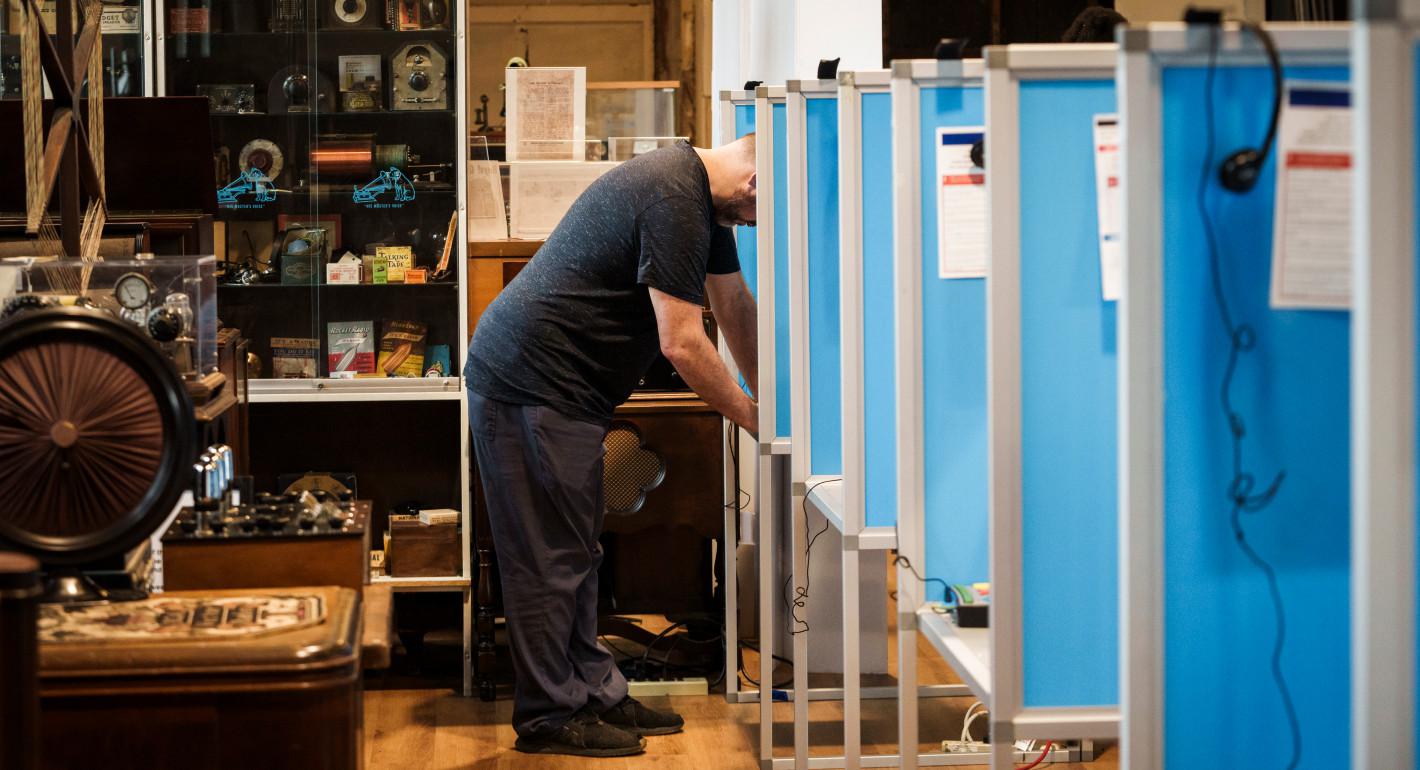
What did we learn from the California primary vote on Super Tuesday? The results point out several concerning trends in the condition of the state’s democracy and offer a preview of the major role that the nation’s most populous state will play in the November general election.
Of the state’s 22 million registered voters, 7.7 million (or 34 percent) cast ballots in the primary contest. Voter turnout is frequently a political wild card, and this vote was no exception. In a February survey from the Public Policy Institute of California (PPIC), which I direct, Californians sent mixed signals by affirming the importance of voting while expressing a lack of enthusiasm. Despite the state’s efforts to increase political participation—requiring all counties to mail every registered voter a ballot and moving the primary date from June to March—Super Tuesday’s turnout remained low. By comparison, 47 percent of registered voters cast ballots in the March 2020 primary, and 48 percent voted in the June 2016 primary.
The state’s efforts to encourage voter participation will need some rethinking, with special attention to regions where turnout was below the state average, such as the Central Valley, Los Angeles, and the Inland Empire. These regions include the competitive races that will help to determine the party in control of the U.S. House of Representatives. The March primary also forebodes a November turnout that may underperform when compared with the record 17.8 million ballots cast in the November 2020 election.
The lack of drama in the presidential contest likely contributed to the low turnout in the California primary, whose results mirrored other states. President Joe Biden won with 89 percent in the Democratic primary, and former president Donald Trump won with 79 percent in the Republican primary. These results are aligned with the findings of the February PPIC survey. Biden is expected to win in California in the general election, as Democrats outnumber Republicans 47 percent to 24 percent, GOP candidates have not won a statewide race since 2006, and Biden previously defeated Trump by a wide margin.
Two political wild cards raised by the California presidential primaries: the numbers and makeup of partisans not voting in the March primary who will cast their ballots in November, and whether the 29 percent of voters who are not registered Republicans or Democrats will opt for third-party candidates, continue to lean Democrat, or not vote.
The March senate primary raises issues about the unintended consequences of the top-two primary system. In this system, which was approved in a 2010 ballot initiative, voters cast primary ballots for all candidates in statewide and legislative races, not just those in their registered party, and the top two vote-getters appear on the general election ballot. The March senate primary was the most blatant example to date of a Democratic front-runner deliberately helping a Republican candidate to qualify for the top-two general election, knowing that any Republican has a slim-to-nonexistent chance of winning a statewide race. The primary ballot listed twenty-seven Senate candidates, but only Democrat Adam Schiff, Democrat Katie Porter, Republican Steve Garvey, and Democrat Barbara Lee were likely contenders, with Schiff and Garvey advancing. Schiff’s campaign aired a flurry of late commercials for Garvey, and Porter came in third. The political gamesmanship of a Democrat working to run against a Republican in the fall may increase cynicism at a time when some voters are feeling distrustful of democracy and elections. After a decade of experience with the open primary, it may be time for California to reconsider the process.
California voters eliminated legislative gerrymandering when they voted for a citizens’ independent redistricting commission more than a decade ago. The primary outcomes for the state’s fifty-two U.S. House seats still include many lopsided victories that mirror California’s red and blue regions and the inland and coastal partisan divides. In addition, the top two winners in every legislative primary race are either Democrat or Republican, with no third-party or independent candidates on the November ballot. The March primary results in the competitive House districts point to four tight races in the CentralValley and OrangeCounty. These races include both Republican and Democratic incumbents and an open seat that will have national interest this fall, and all will help to determine the party that controls a closely divided Congress.
The single measure that was placed on the March primary ballot with bipartisan legislative support passed by a slim margin: 50.2 percent yes, 49.8 percent no. Proposition 1, the government’s response to broad public recognition of major problems facing California, includes a $6.38 billion state bond for mental health treatment and funding for homelessness programs.
There were warning signs in the February PPIC survey that the Proposition 1 vote could be close. In the survey, 48 percent said that now was a “bad time” to issue this state bond, and 50 percent said they disapproved of Governor Gavin Newsom, who championed the measure and made the final pitch for yes in television commercials. The Proposition 1 vote is consistent with the narrow defeat of a state education bond in the March 2020 primary.
In addition, the vote is a reminder that many Californians are fiscal conservatives when it comes to state spending. The latest proof is the mix of red and blue counties where Proposition 1 had difficulty gaining traction. The measure is a wakeup call for legislators’ plans for other state bond measures, and a citizens’ initiative that would limit state and local tax increases may be on the November ballot.
Nonresident Scholar, Carnegie California
Mark Baldassare is a nonresident scholar at Carnegie California. He is an authority on elections, voter behavior, and political and fiscal reform.
Recent Work

Ian Klaus, Mark Baldassare, Rachel George, …
Mark Baldassare, Ian Klaus
Carnegie does not take institutional positions on public policy issues; the views represented herein are those of the author(s) and do not necessarily reflect the views of Carnegie, its staff, or its trustees.

The EU can impose sanctions but struggles to enforce them without the United States. With Washington increasingly disinterested in backing European interests, the bloc must now fend for itself.


Nicu Popescu, Tiago Antunes

Rubio’s recent visit brought welcome attention, but more capital requires governance changes that may be a hard sell for regional governments.

Jennifer B. Murtazashvili

America’s foreign-policy objectives have grown more demanding while Americans have demanded greater focus on their own affairs.
Stephen Wertheim

Despite public disputes over trade and immigration, the strategic partnership’s foundations remain sturdy.

Sameer Lalwani

It signals a new era of tech diffusion and warfare.

Steve Feldstein