

Article
Jennifer B. Murtazashvili
{
  "authors": [
    "Jennifer B. Murtazashvili"
  ],
  "type": "commentary",
  "blog": "Emissary",
  "centerAffiliationAll": "dc",
  "centers": [
    "Carnegie Endowment for International Peace"
  ],
  "englishNewsletterAll": "asia",
  "nonEnglishNewsletterAll": "",
  "programAffiliation": "AP",
  "programs": [
    "Asia"
  ],
  "regions": [
    "Uzbekistan",
    "Central Asia",
    "Kyrgyz Republic",
    "Kazakhstan",
    "Tajikistan",
    "Turkmenistan",
    "United States"
  ],
  "topics": [
    "Economy",
    "Foreign Policy",
    "Trade"
  ]
}
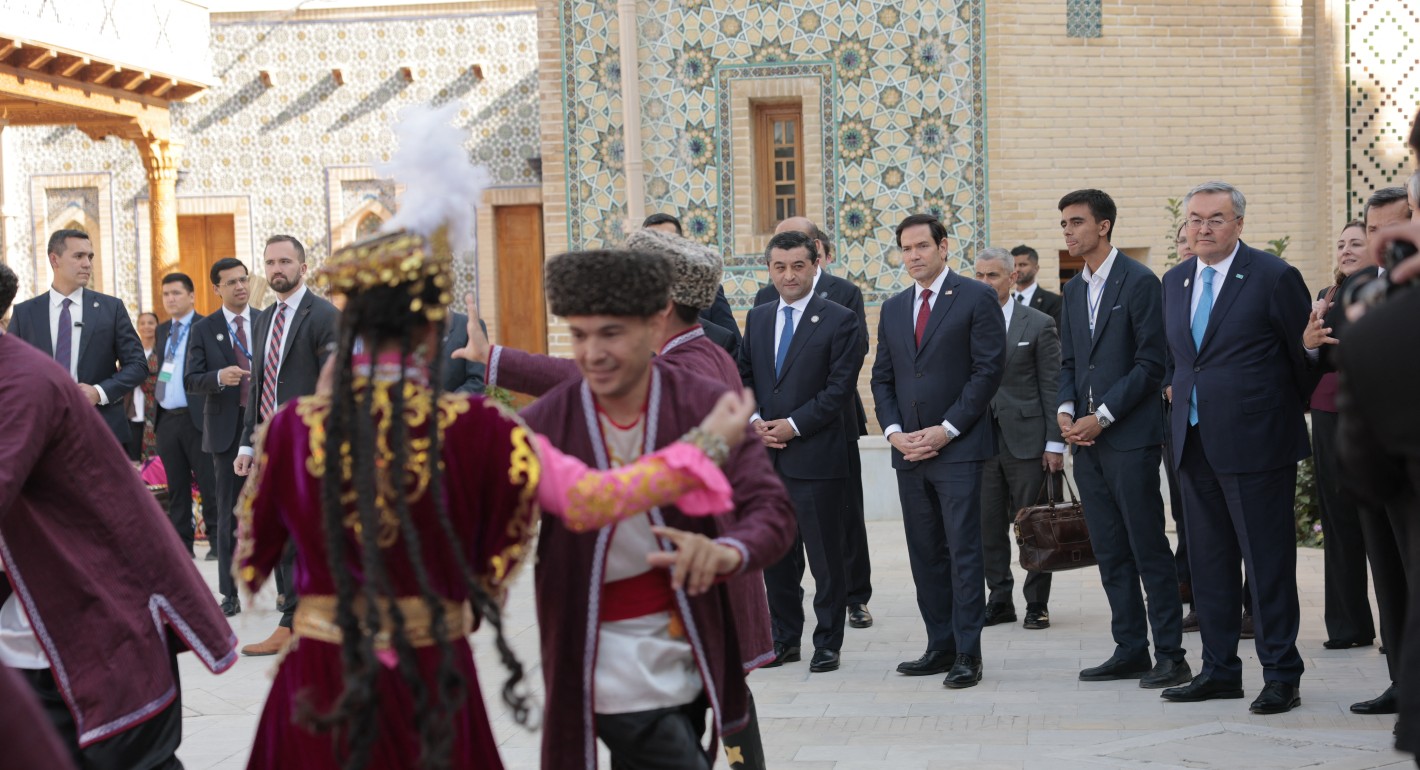
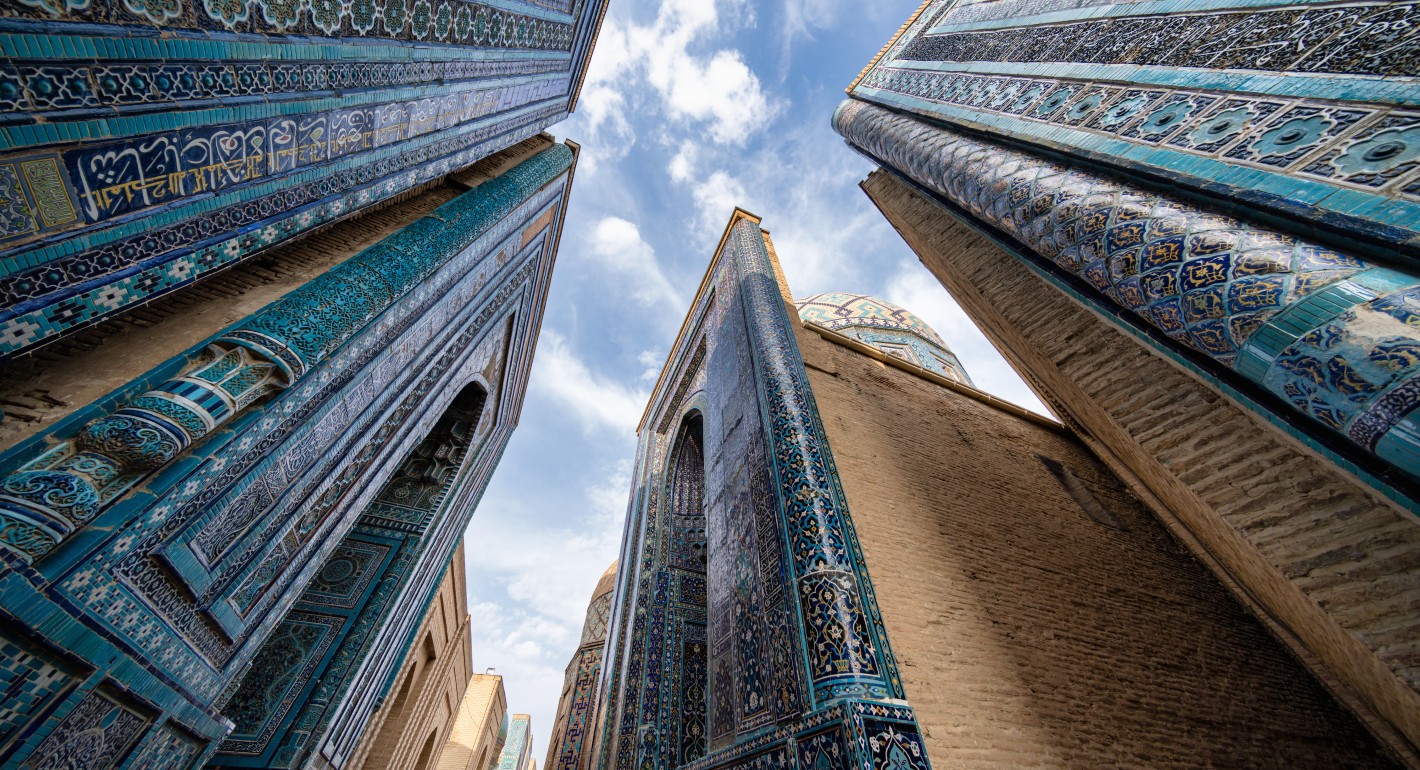
Rubio watches a performance at the Eternal City in Samarkand, Uzbekistan, on October 19, 2026. (Photo by Kylie Cooper/pool/AFP via Getty Images)
Rubio’s recent visit brought welcome attention, but more capital requires governance changes that may be a hard sell for regional governments.
On Monday, U.S. Secretary of State Marco Rubio made his first official trip to Central Asia for a meeting with his counterparts from Kazakhstan, Kyrgyz Republic, Tajikistan, Turkmenistan, and Uzbekistan. He was accompanied by more than 200 U.S. business leaders, and the region’s capitals hoped the trip was laying the groundwork for a presidential visit next year. (No sitting U.S. president has ever visited Central Asia.)
For more than two decades, security and the war in Afghanistan defined American interests in the region. But U.S. influence faded after the chaotic 2021 withdrawal from Afghanistan, which did not reflect well on Washington in regional capitals. Now, Washington is working out how to update those interests for the current era. Weak governance across the region makes Western investors wary, and limited connectivity makes moving goods in and out of the landlocked region costly.
In addition, Central Asia has experienced significant changes: A quarter-century ago, its five states were barely ten years into independence, with weak economies and little leverage. Today, Kazakhstan, the largest economy in the region, is home to two-thirds of foreign investment in Central Asia. It is the largest uranium producer in the world and supplies more than a quarter of U.S. uranium imports. Uzbekistan, the most populous country and the largest market in the region, has opened its economy—and because it borders every other Central Asian state, that opening has transformed connectivity across the region. Governments of the five countries now meet regularly among themselves and court many global partners, including neighboring Russia and China.
Now, Rubio has the opportunity to offer Central Asia something the region wants: capital, trade, and investment in transit routes. But those offers of investment and support to connectivity will mean little unless Central Asian governments do their part. Even so, the region’s governments may bristle at the strings attached to the U.S. offers.
The biggest obstacle to American investment lies in the region itself: Governments remain unreliable partners. Throughout Central Asia, courts remain weak, state enterprises tend to dominate and report to presidents directly, and deals often depend on personal ties. Foreign investors have occasionally faced serious whiplash from local governments, which change their minds on a whim. American capital will not flow at scale until contracts are more enforceable and terms are public. U.S. financing via the International Development Finance Corporation, access to Western capital, and a place in Western supply chains all require better governance and improved transparency.
Those changes are a hard sell when Russia and China are neighbors and convenient partners. They do not press for reforms, disclosures, or shifts in how enterprises are governed. Central Asian governments will gladly take American investment, but American investors will not commit to them without significant improvements in the rule of law and a sound investment climate. As a result, in its quest for influence, Washington is competing against ease just as much as it is competing against capital.
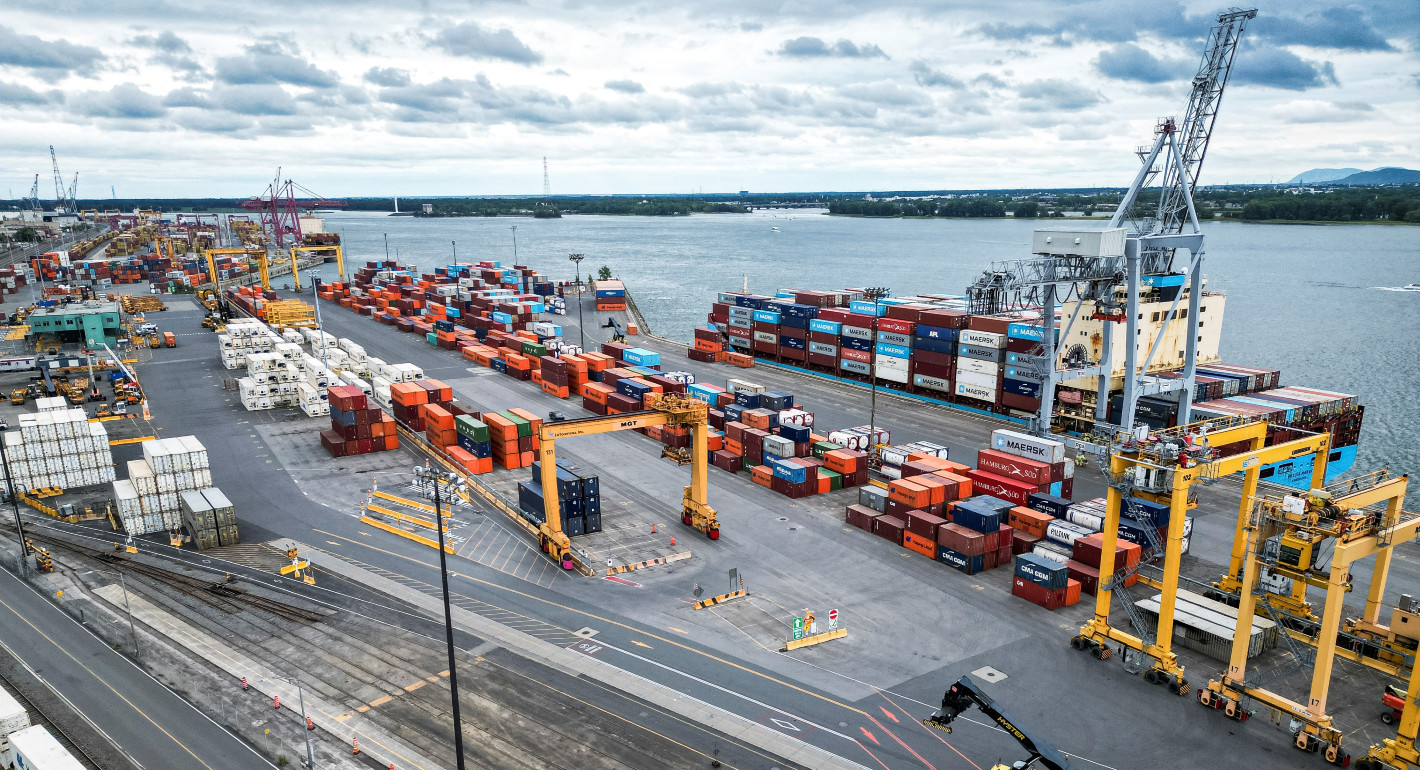
Geography also is a huge constraint, as all five states are landlocked—Uzbekistan doubly so. This makes connections a true matter of survival. The Middle Corridor—the multimodal trade and transport route that runs from China across the Caspian Sea and the Caucasus to Europe—avoids Russia. The new American-backed link—a proposed route across southern Armenia that could connect Azerbaijan to the Nakhchivan exclave, called the Trump Route for International Peace and Prosperity (TRIPP)—is intended to complete the Middle Corridor. However, even optimistic planning puts construction more than a year away for TRIPP, and the Middle Corridor is costly and not economically competitive.
Central Asia is also looking south. Uzbekistan, Afghanistan, and Pakistan signed a framework to study a railway that would cross Afghanistan and give Central Asian cargo access to ports in Pakistan. But financing—and stability in Afghanistan—remain a long way off. On the other hand, the construction of a China-Uzbekistan-Kyrgyz Republic railway is underway.
Both the full-scale Russian invasion of Ukraine and the war with Iran have underscored Central Asia’s urgency to build new connections to and from its markets. Kazakhstan exports most of its oil through Russia, leaving it exposed to the war in Ukraine. The Caspian Pipeline Consortium, which ends at the Russian port of Novorossiysk, has been the site of multiple Ukrainian drone strikes. Chevron and ExxonMobil are among the biggest investors in Kazakh oil, so these strikes hit American companies too. Signals from Washington have also been mixed: Recent U.S. attention has focused on Ukrainian strikes against refineries rather than export terminals. Either way, Astana must treat the targeting choices made in Kyiv as a risk to its own economy.
Critical minerals have been the subject of investment discussion between Central Asia and the United States. Although Central Asia is eager to court American investment, the United States only receives about 2 percent of Central Asian mineral exports. A summit in Washington last year produced a memorandum on critical minerals with Kazakhstan, but this announcement has not yielded results.
Deals announced since then do not fare well under scrutiny. The Financial Times reported that Trump’s sons held indirect stakes in a company set to merge with Cove Kaz Capital, an American firm that in April took a 70 percent stake in tungsten deposits in Kazakhstan alongside the state mining company. The White House announced the deal with great fanfare and promises of U.S. financing, but the mine itself remains years away. Central Asian governments understand the appetite in Washington for quick deals and have tailored their outreach to satisfy it.
Washington has a smaller irritant of its own to remove, one that dates to the Cold War. The 1974 Jackson-Vanik Amendment, meant to pressure Moscow to let Soviet Jews emigrate, still denies permanent normal trade relations to several of the Soviet Union’s successor states.
Since 1997, successive administrations have found Kazakhstan in compliance with the law, but the amendment remains on the books. Mining projects require decades-long commitments, and the amendment makes that trade less predictable. In Congress, both Democrats and Republicans support pending legislation to repeal the law for Kazakhstan, Uzbekistan, and Tajikistan. Repeal would not unlock a wave of investment, but it would remove an irritant that costs Washington almost nothing to fix.
Renewed U.S. attention to Central Asia is welcome, but expectations should be modest. Rubio pledged support for the Middle Corridor and offered partnerships in critical minerals, infrastructure, and advanced technologies that respect both sovereignty and the rule of law. Uzbekistan announced nearly $12 billion in agreements and prospective projects, while President Shavkat Mirziyoyev promised more predictable conditions for American investors. The test now is whether Tashkent and its neighbors can capitalize on these investment promises by enforcing contracts made on transparent terms. Rubio also said that enhanced U.S. attention to the region does not require Central Asia to stop working with other partners. Washington cannot compete with Russia and China on proximity, but it can compete on the quality and credibility of what it offers.
The latest from Carnegie scholars on the world’s most pressing challenges, delivered to your inbox.

Nonresident Scholar, Asia Program
Jennifer Brick Murtazashvili is a nonresident scholar in the Asia Program at the Carnegie Endowment for International Peace.
Recent Work
Jennifer B. Murtazashvili
Jennifer B. Murtazashvili, Temur Umarov
Carnegie does not take institutional positions on public policy issues; the views represented herein are those of the author(s) and do not necessarily reflect the views of Carnegie, its staff, or its trustees.
The real test may come after the leaders leave the room.

Sheena Chestnut Greitens, Oriana Skylar Mastro, Yukon Huang, …
U.S. trading partners in Asia are closely watching the dispute for signs of how it may affect their own interests.
Barbara Weisel
Xi, Putin, and other regional leaders are back-slapping in Bishkek, but the SCO has yet to answer the most serious questions about continental Asia's economic future.
Evan A. Feigenbaum
Lee’s tour shows how Seoul is reorganizing its diplomacy away from Pyongyang and toward industrial networks and the geography of the compute economy.

Darcie Draudt-Véjares
“AI safety in parallel” is modest and pragmatic but vital.

Matt Sheehan