

Other
Stephen Wertheim
Source: Getty
America’s foreign-policy objectives have grown more demanding while Americans have demanded greater focus on their own affairs.
In many respects, the U.S. presidential election of 2024 pitted foreign-policy orthodoxy against heresy. Democrats ran on the record of Joe Biden, who had cast the United States as the “indispensable nation.”1 Yet although his policies and worldview largely hewed to post–Cold War tradition, he was asking the citizenry to hold off the advance of anti-American autocracy everywhere at once. The American people had not signed up for such an intensive mission during the 1990s. Nor did they embrace one in 2024. Donald Trump, who won that year’s election, asked little of the public. On his watch, he claimed, overseas adversaries would barely trouble the United States: Trump would deter them through personal and martial strength, accommodate them through dealmaking, or make allies handle them. His details were scant, his promises often fanciful, but his unconventional means served what too few observers recognized as a familiar end. Implicitly, he promised to keep faith with a domestic political bargain forged in the 1990s—that America should pay minimal costs to dominate a fundamentally unthreatening world.
The contrasting positions of Biden and Trump highlight the widening disjunction between America’s global power and its domestic politics. Many foreign-policy elites, Democrats and Republicans alike, currently perceive external threats to be extensive, grave, and urgent. They recommend a major national mobilization to counter not only China but an “axis of upheaval” that adds Russia, Iran, and North Korea to Beijing’s camp.2 The Democratic ticket of 2024 adopted this position, especially in depicting adversaries as geopolitically and ideologically aligned, though it stopped well short of the costly solutions some experts favor. One such solution came from the congressionally mandated Commission on the National Defense Strategy. Months before the election, it assessed the threats confronting the United States to be “the most serious and most challenging the nation has encountered since 1945.”3 In response, the bipartisan commissioners recommended an immense military expansion allowing the country to fight and win protracted conflicts in Asia, Europe, and the Middle East simultaneously. While declining to specify the fiscal cost of their proposed “multiple theater force,” they called for hiking defense spending from around 3 percent of GDP to Cold War levels ranging from 5 to 17 percent of GDP. This, they admitted, would require raising taxes and cutting entitlement programs such as Social Security and Medicare.4
At the same time, American domestic politics continues to resist expensive foreign-policy initiatives and reward candidates, like Trump and Barack Obama, who promise less war abroad and more nation-building at home. Even as the United States has reoriented its foreign policy to counter major-power rivals over the past decade, defense spending has grown more slowly than the overall economy. If national-security elites feel compelled to call for drastic action today, it is precisely because the political system, comprising the voting public and the three branches of federal government, has long declined to heed such calls.
In short, the country is being pulled in opposite directions by rising threat perceptions among foreign-policy elites and limited cost acceptance among the body politic. In the view of much of the national-security community, a more competitive international arena requires more from the United States in order to uphold all the commitments it has made. America’s politics, meanwhile, offers the world no more, amounting to less for increasingly demanding tasks. Already these opposing pulls have generated instability in U.S. foreign policy. Wild swings from one administration to another are typically understood as stemming from partisan polarization, but a separate cause is the gap, appearing in both parties, between elites’ threat perceptions and the American political system’s inward focus. Going forward, instability may intensify until one side of America’s Janus face prevails over the other, compelling the United States either to reduce its exposure to foreign threats or to increase its acceptance of costs.
This paper does not assess the severity of current threats to the United States, much less advance specific proposals for what to do about them. Rather, it challenges the assumption that foreign-policy elites could persuade the rest of the American political system to wage a new cold war and pay costs on the scale of the original, twentieth-century version. To make their case, advocates of mobilization advance a potent historical narrative: The United States once faced down major foreign foes to protect the postwar international order. Confronting comparable threats today, they conclude, America could and should rally against them again. Historical analysis can neither prove nor disprove such a position. But by examining the domestic constitution of U.S. global power both during the Cold War and since, this paper contends that steering the country toward another thoroughly militarized “twilight struggle” will prove much more difficult than its proponents allow. A vast distance separates the late 2020s from the late 1940s. Not only do today’s external threats register as less pressing and menacing than Cold War communism did, but U.S. global power now rests on a different and more attenuated relationship with the American body politic.
At the outset of the Cold War, both foreign-policy elites and the general public came to see the Soviet Union and international communism as a severe threat to American interests, including those the country had so recently fought a total war to protect. Americans accordingly grew willing to bear major costs to contain communism. The resulting alignment—between threats and costs, shared by elites and citizens—defined a domestic consensus that underwrote the projection of American power across four decades, surviving recurrent fights over means to shared ends. After 1989, another domestic consensus formed, but this time on the obverse basis of the one it replaced. Understanding external threats to be minimal, the American polity agreed to exercise global political-military power because the costs, in lives and treasure, were kept small. Each period found its own equilibrium: Whereas high threat perception and high cost acceptance went together during the Cold War, low threat perception and low cost acceptance harmonized in the post–Cold War world. For a time, the 9/11 attacks again elevated the national sense of threat and willingness to bear costs, but once the war on terror waned, the political system reverted to its post–Cold War limits. There it remains, leaving national-security elites to look on with alarm as competitors challenge America’s global positions.
Once the war on terror waned, the political system reverted to its post–Cold War limits. There it remains, leaving national-security elites to look on with alarm as competitors challenge America’s global positions.
The foreign-policy consensus is, then, breaking down. Yet what is fracturing is not the consensus many suppose, namely an eight-decade attachment to leading a “liberal” or “rules-based” international order.5 Americans waged the Cold War less because they valued world order per se than because they felt threatened by communism at home and abroad. With their support, the United States defended the “free world,” defined negatively as non-communist.6 Since 1989, America has engaged in more explicit and universal order-building, but most Americans have been asked to sacrifice little for the cause. Now Washington is walking away from its project of world-ordering, while the public sees no Cold War–sized threat. For how long can the country uphold far-flung defense obligations while American citizens decline to pay much more for the privilege?
Understand the world with the latest from our scholars around the world.
The United States emerged from the Second World War embracing a global conception of its interests and responsibilities. American officials nevertheless initially believed the postwar world would remain cooperative. Washington began to demobilize its armed forces and, while creating and joining the United Nations, took on no commitments to defend any state outside the Western Hemisphere.7 In 1946, Europe was hungry, Britain was going broke, and communist insurgents closed in on Greece. President Harry Truman sought to send economic aid to Europe. “A sound world order,” he intoned, “can never be built upon a foundation of human misery.”8 But his appeals to world order, financial benefit, and humanitarian sympathy proved inadequate to galvanize congressional action. The country turned inward; when Gallup asked American adults to list the most important problem facing the country over the next year, no more than 13 percent of respondents referred to foreign affairs.9 Stymied, the Truman administration turned to a strategy of what scholar Brett Rosenberg calls “ramping”: It emphasized the threat of communism and cast Europe’s circumstances as make-or-break for the survival of freedom everywhere.10 The Truman Doctrine of March 1947 did just that and unlocked funds to aid Greece and Turkey, paving the way for Marshall Plan aid to reconstruct economies across Europe. By that July, as many as 48 percent of Americans selected foreign-policy issues as the most important problem.11
Although elite rhetoric moved the public, it alone could not determine Americans’ priorities and fears. In March 1946, former British Prime Minister Winston Churchill, standing beside Truman in Missouri, warned that an “iron curtain” had descended across Europe, but his summons came too early to have much effect.12 The country grew more concerned in the years that followed because of real-world events, and because of what caused them: a communist regime with a great power’s reach. The Soviet clampdown in Eastern Europe, Joseph Stalin’s acquisition of the atom bomb, Mao Zedong’s victory in China’s civil war—these, among other developments, ratcheted up Americans’ fears and drove up their acceptance of costs. Indeed, the Truman administration soon found itself under attack for being soft on communism, especially for “losing China,” notwithstanding the difficulty of producing a different result.13 Little more than two years out from the Truman Doctrine, a sense of alarm coursed through American politics, outrunning presidential attempts to manage it.
Then, in June 1950, the Korean War broke out. No single event had a more direct and dramatic effect on U.S. policy. After North Korea’s communist forces invaded South Korea, U.S. officials again chose to ramp up the threat, employing Manichaean rhetoric to build support for military action in Korea and a global, not just European, approach to the containment of communism.14 Seizing on the war, the Truman administration argued that communists were pushing worldwide to spread their creed by force—the “one language” they understood, Truman judged.15 The Korean crisis pushed NSC-68, a highly ideological and globalist strategy document, across Truman’s desk, where it had been sitting for months. The strategy called for keeping the public roused and defense spending high. “The whole success of the proposed program,” it concluded, “hangs ultimately on recognition by this Government, the American people, and all free peoples, that the cold war is in fact a real war in which the survival of the free world is at stake.”16 After the Korean War, annual U.S. defense outlays stayed at around 7 to 10 percent of GDP for two decades, up from a post–World War II low of 3.5 percent in 1948.17
Presidential salesmanship alone would not have brought about so vast a transformation if the Soviet Union and its allies had not taken a series of actions that served to confirm Truman’s threat narrative and overcome the public’s reluctance to bear costs. In addition, America’s Cold War rival possessed certain attributes—some of which may be unique to twentieth-century totalitarianism—that made its conduct look menacing, beyond the immediate stakes of individual flashpoints. Like Nazi Germany, the Soviet Union was an expansionist great power with a military now stationed in the heart of Europe. Its system of government, economy, and society was irreconcilable with America’s; any place that fell under Soviet influence was in a sense lost to the United States, which could no longer interact there on liberal, American-style terms. And the stakes were inescapably global. Although Soviet leaders consistently strove to avoid open war with the United States, communism did aspire to replace liberal democratic capitalism the world over and indeed regarded its own triumph as a historical inevitability. In sum, the nature of the threat, a universalist ideology yoked to a genuine superpower, made “world domination” a credible specter for Americans to fear.
Moreover, the threat did not lie exclusively across the Iron Curtain or even across the oceans. Communists operated inside the United States as well, their modest numbers nonetheless proving enough to stoke panics about subversion and elicit the Red Scare. Cold Warriors worried that communism’s advance abroad would strengthen it at home, and vice versa. The concept of a “communist conspiracy,” in President Dwight Eisenhower’s formulation, linked the threat’s external reach with its internal potential.18 Senator Joseph McCarthy took the notion of conspiracy to paranoid and specific extremes, alleging, for example, that the “left-wing element in our Department of State” helped Stalin deliver China to Mao.19 But the general worry was common. In 1954, 81 percent of the public said American communists posed at least some danger to the nation, and 43 percent judged the danger to be great or very great.20
In this context, the federal government had wide latitude to do, spend, and risk what seemed necessary to combat and contain the threat. Until 1947, the United States had never formed a peacetime treaty alliance obligating the country to defend another. From 1947 to 1954, Washington concluded a raft of defense pacts in the Western Hemisphere, Europe, and East Asia. Americans, both elite and ordinary, assumed these obligations knowing they risked involving the country in a third world war, this time with nuclear weapons. “We can never afford to forget that the terrible destruction of cities, and of civilization as we know it, is a real possibility,” Truman acknowledged.21 Even so, in 1951 and 1952, around two-thirds of Americans said it was more important to keep communism from spreading than to stay out of another war.22 Large majorities supported joining NATO even when told that allies would have to defend one another if attacked.23 After the Soviet Union acquired the atomic bomb in 1949, Americans did not shrink from guaranteeing the security of Western Europe. On the contrary, the United States surged troops to the continent, roughly tripling the Army’s forces by the end of 1952.24
Established in the aftermath of World War II, the domestic consensus around a high-threat, high-cost foreign policy largely endured until the end of the Cold War. The Vietnam War shook the consensus, battering public support for military intervention and foreign aid. Containing communism nonetheless remained a widely shared imperative even as the willingness to fight narrowed.25 The Vietnam War sparked debate about U.S. troop levels in Europe but did not produce deep cuts.26 Defense outlays never fell below 4.5 percent of GDP per annum.27 The United States returned to a muscular Cold War footing by the end of the Jimmy Carter administration and averaged military spending of 5.6 percent of the economy during the 1980s—a level unmatched ever since. From the issuance of the Truman Doctrine to the dissolution of the Eastern bloc, U.S. foreign policy followed the precept laid out in NSC-68: “Budgetary considerations will need to be subordinated to the stark fact that our very independence as a nation may be at stake.”28 Or as John F. Kennedy declared, the United States would “bear any burden” to defend the free world.29
That calculus changed at the end of the 1980s. By winning the Cold War, the United States lost the threat that had oriented its power abroad and underpinned that power at home. For this reason, many observers at the time thought America would or should pull back from international affairs, relinquishing the defense commitments and military garrisons originally instituted to contain a now-vanquished opponent. Reasoning that “the Soviet threat provides the glue that holds NATO together,” political scientist John Mearsheimer predicted in 1990 that the United States would exit the alliance and abandon Europe.30 Although Mearsheimer lamented that seemingly impending reality, Jeane Kirkpatrick, hitherto a neoconservative who had served in Ronald Reagan’s cabinet, welcomed it. Having defeated totalitarianism, she wrote, Americans ought to “give up the dubious benefits of superpower status” and become “a normal country in a normal time.”31 As Kirkpatrick noted, however, much of Washington defined America’s purposes more expansively than she did. The United States swiftly chose a different path.
Under Presidents George H. W. Bush and Bill Clinton, American global power was renewed and reconstituted for a low-threat world and set on a new domestic political foundation. Lacking any great-power peer, let alone a totalitarian one, the United States faced no serious prospect of major war for the foreseeable future. That absence meant the expected cost of almost any foreign policy, however ambitious, was minimal. Had the country’s military alliances and forward deployments not already existed, American leaders would have struggled to make an affirmative case for why the United States needed global military primacy in such favorable international conditions. Even as it was, U.S. policymakers often doubted their fellow citizens’ commitment to a globe-spanning, world-ordering foreign policy, regularly fretting about the strength of “isolationism” among the public.32
It turned out, though, that advocates of post–Cold War primacy needed only to respond: Why not? Why not keep global dominance at a cut-rate price? If not strictly necessary, primacy was at least cheap, in dollar and geopolitical terms alike. On this basis, American leaders effectively struck an unspoken compact with the public: The United States would go on dominating the world so long as its citizens felt almost none of the burden.
For Bush’s Pentagon, the key to preserving a preeminent, globally deployed military was to heed the country’s political demand to cut costs. Defense secretary Dick Cheney and chairman of the Joint Chiefs of Staff Colin Powell proposed to decrease active-duty manpower by 25 percent, allowing for budget reductions extending into the late 1990s.33 At the same time, they introduced a new standard to size and structure the military: The United States must be able to fight and win two major regional wars at once, anywhere, rather than take on the Red Army in Europe.34 In other words, in the fertile soil of the 1990s, the United States would spend less and come out yet more dominant than before.
And so, even as it sent troops home, closed overseas bases, and canceled weapons programs, the Bush administration adopted foreign-policy aims far grander than its Cold War predecessors had entertained. Instead of fostering regional balances of power, the United States would now overmatch all conceivable adversaries. American primacy would not only deter aggression but also extinguish ambition, dissuading would-be rivals, as Pentagon strategic planners wrote, “from even aspiring to a larger regional or global role.”35 In this way, the United States would remain militarily supreme and deliver far-reaching security for a pittance. Paradoxically, a maximalist strategy was thought to keep costs modest: Strike at threats early and Americans would never pay the high price of confronting them once they had grown.
By assuming other countries would reliably bandwagon with, not balance against, the United States, American leaders could scarcely have promised more: global primacy without pain.
By assuming other countries would reliably bandwagon with, not balance against, the United States, American leaders could scarcely have promised more: global primacy without pain. Even so, plenty of Americans challenged the idea, a sign that opposition would have been more potent had the international environment been more competitive and driven up the strategy’s costs. For example, when the Pentagon’s “Defense Planning Guidance” leaked to newspapers in 1992, a range of politicians and analysts denounced it for appointing the United States to the role of “the world’s policeman,” as Senator Joe Biden put it.36 Bill Clinton pledged steeper defense cuts in his presidential campaign, and on taking office appointed a prominent congressional critic of Pentagon largesse, Les Aspin, to lead the Department of Defense and conduct a “Bottom-Up Review” of the military’s size and purpose. That review ultimately produced little except further monetary savings, because Clinton declined to use his political capital pushing for sweeping reforms.37
Clinton had ample reason to prioritize domestic policy. During the 1990s, in Gallup surveys asking Americans to name, in their own words, the “most important problem” facing the country, less than 8 percent, on average, referenced foreign affairs. (By contrast, around half of the public regularly mentioned foreign-policy issues throughout the 1950s and 1960s.)38 By 1999, defense spending had fallen to 3 percent of GDP, even as Clinton and his secretary of state Madeleine Albright trumpeted America’s role as the “indispensable nation” and political leaders and commentators discussed whether the United States constituted a “hyperpower,” mightier than any nation in modern history.39 In this context, ordinary Americans were not about to take to the streets to demand an even larger peace dividend than the windfall they were already reaping.
A permissive world and a passive public enabled policymakers not only to retain America’s Cold War alliances but to start expanding them. When the Clinton administration launched an open-ended enlargement of NATO in the second half of the 1990s, many officials and analysts doubted that the public, and the Senate, would approve. Applying the threat-driven standards of the Cold War, when Americans expected their defense pledges might well come due, political scientist Charles Kupchan asked in 1995: “Will Americans be prepared to foot the bill and, in keeping with Article V of the North Atlantic Treaty, pledge their lives to defend countries many would have trouble locating on a map?”40 Though the question was meant rhetorically, the answer turned out to be yes—because the bill appeared tiny and the pledge was, to a striking degree, empty.
In the debate over enlargement, proponents argued less that the United States should prepare to defend its new allies than that it would not need to defend them. Russia, reeling economically, was in no position to react violently. The Clinton administration did all it could to downplay the costs of admitting the first three post–Cold War members, the Czech Republic, Hungary, and Poland. The Pentagon estimated the U.S. tab at $1.5 to $2 billion over a decade. It arrived at that figure by positing that Moscow would remain cooperative, thus allowing NATO to keep its military footprint light.41 Such an estimate assumed away the very geopolitical consequences risked by expanding the alliance.
With stakes so modest, the operative logic was not so much Why must NATO enlarge? as Why not enlarge it? Just one in five Americans, according to a 1997 Pew poll, followed the issue closely.42 Biden, an important backer of enlargement, nonetheless admitted, “There is very little consensus about why this is in the vital interest of the United States.” As in the Vietnam War, he continued, the public had not given its “informed consent.”43 Nor did informed consent materialize in the years and decades to come.44 After voting eighty to nineteen to admit the first three entrants in 1998, the Senate has given near-unanimous approval to all thirteen countries it has considered since then. Whereas the gravity of the Soviet threat had compelled the United States to join NATO during the Cold War, it was the absence of threat, and the minimization of cost, that enabled the country to expand NATO thereafter.
On September 11, 2001, terrorist attacks in New York and Washington disrupted the post–Cold War pattern, driving threat perceptions and cost acceptance higher. The 9/11 attacks were instantly said to have “changed everything,” separating time into pre and post.45 In a flash, they reduced the 1990s to a listless interlude; for many interpreters, the global war on terror became the successor of the Cold War.46
To defeat the terrorist threat, the political system was ready to do and spend what it must. In his first State of the Union address after the attacks, President George W. Bush sounded Kennedy-esque notes about bearing burdens. “While the price of freedom and security is high, it is never too high,” he declared. “Whatever it costs to defend our country, we will pay.”47 The public agreed. Large majorities backed U.S. wars in Afghanistan and Iraq when they began. Days after 9/11, 77 percent favored military retaliation against terrorists even if the draft were reinstituted.48 In the following months and years, the American people might have accepted greater sacrifices than their leaders asked of them. As it was, Bush did much to contain and defer tangible costs. He stuck with the all-volunteer force and financed his wars on borrowed money while cutting taxes to boot.49
The domestic politics of foreign policy began to turn as much on American overreach as on the terrorist threat itself.
In part for that reason, the war on terror did not reach as deeply into society as the Cold War did, and the threat soon became less salient than that of communism. After 2002, the share of Americans citing terrorism as the country’s most important problem never again exceeded 20 percent.50 Since 2007, that number has stayed in the single digits, interrupted by a spike to 16 percent following the 2015 attacks in Paris and San Bernardino.51 Starting in the mid-2000s, the domestic politics of foreign policy began to turn as much on American overreach, especially the faltering campaign in Iraq, as on the terrorist threat itself. Opposition to the Iraq War decided the midterm elections of 2006, delivering the House of Representatives to the Democrats, and helped to elevate Barack Obama over Hillary Clinton in the 2008 presidential primary.52 In 2007, a plurality of the public said the country’s defense spending was “too much,” overtaking “about right,” hitherto the consistent plurality view since 9/11.53 Given that al-Qaeda terrorists killed thousands of Americans on U.S. soil, something the Soviets never attempted, the fading of public support for the war on terror requires explanation.
One reason was the scope of the threat. Although al-Qaeda and related groups were deadly and shadowy, they were incomparably weaker and less globally consequential than a superpower like the Soviet Union. They could challenge the United States only by inflicting violence upon it, not by inspiring other countries to copy their model or defect to their camp. As time passed without another catastrophic attack, fear diminished. Relatedly, the American polity was never called upon to make military, economic, or social sacrifices of a mid-twentieth-century magnitude that might have fostered a sense of citizen solidarity and achievement in the war on terror. Treated like spectators, most Americans were bound, absent further mass-casualty incidents, to move on to new spectacles.
The war on terror confirmed the larger rule: A specific threat, following a direct assault on the U.S. homeland, steeled Americans to do whatever seemed necessary to defeat it. As the threat dimmed, so did the country’s tolerance for costs, which have accumulated to more than 7,000 U.S. service members killed in Iraq and Afghanistan and an estimated $8 trillion in federal spending obligations for the post-9/11 wars.54 A quarter-century after 9/11, the war on terror has started to recede. It increasingly resembles one extraordinary chapter of the post–Cold War era, not the main story. Barring another terrorist attack on American soil, the public’s rejection of the post-9/11 wars may end up exerting a stronger pull on the course of U.S. global power than the propulsive influence of the attacks themselves.
In the past decade, as the war on terror faded, the post–Cold War foreign-policy consensus has unraveled, exposing how shallow its roots always were. Trump’s presidency, along with America’s broader political discord and dysfunction, is one cause, but not a necessary one. Even if American domestic politics had remained stable, functional, and free of Trump’s Make America Great Again movement, the United States would still be rethinking its role in the world as the global commitments it made and retained after 1989 have run up against more capable, determined competitors in Europe and Asia and unabated violence in the Middle East. In sum, the external threats to America’s accumulated objectives, positions, and partners have mounted.55 The country’s willingness to bear costs for foreign-policy ambitions has not. Instead of sharpening at the sight of challenges, the domestic appetite has, if anything, shrunk. A chasm has opened between what American primacy demands and what American citizens will supply. Overstretch of this kind—arising from a political, not material, shortfall—raises the risk that U.S. commitments will lose credibility and invite attacks, thrusting the country into an avoidable war or forcing an abrupt retreat.
A chasm has opened between what American primacy demands and what American citizens will supply.
As China has turned into a near peer of the United States and Russia has become an aggrieved disruptor, American officials and experts have warned of gathering threats that require a more intensive response. The shift was cemented in the first Trump administration, which adopted great-power competition as the orienting principle of national-security policy.56 During the Biden years, the prospect of high-intensity conflict, potentially with several powers at once, became a much-discussed specter, as Russia invaded Ukraine, China menaced Taiwan, and both powers aligned more closely with each other and with Iran and North Korea.57 In the estimation of the Commission on the National Defense Strategy, these four antagonists constitute an “axis of growing malign partnerships” no less dangerous than America’s communist rivals.58
Such threat perceptions are more common in Washington than the call to spend big on arms. The commission, however, is not alone in urging the latter. The current chairmen of the Senate and House Armed Services Committees, Roger Wicker and Mike Rogers, respectively, support driving the defense budget to 5 percent of the national economy on the grounds that “America is facing the most dangerous global environment since World War II.”59 Many politicians and analysts put forward a more modest version of the same agenda, forgoing a full-throated cold war framing of international threats and policy responses but favoring larger defense budgets to counter emboldened adversaries.60 As of 2026, the Trump administration is among them. Citing the “current global threat environment,” it has asked Congress to supercharge defense resources from $1 trillion to $1.5 trillion in fiscal year 2027—a topline of 4.5 percent of projected GDP.61
Perhaps the effort will succeed, turning the next decade of American power into an approximation of the 1950s. So far, however, the American polity shows few signs of perceiving grave external threats or accepting high foreign-policy costs.62 In the near-decade since the 2017 U.S. National Security Strategy proclaimed that “great power competition returned,” the American taxpayer has returned to spending 3 to 3.4 percent of GDP on defense.63 The post-9/11 bump, that is, gave way to 1990s, not 1950s, levels. Foreign policy, conventionally defined, dropped far down the list of the public’s priorities. From 2018 to 2024, precisely as tensions with China and Russia intensified, the share of Americans favoring an “active” role in the world fell each successive year.64 Over the same period, Gallup asked Americans each month to name the nation’s “most important problem,” allowing up to three answers per person. Of the problems they mentioned, all foreign-policy issues combined—wars, terrorism, national security, relations with China and Russia, foreign aid, and more—accounted for about 6 percent.65 Even in the election year of 2024, as the United States supplied Israel’s wars in the Middle East and Ukraine’s war against Russia, foreign policy remained far down the list of top problems, and no single foreign-policy issue elicited more than 3 percent of responses in any month.66
By another common measure of cost, American war deaths, the United States now stands an order of magnitude below mid-twentieth-century levels. Since the Cold War ended, it has used force in discrete missions more frequently than it did during the Cold War, and yet it has lost nearly thirteen times fewer service members.67 The death toll from the Korean War alone exceeds that from the entire period from 1990 to the present. The post-9/11 wars account for nine-tenths of the latter, and recent years have seen the least deadly stretch of all: There were roughly 230 fatalities from 2014 to 2025, accounting for just 3 percent of the post–Cold War total.68 Even as the country has waged more wars, America has suffered far fewer deaths.69
Although it remains possible that the U.S. body politic would have tolerated significantly more casualties, leaders of both parties have avoided testing the proposition. Every president since George W. Bush has gone to extraordinary lengths to use force without exposing Americans to danger, whether through drone campaigns, standoff strikes, or special-operations raids.70 At the time of writing, the war with Iran is a case in point. The conflict began without majority support and grew only more unpopular as energy prices climbed and service members died.71 Trump, despite failing to achieve his stated objectives, has so far relied on airpower, unwilling to commit ground troops and risk an even greater political backlash.
As the United States looks to the 2030s, the question is how rising threats to America’s global position will collide with the cost aversion of its political system. If dominance on the cheap becomes impossible, will Americans pay for primacy or part with it? Three basic outcomes are possible.
First, the United States could grow much more alarmed by overseas rivals and accept greater sacrifices to counter them. This outcome could potentially come about through a combination of elite persuasion and international crises. For years, however, national-security elites have made the case that America must do more to combat rising threats. Nor have major crises been lacking. The COVID-19 pandemic, with its origins in Wuhan, might have led Americans to hold China responsible for the more than 1 million Americans killed by the virus, and lock into a sustained cold war posture against Beijing. Russia’s full-scale invasion of Ukraine then exhibited just the kind of blatant international aggression that might have shocked Americans and their allies “out of their complacency” and compelled them to “regroup and reload for an era of intense competition” with Russia and China—as the scholars Michael Beckley and Hal Brands imagined early in the conflict.72 What the Korean War did for America’s Cold War strategy, they wrote, the Ukraine war could and should do today.
But no grand transformation followed, and not necessarily because the public is ignorant or misinformed. In crucial respects, today’s adversaries and competitors are less threatening to U.S. interests than the Soviet Union and international communism were. For one, China, Russia, Iran, and North Korea do not share a universalist ideology or profess an intention to supplant liberal democratic capitalism. Instead, they are non-democracies bound by resistance to what they call U.S. hegemony.73 They have no organized, explicit supporters in the United States; there is no American Chinese Communist Party. The flashpoints in Europe—Ukraine today, possibly the Baltic states tomorrow—are much less strategically significant than the Cold War front running through Germany, and present-day Moscow is too weak to drive far into the continent, having failed to take Kyiv after more than four years of warfare.74 No outside power is poised to dominate the Middle East; no internal actor threatens to conquer much of the region.75 In Asia, Taiwan manufactures most of the advanced semiconductors on which America’s economy runs, but China has not fought a large war since 1979. The threat to Taipei is hard to gauge, and harder still to dramatize, when China’s most violent acts abroad during the past decade have included the ramming and slashing of Philippine boats in the South China Sea and a clash that killed twenty Indian troops with clubs and stones in the Himalayas.76
To move the U.S. political system onto a Cold War–like footing, then, would likely require a genuine calamity, one that directly imperils America’s security and prosperity as nothing since 9/11 has done. The most plausible candidate would be a Chinese attack on Taiwan, especially if Beijing began by targeting U.S. troops in the Western Pacific or Americans at home. A major loss of American life would draw the United States into the war, upending the domestic politics of foreign policy. Even in that scenario, though, the United States would not necessarily emerge committed to a more muscular world role. Should the United States lose the conflict, allowing China to control Taiwan, it might then retrench or accommodate Beijing to avoid another war while its power and prestige suffer worldwide. And were China to attack Taiwan without targeting Americans, it is essentially anyone’s guess how the United States would respond. Although incensed by Beijing, Americans might be deterred by the staggering costs of defending the island by force of arms.
As a second possibility, Americans may remain wary of costs or grow even warier, pushing political leaders to shrink American commitments overseas. This dynamic is already at work. As noted, successive presidents have favored low- and no-footprint interventions, driving down American war deaths. Defense spending as a share of GDP has fallen from its twenty-first-century high of 4.7 percent in 2010.77 Moreover, recent attempts to rebuild the political consensus around American global power have proved remarkably fleeting. A few years into Europe’s largest war since 1945, for example, most Americans still supported Ukraine, but not intensely enough to keep Congress from holding up aid or to elect a president other than Trump, who pledged to broker an immediate end to the conflict.78
U.S.-China competition may be following a similar arc. In Trump’s first term, the United States began to cast China as a rival. Biden’s presidency appeared to complete the bipartisan shift, convincing many that what Biden once called “extreme competition” would define bilateral relations for decades.79 Since then, however, the ostensible consensus has frayed.80 China barely figured in the 2024 election; the second Trump administration has so far prioritized the Western Hemisphere above Asia, at least on paper; and after U.S. tariffs prompted Beijing to restrict exports of critical minerals to the United States, Trump settled for a truce. Public attitudes have softened as well. In January 2026, 28 percent of Americans called China an enemy rather than a competitor or partner, down from a peak of 42 percent two years earlier.81
In the future, trends could produce shocks and accelerate U.S. retrenchment. If the federal government’s borrowing costs rise, the country could suddenly face acute fiscal trade-offs and choose butter over guns. Should a foreign adversary directly test a formal U.S. defense commitment, the United States might decline to fight or might fight and lose—or it might win but, as after World War I, regret the ordeal. Any of those experiences could bring home to Americans the risks of maintaining defense commitments elsewhere. Finally, because younger adults consistently favor a more modest U.S. military role, they could restrain foreign policy as they gain political power.82
The third possibility is a meeting in the middle. On the one hand, the United States could moderate its exposure to external threats. It could shift the conventional defense of Europe onto European shoulders and scale back U.S. entanglements in the Middle East. It could reduce the risk of Sino-American war by accommodating China over Taiwan, enabling Taiwan to defend itself, or diminishing America’s economic dependence on the island. On the other hand, Washington could modestly increase the resources it devotes to national security while avoiding expensive outlays such as a nuclear buildup meant to overmatch Moscow and Beijing combined.83 Together, such measures could align threat perception and cost acceptance at levels below those of the Cold War but above those that have prevailed since. (A variant is also conceivable: An economic boom, perhaps driven by AI, could generate new resources for foreign policy without requiring changes in threat perception or cost acceptance. Even then, the political will to defend frontline allies from attack would remain very uncertain.)
This middle course comes with its own obstacles and drawbacks. The United States has an extensive record of taking on new defense obligations and missions; its record of ending wars, accommodating rivals, and shrinking alliances or its role within them is thin and fraught.84 If executed too quickly, strategic retrenchment risks opening gaps for adversaries to exploit, after the United States has pulled back but before local actors can defend themselves. Gradual retrenchment, however, might not happen at all, if allies slow-walk the transition and future presidents reverse it. Moderate adjustments may also fail to make U.S. foreign policy strategically solvent. Defense spending may fall for political and fiscal reasons. The country could then land in one of the starker scenarios above.
In each of these outcomes, save an economic deus ex machina, America’s world role would undergo difficult and far-reaching change. But change may be unavoidable. American power rests not only on the nation’s resources but also on the will of its people and political system to direct them abroad. In a democratic society, the popular will deserves respect and warrants serious analysis. It is not immutable, nor is it infinitely malleable. The much-discussed problem of the Lippmann gap arises when global commitments exceed a country’s power to uphold them.85 A political version of that gap, between foreign objectives and domestic will, is no less important.86 As Walter Lippmann himself wrote in 1943, “An agreement has eventually to be reached when men admit that they must pay for what they want and that they must want only what they are willing to pay for.”87
America has not turned its back on the post-1945 international order. It is, rather, seeking to revise post-1989 arrangements and the domestic bargain that sustained them.
For some time now, America’s uniquely extensive foreign-policy objectives have grown more demanding while Americans themselves have demanded greater focus on their own affairs. U.S. global power has escaped its domestic moorings—less because of Trump and right-wing populism than because the post-unipolar world is straining America’s commitments and its long-standing political consensus to keep foreign policy cheap. The problem would outlast Trump and his movement even if they vanished overnight. In one sense, though, the problem is less deep-seated than many say. America has not turned its back on the post-1945 international order. It is, rather, seeking to revise post-1989 arrangements and the domestic bargain that sustained them but can be sustained no longer. This paper does not prescribe the way forward, but it does warn against one path that tempts some: to try to restore a time when American leaders vowed to “pay any price, bear any burden, meet any hardship, support any friend, oppose any foe to assure the survival and the success of liberty,” as John F. Kennedy put it,88 stirringly, in a different world, in an America that even then sought to pay a reasonable price and bear worthy burdens.
The author thanks Christopher S. Chivvis, Max Fisher, Samuel Moyn, Christopher Preble, Jaden Richards, Liana Schmitter-Emerson, and the attendees of a Carnegie Endowment for International Peace workshop on June 11, 2026, in Washington, DC, for their comments on drafts of this paper. Special thanks to Fisher and Schmitter-Emerson for assistance with research.
What is the future of American power? The United States commands extraordinary resources across every dimension of national power, yet in recent years it has struggled to achieve many important foreign policy aims. This paradox raises a key question for Americans and the world: What can the United States actually do with the power it has? Our project examines not just the quantity but the qualities of American power, assesses the degree to which it is eroding, and asks how the United States might use the power it has to better effect.
Senior Fellow, American Statecraft Program
Stephen Wertheim is a senior fellow in the American Statecraft Program at the Carnegie Endowment for International Peace.
Recent Work
Stephen Wertheim


Sophia Besch, Alper Coşkun, Nate Reynolds, …
Carnegie does not take institutional positions on public policy issues; the views represented herein are those of the author(s) and do not necessarily reflect the views of Carnegie, its staff, or its trustees.
Smaller powers cannot go it alone, but Canadian history shows that integration with the United States will not always be benign.
Paul Samson
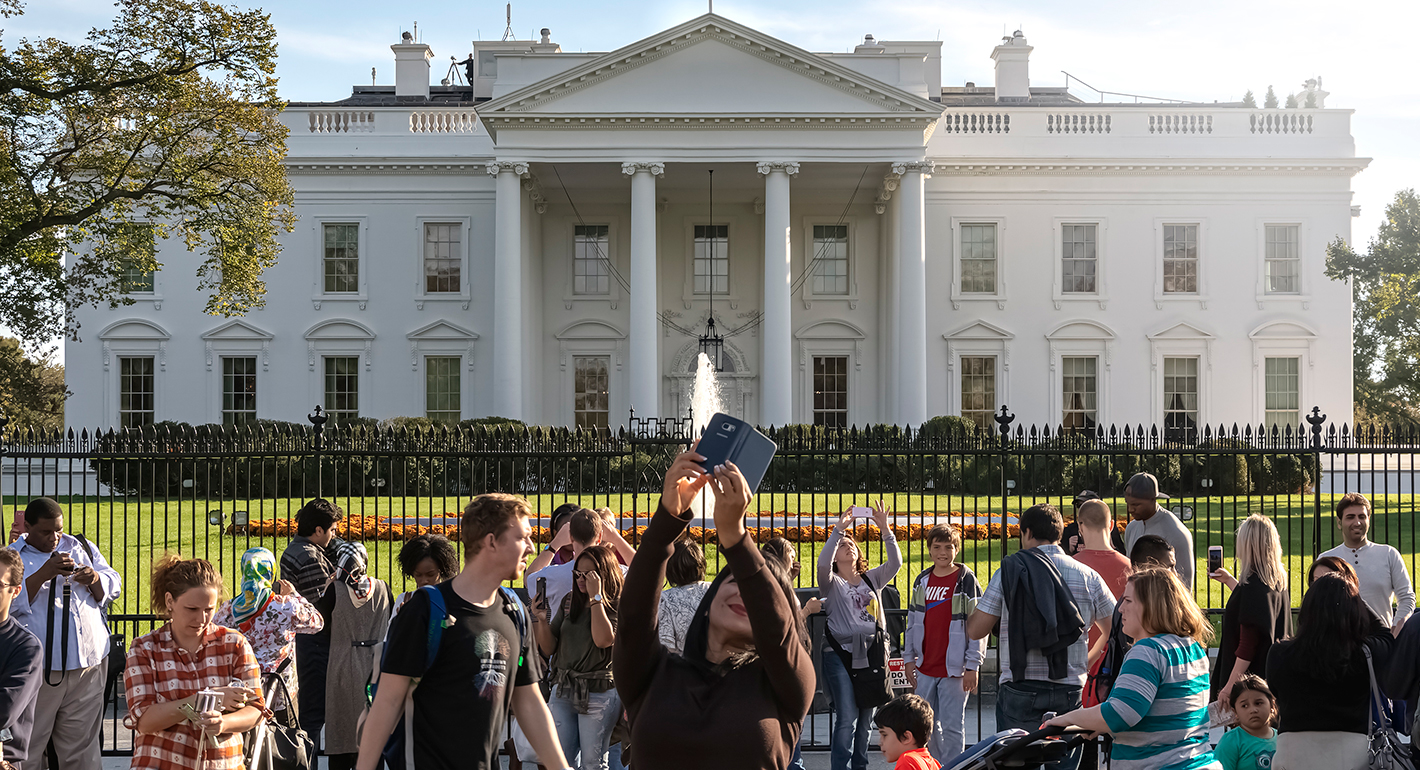
Soft power on its own is insufficient to meet U.S. national security needs, but hard power also has its limits. Soft power allows for more effective and efficient use of hard power than hard power alone, as it encourages cooperation and compliance which deters the need for hard power.
Sarah Yerkes
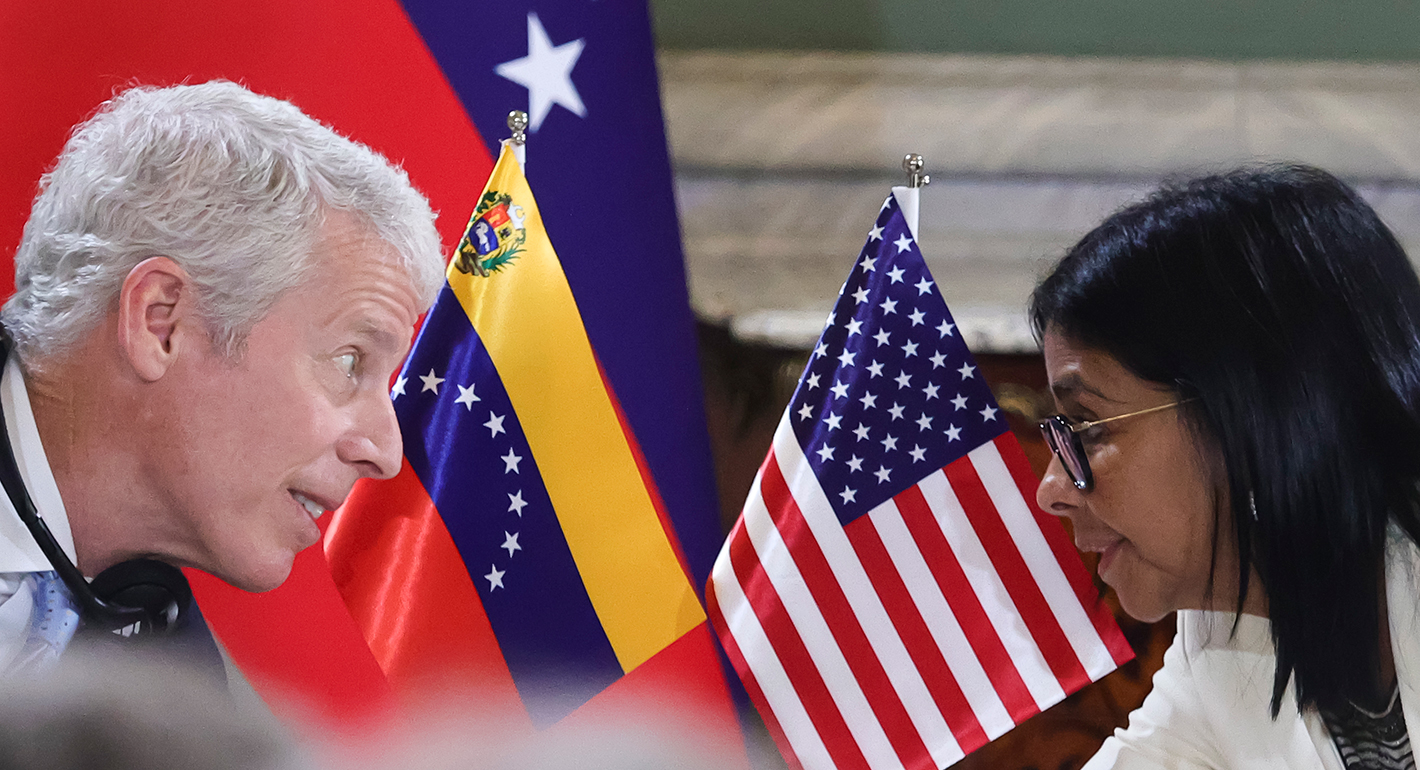
Washington needs to recognize that influence in the Western Hemisphere comes from presence, delivery, and reliability. It also must recognize that while the United States remains the key external actor, it no longer operates in a permissive environment and cannot presume deference from regional players who have other options, namely China.
Juan S. Gonzalez
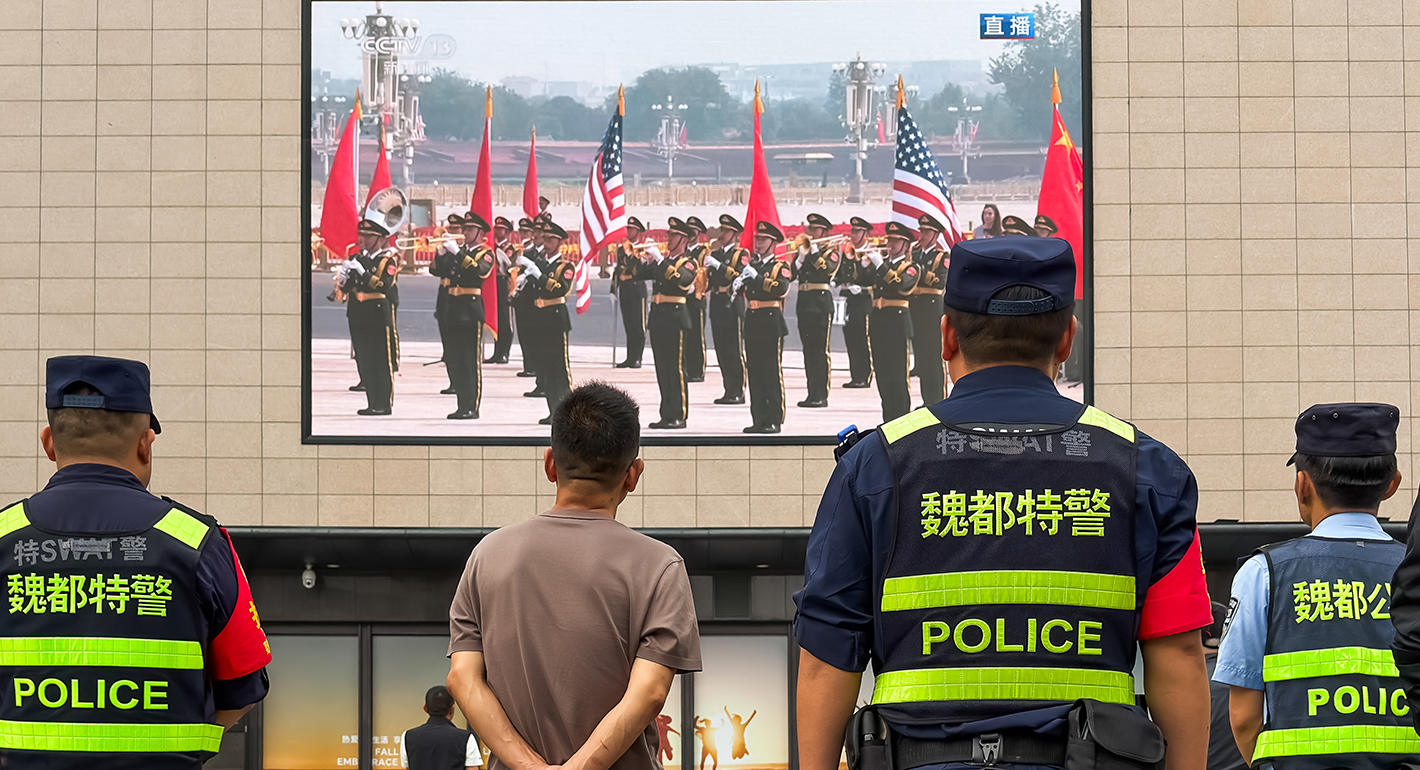
Chinese strategists are once again debating whether American power is declining and whether U.S. hegemony is experiencing irreversible decay.
Wu Xinbo
Networks—from international payments platforms to key economic sectors—underlie many aspects of U.S. power. But they are suffering under an extractive approach to foreign policy.
Daniel W. Drezner