

Commentary
Sergei Kiriyenko used Russia’s parliamentary vote to further hone his strategy of corporate mobilization that is designed to maximize votes for United Russia.
Andrey Pertsev
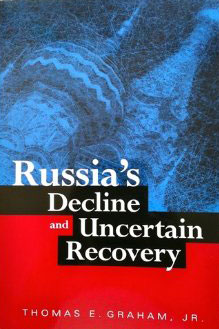
The precipitous decline of Russian power and influence in the world may stand as the most significant development for international relations of the last quarter of the 20th century. Never in modern history has a great power fallen so far so fast during peacetime.
Source: Washington, DC: Carnegie Endowment for International Peace, 2002
The precipitous decline of Russian power and influence in the world may stand as the most significant development for international relations of the last quarter of the 20th century. Never in modern history has a great power fallen so far so fast during peacetime. This decline initially brought the four-decades-long Cold War to a hasty, unexpected conclusion, and subsequently the Russian state and people have experienced a traumatic decade of chaos and widespread impoverishment that can be compared with the Time of Troubles at the turn of the 17th century or the Bolshevik Revolution and ensuing civil war in the early 20th century.
In this monograph, Thomas E. Graham, Jr., clearly and succinctly analyzes the sources of Russia's decline during the Soviet period and the dangerous fragmentation and erosion of state power in Russia during the 1990s. In finding roots in Russian history for the oligarchic regime of the Yeltsin years and the increasingly authoritarian characteristics of the Putin regime, he challenges the appropriateness of the transition paradigm for what has emerged in Russia during the past ten years. According to Graham, whether Russia will achieve sustainable economic growth, political stability, and renewed international influence remains an open question.
About the Author
Thomas E. Graham, Jr. is associate director of the Policy Planning Staff at the Department of State. He was previously a senior associate in the Russian and Eurasian Program of the Carnegie Endowment for International Peace, where he undertook a two-year project on the fragmentation of Russia that resulted in this monograph.
Former Senior Associate
Carnegie does not take institutional positions on public policy issues; the views represented herein are those of the author(s) and do not necessarily reflect the views of Carnegie, its staff, or its trustees.

Sergei Kiriyenko used Russia’s parliamentary vote to further hone his strategy of corporate mobilization that is designed to maximize votes for United Russia.

Andrey Pertsev

Trump has promised Belarus a massive potash deal. But Minsk is seeking something greater: restored Western transit and greater room for maneuver from Russia.

Balázs Jarábik

Before the next wave of EU enlargement takes place, the union needs to grapple with thorny questions of how power is distributed among its members.


Emil Sondaj Hansen, Ditte Brasso Sørensen

The European far right might fail to steer EU policy in the direction Russia wants, but they will create enough chaos inside Europe to benefit the Kremlin.

Dimitar Bechev

A summer of escalation in the Black Sea has hurt Ukraine economically and is exacerbating world food security. A truce is needed—as is a broader reframing of Europe’s Ukraine strategy.

Thomas de Waal