

Commentary
The summit may be remembered as a fatal blunder, when Washington, Beijing, and the AI industry collectively chose ceremony over action.
Jeffrey Prescott

REQUIRED IMAGE
The Carnegie International Non-Proliferation Conference, "Sixty Years Later," will be held on November 7- 8, 2005. Below is the second in a series of analyses on proliferation milestones.
"We are here to make a choice between the quick and the dead. That is our business…If we fail, then we have damned every man to be the slave of fear."
With these dramatic words on June 14, 1946, Bernard Baruch, the United States representative to the UN Atomic Energy Commission, introduced America’s plan to avert a state of permanent nuclear terror. The Baruch Plan was revolutionary. It also failed, and his fearful prophecy proved all too accurate. As nonproliferation experts and political leaders struggle today to control the spread of nuclear technology and weaponry, revisiting the Baruch Plan can teach us much about where we have come and where we may be going. (Read More)
The Carnegie International Non-Proliferation Conference, "Sixty Years Later," will be held on November 7- 8, 2005. Below is the second in a series of analyses on proliferation milestones.
"We are here to make a choice between the quick and the dead. That is our business…If we fail, then we have damned every man to be the slave of fear."
With these dramatic words on June 14, 1946, Bernard Baruch, the United States representative to the UN Atomic Energy Commission, introduced America’s plan to avert a state of permanent nuclear terror. The Baruch Plan was revolutionary. It also failed, and his fearful prophecy proved all too accurate. As nonproliferation experts and political leaders struggle today to control the spread of nuclear technology and weaponry, revisiting the Baruch Plan can teach us much about where we have come and where we may be going.
Baruch based his plan on the "Acheson-Lilienthal" report, which was submitted to President Truman by then-Undersecretary of State Dean Acheson and U.S. Atomic Energy Commission chairman David Lilienthal in March 1946. The plan sought to establish an International Atomic Development Authority that would own and control all "dangerous" elements of the nuclear fuel cycle, including all uranium mining, processing, conversion, and enrichment facilities. Only "non-dangerous" activities could be conducted on a national level, and even then only with a license granted by the International Atomic Development Authority. Baruch reasoned that this structure would make verification relatively simple since the mere possession of a uranium conversion or enrichment plant by a national authority would be a clear violation. Baruch’s version of the plan also included automatic punishment for violations, a step that went much further than the recommendations of Acheson and Lilienthal.
Moreover, since the objective of the Baruch Plan was not only to restrain the spread of nuclear weapons, but also to prevent an arms race and eliminate the bomb altogether, it proposed that once the Authority could ensure that no other state was able to construct the bomb, the United States would guarantee the elimination of its entire nuclear stockpile.
The Baruch Plan tried to prevent the balance of terror that later defined the standoff between the United States and the USSR. But it failed, an early victim of the Cold War rivalry. Approved by the UN Atomic Energy Commission on December 31, 1946, the plan was opposed by the Soviet Union in the UN Security Council. Close to achieving his own nuclear bomb, Stalin was not about accept any plan that limited Soviet national sovereignty and that might have locked in, even if only for a short time, America’s nuclear advantage. Knowing that the Americans would refuse, the Soviets proposed that any agreement require Washington to disarm prior to some form of the Authority being put in place.
Stalin was right. Truman and Baruch would not compromise. Though there was urgency in late 1945 and early 1946 about the need to control the bomb, there was also a growing sense among prominent American officials that the United States could and should retain a nuclear monopoly. Manhattan Project leader Brigadier General Leslie Groves argued that the Soviets would not be able to build the bomb for one to two more decades. Secretary of State James Byrnes saw the bomb as a trump card in meetings with Stalin and Soviet Foreign Minister Molotov. Even Baruch came to believe that the plan could only be accepted on its own terms since "America can get what it wants if she insists on it. After all, we’ve got it and they haven’t…"
The combination of Soviet opposition and growing faith in the sustainability of American superiority proved too much for the Baruch Plan. For a brief time in 1946, this revolutionary vision to abolish the ultimate weapon seemed within reach. In a matter of months, however, it faded into oblivion.
The atomic threat of 1946 pales in comparison to the threat of today’s 27,000 nuclear weapons held by eight nations (nine, if North Korea is included). Bold, new ideas are needed now, just as much as then. Though it failed politically, the spirit of the Baruch Plan—looking for novel, comprehensive ways to restrict access to the material and technology needed for the bomb without depriving any state of the benefits of this discovery—should inspire nonproliferation leaders to learn from the past in order to breath new life into efforts to more successfully halt the spread of nuclear arms.
Related Links:
"The Baruch Plan," as Presented to the United Nations Atomic Energy Commission, 14 June 1946
"Multilateral Approaches to the Nuclear Fuel Cycle," Report of the independent Expert Group on Multilateral Approaches to the Fuel Cycle, February 2005
Joshua Williams
Carnegie Endowment for International Peace
Carnegie does not take institutional positions on public policy issues; the views represented herein are those of the author(s) and do not necessarily reflect the views of Carnegie, its staff, or its trustees.
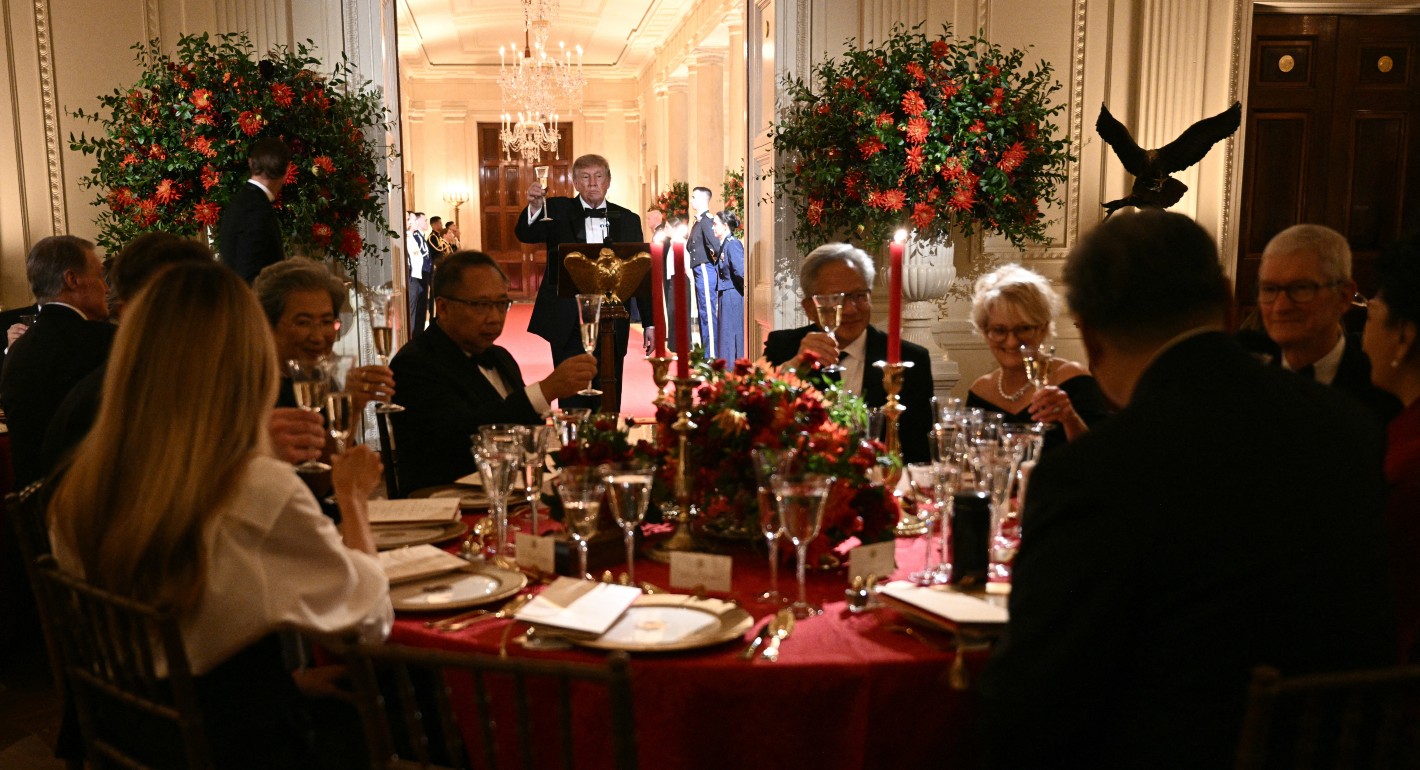
The summit may be remembered as a fatal blunder, when Washington, Beijing, and the AI industry collectively chose ceremony over action.

Jeffrey Prescott

European NATO countries are wrestling with the possibility of U.S. disengagement from the alliance. With the continent’s security increasingly uncertain, governments must restore the credibility of their collective defense.



Hans-Dieter Lucas, Adam Thomson, Pierre Vimont

Cargo traffic through Russia’s Northern Sea Route has increased because of the disruption caused by the conflict in the Middle East, the Ukraine war, and U.S.-China tensions.

Mikhail Korostikov

An analysis of traffic accident data suggests that Ukrainian drone attacks caused a material but not disastrous fall in Russian gasoline consumption over the summer.

Sergey Vakulenko
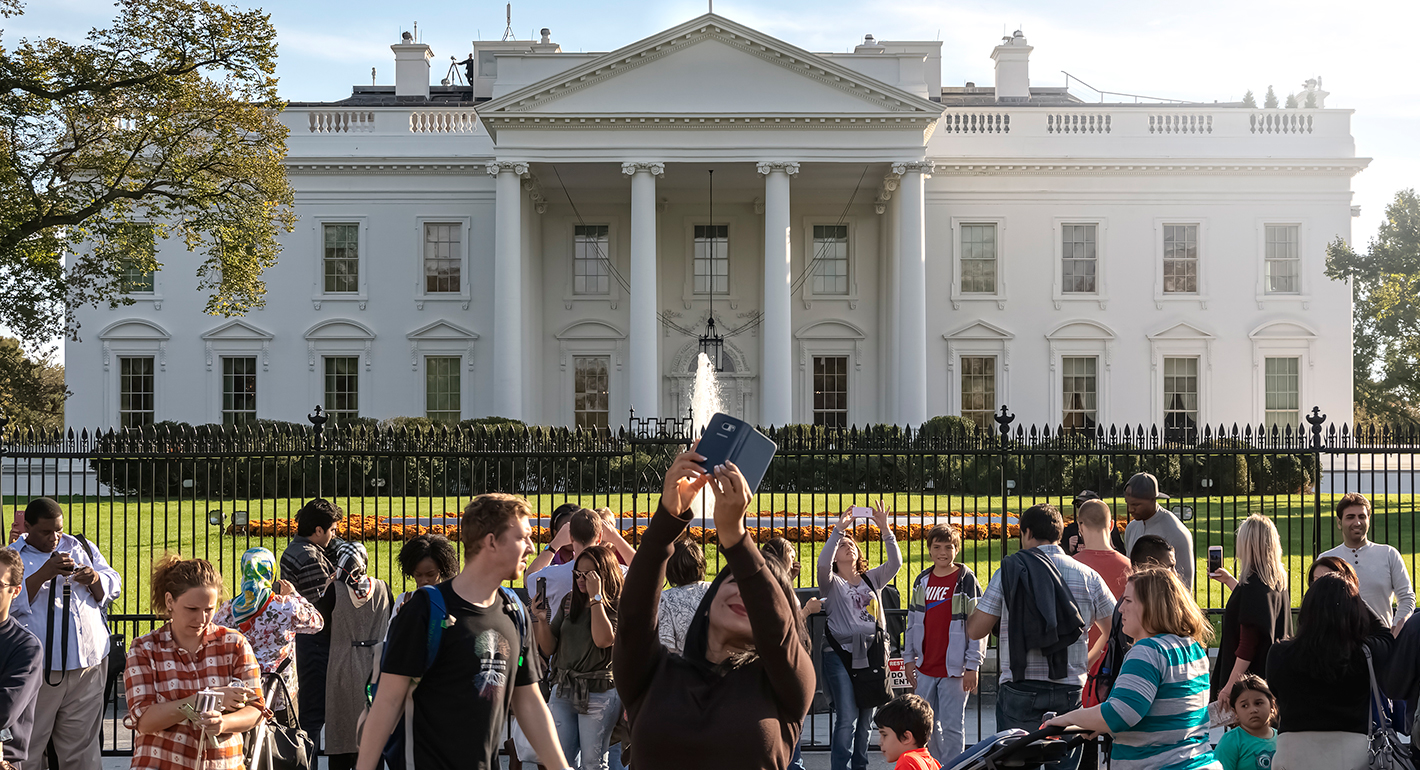
Soft power on its own is insufficient to meet U.S. national security needs, but hard power also has its limits. Soft power allows for more effective and efficient use of hard power than hard power alone, as it encourages cooperation and compliance which deters the need for hard power.

Sarah Yerkes