

In The Media
Josh Kurlantzick
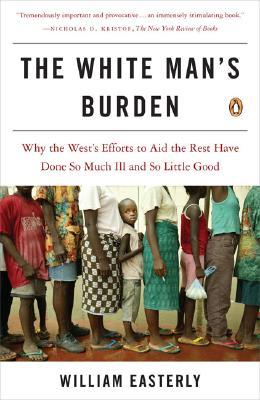
If The White Man’s Burden is too dour in some respects, it does serve as a useful warning to the next generation of utopians.
Source: Book Review
The White Man’s Burden: Why the West’s Efforts to Aid the Rest Have Done So Much Ill and So Little Good
by William Easterly (Penguin Press. 436 pp. $27.95)
Reviewed by Joshua Kurlantzick
The economist Jeffrey Sachs was once known primarily as the doctor who healed the economies of post-cold-war Eastern Europe, but recently he has achieved far greater fame. With the publication last year of The End of Poverty: Economic Possibilities for Our Time,* he almost single-handedly revived a seemingly lost cause. If, Sachs argued, rich countries increased their foreign aid to roughly $150 billion a year, the world could eliminate extreme poverty by 2025.
Support for Sachs’s “end poverty” push now ranges from the musician Bono, who was named one of Time’s Men of the Year (along with Bill and Melinda Gates) for urging rich governments to ante up; to the United Nations, which has set eight Millennium Development Goals for 2015; to Tony Blair, who echoed Sachs in calling for a doubling of aid to Africa. Sachs even helped inspire the music promoter Bob Geldof to hold a globe-spanning rock festival for the cause in July 2005—ten simultaneous shows, collectively titled Live 8 and designed to pressure global leaders to banish poverty.
Who could object to such idealism? William Easterly, for one. A former senior research economist at the World Bank, Easterly has spent his career working for international institutions that try to help the poor. His first book, The Elusive Quest for Growth: Economists’ Adventures and Misadventures in the Tropics (2001), established him as perhaps the foremost critic of foreign economic intervention in the third world. In The White Man’s Burden, he extends his argument, placing Sachs and his followers squarely in his sights.
As Easterly sees it, the great problem with foreign aid has always been the utopian aims of “Planners”—humanitarians who think they know the answer to problems in advance and insist on imposing their own solutions. During the 19th and early 20th centuries, when Western countries were still colonial powers, leaders like the British abolitionist William Wilberforce and President Woodrow Wilson considered themselves chosen to save the non-white “Rest.” As Wilberforce demanded in the name of Christianity and Enlightenment alike, “Must we not then . . . endeavor to raise these wretched beings?” What he and those like him failed to ask, according to Easterly, was whether their remedies actually helped their impoverished wards.
After World War II, the West’s rhetoric of racial superiority died out, but the frame of mind behind it did not. In the 1950’s and 60’s, private and government organizations inspired by Walt Rostow’s The Stages of Economic Growth decided that poor nations needed big doses of aid, often focused on infrastructure, to escape from the “poverty trap”—the supposed need to spend all of their resources on survival, leaving little for investment in the long-term welfare of their societies.
As Easterly shows, however, the Planners’ big push failed. Advocates like Robert McNamara, the president of the World Bank, focused only on the volume of foreign aid, constantly proposing to double disbursements. But the aid had no discernible effect on growth rates and brought only modest improvements in the quality of life. Tanzania, for instance, received $2 billion worth of gleaming new roads, only to see them deteriorate from lack of maintenance.
In the 1980’s and 90’s, Western givers began to emphasize something called structural-adjustment programs—that is, loans conditioned on market reforms in the recipient countries. But these, too, failed. In the Ivory Coast, which received more than twenty loan packages, per-capita income plunged, leading to “one of the worst and longest depressions in economic history.” In other recent cases—in countries like Bolivia and Malawi—the policies dictated by structural-adjustment loans from the International Monetary Fund and World Bank have contributed to a collapse into economic and political turmoil.
Thanks in part to this record, aid to the third world fell out of favor in the late 1990’s. Today, through the efforts of Sachs and his fellow travelers, it has come full circle. But Easterly sees little difference between today’s top-down anti-poverty agenda and the one promoted with such fanfare in the 1950’s—or in the 1850’s. The utopian impulse has remained a constant. As he quotes Sachs: “To do things piecemeal is vacuous. . . . Success in ending the poverty trap will be much easier than it appears.”
The core problem, Easterly contends, is that few Western aid programs ever seek feedback from their consumers, the world’s poor. Aid bureaucrats seldom feel accountable to anyone other than their rich-country principals, who rate results not on how money is used but on how much of it is given out. In Angola, for example, the World Bank disbursed some $180 million to the government between 1992 and 1999, despite rampant corruption. When that sparked little growth, donors just upped the ante. Nor do many donors attempt even a basic cost-benefit analysis of aid flows. If they did, Easterly believes, they might realize that the battle against HIV/AIDS in Africa has taken more lives than it has saved, because the money spent on expensive anti-retroviral treatments diverts funding from HIV prevention and the fight against other diseases, like malaria.
On the basis of this analysis, Easterly’s advice to Western donors is that they should stop thinking of themselves as Planners and begin thinking of themselves instead as “Searchers.” They should investigate what is in demand in impoverished countries, adapt to local conditions, and stress accountability. Indeed, he shows, such programs have already achieved some measure of success. In Bangladesh, for instance, a doctor found that if he charged his poor clients small fees for basic care, they became more active and demanding as patients than those receiving it for free. Another initiative, called GlobalGiving.com, lets potential recipients post their ideas online to win over donors who are “shopping” for worthy projects. Even the World Bank has gotten into the act, with a program begun in the early 1990’s that gives parents small in-kind rewards for their children’s school attendance; enrollment has doubled.
Though Easterly celebrates such efforts, and believes that market instincts are hardwired into all human beings, he does not tout laissez-faire capitalism as a panacea. As he sees it, development agencies simply should abandon the patronizing conviction that they alone can transform the third world. They should allow the poor in Africa and other underdeveloped regions to “be their own Searchers.” At most, the West should provide support for small-scale programs with built-in feedback—just the sort of modest interventions disdained by Jeffrey Sachs and his minions.
William Easterly’s writing is much like that of Thomas Friedman. To explain complex economic questions, he mixes anecdotal reporting with simple descriptions of ideas and theories. To Easterly’s credit, though, he does not fall into the Friedman trap of extrapolating trends from a handful of examples; he backs up his claims with significant research.
As an attack on the international anti-poverty establishment, The White Man’s Burden is difficult to refute. Easterly hits easy targets, like the hydra of United Nations organizations, with their useless “summits” and onerous reporting requirements. But he also debunks the more hardheaded advocates of aid. As against Sachs, Easterly throws cold water on the idea of a “poverty trap,” finding economic mobility among even the poorest states. As for the premise of the Bush administration’s Millennium Challenge Corporation—the idea that aid can be used as an incentive to promote good government—he sees little evidence that donors themselves can make such discriminations, and even offers reason to doubt that democracy makes aid more effective.
Where Easterly fares less well is in his own agenda for improving foreign aid. He is right, no doubt, that assistance must encompass more feedback, accountability, and market-driven solutions. But he cannot see beyond the possibility of piecemeal change, even though at times he appears to understand the contribution it can make to broader developments. Thus, he notes the significance of market reforms in Xiaogang, China during the 1970’s, calling them the “pebble that started the landslide of the Chinese economic miracle,” but he fails to describe how the one might have contributed to the other.
Indeed, there is an unwarranted resignation in Easterly’s advice, especially considering the economic transformation that has swept much of the globe in recent decades. Most of the high-growth Asian economies he cites as success stories actually combined elements of (in his terms) both Searching and Planning. Each country found an economic model suited to it—Hong Kong became a trading entrepot, South Korea, an industrial giant—and formulated national policies accordingly. Today, some private-sector aid donors, like the Gates Foundation, blend elements of Searching and Planning as well, trying to look at problems like malaria control comprehensively while figuring out what works best in particular environments.
If The White Man’s Burden is too dour in these respects, it does serve as a useful warning to the next generation of utopians. After all, two decades before the Live 8 concerts inspired by Jeffrey Sachs’s crusade, rockers held another benefit, Live Aid, to boost assistance to Ethiopia. They raised some $100 million for the cause; today, Ethiopia is even poorer than it was then.
Joshua Kurlantzick is a special correspondent for the New Republic and a visiting scholar at the Carnegie Endowment for International Peace.
*Reviewed by David Frum in the June 2005 COMMENTARY.
This article first appeared in Commentary (June 2006). Commentary is available at www.commentarymagazine.com.

Former Visiting Scholar, China Program
A special correspondent for The New Republic, a columnist for Time, and a senior correspondent for The American Prospect, Kurlantzick assesses China’s relationship with the developing world, including Southeast Asia, Africa, and Latin America.
Recent Work
Josh Kurlantzick
Carnegie does not take institutional positions on public policy issues; the views represented herein are those of the author(s) and do not necessarily reflect the views of Carnegie, its staff, or its trustees.

Soft power on its own is insufficient to meet U.S. national security needs, but hard power also has its limits. Soft power allows for more effective and efficient use of hard power than hard power alone, as it encourages cooperation and compliance which deters the need for hard power.

Sarah Yerkes

In an interview, Ian Lustick and Eli Clifton discuss their new book on why a prominent ally has so much influence in America.

Michael Young

Germany, India, and other middle powers can’t build frontier AI alone, and they risk being cut off if they depend on the United States or China. The way through is to build the capacity for a frontier sprint while hoping never to use it.


Anton Leicht, Sam Winter-Levy

The real test may come after the leaders leave the room.



Sheena Chestnut Greitens, Oriana Skylar Mastro, Yukon Huang, …

The Horn of Africa countries are among those facing a new security calculus.


Andrew Leber, Lesley Anne Warner