• Research
  • Emissary
  • About
  • Experts
Carnegie Global logoCarnegie lettermark logo
Democracy
  • Donate
Turkey's Perspectives on Nuclear Weapons and Disarmament
Report

Turkey's Perspectives on Nuclear Weapons and Disarmament

Global nuclear disarmament could increase Turkey’s regional and international influence. If Iran achieves its nuclear ambitions and America’s influence is perceived as declining, however, Turkey’s inclination to favor a disarmament agreement may change.

Link Copied
By Henri J. Barkey
Published on Sep 22, 2009

Additional Links

Click here to read the full report
Program mobile hero image

Program

Middle East

The Middle East Program in Washington combines in-depth regional knowledge with incisive comparative analysis to provide deeply informed recommendations. With expertise in the Gulf, North Africa, Iran, and Israel/Palestine, we examine crosscutting themes of political, economic, and social change in both English and Arabic.

Learn More

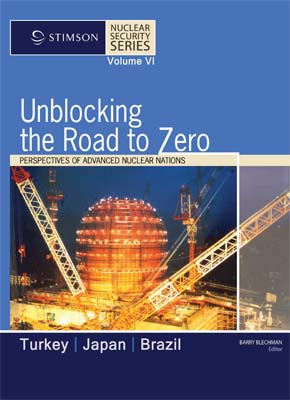
Source: Stimson Center's Nuclear Security Studies

Turkey's Perspectives on Nuclear Weapons and Disar
In principle, Turkey would welcome the global elimination of nuclear weapons. For the
current government, the possession of nuclear weapons by other states is a factor that, indirectly at least, reduces Turkey’s regional (if not global) aspirations and power. However, in the medium term, it remains deeply ambivalent on the future of nuclear weapons and its own plans regarding nuclear energy and weapons development.
Turkey lacks a coherently articulated national policy vis-à-vis nuclear weapons. This is partly due to the fact that as a member of NATO it is a direct beneficiary of the US nuclear umbrella and because the United States maintains a number of nuclear weapons at the Incirlik Air Force base in southern Turkey. The absence of such a policy is also the result of the unclear demarcation of lines of authority between civilian and military leaders on issues of national defense. While this may not have been a problem in the past, civil-military relations have been strained under the current ruling government, led by the Justice and Development Party (AKP). Until recently, when it came to setting national priorities, the military establishment’s role could best be described as primus inter pares. The AKP’s preoccupation with expanding Turkey’s role in the region and its push to reform Turkish state structures, including the military’s prerogatives, are radically challenging the military’s control of the national security agenda.
This report is part of larger series produced by the Stimson Center.
Henri J. Barkey
Former Visiting Scholar, Middle East Program
Henri J. Barkey
TürkiyePolitical ReformForeign PolicyNuclear PolicyNuclear Energy

Carnegie does not take institutional positions on public policy issues; the views represented herein are those of the author(s) and do not necessarily reflect the views of Carnegie, its staff, or its trustees.
More Work from Carnegie Endowment for International Peace

  • Commentary
    Strategic Europe
    Taking the Pulse: Is It Time for Europe to Reengage With Belarus?

    In return for a trade deal and the release of political prisoners, the United States has lifted sanctions on Belarus, breaking the previous Western policy consensus. Should Europeans follow suit, using their leverage to extract concessions from Lukashenko, or continue to isolate a key Kremlin ally?

      Thomas de Waal, ed.

  • A New Era of Nuclear-Powered Submarines Is Making Waves in Nuclear-Weapon-Free Zones
    Research
    A New Era of Nuclear-Powered Submarines Is Making Waves in Nuclear-Weapon-Free Zones

    As states without nuclear weapons develop nuclear-powered submarines, can NWFZ regimes adapt to manage new technical, legal, procedural, and normative challenges?

      Jamie Kwong, ed., Toby Dalton, ed., Celia McDowall, ed.

  • Navigating Responsible Stewardship of Nuclear-Powered Submarines
    Research
    Navigating Responsible Stewardship of Nuclear-Powered Submarines

    As the first states without nuclear weapons set to acquire nuclear-powered attack submarines, Australia and Brazil face new questions and challenges as they seek to responsibly manage the risks of naval nuclear propulsion.

      Jamie Kwong, ed., Toby Dalton, ed.

  • Group of people walking and waving
    Commentary
    Emissary
    Can Venezuela Move From Economic Stabilization to a Democratic Transition?

    Venezuelans deserve to participate in collective decisionmaking and determine their own futures.

      Jennifer McCoy

  • Commentary
    Carnegie Politika
    Lithuania’s Potash Dilemma Raises Questions About Sanctions’ Effectiveness

    What should happen when sanctions designed to weaken the Belarusian regime end up enriching and strengthening the Kremlin?  

      Denis Kishinevsky

Get more news and analysis from
Carnegie Endowment for International Peace
Carnegie global logo, stacked
1779 Massachusetts Avenue NWWashington, DC, 20036-2103Phone: 202 483 7600Fax: 202 483 1840
  • Research
  • Emissary
  • About
  • Experts
  • Donate
  • Programs
  • Events
  • Blogs
  • Podcasts
  • Contact
  • Annual Reports
  • Careers
  • Privacy
  • For Media
  • Government Resources
Get more news and analysis from
Carnegie Endowment for International Peace
© 2026 Carnegie Endowment for International Peace. All rights reserved.