• Research
  • Emissary
  • About
  • Experts
Carnegie Global logoCarnegie lettermark logo
DemocracyIran
  • Donate
What Comes Next in Yemen? Al-Qaeda, the Tribes, and State-Building

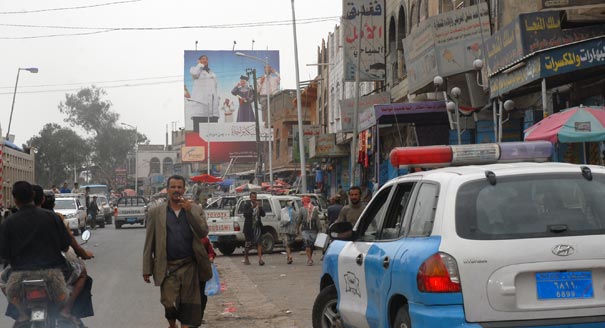
Source: Getty

Paper

What Comes Next in Yemen? Al-Qaeda, the Tribes, and State-Building

There are limits to how much foreign intervention can accomplish in Yemen. To overcome its daunting security, economic, and political challenges, Yemen’s political system needs to become less centralized and more inclusive.

Link Copied
By Sarah Phillips
Published on Mar 11, 2010

Additional Links

Executive Summary
Program mobile hero image

Program

Middle East

The Middle East Program in Washington combines in-depth regional knowledge with incisive comparative analysis to provide deeply informed recommendations. With expertise in the Gulf, North Africa, Iran, and Israel/Palestine, we examine crosscutting themes of political, economic, and social change in both English and Arabic.

Learn More

Western policy makers are scrambling to respond decisively to Yemen’s instability after the failed Christmas Day attack on a U.S. passenger jet was tied to al-Qaeda in the Arabian Peninsula. But there are limits to how much foreign intervention can accomplish—Yemen’s political system needs to become less centralized and more inclusive.

Map: Yemen

Map of Yemen
  • view map
Map of Yemen showing current governorate boundaries and former North/South boundary.

Key Conclusions:

  • Although it is feared that Yemen’s collapse could usher in a Taliban-style regime and create a haven for al-Qaeda, the regime’s failure would not necessarily be a win for the militants. Al-Qaeda arguably benefits more from Yemen’s weak state.
     
  • Even though there are areas in Yemen that lack formal state control, this does not mean that they are ungoverned—there are local mechanisms that maintain a level of order. Al-Qaeda is trying to present itself as an alternative to the regime, but as it grows stronger and seeks control of more territory, it risks competing with local tribes.
     
  • Al-Qaeda’s goal of establishing an international caliphate, propensity for extreme violence against civilians, and hard-line religious ideology conflict with local norms and weaken al-Qaeda’s appeal to the Yemeni people, including the tribes. 

Policy Implications:

  • Western policy makers need to consider the intricacies of Yemen’s domestic politics before responding. Military intervention, like the U.S.-assisted air strikes in December, is likely to further entrench al-Qaeda in the country by inflaming public grievances.
     
  • Merely increasing development assistance risks reinforcing a regime that is poorly equipped and poorly motivated to effectively distribute aid.


“The establishment of a more stable political settlement is a domestic endeavor, and Westerners’ chances of encouraging a more inclusive political system are questionable,” writes Phillips. “In the long term, only a fundamental restructuring of the political system to become much more inclusive will lead to stability.”

About the Author

Sarah Phillips

Sarah Phillips
Middle EastYemenGulfPolitical ReformSecurity

Carnegie does not take institutional positions on public policy issues; the views represented herein are those of the author(s) and do not necessarily reflect the views of Carnegie, its staff, or its trustees.

More Work from Carnegie Endowment for International Peace

  • Commentary
    Diwan
    Shockwaves Across the Gulf

    The countries in the region are managing the fallout from Iranian strikes in a paradoxical way.

      • Angie Omar

      Angie Omar

  • Commentary
    Strategic Europe
    Taking the Pulse: Is France’s New Nuclear Doctrine Ambitious Enough?

    French President Emmanuel Macron has unveiled his country’s new nuclear doctrine. Are the changes he has made enough to reassure France’s European partners in the current geopolitical context?

      • Rym Momtaz

      Rym Momtaz, ed.

  • Commentary
    The Iran War’s Dangerous Fallout for Europe

    The drone strike on the British air base in Akrotiri brings Europe’s proximity to the conflict in Iran into sharp relief. In the fog of war, old tensions in the Eastern Mediterranean risk being reignited, and regional stakeholders must avoid escalation.

      Marc Pierini

  • Commentary
    Diwan
    The U.S. Risks Much, but Gains Little, with Iran

    In an interview, Hassan Mneimneh discusses the ongoing conflict and the myriad miscalculations characterizing it.

      Michael Young

  • Commentary
    Diwan
    The Greatest Dangers May Lie Ahead

    In an interview, Nicole Grajewski discusses the military dimension of the U.S. and Israeli attacks on Iran.

      Michael Young

Get more news and analysis from
Carnegie Endowment for International Peace
Carnegie global logo, stacked
1779 Massachusetts Avenue NWWashington, DC, 20036-2103Phone: 202 483 7600Fax: 202 483 1840
  • Research
  • Emissary
  • About
  • Experts
  • Donate
  • Programs
  • Events
  • Blogs
  • Podcasts
  • Contact
  • Annual Reports
  • Careers
  • Privacy
  • For Media
  • Government Resources
Get more news and analysis from
Carnegie Endowment for International Peace
© 2026 Carnegie Endowment for International Peace. All rights reserved.