

Commentary
Russian strikes are weakening the economy sustaining Ukraine’s war effort. Closing the growing funding gap will require more European support and politically contentious reforms in Kyiv.
Balázs Jarábik
Source: Getty
Food prices have been fluctuating wildly, hurting both consumers and producers. Several causes are clear and policy makers are taking note, but more must be done to help ensure long-term food price stability.
Food prices have been fluctuating wildly over the last four years, hurting both consumers and producers. Changing petroleum prices, crop yields, food stock levels, and exchange rates are the main culprits, but trade policies and a lack of reliable, up-to-date data are also driving the volatility. Policy makers are taking note, as evidenced by French President Nicolas Sarkozy’s decision to prioritize food price volatility on the G20 agenda this year under France’s chairmanship. However, governments in both developed and developing countries must do more to mitigate each of these causes and to help ensure long-term price stability.1
As shown by the food price index below, compiled by the United Nations’ Food and Agriculture Organization (FAO), food prices have fluctuated wildly over the last four years. The index rose from 122 in 2006 to 214 in June 2008 as the 2007–2008 food price crisis unfolded. The index then fell rapidly in the second half of 2008, reaching 140 in March 2009. In the latter half of 2010, it increased markedly, especially after a severe drought hit Russia, and reached 215 in December, surpassing its 2007–2008 crisis peak.

In what is potentially an even more worrying trend, implied volatility—which represents the market’s expectations of how much the price is likely to move in the future and can only be inferred from the prices of derivative contracts such as options—has been increasing steadily since the mid-1990s. The implied volatilities of three key staple foods—soybeans, maize, and wheat—show a clear upward trend, indicating a steady increase in uncertainty.

Price fluctuations, or normal volatility, are a common feature of competitive markets. They provide important signals to producers and consumers. But the efficiency of this system breaks down when economic shocks cause prices to move in increasingly uncertain and precipitous ways. When shocks surpass a certain level, the price system becomes redundant, and traditional policy prescriptions and coping mechanisms tend to fail.
In addition, extreme volatility hurts poor consumers. Large, unexpected swings in food prices greatly endanger the food security of poor households in developing countries, who spend as much as 70 percent of their incomes on food. As a result of the 2007–2008 food price crisis, for example, about 80 million additional people became undernourished, according to FAO estimates.
Excessive volatility also hurts producers. When price uncertainty increases, poor, risk-averse farmers invest less and use fewer inputs, making them more likely to remain in poverty.
The need to minimize food price volatility has become even more urgent recently, as trade has weakened as an instrument for food security. Agricultural subsidies in rich countries limit agricultural growth in developing countries, leaving them vulnerable to food price shocks. And export restrictions—all the more likely in times of crisis—raise world prices and threaten the food security of the world’s poorest people.
The FAO consistently finds that volatility in four variables—petroleum prices, crop yields, food stock levels, and exchange rates—significantly increases food price fluctuations.
First, petroleum price volatility—which tends to be high—translates to food price volatility through transportation costs and fertilizer prices. The link has become even stronger with the advent of biofuels, which require food crops as inputs and can therefore change food prices.
Second, because the demand for food is inelastic, small changes in supply can lead to big changes in prices, meaning that even limited crop yield volatility can have large effects on food price fluctuations. The role of crop yield variability is only expected to rise as extreme weather events become more common.
Third, food price volatility is inversely related to the level of food stocks—as stocks fall, price volatility rises. Both public and private actors have lowered stocks in recent years. This trend may be reversing itself, however, as countries are revising their reserves policies in response to recent bouts of volatility.
Finally, changes in exchange rates, especially of major exporting countries, translate to changes in international food prices. Thus, as macroeconomic factors lead to more volatile exchange rates, food price volatility also rises.
In an extraordinary meeting that followed the drought in Russia, the Intergovernmental Group on Grains and Rice (IGGR) pointed to an additional cause of price volatility: the lack of reliable, up-to-date information on crop supply and demand, stocks, and export availability. Lack of information often leads countries to make bad decisions, such as panic buying in response to a temporary price rise, which leads to even higher prices than would have otherwise been the case.
The role of speculators in increasing food price volatility remains controversial. Market liberalization and financial deregulation have led to a rapid increase in the volume of transactions in commodity exchanges. Ninety billion bushels of wheat worldwide were traded on the Chicago Board of Trade in 2009—the equivalent of trading the entire U.S. Soft Red Wheat crop every business day. Most of those transactions must have been speculative. As a result, it is possible to argue that increased speculation contributed to higher food price volatility.
On the other hand, real factors such as production shortfalls in key exporting countries—and not speculation—triggered the two recent bouts of volatility (in 2007–2008 and 2010). Moreover, the futures markets, where speculators tend to operate, play important societal roles by discovering prices and providing liquidity, suggesting that over-regulation could further hurt the food market.
A return to market management and control, such as by maintaining buffer stocks, is not realistic. Private agents tend to counteract such interventions, leading them to fail. Hence, new, more market-friendly approaches are needed to limit volatility, listed below in order of priority:
High and volatile food prices are a result of the neglect of agriculture over the last three decades. As long as the demand for food continues to rise faster than yield growth, markets will remain tight and prices will remain high and volatile. Thus, in the long run the only real solution to excessive volatility is to invest much more in agriculture.
Hafez Ghanem is the Assistant Director-General of the Food and Agriculture Organization's Economic and Social Development Department.
1. This article is based on numerous studies conducted by the FAO, the results of which will soon appear in a book titled “Safeguarding Food Security in Volatile Global Markets.” For more information, contact the book’s editor, Adam Prakash, at Adam.Prakash@fao.org.
Hafez Ghanem
Food and Agriculture Organization
Carnegie does not take institutional positions on public policy issues; the views represented herein are those of the author(s) and do not necessarily reflect the views of Carnegie, its staff, or its trustees.

Russian strikes are weakening the economy sustaining Ukraine’s war effort. Closing the growing funding gap will require more European support and politically contentious reforms in Kyiv.

Balázs Jarábik
Economic recovery has brought Sri Lanka a modicum of stability, but domestic strains and great-power rivalry could test how long it lasts.

Avinash Paliwal
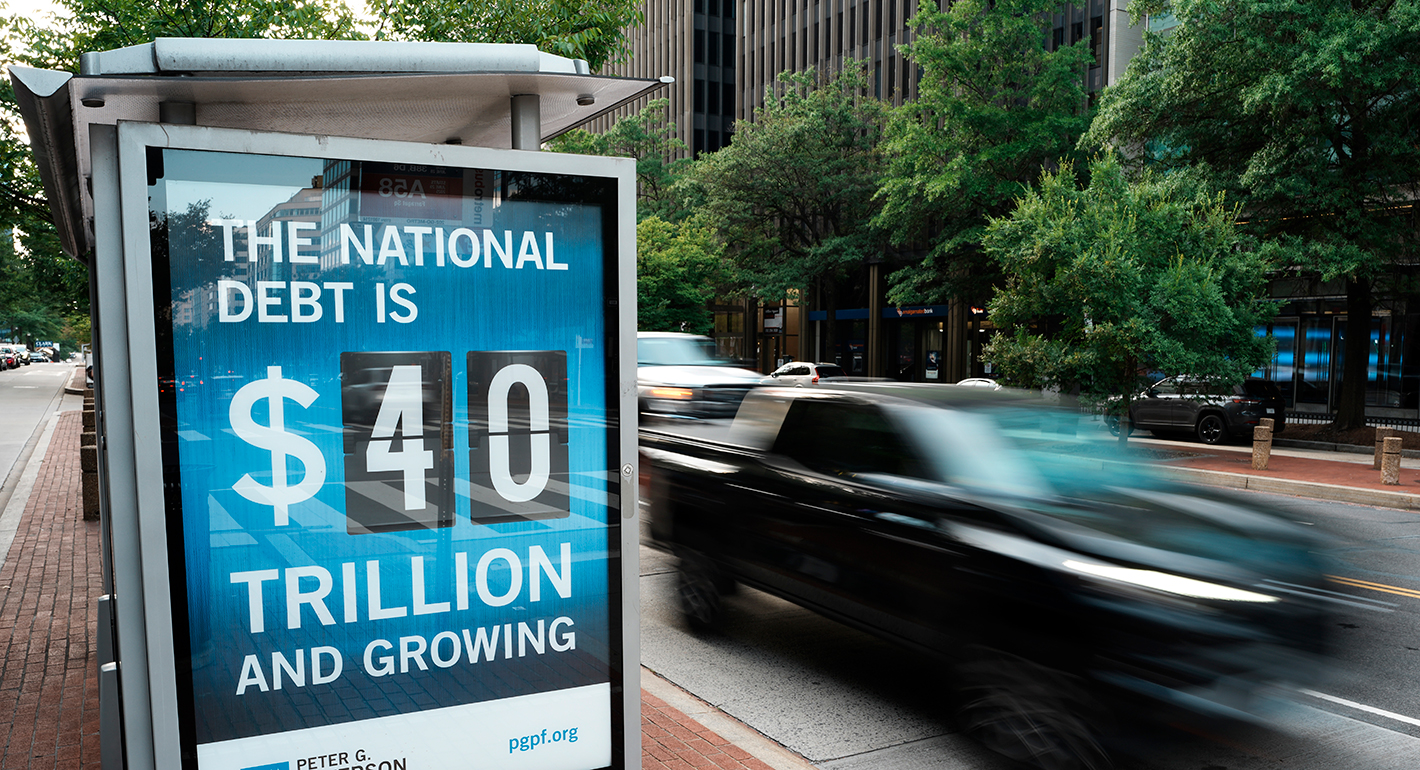
Policy proposals on sovereign debt must both match the scale of the challenge and be implementable within existing political constraints.
David McNair

For every ruble allocated to social policy, health, and education in 2027, double that amount is earmarked for the army, the police, and the security services.

Alexandra Prokopenko

The European Commissioner for Trade is headed to China. But after President Xi’s bridge-building visit to Washington, can a more isolated EU overcome Beijing’s stranglehold on critical raw materials? Who will blink first?

Rym Momtaz, ed.