

Commentary
By fueling the arguments of both supporters and opponents of Armenian Prime Minister Nikol Pashinyan, Azerbaijan wants to ensure he is re-elected with a weaker mandate.
Bashir Kitachaev
Source: Getty
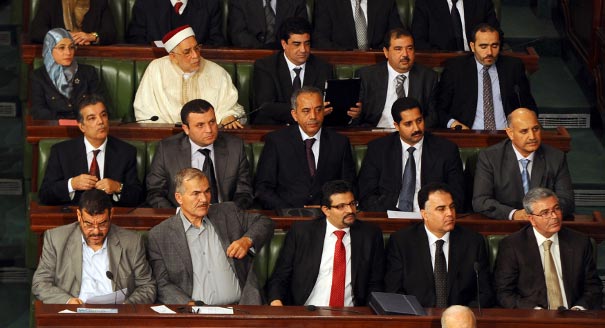
As Tunisia's Constituent Assembly continues to tackle technical constitutional issues, it must also respond to the country's growing impatience about the slow progress on legislative issues.
One hundred fifty years after writing the Arab world’s first constitution, Tunisia is again making history. This time, its newly elected leaders are engaged in the region’s first constitution-making process outside the influence of a dictator or a colonial power.
Since the National Constituent Assembly of Tunisia began discussing the constitution in February 2012, the role of religion in the state—specifically, whether to make reference to sharia in the constitution—was poised to be the most divisive political issue. But now that the assembly’s leading party, Ennahda, has opposed any reference to sharia, the way is clear for the discussion in the assembly to turn more technical. Leaders in the assembly plan to have the constitution approved by December 2012, and Prime Minister Hamadi Jebali has announced that legislative and presidential elections will occur under the new constitution by March 2013.
Six commissions are doing the bulk of constitutional drafting, and each has some twenty members drawn from all parties in the assembly roughly proportionally to the seats they control. Ennahda holds the chair of four of the commissions. The other two chairs come from the Congress for the Republic, a secular party in the governing coalition with Ennahda, and Ettajdid, a leftist opposition party.
The six commissions will discuss, respectively:
The themes reveal that Tunisia’s constitutional drafters are chiefly concerned with establishing a comprehensive legal framework for the republic, not with getting caught up in divisive political issues. The commissions are designed to isolate volatile topics from each other, allowing each group to work toward a stable consensus on a range of important issues.
The chairs of each of the commissions form a coordinating drafting committee tasked with stitching the commissions’ articles together into a complete draft. The president of the assembly, Mustapha Ben Jaafar of the Ettakatol party, which is part of the governing coalition, is the chair of the coordinating committee, but he has a largely symbolic role in the drafting process.
The general rapporteur of the coordinating committee, Habib Kheder of Ennahda, is positioned to be the chief architect of the constitution. However, to what extent Kheder or the coordinating committee will be at liberty to change the text of the articles submitted by the commissions is not clear. Kheder might claim a substantive role or his task might simply be to make the legal provisions consistent. What is clear is that Ennahda and the parties in the governing coalition control the process, since they chair five of the six commissions and will manage it.
Working from the commissions’ articles, the coordinating committee will present a complete draft constitution to the Constituent Assembly. The draft will be adopted if it garners a two-thirds majority. If the draft fails, the coordinating committee will make revisions and send it back to the assembly. If it fails a second time, it will be submitted to popular referendum, at which point a simple majority would be enough to override the assembly and adopt the constitution. It is not clear what would happen if the draft fails the referendum; the assembly might disband or it might start the drafting process all over again.
Despite the public’s desire to be included in the process, as shown by focus groups conducted by the National Democratic Institute, the drafting is closely controlled by the Constituent Assembly. The body has invited a handful of civil society organizations to present their views to the drafting commissions, but these invitations have not been systematically extended. Members of parliament are given one week a month to return home to talk to constituents, but members’ diligence in soliciting feedback is sporadic. And the time line announced by Prime Minister Jebali does not provide the opportunity for a broad public consultation in the model of Uganda or South Africa.
The national debate has centered on the role of religion in the state, which was taken up briefly by the commission in charge of drafting the preamble. Ennahda effectively put an end to the controversy on March 26 by announcing that it opposes including sharia in the constitution. It is all but guaranteed that the only reference to Islam will appear in the form of Article 1 of Tunisia’s 1957 constitution, which states: “Tunisia is a free, independent and sovereign state. Its religion is Islam, its language is Arabic, and its type of government is the Republic.”
Ennahda’s decision came after weeks of public protests on both sides of the issue and confusion over where the party stood. The party’s official platform before the election, as announced by Rached Ghannouchi, its founder and president, was that Ennahda would not seek sharia. Ghannouchi said that the party would be satisfied with maintaining Article 1 of the 1957 constitution.
But several Ennahda leaders took a different stance after the election. An internal Ennahda draft was circulated in the weeks following the vote that stated in the preamble that sharia would be a “source among sources” of legislation. At a protest on March 16, the president of the Ennahda parliamentary group, Sahbi Atig, shouted that sharia would be “the main source of legislation”; the crowd chanted in agreement, “the only source!” The rhetoric of some members of Ennahda prompted Mustafa Ben Jaafar to declare that he would resign and withdraw Ettakatol from the ruling coalition should sharia appear in the constitution in any form.
The decision to avoid mentioning sharia in the constitution was taken by the party’s political council, its top deliberative body of about 120 elected members. Of the 80 members who participated in the debate, only 12 voted in favor of sharia. By contrast, a straw poll of Ennahda members of parliament taken a few days earlier showed a small majority in favor of including sharia.
According to an Ennahda parliamentarian, the political council made the decision for a number of reasons. One is that the meaning of sharia is varied and the council did not want to leave a vague reference in the preamble up to judicial or public (mis)interpretation. The question of sharia is also not that important to the party when compared with other problems facing the country, such as a stable and well-balanced government. Ennahda wanted to avoid contradicting its preelection platform as well as to signal its determination to adopt the constitution by consensus—and the sharia issue had emerged as a red line for the secular parties. And it wanted to demonstrate to the world that including a reference to sharia is not necessary for establishing a democracy that is compatible with Islam.
The key remaining questions in the constitution-drafting process deal not with values and principles but with institutions. They can be summarized as follows, in rough order of priority: the system of government; maintaining the balance of power, including establishing legislative oversight of the executive, a constitutional court, and an amendment procedure; security sector reform; decentralization of power; and electoral system design.
The most immediate question facing the Constituent Assembly is the choice between a parliamentary and a presidential system. Ennahda supports a parliamentary system believing it limits executive power, while its ally Congress for the Republic and most secular parties support a presidential system. The new centrist Republican Party (comprised primarily of the Progressive Democratic Party and Afek Tounes), which is now the second-largest parliamentary group behind Ennahda, backs a mixed system where executive power is shared between an elected president and a prime minister chosen by parliament, as in France.
The decision about the system of government will also affect other major structural questions. One of the most important goals is to ensure that the constitution maintains a balance of power. Drafters want to prevent the executive from monopolizing power as former presidents Habib Bourguiba and Zine el-Abidine Ben Ali did. Drafters seek to enforce a balance in three main ways.
First, the constitution will strengthen legislative oversight over the executive, reinstating parliamentary control of the budget and giving the parliament greater visibility. Already the Constituent Assembly is reviewing and will approve the national budget submitted by the government, and ministers are frequently called in to testify before the assembly. The assembly is looking for ways to enshrine the principles of a strong, transparent legislature into the constitution, and some members of parliament are turning to the budget oversight process in the United States and elsewhere for inspiration. Television cameras have even been let into Bardo Palace—the legislative hall—for the first time.
Second, the Constituent Assembly will establish Tunisia’s first constitutional court. Tunisia operates a French court system, where the Court of Cassation is the highest appeals court but does not rule on constitutionality. The assembly broadly agrees that there will be a constitutional court, but the technical details of composition, procedure, jurisdiction, and precedent have not yet been debated.
Third, the constitution will include a flexible but consensus-based amendment procedure. Then president Bourguiba was able to consolidate power by manipulating the 1957 constitution through lax amendment procedures that only required the two-thirds majority approval of the Chamber of Deputies, a body that he effectively controlled. The assembly is currently reviewing international examples of amendment procedures that balance flexibility with limited executive influence.
The assembly will also have to reckon with security sector reform, which emerged as a priority for Tunisians in a public opinion survey carried out by the International Republican Institute in May 2011. In its most comprehensive form, security sector reform involves a deeply complicated set of procedures, including community-oriented policing, lustration, transitional justice, and legal reform. Reforming this sector will be a decades-long process in Tunisia, requiring a high degree of interagency cooperation and trust building. At the present stage, the constitutional framework for effective and rights-based security sector reform will be an important locus of debate in the assembly.
Civil society groups have been pushing for the inclusion of broad human rights principles in the constitution that can be used to hold the security apparatus accountable, especially to its pledge to ban harsh interrogations. The constitutional commission dealing with rights and freedoms has held hearings on this issue in particular.
Reforms of the security apparatus that have been proposed by some Interior Ministry officials include the separation of the domestic intelligence services from the national police as well as the decentralization of the national police. It is not clear yet which if any of these issues will rise to the level of the constitution. They could instead be dealt with later in legislation or internally within the Interior Ministry.
Decentralization will be an important consideration in other ways as well. Under Ben Ali, the governorates were granted fairly little autonomy. Governorates cannot levy their own taxes, so they receive their entire budget from the central government. Governors and regional commanders cannot deploy the military or police without approval from headquarters in Tunis. Centralization also fueled corruption under the Ben Ali regime, and central planning that privileged export-oriented firms over the domestic market has benefited the coastal regions while leaving the interior behind. How to loosen the grip of the central government and empower the regions will be a key theme as talks continue.
As the Constituent Assembly continues to tackle these increasingly technical issues, it must also respond to the growing impatience of Tunisians about the slow progress on legislative issues, economic and security sector reform chief among them. Economic reform is in this way challenges the drafting process: as Tunisians continue to demand jobs and growth and see neither, some have begun to lose interest in constitutional reform.
Recent protests in Tunis illustrate this point. On April 9, thousands of Tunisians marched down Avenue Bourguiba in front of the Interior Ministry. The crowd grew to such a size that the police dispersed it with tear gas. Unlike slightly smaller protests on Avenue Bourguiba weeks earlier, this march did not comprise Salafis or other supporters of sharia. Rather, the protesters were unemployed youth from central Tunis and governorates, a demographic similar to that of the protests of the first weeks of the revolution.
The changes in demands of large-scale protesters—from the place of sharia in the constitution to economic grievances—could signal a shift in public pressure on the Constituent Assembly. For the remainder of the constitution-drafting process, the Constituent Assembly will continue to balance the tasks of legislating and constitution making.
Duncan Pickard is a graduate student at the John F. Kennedy School of Government at Harvard University, focusing on democratic governance and Middle Eastern politics.
Duncan Pickard
Carnegie does not take institutional positions on public policy issues; the views represented herein are those of the author(s) and do not necessarily reflect the views of Carnegie, its staff, or its trustees.
By fueling the arguments of both supporters and opponents of Armenian Prime Minister Nikol Pashinyan, Azerbaijan wants to ensure he is re-elected with a weaker mandate.

Bashir Kitachaev
If Indigenous land and water dispossession is ignored, climate adaptation strategies risk reproducing inequalities and worsening acute climate vulnerability.

Frederic Wehrey, Charles H. Johnson
Strengthening U.S.-Africa trade and advancing U.S. interests aren’t conflicting goals.

Tyler Beckelman, Kholofelo Kugler
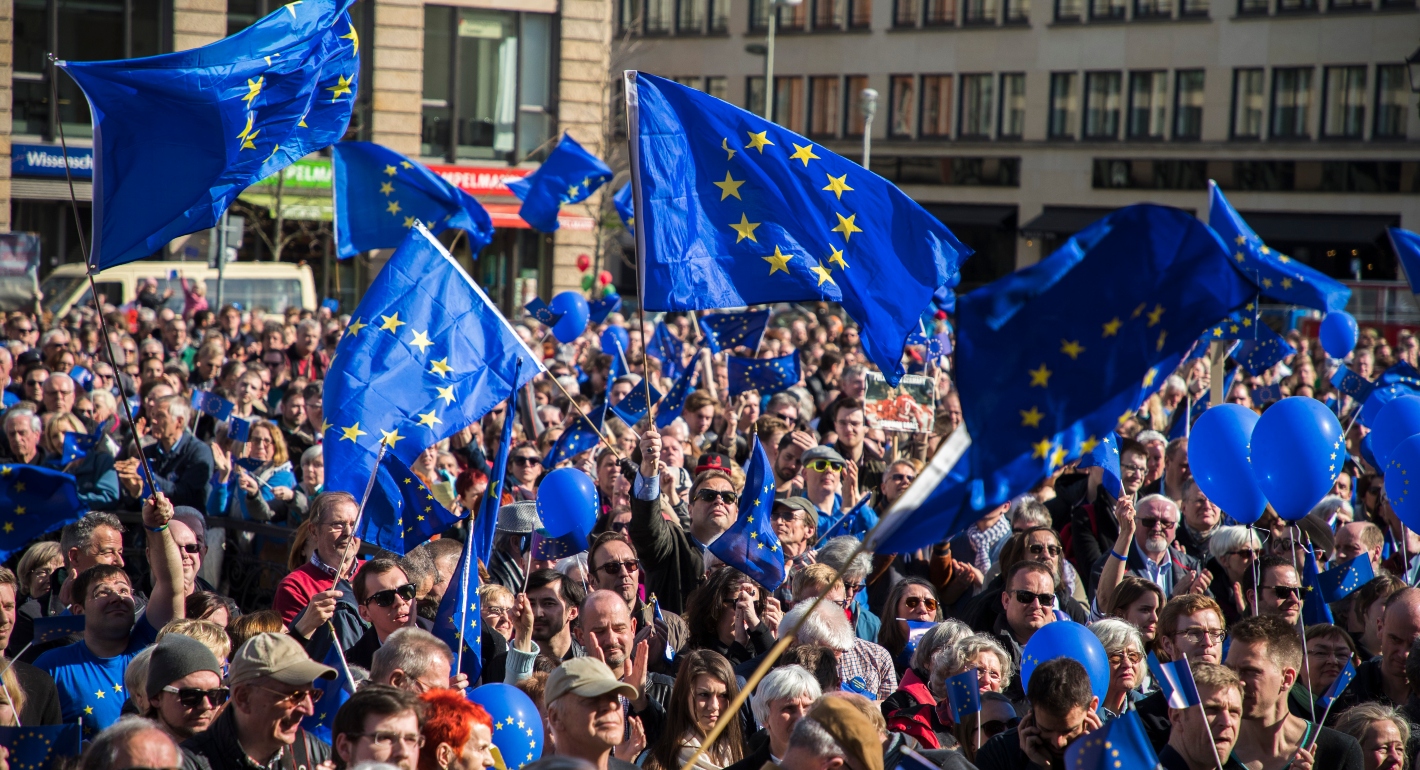
Preparing candidate countries for EU membership is no longer enough. As the enlargement process becomes a reality, the union must also prepare its own societies.

Iliriana Gjoni

A partnership between India, a country of subcontinental size, and Africa, a continent of fifty-four countries, may seem asymmetric until one notes that both are home to nearly the same number of people—1.4 billion. This essay spells out the existing challenges to the partnership, its optimal potential, and the possible pathways to realize it over the next quarter-century.

Rajiv Bhatia