

Commentary
Michael Pettis
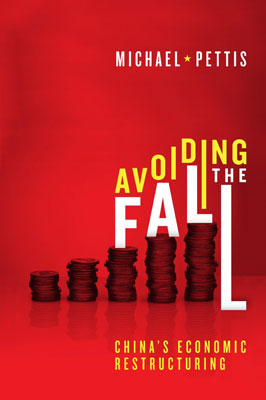
Beijing has no choice but to take significant steps to restructure its economy. The only question is how to proceed.
Source: Carnegie Endowment for International Peace
The days of rapid economic growth in China are over. Mounting debt and rising internal distortions mean that rebalancing is inevitable. Beijing has no choice but to take significant steps to restructure its economy. The only question is how to proceed.Michael Pettis debunks the lingering bullish expectations for China’s economic rise and details Beijing’s options. The urgent task of shifting toward greater domestic consumption will come with political costs, but Beijing must increase household income and reduce its reliance on investment to avoid a fall.
INCXYZ[dis_AuthorBox1.cfm]INCZYX“Michael Pettis combines deep personal knowledge of China with a remarkably broad perspective on economic and financial history generally. This lets him embed the China story in a larger framework of global imbalances, so the reader can see the U.S. subprime crisis, the European sovereign crisis, and the current stresses in China as all part of one massive, global rebalancing.”
—David Beim, Professor of Professional Practice, Columbia Business School
“Pettis probes deeply into the widening cracks in China’s ‘miracle’ economy and lays bare the tough choices that Beijing faces if it is to repair them, demolishing some popular myths and misconceptions about both China and economics. Insightful and compellingly argued, this well-timed book is a valuable key to understanding why the engine that has propelled China’s thirty-year ascent is now threatened with power failure.”
—Guy de Jonquières, Senior Fellow, European Centre for International Political Economy
“Over the past several years, Pettis has been a rare level-headed China observer who has kept his focus on accounting identities and hard economic constraints. Long before it became mainstream, he maintained that China’s economic growth model was unsustainable. In this highly insightful and forward-looking book, Pettis argues that the major uncertainty regarding the rebalancing of China’s economy is not whether but how it will unfold. He applies his characteristic logic and analytical rigor to delineate the range of realistic economic scenarios. It’s a fascinating and provocative read for anyone interested in China’s economy.”
—JC de Swaan, Lecturer in Economics, Princeton University and Principal, Cornwall Capital
“Can China make it past the middle-income trap? Having lived and taught in Beijing for more than a decade, Pettis is uniquely qualified to address this and many other key issues. Don't miss this book.”
—Arminio Fraga Neto, Former President, Central Bank of Brazil

Nonresident Senior Fellow, Carnegie China
Michael Pettis is a nonresident senior fellow at the Carnegie Endowment for International Peace. An expert on China’s economy, Pettis is professor of finance at Peking University’s Guanghua School of Management, where he specializes in Chinese financial markets.
Recent Work
Michael Pettis
Michael Pettis
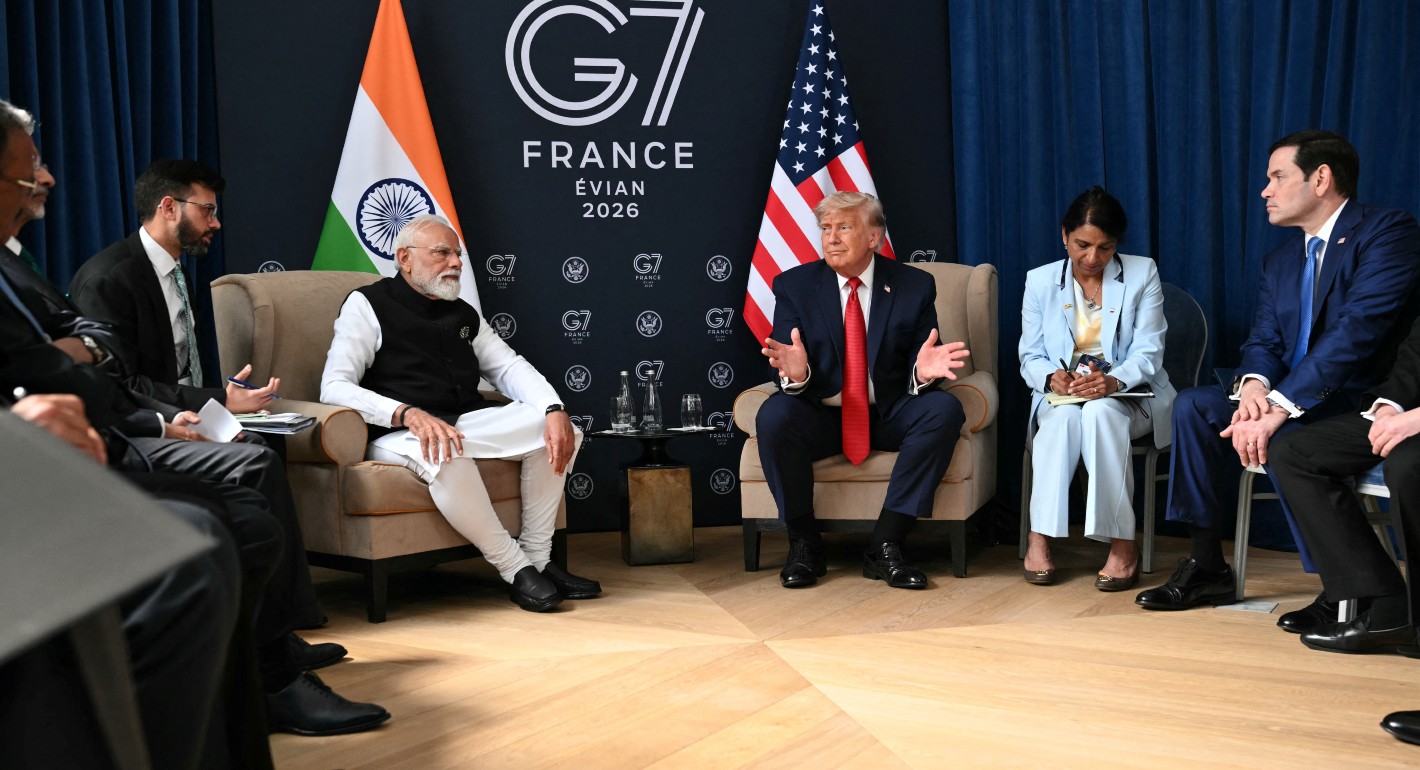
Despite public disputes over trade and immigration, the strategic partnership’s foundations remain sturdy.

Sameer Lalwani

With its public finances in shambles, the far right polling at 35 percent ahead of the 2027 presidential election, and a growing protest movement, is France’s crisis a threat to the EU’s geopolitical awakening?

Rym Momtaz, ed.

Without a ceasefire with Ukraine on attacking each other’s energy infrastructure—to which the Kremlin is unlikely to agree—the diesel agreement between Putin and Trump is largely for show, rather than representing a genuine increase in the volumes of Russian diesel on the global market.

Sergey Vakulenko

Russian strikes are weakening the economy sustaining Ukraine’s war effort. Closing the growing funding gap will require more European support and politically contentious reforms in Kyiv.

Balázs Jarábik

While the EU and European governments are embracing the much-lauded middle-power moment, this entails three difficult conundrums.

Richard Youngs