

Commentary
Sarah Chayes
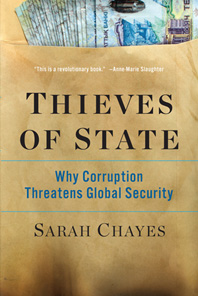
Corruption is a cause—not a result—of global instability.
Source: W. W. Norton & Company
Since the late 1990s, corruption has reached such an extent that some governments resemble glorified criminal gangs, bent solely on their own enrichment. These kleptocrats drive indignant populations to extremes—ranging from revolution to militant puritanical religion. Chayes plunges readers into some of the most venal environments on earth and examines what emerges: Afghans returning to the Taliban, Egyptians overthrowing the Mubarak government (but also redesigning Al-Qaeda), and Nigerians embracing both radical evangelical Christianity and the Islamist terror group Boko Haram. In many such places, rigid moral codes are put forth as an antidote to the collapse of public integrity.
The pattern, moreover, pervades history. Through deep archival research, Chayes reveals that canonical political thinkers such as John Locke and Machiavelli, as well as the great medieval Islamic statesman Nizam al-Mulk, all named corruption as a threat to the realm. In a thrilling argument connecting the Protestant Reformation to the Arab Spring, Thieves of State presents a powerful new way to understand global extremism. And it makes a compelling case that we must confront corruption, for it is a cause—not a result—of global instability.
“I can’t imagine a more important book for our time. With a novelist’s fine sense of drama, Chayes has written about one of the most crucial issues at hand: the startlingly obvious—and entirely overlooked—connection between deep corruption and civil violence. Not only is this book a pleasure to read, it has a brilliant and urgent message about our world.”
—Sebastian Junger
“Thieves of State is a revolutionary book. It stands our understanding of the sources of violent extremism on its head, arguing that the governments we have been relying on to fight terrorism are themselves one of its most potent and insidious sources. Sarah Chayes weaves together history, adventure, political analysis, personal experience, culture, and religion in a shimmering and compelling tapestry.”
—Anne-Marie Slaughter
“Sarah Chayes provides a vivid, ground-level view on how pervasive corruption undermines U.S. foreign policy and breeds insurgency. Thieves of State provides critical lessons that all policymakers should heed.”
—Francis Fukuyama
“Thieves of State is a compelling read. Drawing from detailed experience in Afghanistan as well as reporting from a number of today’s other crisis spots, Sarah Chayes illustrates how corruption not only impacts ordinary people, but poses an acute threat to the stability and security of countries.”
—Cobus de Swardt, Managing Director of Transparency International
“This is an essential and very readable book about an explosive topic. In a stunning and compelling argument, Sarah Chayes transforms our understanding of the ugly reality behind sustained terrorism and other threats around the globe. She writes with an authenticity born of on-the-ground, in-the-markets and at-the-headquarters experiences that are unmatched by any other American.”
—Admiral (ret.) Eric Olson, former commander of U.S. Special Operations Command
“Sarah Chayes brilliantly illuminates a topic no one wants talk about—but we must. Corruption is an insidious force that is causing some of the most dangerous challenges our world is facing. It has to be at the core of America’s strategies, engagements and relationships for the twenty-first century.”
—Admiral (ret.) Mike Mullen, former chairman of the Joint Chiefs of Staff
Do Corrupt Governments Breed Political Violence?
—Washington Post
Thieves of State
—Kirkus Review
“Thieves of State,” by Sarah Chayes
—San Francisco Chronicle
Corruption and Revolt
—New Yorker
“Thieves of State,” by Sarah Chayes
—New York Times
Book Review: Thieves of State
—Huffington Post
On Tour With Kleptocrats and Their Cronies
—Financial Times
Thieves of State: Why Corruption Threatens Global Security
—Foreign Affairs
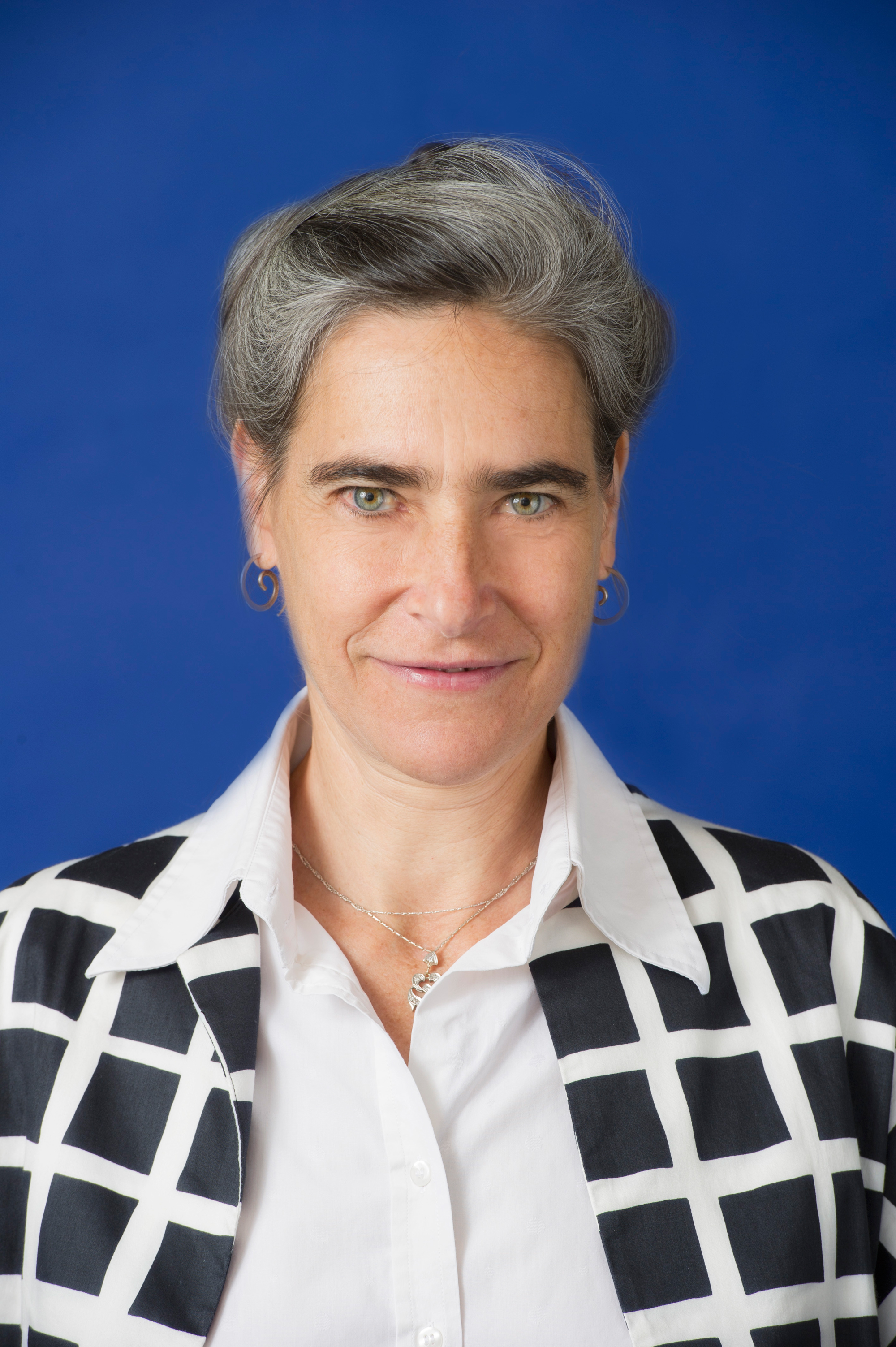
Former Senior Fellow, Democracy, Conflict, and Governance Program
Sarah Chayes is internationally recognized for her innovative thinking on corruption and its implications. Her work explores how severe corruption can help prompt such crises as terrorism, revolutions and their violent aftermaths, and environmental degradation.
Recent Work
Sarah Chayes
Carnegie does not take institutional positions on public policy issues; the views represented herein are those of the author(s) and do not necessarily reflect the views of Carnegie, its staff, or its trustees.

If the Russian-speaking community in Latvia cannot articulate their interests without being seen as disloyal, they could end up embracing a pro-Kremlin agenda.

Sergejs Potapkins

Russia’s ruling party would have benefited from Putin appearing as its distant patron, but as an active frontman imposing his views on the public, he has done nothing but harm both the party’s election campaign and the ruling system overall.

Andrey Pertsev

Despite myriad challenges and occasional stumbles, the new Hungarian government is moving ahead with energy and conviction to uproot years of illiberalism and corruption and rebuild Hungarian democracy.

Thomas Carothers

European Commission President Ursula von der Leyen is about to give her annual address on the state of the EU. Here’s what she won’t—but should—say.

Rym Momtaz

Depleted financial reserves and a shrinking tax base mean it is no longer possible to simultaneously deliver high defense spending, price stability, and economic growth.

Alexandra Prokopenko