

Paper
Raluca Csernatoni, Alicia Wanless
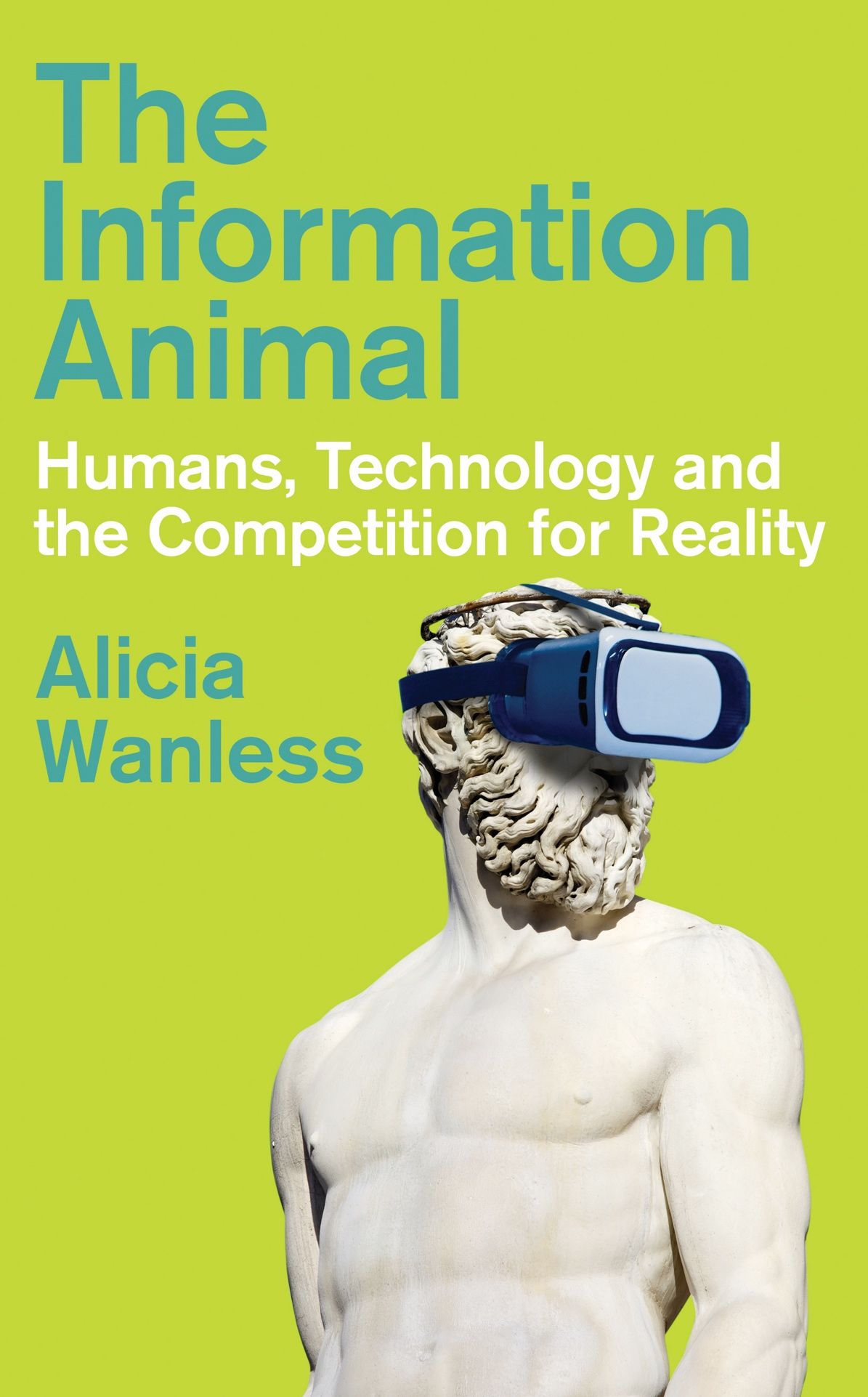
Humanity has always craved, and feared, information. How should we understand our enduring, ever-changing relationships with technology and knowledge?
Forthcoming
Depending on the news you read, new tools like AI will either save or destroy us. But our response to emerging technology’s ‘unprecedented’ threats actually follows a pattern as old as civilization. From ancient Athens to COVID-19, social media to spam, Alicia Wanless shows how humans have always consumed information, whether accurate or not.
First a new technology changes how information is shared, broadening its availability and accelerating how fast it travels. Then, as more people engage with this new content, fresh ideas arise, often challenging prevailing beliefs. Some use the new tools to promote their views, win power or simply profit, adding to the mounting information pollution. Competition and conflict follow. We scramble—in vain—to control information flows and use of the new technology.
With democracies worldwide lurching from crisis to crisis, knee-jerk reactions to information conflict won’t suffice. What’s needed is an understanding of our nature as ‘information animals’, in a millennia-long relationship with technology—and of how a content-saturated world impacts the political battle for hearts and minds.
‘A rich historical analysis and innovative framework for understanding how humans and technology shape each other through the spread of ideas. Coming at a critical time, it is an essential guide for how democratic societies can navigate the information challenges of today and the future.’
— Mariano-Florentino Cuéllar, President of the Carnegie Endowment for International Peace
‘A sharp, essential guide to understanding the information environment before trying to fix it. Cutting through the noise, she makes a compelling case: before we tackle disinformation or tech-driven disruption, we must first grasp how information ecosystems really work. A foundational text for anyone wanting to understand the information environment—and beyond.’
— Marie-Doha Besancenot, NATO Assistant Secretary General for Public Diplomacy (2023–5)
‘Alicia Wanless does an impressive job of arguing for an entirely new way of looking at information and communication. Using a number of wonderful case studies from across the globe, throughout history, the premise of the book comes to life. Fresh, original and absorbing.’
— Claire Wardle, co-founder and co-director of the Information Futures Lab, Brown University
‘Clearly, beautifully and passionately articulated, The Information Animal makes an important and unique argument. Rich in detail and with meticulously documented case studies, it is a compelling, substantive and engaging exploration of a critically important subject.’
— Tim Abray PhD, journalist, policy consultant and former radio presenter
‘The Information Animal is an excellent piece of scholarship. With a compelling, original and well-supported argument, it is a very useful and important contribution to the literature.’
— David Scales, Assistant Professor of Medicine, Weill Cornell Medical College
‘Using an ecological metaphor to analyse corrupting influences on good information flows, Wanless shows how the former are nucleated and strengthened, and how clean information is tainted. This book should be a foundational resource for students, scholars and practitioners working on information dysfunction.’
— Herbert Lin, Hank J. Holland Fellow in Cyber Policy and Security, Stanford University
‘Smart and inventive, The Information Animal will make you ponder our human relationship to information—and its role in history, as well as the present. Wanless offers a holistic new way of thinking about the health and makeup of our “information ecosystems.” This is a timely book.’
— Kate Grandjean, Associate Professor of History, Wellesley College, and author of American Passage: The Communications Frontier in Early New England
‘Alicia Wanless is perhaps the world’s deepest thinker on the information environment, and The Information Animal is a foundational text for anyone wanting to understand the informational spaces in which we live. Don’t read it for quick-hit solutions—the latest faddish thing we should do about disinformation or propaganda. Wanless’s core argument is that we need to know how information ecosystems work before we can understand how new technologies or human actors might be changing them. It’s an argument for the development of a whole new field—one that allows us to understand the human relationship to information—so the tending of our informational gardens is based on robust understanding of how they work and what we are doing when we meddle with them.’
— Benjamin Wittes, Senior Fellow in Governance Studies, The Brookings Institution, and Editor-in-Chief, Lawfare

Senior Fellow, Technology and International Affairs, Director, Information Environment Project
Alicia is the director of the Information Environment Project and the author of The Information Animal: Humans, Technology and the Competition for Reality. Alicia was a technical advisor to the Aspen Institute’s Commission on Information Disorder and is a founding member of its Global Cybersecurity Group.
Recent Work

Raluca Csernatoni, Alicia Wanless



Sophia Besch, Steve Feldstein, Stewart Patrick, …
Carnegie does not take institutional positions on public policy issues; the views represented herein are those of the author(s) and do not necessarily reflect the views of Carnegie, its staff, or its trustees.

China has showcased its engineering prowess with small modular reactor demonstration projects. But turning these technological achievements into commercial success will be a greater challenge.

Tong Zhao

Scholars and policymakers increasingly use ecological metaphors such as “information environment” and “information ecosystem” to describe contemporary informational spaces. Ecology offers more than loanwords. Its concepts and frameworks can help researchers understand relationships among people, technology, content, and society.


Alicia Wanless, Claire Wardle, David Scales

Despite public disputes over trade and immigration, the strategic partnership’s foundations remain sturdy.

Sameer Lalwani

Russia spent years building a “sovereign internet,” concentrating web infrastructure exclusively within Russian territory. Ukrainian drone attacks have shown how vulnerable that approach has left the Russian internet.

Maria Kolomychenko

It signals a new era of tech diffusion and warfare.
Steve Feldstein