

Commentary
Fatima El Mansouri is the country’s first female prime minister. She’s also a privileged insider in a largely ceremonial position.
Sarah Yerkes
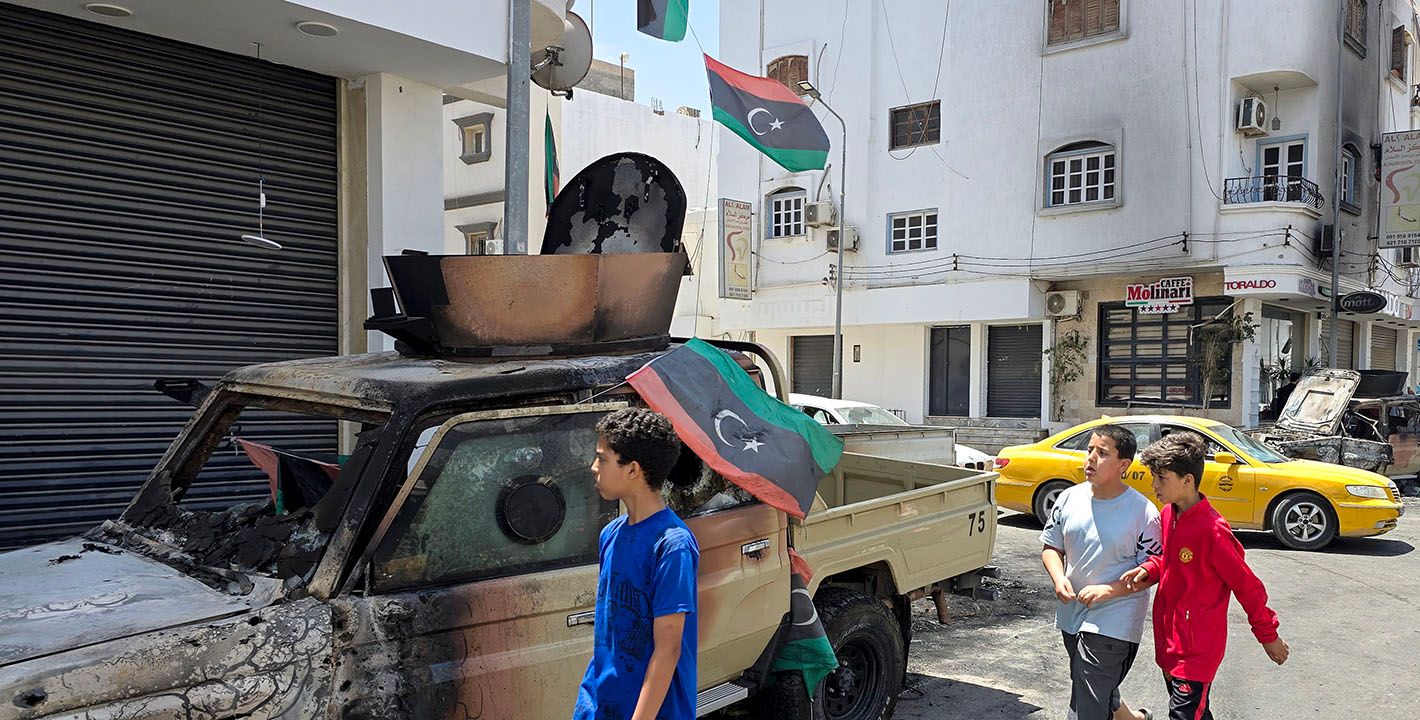
Source: Getty
The UN Support Mission in the country should reassess its approach so that consensus between the warring parties becomes the eventual goal, rather than a procedural matter that dogs the negotiating process at every turn.
On August 21, Hanna Tetteh, head of the United Nations Support Mission in Libya (UNSMIL) and special representative of the secretary-general, presented to the United Nations Security Council a new roadmap aimed at breaking Libya’s persistent political deadlock. Focused on reviving the electoral process and legitimizing institutions, the new UN initiative aims to create the conditions for a unified Libyan state. Yet the plan is likely to suffer the same fate as those of its predecessors, all of which sought to introduce power-sharing mechanisms in an attempt to resolve conflicts among Libyan factions. This approach is supposed to guarantee each political or security actor a place in the main power structures and bring an end to the country’s fragmentation. In practice, however, the consociationalist model of establishing a power-sharing interim government gives the elites that are its constituent elements veto power over most major decisions. This reinforces rivalries, deepens corruption, and can even scuttle the intended transition to democracy.
Essentially, the various initiatives undertaken by UNSMIL serve to highlight the limits of the power-sharing approach, at least insofar as it is focused on elites. It is time to rethink the framework. Rather than seeking to bring the major actors together around a fragile and constantly renegotiated system of agreements, UNSMIL should reassess its approach so that consensus becomes the eventual goal, as opposed to a procedural matter that comes up at every turn. And in order to prevent repeated deadlocks and address the structural and contextual challenges at play, UNSMIL should advocate for mediation frameworks that move beyond bargaining among elites. This can be done by managing temporality, given that the timetable for any process is all-important; cultivating ripeness, so that a final settlement is proposed only when all parties are ready for it; and seizing any and all major opportunities to resolve the conflict.
For nearly a decade, Libya has been marked by deep institutional division: a government executive based in Tripoli; and a House of Representatives based in Tobruk. This fragmentation of power has fueled a lasting crisis of legitimacy, hindering the reconstruction of the state and the unification of the country. While both institutions are internationally recognized, the House of Representatives has withdrawn its confidence in successive governments in Tripoli, granting it instead to rival bodies that it has appointed itself. The proliferation of armed groups—some of which act as proxies for external powers—and their control of territory have made the ruling elites dependent on them. While successive Tripoli-based governments have had to negotiate their authority with the Tripoli militias, the House of Representatives is allied with Marshal Khalifa Haftar’s self-proclaimed Libyan National Army (LNA).
Since 2015, UNSMIL has repeatedly indicated a preference for a power-sharing approach to reconcile the two sides, and has pushed for the establishment of a transitional government that would unify the country and hold free and fair elections. However, examination of the major UNSMIL-brokered accords, whether the Libyan Political Agreement (LPA) in 2015 or the Libyan Political Dialogue Forum (LPDF) in 2020, reveals that this consensus-based approach was flawed from the beginning.
In 2015, the LPA established a Presidential Council, to be made up of three members based on representation from Libya’s three main regions (Tripolitania, Cyrenaica, and Fezzan), and tasked it with forming a government of national accord. Despite sending representatives to the negotiations, the House of Representatives ultimately refused to grant its confidence to this new government, as it disagreed with provisions regarding the distribution of powers as well as certain military-related issues. Furthermore, the consensus on the composition of the council fractured, as various parties sought representation within the power-sharing model. Ultimately the Presidential Council was undermined by rivalries among elites and no longer fairly represented the country’s three regions despite being expanded to nine members.
In 2019, the internationalization of the Libyan conflict resulted in the active involvement of the Wagner Group—a Russian private military company with strong ties to the Russian state that existed from 2014 until 2023—alongside LNA units, and the deployment of Turkish forces to support the government of national accord in Tripoli. In 2020, UNSMIL initiated “outside-in” mediation within the framework of the Berlin process, a series of diplomatic initiatives to revive Libyan inter-dialogue. By including foreign powers in mediation and resolution efforts, the Berlin process made it possible to negotiate a ceasefire in October of that year. Paradoxically, the continued presence of foreign forces had ensured a balance of power among the Libyan elites and therefore an acceptable status quo.
The Libyan Political Dialogue Forum (LPDF), launched by UNSMIL after the 2020 ceasefire, was conceived as a more inclusive mediation framework. The LPDF brought together members of the main rival institutions but also, more importantly, created a broad representation of Libyan society: women, youth, civil society, and political parties were included in order to increase the legitimacy of the process. At the same time, consultations and initiatives on security and economic issues were launched to complement the political component. At the end of these discussions, the seventy-five Libyan participants in the LPDF designated a list of three members (one each for Tripolitania, Cyrenaica, and Fezzan) to form the new Presidential Council, as well as a prime minister to steer the country toward elections.
However, the subsequent national unity government—formed in Tripoli in March 2021—proved unable to overcome the transactional logic of the elites and the persistent problem of corruption. Similarly, it failed to resolve the sticking points that served as an excuse for local and international “spoilers” to prevent change. Unresolved debates over electoral laws, eligibility to run in elections, and constitutional amendments have allowed dominant groups to preserve their advantages and prevent the emergence of new political figures and the implementation of reforms, as well as to block presidential and legislative elections that had been set by UNSMIL for December 24, 2021. Instead of the durable pact among elites envisioned by the power-sharing framework, bargaining among those very elites became the order of the day.
Although the roadmaps proposed by UNSMIL have often been perceived as failures in the immediate sense, they have helped to create space for dialogue and established methodological frameworks that continue to offer hope for the evolution of the Libyan political process. The problem lies in continuing uncertainty about the medium and long-term sustainability of these roadmaps. Considering this uncertainty, mediation efforts should leverage three strategic tools to strengthen the consolidation of any roadmaps: temporality, ripeness, and opportunities.
The issue of temporality is central to the success of the political mediation processes led by UNSMIL. The latter has historically favored tight schedules for the implementation of its plans. In part, this is due to the short-term nature of UNSMIL’s mandate. For example, its most recent mandate was renewed in October 2025 for one year by the UNSC under Resolution 2796. While a tight schedule can prevent certain blockages, such as the ability of “spoilers” to undermine the political transition, it risks fueling a short-term crisis management approach, one that is based on stabilization rather than long-term resolution.
UNSMIL’s latest roadmap sets out the goal of unifying institutions and organizing national elections within twelve to eighteen months. Yet the Libyan experience shows that tight timelines are largely illusory and frequently exceeded due to persistent disagreements, ambiguities in the text of agreements, and competing interests related to the nature of power-sharing. Ultimately, failure to adhere to timetables further erodes the legitimacy of interim institutions and fuels accusations of illegitimacy. Faced with this impasse, it would be wise to alter the process in favor of an incremental, long-term approach to agreements.
Such an approach would enable stakeholders to gain greater confidence in each other as well as in the power-sharing framework itself. This could allow for more extensive oversight of reforms. The latter could include decentralization—which has already been identified by several researchers as an effective practice in Libya, and which enables a more accurate representation of local realities. For example, although the state has failed to fulfil several of its duties since 2011, municipalities have on several occasions proven able to guarantee security, ceasefires, elections, and access to certain services for the population. From an economic perspective, it is necessary to consider implementing reforms aimed at the redistribution of hydrocarbon revenues. This could facilitate a better distribution of wealth and, in the long term, strengthen local governance.
The repeated failure of transition processes in Libya, particularly when it comes to the sustainability of compromises among elites, often reveals that proposed all-encompassing agreements have not had time to ripen. Yet this maturation is crucial to the success of the undertaking. To paraphrase William Zartman, renowned American researcher of and expert in conflict resolution, the ripeness of a proposed settlement must be nurtured by the mediating party in any conflict. In the case of Libya, the onus is on UNSMIL to do this by establishing a rigorous framework for any roadmap or agreement, one that would create space for dialogue among opposing parties, and, even more importantly, clear up ambiguities fully or at least partially.
The resumption of negotiations among the 6+6 Committee—composed of members of the House of Representatives and its rival claimant to the upper house of parliament, the High Supreme Council—is a step in the right direction. Tasked with reaching an agreement to revise the constitutional framework governing the electoral process, the body is supported by the recommendations and co-supervision of an Advisory Committee composed of twenty Libyan experts, in accordance with UNSC Resolution 2755 (2024). This format requires their members to work together on technical aspects of the constitution and elections. However, reaching solid compromises takes time, and the 6+6 members are struggling to achieve their mission.
For it to reach a sufficient degree of ripeness, any framework must elicit participation by a wide segment of the Libyan population. This would ensure more transparent and representative negotiations as well as political openness, and would limit the exclusion of minority groups. UNSMIL head Tetteh plans to resume and strengthen the inclusive initiatives already implemented within the framework of the ongoing National Dialogue and the LPDF by proposing the establishment of a Structured Dialogue platform. This would include representatives of civil society, municipalities, political parties, and security actors, and would guarantee the representation of women and certain geographic and cultural groups.
With the primary objective of laying the groundwork for a clear national vision and overseeing the constitutional process, the Structured Dialogue platform could help to limit the so-called kingmaking ability of elites. For one thing, including members of civil society within future bodies would facilitate a cyclical replacement of elites before each and every round of elections. And, for another, it would help see to it that authority over several matters devolves to grassroots civil society individuals and groups. This would counterbalance the traditional arrangements observed among elites, which restrict access to those beyond their circle.
Since its inception, UNSMIL has faced constant disruptions due to external interference that has competed with and undermined its mission. Despite UNSMIL representatives’ efforts to petition the UNSC to sanction those who obstruct the process—whether Libyan or foreign—the effectiveness of any such proposed measures remains uncertain due to structural divisions and persistent conflicting interests within the Security Council regarding the Libyan issue. In the conclusion of her book recounting her years as a former UNSMIL representative, Stephanie Williams examines the profound transformations currently taking place in peacemaking processes: “Will conflict negotiations be taken up by the relevant regional organizations or individual, interested member states? Or by private mediation organizations? Are there other formulas that can be pursued?” In setting out a remedial course of action, Williams argues that UN mediators must position themselves as “conductors” who define the framework and lead the process, rather than restricting themselves to the role of “soloists” who guide it from the background.
While it is essential to maintain a multilateral approach to negotiations for conflict resolution, UNSMIL could take advantage of the opportunities presented by the strategic ambitions of external actors. These ambitions may serve to incentivize such actors to resolve the conflict. Take, for example, the peace agreement that was concluded in September 2025 between the national unity government and Tripoli’s Rada militia, which controls Mitiga Airport. Türkiye’s support for the agreement illustrated how external economic and security interests could promote the establishment of new mediation arrangements in parallel with traditional efforts.
The U.S. desire to play a more active role in resolving the Libyan conflict could emerge as similarly constructive. This was demonstrated by the Rome meeting in September 2025 between Massad Boulos, senior advisor for African affairs in the Trump administration, and two powerful Libyan figures linked to opposing forces from the east and west. The meeting reportedly focused on how to draw up a unified budget among rival institutions to promote the country’s openness to commercial opportunities.
A separate U.S. initiative to merge segments of the armed forces of eastern and western Libya—as part of U.S. Africa Command’s annual Flintlock special operations exercise—could also present an opportunity to resolve the conflict. This initiative could be conducted in coordination with, rather than in competition with, UNSMIL’s efforts to establish a Joint Technical Coordination Team that brings together security groups from the west and east in joint exercises. For their part, by engaging in initiatives that enable them to take on recognized institutional roles with international mediators and partners, key Libyan actors could well find it in their interest to end the various conflicts among their respective factions.
External actors, particularly those invested in Libyan affairs, already feel tempted to double as “dealmakers” in Libya. This phenomenon, if properly harnessed by UNSMIL, can help to resolve the conflict. However, it is important not to grant these outside powers a blank check; instead, UNSMIL and Libyan actors themselves should place limits on their prerogatives. Otherwise, as seen in the mediation process with the Palestinians in Gaza, there is a risk that foreign powers will shunt aside the concerns and aspirations of the people on the ground.
It is not difficult to imagine how this would look in the Libyan context. Left unchecked, regional and world powers might reach agreements among themselves through short-term transactions based more on commercial than political considerations—and self-serving commercial considerations at that. In such a scenario, the underlying issues that shape the Libyan conflict would remain unaddressed. UNSMIL should grasp this reality. If ordinary Libyans are to avoid marginalization at the hands of foreign powers and the local elites moving within their orbit, UNSMIL must find a way to truly involve influential external parties in its mediation strategy without going so far as to hand them the reins.
Soraya Rahem
Affiliated researcher at the Center for Economic, Legal, and Social Studies and Documentation (CEDEJ) in Cairo.
Soraya Rahem is a PhD Candidate in Geopolitics at Cités, TERritoires, Environnement et Sociétés (CITERES), University of Tours (France), researcher in the Equipe Monde Arabe et Méditerranée (EMAM), and affiliated to the Center for Economic, Legal, and Social Studies and Documentation (CEDEJ) in Cairo.
Carnegie does not take institutional positions on public policy issues; the views represented herein are those of the author(s) and do not necessarily reflect the views of Carnegie, its staff, or its trustees.
Fatima El Mansouri is the country’s first female prime minister. She’s also a privileged insider in a largely ceremonial position.

Sarah Yerkes
Most migrants may have left Ceuta, but the effects may linger.

Alejandro Martin Rodriguez, Sarah Yerkes
Saied’s main accomplishment has been to destroy a decade’s worth of democratic progress.
Sarah Yerkes

The armed forces champion a form of capitalism that is generating revenue, but its reliance on rent faces diminishing returns, leaving the country with massive sunk costs and deferred returns, deepening dependency on external borrowing.

Yezid Sayigh
Middle powers in the region will keep hedging between Washington and Beijing. It’s in the great powers’ interests to play along.

Amr Hamzawy, Kathryn Selfe