

Commentary
Christopher Shell
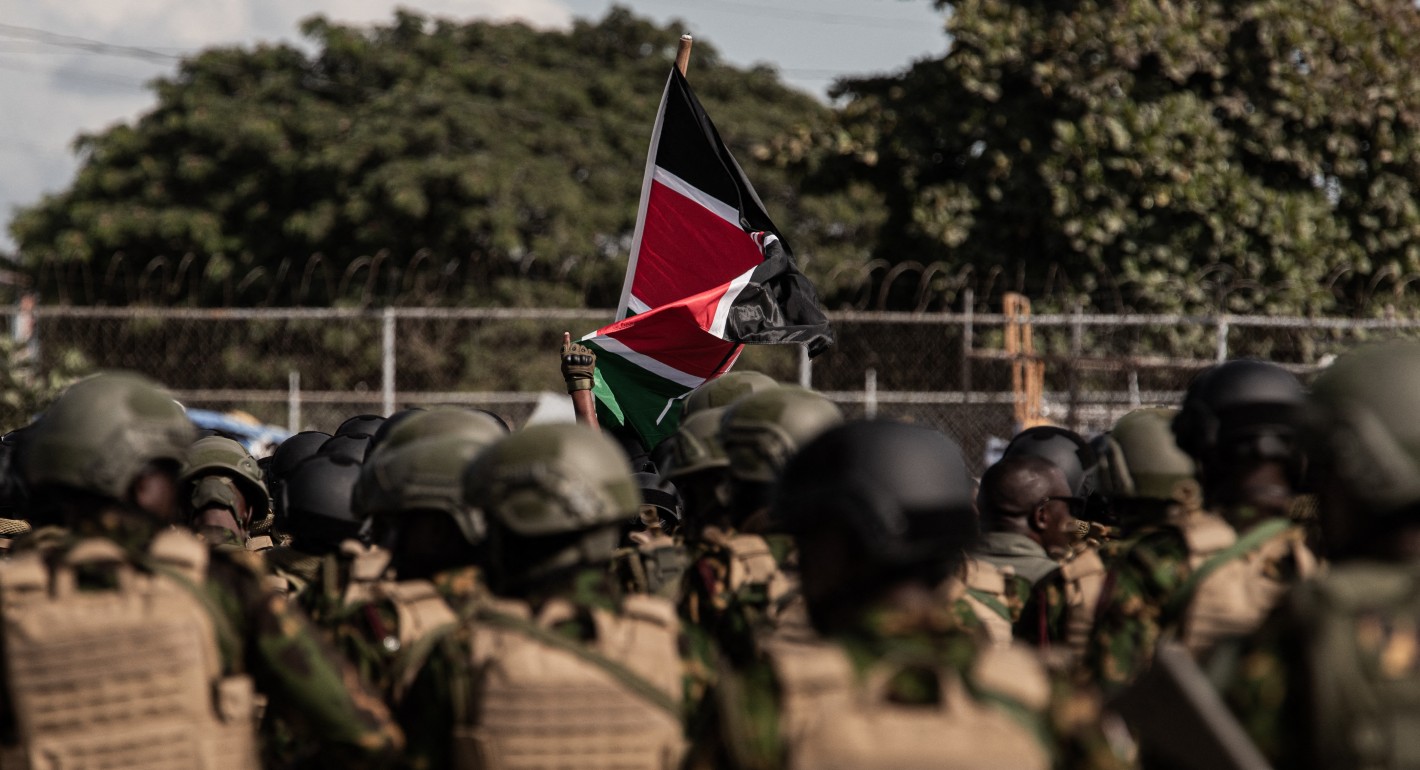
Kenyan police officers arrive at Toussaint Louverture International Airport in Port-au-Prince, Haiti, on December 8, 2025. (Photo by Clarens SIFFROY / AFP via Getty Images)
Helping to stabilize Haiti is in the United States’ national interest and can be done by making wise use of various foreign policy tools in addition to supporting international security forces.
The arrival of the Gang Suppression Force in April 2026 marked the second iteration of a recent campaign aimed at stabilizing the political situation in Haiti and bringing to heel criminal groups operating primarily in the nation’s capital of Port-au-Prince. The two United Nations–authorized and –backed forces—the Multinational Security Support Mission and the expanded Gang Suppression Force—have received significant financial and material support from the United States, yet a clear path toward baseline stability remains distant for the island nation. While the Gang Suppression Force is more muscular and allows greater leeway to target criminal groups with lethal force, there remains the real possibility that instability could resume once the multinational force departs, as has been the case with previous interventions in Haiti. Given this reality, this paper argues that helping to stabilize Haiti is in the United States’ national interest and can be done by making wise use of various foreign policy tools in addition to supporting international security forces. This includes bolstering Haiti’s border and maritime enforcement capabilities to better interdict U.S.-sourced weapons, assisting in the development of Haitian domestic police and military forces, and using financial tools to stop corrupt political elites, many of whom reside in the United States, from financing Haiti-based criminal groups.
Haiti, the most populous nation in the Caribbean, has long occupied a consequential place in U.S. regional policy. Located just 700 nautical miles from Florida, instability in Haiti translates quickly into challenges for the United States in three areas: transnational criminal flows, irregular migration, and regional instability in the Caribbean. Today, Haiti faces a deepening humanitarian and security crisis that has displaced over a million people and pushed the state toward the brink of collapse, carrying direct implications for U.S. interests in the Caribbean and beyond.1
Since violence escalated sharply following the 2021 assassination of Haitian president Jovenel Moïse,2 the United States has sought to mitigate gang violence and prevent further deterioration of the country’s institutions. It has done this, in part, by supporting external security initiatives, such as the Kenyan-led, UN-backed Multinational Security Support Mission (MSS). The Donald Trump administration has continued to support these efforts by transitioning the MSS into the Gang Suppression Force (GSF), a mission with a larger force and a mandate with a more explicitly offensive posture toward criminal groups.3 It has also sought to address the security crisis by designating select Haitian gangs as foreign terrorist organizations.4
This paper draws on field research in Haiti in November 2025, during which the author held extensive interviews with more than a dozen civil society members, security personnel, and government officials. It argues that while external security deployments may temporarily blunt violence, they are unlikely to produce lasting stability absent a parallel effort to rebuild Haitian state capacity and cut off gangs’ access to material and financial resources they use to wage war against the state.5 With Haiti’s crisis increasingly threatening regional stability, migration flows, and transnational crime, the current moment presents a critical opportunity for the United States to recalibrate its approach and move beyond temporary stopgaps and toward a strategy that attacks the root causes of gang violence.
While external security deployments may temporarily blunt violence, they are unlikely to produce lasting stability absent a parallel effort to rebuild Haitian state capacity.
The paper proceeds in four sections: First, it outlines the state of Haiti today, providing an overview of its governance, gang violence, and displacement challenges. Next, it examines U.S. interests in Haiti including drug flows, migration, and its role in regional security. It then turns to a consideration of scenarios for the future of Haiti and an analysis of current U.S. policy toward the country. It concludes with concrete recommendations for U.S. foreign policy moving forward, arguing for a paradigm shift from U.S. support for foreign boots on the ground in Haiti to strengthening Haiti’s state capacity. For the United States, the strategic objective should not be indefinite crisis management, but a stabilized Haiti that no longer requires repeated international security interventions.
Since the early twentieth century, Haiti has struggled to establish stable governance. Successive coup d’états, an ill-fated U.S. intervention in the early twentieth century, a prolonged period of military dictatorship under the Duvalier family (1957–1986), and natural disasters in the twenty-first century have combined to produce perennial political instability in the country’s modern history.6 The 2021 assassination of Jovenel Moïse, who had been ruling by decree, served as a recent iteration of political instability across Haiti’s 222-year history.
In the months following Moïse’s assassination, violence facilitated by armed criminal groups ebbed and surged through successive episodes of civil unrest, but it always followed an upward trajectory. Gang violence reached a critical inflection point in 2024, when previously rival gang coalitions in Port-au-Prince unified as the Viv Ansanm coalition (Haitian Creole for “live together”) in opposition to the transitional government. Jimmy “Barbecue” Cherizier, a former police officer and leader of the Revolutionary Forces of the G9 Family and Allies (otherwise known as the G9 coalition), one of the predecessors to Viv Ansanm, quickly emerged as one of the alliance’s most prominent public voices.7 The coalition decisively tipped the balance of power against the overstretched Haitian National Police (HNP). This development meant that gangs that once operated in fragmented, localized factions—at times manageable by the HNP—became consolidated, enabling them to capture ports, major roadways, and key infrastructure, and even notably mount attacks on prisons and the capital’s main airport in March 2024. In addition to attacking security forces, gangs increasingly targeted civilians, through massacres, sexual violence, kidnapping, and the obstruction of humanitarian aid.8
These groups are better armed, and they outnumber security forces. Estimates state that Viv Ansanm alone could collectively have between 12,000 and 20,000 members, 3,000 of which are heavily armed.9 If correct, these estimates outnumber the roughly 12,000 HNP officers tasked with policing the entire nation. The criminal groups also benefit from steady flows of U.S.-sourced illicit weapons that have overwhelmed domestic security forces, and they enjoy ample financial backing from their engagement in drug trafficking, kidnappings, and extortion and their connections to blatantly corrupt political and economic elites.10 In fact, this power has increasingly turned to political ends: Unrelenting gang attacks on critical infrastructure such as hospitals and the main international airport, combined with pressure from the international community and civil society leaders, contributed to prime minister Ariel Henry’s resignation in April 2024 and the transfer of power to a nine-member Transitional Presidential Council.11
Today, Haiti has no sitting elected officials. On February 7, 2026, the Transitional Presidential Council, tasked with reinstituting some semblance of order after Henry’s resignation, was dissolved. Under pressure from the current U.S. administration, the council—many of whose members favored replacing Prime Minister Alix Didier Fils-Aimé—instead transferred authority to him, making him the sole executive authority.12 He is now tasked with steering the nation toward elections tentatively scheduled for August 2026. While this arrangement offers a narrow path back to constitutional order, it operates amid dire security conditions and commands only limited legitimacy, as many civil society groups report being sidelined from the decisionmaking process.13 While criminal groups seek to expand to territories outside of metropolitan Port-au-Prince, the HNP and the recently reconstituted military remain under-resourced, ill-equipped, and stretched thin as they attempt to engage in urban and rural policing, counter-gang operations, and border and maritime security to confront substantially armed gangs, leaving the state dangerously close to complete collapse.14
Gang activity remains heavily concentrated in Port-au-Prince, with reports suggesting that gangs control roughly 90 percent of the capital.15 But recent violence points to a widening in both the scale and scope of instability as gang control spreads into the center department and individual gang attacks occur as far as the north.16 In October 2024, the gang Gran Grif killed more than one hundred civilians in Pont-Sondé, while in early 2025 thousands of residents fled Mirebalais following sustained gang attacks. Both towns lie well outside of the metropolitan Port-au-Prince area and demonstrate the expanding geographic reach of criminal groups, even amid international security assistance.17
At the same time, displacement driven by violence in the capital is straining relatively stable regions. In 2025, an estimated 1.4 million people, 10 percent of the nation’s population, were internally displaced, a 36 percent increase from the previous year.18 In 2024, reports indicated that approximately 95,000 civilians fled violence in Port-au-Prince for Cap-Haïtien, Haiti’s second-largest city, placing significant strain on a city of roughly 400,000 residents.19
The state has attempted to respond to the proliferation and consolidation of gang power. In early 2025, it launched an aggressive police recruitment initiative known as the P4000 program, aimed at training 4,000 new officers over an eighteen-month period to reinforce the 13,000 HNP officers currently in the field. In a desperate attempt to assist the beleaguered Haitian state’s fight against insurgent criminal groups, the Transitional Presidential Council in 2025 partnered with a U.S.-based private military contractor, Erik Prince’s Vectus Global company, to create a specialized task force to conduct weaponized drone strikes against gang coalitions.20 While some have lauded the deployment of this new technology as a form of lethal force that poses minimal risks to beleaguered security forces, there are also serious risks that could outweigh the benefits. The first, of course, is civilian casualties.
While drone strikes have been successful in targeting members of criminal groups, often in hard-to-reach neighborhoods in Port-au-Prince, civilians have occasionally been caught in the crossfire. In September 2025, the Human Rights Defense Network of Haiti reported that eleven civilians, including children, were killed in a kamikaze drone strike in the gang stronghold of Cité Soleil. Another recent report found that since March 2025, drone strikes have killed sixty people not affiliated with any gangs, including seventeen children, and injured at least forty-nine more.21
Despite these efforts, the Haitian state now finds itself in a broader struggle for the allegiance and legitimacy of the Haitian population. Gangs have increasingly adopted populist rhetoric, framing themselves as protectors of the Haitian masses against corrupt elites, a tactic they have leaned on more heavily since the introduction of kamikaze drones by the Haitian state in gang-controlled territory. They also prey on Haiti’s dispossessed, targeting young teenagers (most of whom are unemployed) and poor people by offering the appearance of protection or assistance in the absence of the state, only to then recruit and deploy them as foot soldiers.22
As a result, the battle to reassert control over Port-au-Prince and contain the spread of gang violence remains largely at a stalemate. Although total state collapse—the disappearance of government authority and the emergence of gangs as de facto legitimate actors—has thus far been averted, continued deterioration would make such an outcome increasingly plausible. The further erosion of security and government capabilities would carry real risks for regional stability and directly implicate U.S. national security interests.
Haiti’s proximity to the United States places it at the crossroads for U.S. security and regional stability. While the relationship between the United States and Haiti encompasses a wide range of economic, political, and diaspora ties, developments in Haiti also translate quickly into challenges for the United States in three key areas: transnational criminal flows, irregular migration, and regional instability. Because the country is 700 nautical miles from Florida, the expanding reach of Haiti’s gangs presents a direct risk that U.S. policymakers cannot afford to ignore.
First, Haiti’s geographic position along major Caribbean Sea lanes has long made it a secondary transit point for narcotics trafficking. Estimates suggest that roughly 10 percent of cocaine entering the United States passes through Haiti,23 and recent United Nations reporting indicates that weakening state capacity and expanding gang control have increased the country’s attractiveness as a launch point for drug flows from South America.24 The Trump administration is acutely aware of this vulnerability, as it listed Haiti as a major drug transit hub for the fiscal year 2026.25 Recent interdictions, such as a major drug seizure off Haiti’s coast in July 2025, demonstrate that the HNP retains some operational capability, but they also underscore the scale of the challenge. Transnational criminal organizations are exploiting gaps in state authority, and further erosion of governance would complicate U.S. counternarcotics efforts and strengthen criminal networks operating in the near abroad.
Second, Haiti’s deepening humanitarian crisis poses significant risks for the United States and its regional partners. Gang violence has thus far displaced 1.4 million Haitians internally, roughly 10 percent of the island’s population, and insecurity continues to drive outward migration to neighboring states, notably the United States. While recent U.S. policies have sought to channel Haitian migration into legal pathways, the potential expiration of the Temporary Protected Status pathway raises questions about the long-term sustainability of these approaches.26 If criminal groups were to further besiege the civilian population, migration flows toward U.S. shores would likely rise sharply, at a moment when migration already faces significant social and political strain in U.S. domestic politics.27
Third, instability in Haiti carries contagion effects for the wider Caribbean. The illicit flow of U.S.-sourced weapons into Haiti not only fuels violence domestically but also likely enables regional criminal networks to supply arms to neighboring countries, notably Jamaica, often in return for narcotics (in what are called guns-for-drugs exchanges).28 Even prior to Haiti’s 2021 political unrest, transnational criminal organizations leveraged Haitian territory as part of these exchanges. Several Caribbean partners, including the Bahamas and Turks and Caicos, have experienced a surge in gang-related and firearm violence, in some cases apparently linked to networks connected to Haitian gangs.29 A Haiti awash in weapons and lacking meaningful border or maritime enforcement capacity risks exacerbating these issues by creating an unregulated pipeline for illicit arms proliferation across the region that ultimately fuels criminal actors in the region. This would place additional strain on U.S. partners and multilateral political bodies like the Caribbean Community.30
For the United States, the stakes in Haiti are neither distant nor nebulous. The continued deterioration of state authority risks turning Haiti into a hub for illicit trafficking, mass displacement, and regional instability. Each of these dynamics would directly implicate U.S. national security interests and demand prudent American engagement.
While criminal groups today remain largely concentrated in Port-au-Prince, there are growing reports of their reach extending into northern and southern departments. Although the Haitian state appears further from outright collapse than it did during the March 2024 crisis—due in part to increased security pressure—the expansion of gang activity into additional regions may reflect efforts to consolidate and reinforce their positions rather than to seize national control. Even so, continued territorial spread risks further eroding already limited state authority, which could significantly alter the scope and scale of insecurity. In this context, a deeper breakdown of governance would entail the weakening of centralized political authority and the further loss of the state’s ability to control its territory, borders (land and maritime), and basic security functions.
In such a scenario, gang violence would no longer be confined to the capital. Relatively stable cities such as Les Cayes and Cap-Haïtien, which are currently serving as destinations for internally displaced Haitians, would likely become new arenas of competition among armed groups. As gangs expanded geographically, violence would shift from localized dominance to nationwide contestation that would accelerate displacement and erode the remaining pockets of stability. Any efforts to hold elections and restore basic governance would almost certainly be postponed indefinitely, deepening public mistrust and further fueling gangs’ antiestablishment populist rhetoric.
For the United States, a collapsed Haitian state would create a permissive environment for transnational criminal organizations operating less than 700 nautical miles from U.S. shores. Haiti’s territory, maritime space, and porous borders would offer trafficking networks new routes for narcotics and weapons, complicating U.S. counternarcotics efforts at a time when existing routes through Mexico and the Pacific Ocean are already heavily contested. State collapse in Haiti would multiply the number of vectors through which illicit flows could reach the United States.
Finally, a further erosion of governance and security would dramatically accelerate Haiti’s humanitarian crisis. If the state can no longer provide protection beyond the capital, then kidnappings, extortion, and gang violence currently concentrated in the central district would likely spread to additional departments. The result would be an acceleration of mass internal displacement and increased irregular outward migration, compounding pressures on neighboring states and the United States alike.
Under such conditions, the policy options available to the United States would become significantly more costly. If the Haitian state were to lose what remains of its limited authority over security, the international community could be compelled to expand the multinational force’s mandate to cover the entire country, similar to the United Nations Stabilization Mission in Haiti (2004–2018), in an effort to restore basic order.31 Such an expanded mission would carry the real risk of entrenching the international community in a prolonged and costly security engagement.
Alternatively, the United States could face pressure to act unilaterally by deploying U.S. combat forces. While a limited ground presence might be the preferred option of policymakers, widespread insecurity and the collapse of domestic security forces would likely require a substantially larger force. Either course of action would carry high political, financial, and strategic costs and would almost certainly prove unpopular with both international partners, given concerns about national sovereignty, and an American public fatigued with military adventurism abroad. It is this scenario of Haiti’s total collapse that the United States should prioritize preventing from becoming a reality.
Unlike earlier moments, however, the Henry government itself in 2023 repeatedly requested international assistance as criminal groups expanded their territorial control and overwhelmed domestic security forces, capturing major roadways and causing critical infrastructure such as schools and hospitals in Port-au-Prince to close.32 Given the severe political, social, and economic consequences of successive foreign interventions in Haiti, the international community was initially reluctant to deploy another external security force. Previous interventions, while occasionally successful in restoring a modicum of order, failed to produce durable stability and often eroded public trust in both domestic institutions and international actors. This legacy shaped the caution that greeted Ariel Henry’s calls for international support.
As gang violence metastasized, then U.S. president Joe Biden’s administration concluded that inaction carried real risks. Complete state collapse, with its attendant humanitarian and regional consequences, was viewed as untenable. In response, Washington sought to organize a coalition of the willing to stabilize the situation without placing U.S. combat forces at the center of the mission.
This approach reflected the Biden administration’s awareness of the political sensitivities surrounding international intervention in Haiti. A U.S.-led intervention was widely seen as politically toxic, given the country’s long history of American involvement and the deep anti-American sentiment that endures in Haiti as a result. A traditional UN peacekeeping mission also faced resistance, amid skepticism about its effectiveness and concerns about accountability. The resulting compromise was the Kenya-led MSS authorized by the United Nations in 2023, with the United States and Canada providing the bulk of financial and logistical support. While Kenya provided the lion’s share of personnel, nations from the Caribbean Community and Organization of American States nations—such as the Bahamas, El Salvador, Guatemala, and Jamaica—contributed personnel as well.
In theory, the MSS was tasked with working in tandem with the HNP and focusing narrowly on restoring order in the capital and securing key infrastructure, including ports, airports, and major transit routes, to enable humanitarian assistance and create a stable security environment for a political transition. In practice, the MSS encountered severe structural and operational constraints. The mission never reached its authorized strength of 2,500 personnel and peaked at roughly 1,000 police officers, the majority from Kenya. It required an annual $600 million to be fully operational, but faced chronic underfunding and only received $113 million; logistical delays impeded deployment, while reports emerged of personnel lacking adequate equipment, facing delayed pay, and operating at a significant disadvantage against heavily armed gangs.33 The asymmetry in firepower, most notably illustrated by gangs’ access to high-caliber weapons capable of piercing armored vehicles, undermined the mission’s deterrent effect and exposed the limits of a highly armed policing force confronting quasi-militarized nonstate actors.34
While the MSS was mandated to operate alongside the HNP, the HNP lacked the capacity to simultaneously conduct urban counter-gang operations, rural policing, and border and maritime patrol. As a result, although the mission succeeded in preventing immediate state collapse by the end of the Biden administration, it failed to decisively weaken gang networks or create adequate conditions for elections.
The Trump administration has largely built upon, rather than departed from, the framework laid out under the Biden administration. It has supported the creation of a new Gang Suppression Force (GSF), approved by the UN Security Council in September 2025 to operate for a twelve-month period. The force expands the authorized size of the international mission to approximately 5,500 personnel and includes both police and military units. In early December 2025, U.S. Secretary of State Marco Rubio announced that the force had secured pledges up to 7,500 security personnel from roughly eighteen countries.35 On April 1, the first contingent of the GSF, a contingent from Chad, arrived in Haiti and replaced Kenyan police officers who officially departed on April 27, 2026.36
A key departure from the MSS framework, however, was the creation of the UN Support Office in Haiti on April 1, 2026, which was designed to provide the bulk of the mission’s logistical support through assessed UN contributions. In theory, this arrangement addresses many of the funding and coordination challenges that constrained the MSS, which relied heavily on voluntary contributions to a UN trust fund. At the same time, UN assessed funding has proven less reliable in recent years due to broader liquidity constraints, which ultimately raises questions about the sustainability of this model. It is particularly worth mentioning that the GSF has more operational autonomy than its predecessor, meaning it can undertake offensive operations against gangs without having to operate alongside the HNP.
For its part, the Trump administration has taken steps to disrupt the flow of illicit firearms from the United States into Haiti, including through enhanced cooperation with U.S. law enforcement agencies and Caribbean partners. Recent initiatives have emphasized intelligence sharing, joint investigations, and coordinated law enforcement efforts aimed at dismantling trafficking networks. These efforts have led to the conviction of several U.S. citizens for smuggling firearms to Haiti, as well as the interception of cargo containers containing firearms headed for Haiti.37 These are modest gains against a metastasizing problem.
The Trump administration has also adopted a more muscular approach to targeting Haitian political and economic elites suspected of supporting criminal gangs, including through 2024 sanctions against former Haitian president Michel Martelly and the 2025 arrests of prominent businessmen Dimitri Vorbe and Pierre Reginald Boulos, both accused of ties to gang networks.38 The House of Representatives has likewise moved to undercut financial linkages between elites and gangs through the passage of the Haiti Criminal Collusion Transparency Act of 2025, which mandates the U.S. government to investigate, report on, and impose sanctions against political and economic elites in Haiti who have reportedly colluded with gangs.39
There is a substantial body of scholarship suggesting that limited, small-footprint interventions with clearly defined objectives can, under specific conditions, restore a measure of order in fragile states.40 However, such interventions tend to succeed only when they are paired with political stability, popular buy-in, and capable domestic security forces. Absent these conditions, short-term gains often give way to renewed instability once external forces withdraw.
Given the absence of all three of these conditions in Haiti, it is perhaps unsurprising that the MSS fell short of its objective of restoring order to Haiti’s capital. While the mission helped prevent complete collapse in the near term, it was unable to decisively weaken gang control in Port-au-Prince and the surrounding areas. Haiti’s experience with earlier interventions reinforces this pattern. The UN’s Stabilization Mission in Haiti (2004–2018) succeeded in restoring a loose form of stability, but weak domestic capacity and limited institutional reform meant that once the mission ended, the country rapidly slid back into crisis.
The GSF represents the latest attempt to break this cycle. While the mission is still in its early stages and has attracted significant financial and material pledges, history suggests that commitments alone are insufficient. Without timely deployment, sustained funding, and placement alongside a well-endowed and competent Haitian security force, the GSF risks replicating the shortcomings of the MSS.
Without timely deployment, sustained funding, and placement alongside a well-endowed and competent Haitian security force, the GSF risks replicating the shortcomings of the MSS.
In the best-case scenario, the GSF receives adequate resources and troop contributions to restore basic order by neutralizing key gang leaders and retaking control of critical infrastructure such as ports, airports, and major roadways. Crucially, such gains could relieve pressure on the HNP, allowing it to regroup, rearm, and professionalize, while creating space to clarify the role of the Haitian military. This could enable a seamless transitional political process free from gang coercion and pave the way for credible elections and the restoration of basic governance.
Yet history suggests that interventions rarely unfold according to best-case expectations. A less optimistic, but plausible, scenario is that the GSF encounters the same structural constraints as its predecessor. Gangs could adapt by acquiring new technologies (such as weaponized drones), expanding into additional regions, or embedding themselves more deeply within civilian populations. Rising civilian casualties and displacement could erode public support for the mission and fuel antiestablishment narratives. In this scenario, elections would likely be further delayed, domestic security institutions sidelined, and the GSF reduced to a temporary stopgap rather than a solution.
The worst-case outcome carries serious implications for U.S. national security and is not outside the realm of possibility. A protracted security mission that sidelines domestic capacity risks entrenching a cycle in which external forces merely manage insecurity without resolving it. Haiti’s recent history suggests that this pattern could repeat itself unless U.S. strategy is recalibrated. Adjusting U.S. policy therefore is not about abandoning security assistance but about disrupting criminal weapons trafficking networks and enabling Haitian institutions to assume responsibility for their own security.
The United States should focus on assisting Haitian security forces, building up the state’s ability to interdict illegal weapons flows, and assisting the severance of gang ties to financial backers, alongside supporting the international security force. The GSF has been approved for one more year to operate in Haiti, with the first contingent of personnel arriving at the beginning of April, and while some observers are skeptical of intensifying the multinational force, it is highly unlikely that such a decision will be reversed in the interim.41 It is worth thinking about and spelling out initiatives that should be pursued alongside the current GSF.
The three policy options outlined here—strengthening Haitian security forces, enhancing border and maritime enforcement, and going after obviously corrupt political elites—are not intended to be exhaustive, nor do they diminish the importance of addressing Haiti’s deeper political economy challenges and urgently rebuilding the country’s judicial system. Rather, they reflect a set of immediate, actionable priorities where the United States and its partners can have the greatest near-term impact without relying on a purely external, security-heavy approach. These areas were selected in part because they represent domains where U.S. policy tools are the most readily deployable and where the risk is minimized. Reforms in law and order remain essential, but they will ultimately require sustained Haitian political leadership and domestic buy-in, which take time that Haiti does not have.
Haiti’s contemporary security challenges cannot be understood without first examining the evolution of its security institutions in recent decades. Due to a long history of corruption, human rights abuses, and political instability within Haiti’s security institutions throughout much of the twentieth century, efforts toward police reform and professionalization began in earnest during the 1990s. Central to this process was the disbandment of the Haitian military by then president Jean-Bertrand Aristide in 1995, due to its repeated use as a political instrument against elected governments. In its place, international and domestic reform efforts concentrated almost exclusively on building the HNP. This process gained momentum in the early 2000s but suffered not only a significant setback following the 2010 earthquake, which severely degraded institutional capacity, but also recruitment issues during the UN Stabilization Mission in Haiti reconstruction efforts.42
There are several policy measures the United States could consider to buttress Haiti’s domestic security forces. The United States should also work with UN partners to encourage the UN Integrated Office in Haiti to prioritize the reestablishment of a robust police component tasked with coordinating international police training efforts. The office’s mandate has been extended until January 31, 2027, and was penned by the United States. This is an opportunity for Washington to think about ways to help coordinate these efforts. The current, dispersed model—where police officers often train overseas—complicates coordination and undermines professional cohesion once these units return.43 While it was reasonable to initially rely on multiple partners to develop specialized capabilities, the resulting patchwork of training standards has impeded operational effectiveness. Consolidating training partnerships to one or two primary host nations would improve consistency, reduce logistical friction, and strengthen command integration.
Consolidating training partnerships to one or two primary host nations would improve consistency, reduce logistical friction, and strengthen command integration.
Security reform efforts should not be limited to overseas training alone. Haiti retains some domestic capacity for police instruction and professional development, and these institutions should receive robust international support. This could take the form of refurbishing and bringing up to date current training facilities or building new ones, either near Port-au-Prince or in cities faced with comparatively less gang violence like Les Cayes and Cap-Haïtian. Strengthening in-country training would assist the government’s recruiting campaign to bring the number of officers closer to the UN’s recommended minimum of 25,000, which would ultimately reduce dependence on external partners over time.
A more controversial but increasingly attractive option is the gradual rebuilding of the Haitian military. The HNP is currently stretched dangerously thin, tasked simultaneously with urban policing, rural security, and border control. While Haiti’s historical experience with military forces justifies reticence, the present reality is that the police lack the manpower and capabilities to fulfill all these roles effectively. A carefully designed model—one featuring a small, professional, highly vetted, well-equipped military with strict accountability mechanisms, focused on border security and territorial defense—could alleviate pressure on the HNP and allow it to concentrate on core policing functions. Understandably, the U.S. Congress has been reticent to offer support to the reconstituted Haitian military.44 However, with appropriate oversight, U.S. policymakers may wish to consider limited avenues for supporting the development of Haitian military capabilities in ways that could relieve some burden from the HNP.
Observers have recommended reinforcing the HNP with a French-style quasi-military gendarmerie rather than building out the military. While such an approach could, in theory, help address current capacity gaps, it also carries serious risks. Building out a new paramilitary force could create a parallel command structure that could foster institutional rivalry, as seen in other contexts such as Sudan, when the Rapid Support Forces and Sudanese Armed Forces splintered into a civil war.45 Moreover, establishing a gendarmerie would require significant resources in an already resource-deprived nation on a limited time frame to stability. On the other hand, working with Haiti’s existing, albeit imperfect, security institutions may offer a more immediate and politically feasible pathway for strengthening state capacity (see box 1).
Effective border security is essential for the Haitian state to manage the growing power of criminal groups and reassert basic sovereignty. Haiti’s inability to control its land and maritime borders has allowed illicit arms, narcotics, and human trafficking networks to flourish, directly fueling gang violence and undermining domestic security forces.46
While border control must in the long run rest with Haitian institutions, foreign expertise and support can play a constructive role. This is an area where the United States can meaningfully contribute without expanding its on-the-ground footprint. Further U.S. efforts to dismantle gun-smuggling networks, many of which originate in the United States and supply an estimated 80 percent of firearms recovered in Haiti,47 would strike at the material foundation of gang power while reinforcing Haitian domestic law enforcement efforts.
Further U.S. efforts to dismantle gun-smuggling networks . . . would strike at the material foundation of gang power while reinforcing Haitian domestic law enforcement efforts.
However, given the polarized and contentious nature of the U.S. gun policy debate, any significant attempt to regulate the domestic supply of firearms in the United States may prove politically difficult. As a result, there may be more bipartisan consensus if Washington prioritizes strengthening Haiti’s border and maritime capacity. As such, Congress may consider allocating foreign assistance to support advanced technologies for maritime and border security. Investments in intelligence, surveillance, and reconnaissance capabilities would significantly improve Haiti’s ability to monitor its borders and interdict illicit flows (see box 2).
Strengthening Haiti’s cooperation with the Dominican Republic should also be a priority, because the two nations share a 243-mile-long border. The Haiti–Dominican Republic border remains highly porous, but the Dominican Republic benefits from greater institutional capacity and maintains a cooperative relationship with Washington. Joint patrols, increased staffing, and coordinated border monitoring could substantially reduce trafficking and cross-border criminal activity. To be sure, relations between Haiti and the Dominican Republic are deeply fraught, and this level of cooperation would require sustained diplomatic engagement. However, the recent reopening of airspace between the two countries, after a two-year pause, may signal a modest opportunity to rebuild bilateral ties.
At the same time, any strategy that focuses solely on armed actors without addressing the financial and political networks that sustain them will remain incomplete. Criminal groups in Haiti do not operate in a vacuum—they are embedded within a broader ecosystem that includes economic elites, political actors, and transnational financial networks that facilitate arms procurement and illicit trade.
Successive U.S. administrations have attempted to disrupt the nexus between Haitian elites and criminal groups. The current administration and Congress have taken proactive steps to disrupt the mechanisms that finance the gangs, including the sanctioning and arrest of political and economic elites accused of having ties to criminal groups that are fueling Haiti’s crisis. Building on this, U.S. policymakers could make use of the designation of gangs as foreign terror organizations and broaden the use of targeted sanctions, financial intelligence tools, and law enforcement cooperation to identify and disrupt the individuals and entities that materially support gang activity.
This could potentially involve sustained designations targeting elite financiers, expanded U.S. prosecutions of individuals providing material support from within the United States, and enhanced financial surveillance by the Treasury Department of Haiti-linked transactions. While such efforts are unlikely to fully sever these relationships in the near term, they would raise the cost of participation in these networks and begin to weaken the structural foundations that allow gangs to operate with relative impunity (see box 3).
At first glance, Haiti’s current trajectory appears bleak. Yet a critical and often overlooked reality is that Haiti still possesses functioning—if severely overstretched—security institutions. This distinguishes Haiti from other recent cases of governance crisis and offers a narrow but meaningful foundation upon which stability can be rebuilt. For the United States, the strategic objective should not be indefinite crisis management but a stabilized Haiti that no longer requires repeated international security interventions.
“Haiti fatigue” is a familiar sentiment among international partners and Haitians alike, driven by cycles of intervention that restore short-term order without producing lasting institutional strength. Breaking this cycle will require shifting emphasis away from externally driven security fixes and toward sustained investment in Haitian capacity. Strengthening domestic security forces and disrupting gangs’ access to U.S.-sourced weapons and financial support will be required for Haiti to stand on its own and restore self-governance.
To be sure, current international security assistance may be necessary until the violence abates. But such interventions are far more likely to succeed and far less likely to undermine Haitian sovereignty if they are paired with deliberate efforts to transfer authority and capability to Haitian institutions and weaken the gangs’ material and financial lifelines. The choice facing U.S. policymakers is between repeating a costly pattern of dependency and pursuing a strategy that enables Haitians to reclaim control of their own security and political future.
Former Fellow, American Statecraft Program
Christopher Shell was a fellow in the American Statecraft Program at Carnegie Endowment for International Peace.
Recent Work
Christopher Shell
Christopher Shell
Carnegie does not take institutional positions on public policy issues; the views represented herein are those of the author(s) and do not necessarily reflect the views of Carnegie, its staff, or its trustees.
How significant are statements by senior U.S. officials about supporting democracy abroad in the context of a foreign policy led by a president focused on near-term transactional interests?


Thomas Carothers, McKenzie Carrier
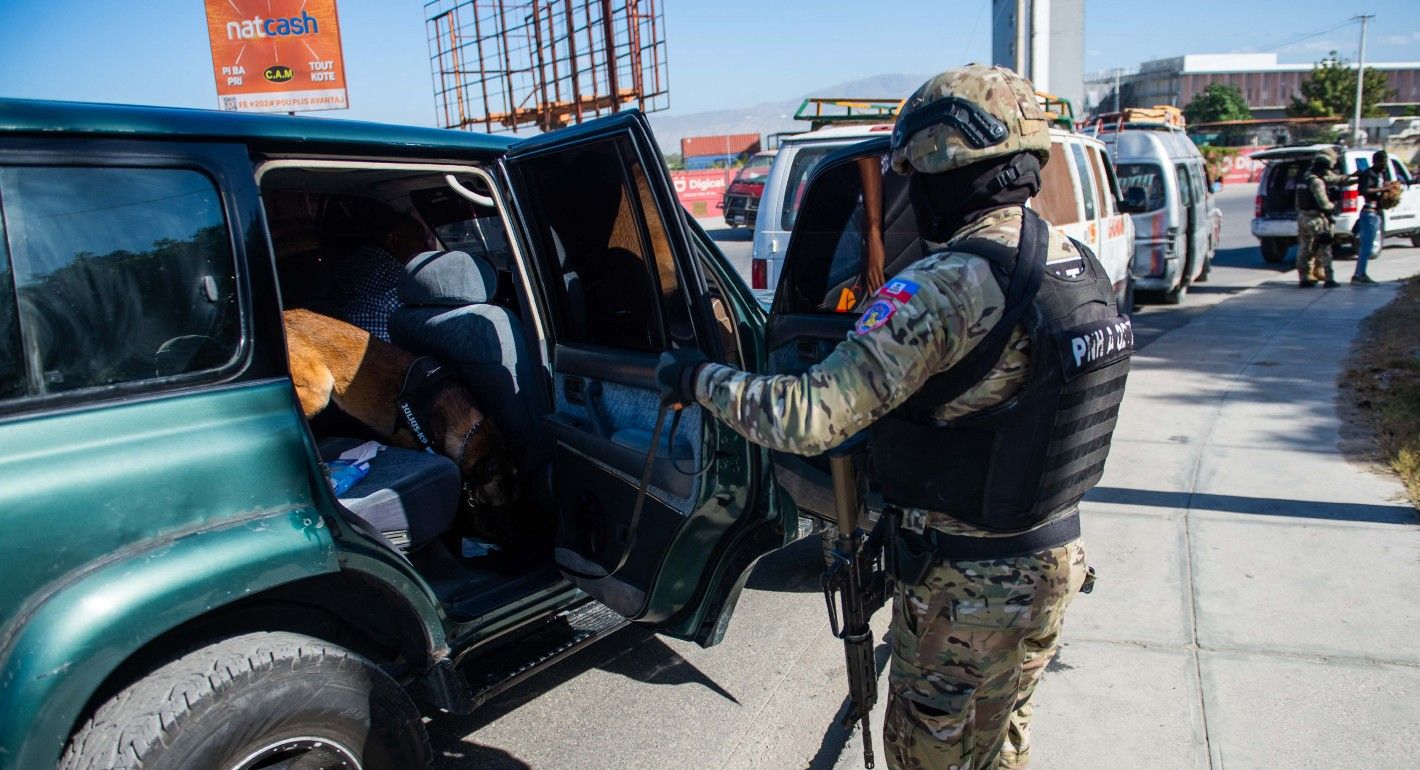
Perhaps the most consequential contribution the international community can make is not an enlarged foreign military footprint, but equipping Haitian institutions to manage their own security.
Christopher Shell
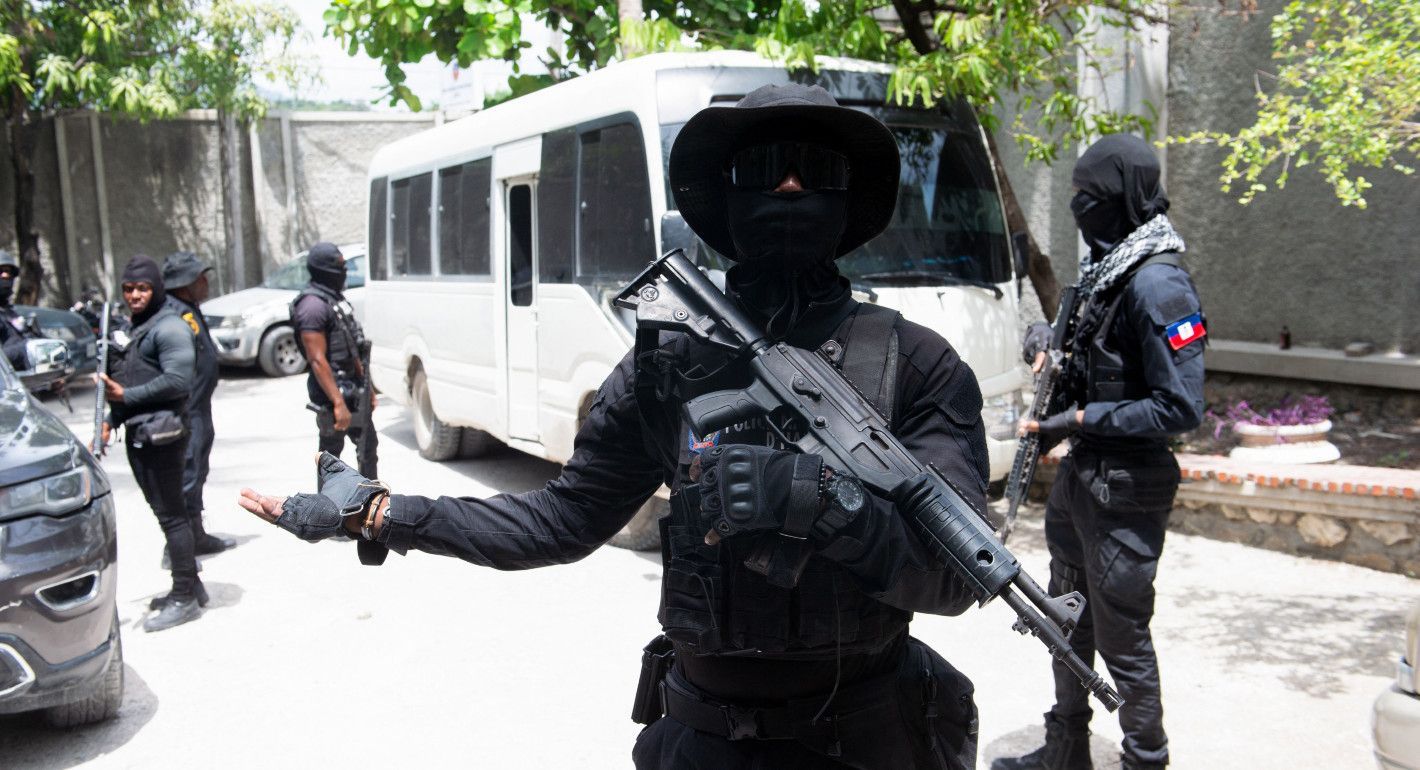
There’s a much more productive way to secure the border.
Christopher Shell
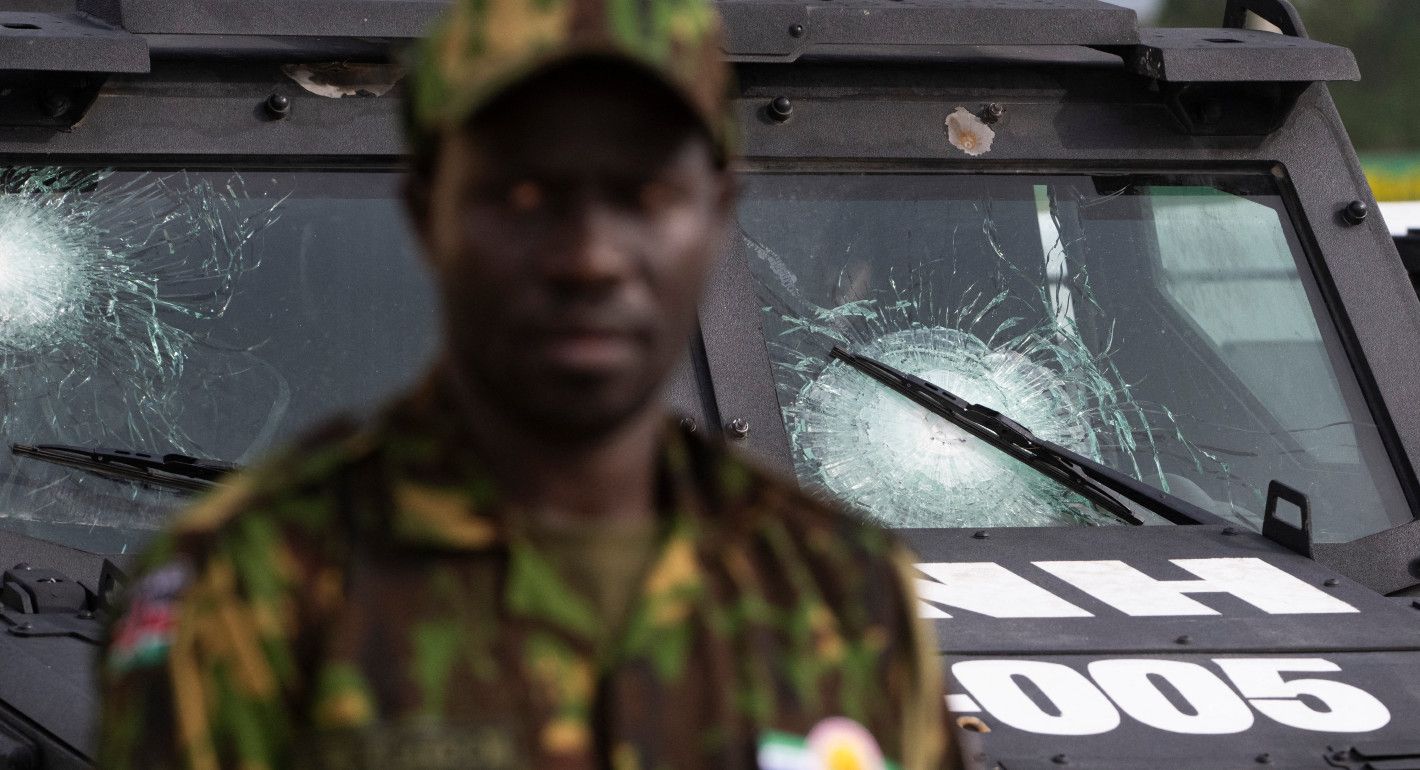
Without more funding, the police force won’t be able to stem gang violence, and elections will likely be delayed.
Christopher Shell
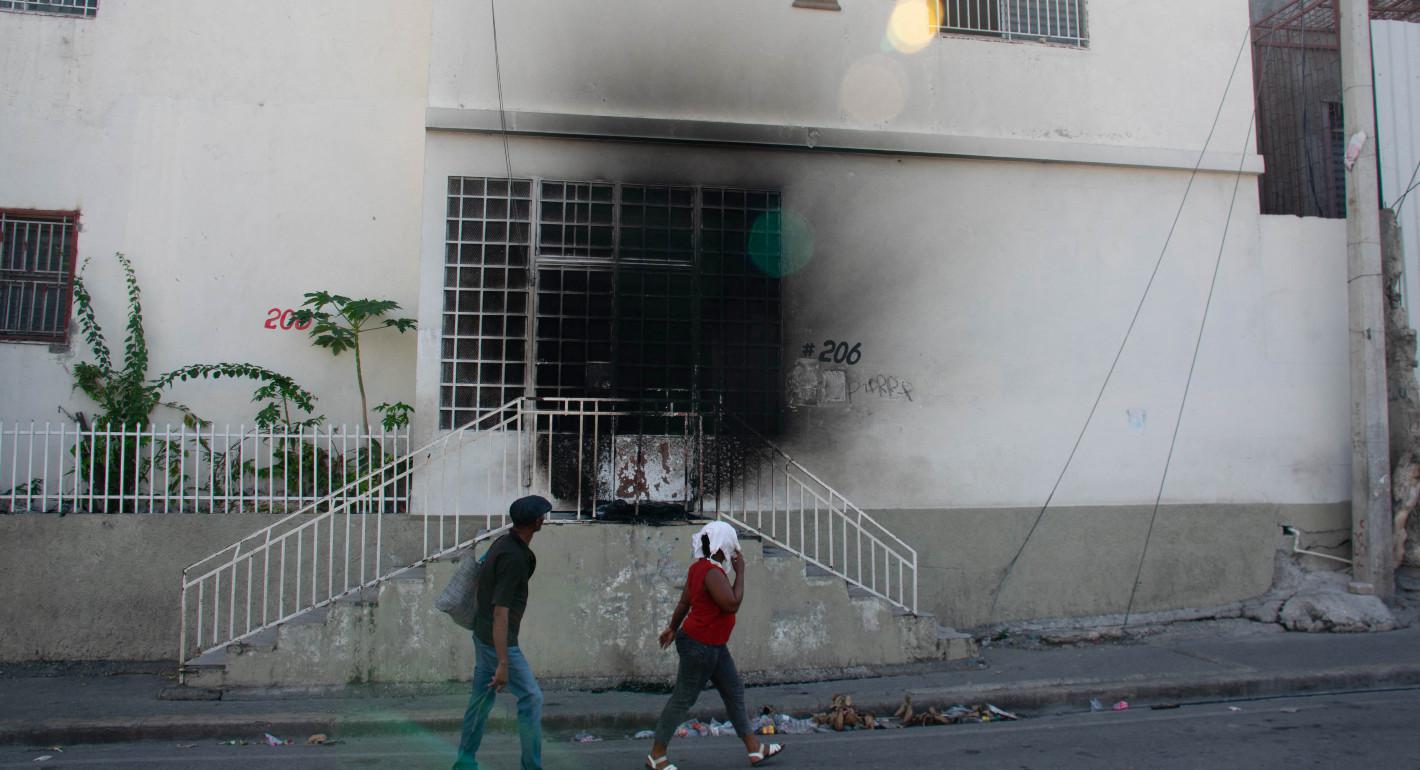
Its latest round of instability runs the risk of exacerbating an already dire crisis for its citizens and neighbors.
Christopher Shell