

Commentary
Its latest round of instability runs the risk of exacerbating an already dire crisis for its citizens and neighbors.
{
  "authors": [
    "Christopher Shell"
  ],
  "type": "commentary",
  "blog": "Emissary",
  "centerAffiliationAll": "dc",
  "centers": [
    "Carnegie Endowment for International Peace"
  ],
  "englishNewsletterAll": "americanStatecraft",
  "nonEnglishNewsletterAll": "",
  "primaryCenter": "Carnegie Endowment for International Peace",
  "programAffiliation": "ASP",
  "programs": [
    "American Statecraft"
  ],
  "projects": [],
  "regions": [
    "Haiti",
    "United States",
    "France"
  ],
  "topics": [
    "Security",
    "Foreign Policy",
    "Democracy"
  ]
}
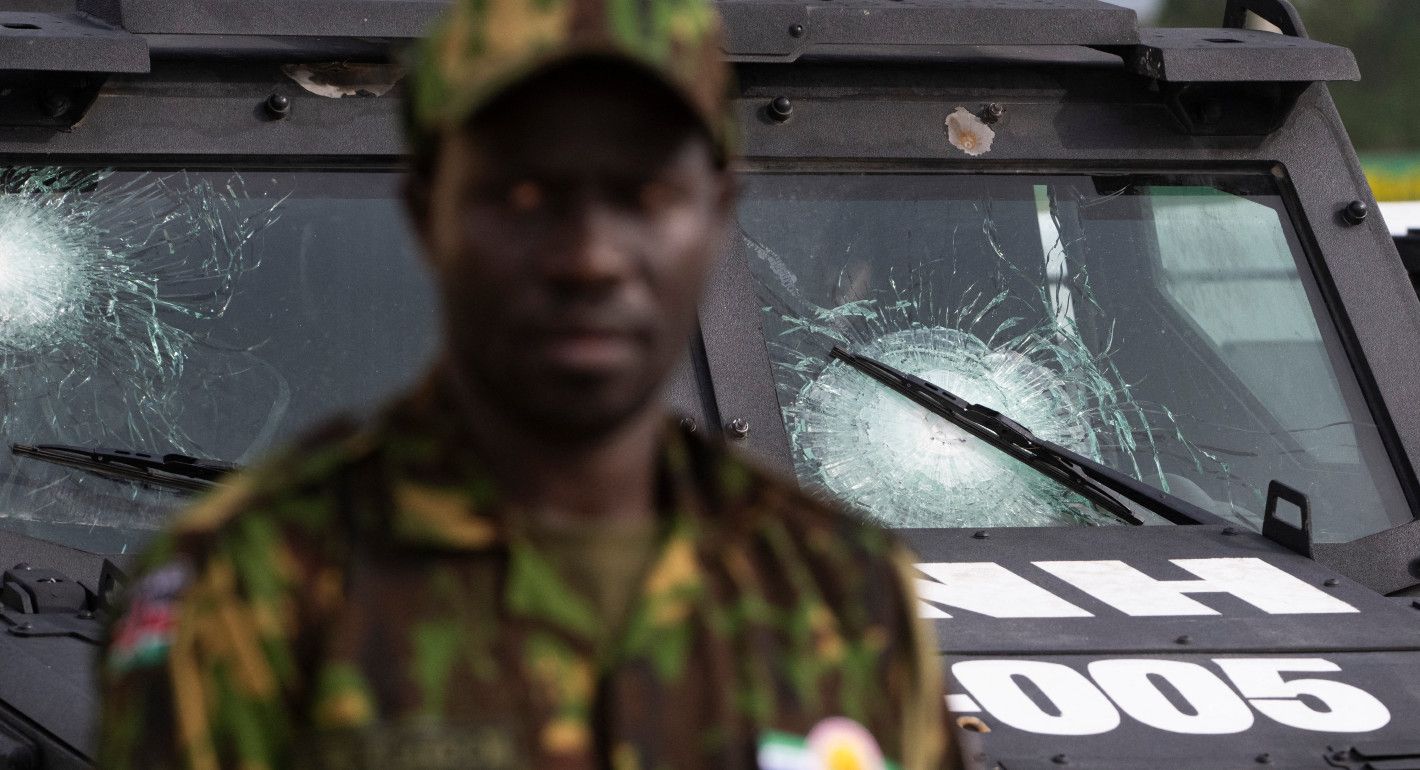
A Kenyan member of the MSS stands next to a U.S.-donated Haitian police vehicle, which was damaged by bullets during patrols, on September 5. (Photo by Roberto Schmidt/pool/AFP via Getty Images)
Without more funding, the police force won’t be able to stem gang violence, and elections will likely be delayed.
Last week, Secretary of State Antony Blinken traveled to Haiti to meet with the island nation’s interim prime minister, Garry Conille. The visit was a show of support for the Kenyan-led, UN-backed Multinational Security Support (MSS) mission and the country’s struggle to end criminal gang violence and attempt to re-establish democratic rule.
But nearly a year after the MSS was approved, progress in combatting the gangs that terrorize Port-au-Prince, Haiti’s capital, has been slow, with only intermittent progress. “At this critical moment,” Blinken told reporters during his trip, the MSS needs “more funding” to effectively fulfill its objectives. Complete funding will undoubtedly help to address the challenges facing the MSS, which include personnel shortages. Boosting contributions to the UN trust fund for the MSS will enable the Kenyan-lead mission to effectively combat criminal gangs, restore the flow of humanitarian aid, and create the conditions necessary for the planned democratic elections in 2026.
The MSS was established in response to former prime minister Ariel Henry’s call for international assistance amid Haiti’s deteriorating security conditions following the 2021 assassination of President Jovenel Moïse. In March, the gangs attempted to seize the main airport and stormed a major prison in Port-au-Prince. They also helped to oust Henry, who was largely unpopular and was out of the country to finalize details of the MSS. In late May, Haiti’s transitional presidential council replaced Henry with Conille, and the first MSS contingent arrived in June.
As of today, 400 Kenyan police officers are stationed in Haiti to work alongside the Haitian National Police—but still far short of the 1,000 Kenya pledged in October 2023. Furthermore, Jamaica announced an initial deployment of twenty-four military and police personnel to Haiti, still short of the 200 personnel it pledged in March. The promised officers from the Bahamas, Bangladesh, Barbados, Benin, and Chad—which would bring the mission’s total personnel to 2,500—have yet to arrive. U.S. officials recognize that the current numbers alone cannot end Haiti’s perennial gang violence.
These challenges are exacerbated by the failure to fully fund and operationalize the MSS, which has allowed the gangs to entrench themselves and further destabilize the capital. The funding shortfall for the UN trust fund, which relies on voluntary contributions from member states rather than the mandatory assessments used for traditional peacekeeping missions, has significantly delayed the deployment of Kenyan police to Haiti and has hindered their operational effectiveness due to insufficient equipment and delayed pay, impacting morale.
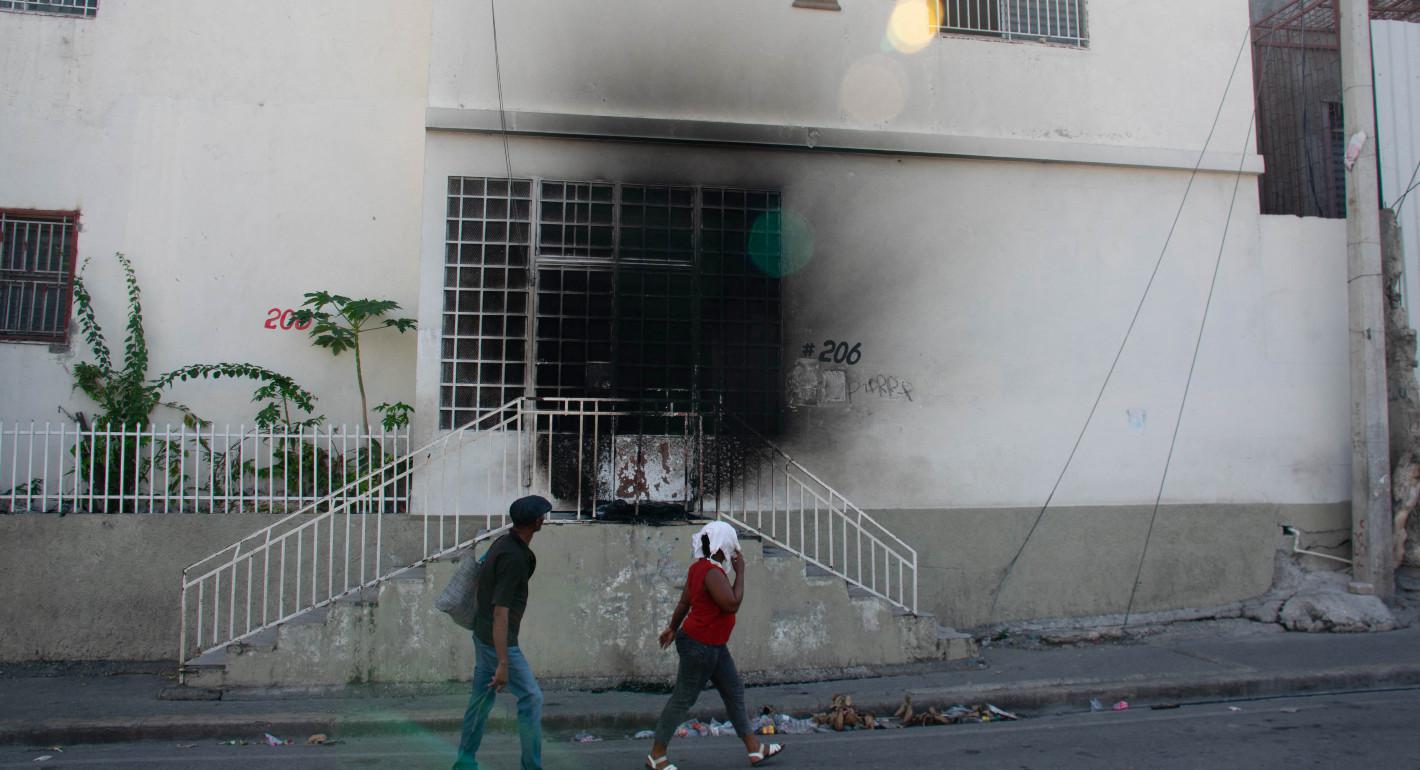
Its latest round of instability runs the risk of exacerbating an already dire crisis for its citizens and neighbors.
The United States has shouldered a disproportionate financial burden for the MSS, contributing $380 million, while Canada has provided $59 million. The United States’ substantial contribution is understandable, given its geographical proximity and economic capacity. But the Haitian crisis is a regional issue that warrants a collective response from the international community. Major economies should step up to help meet the financial goal necessary to fully operationalize the mission.
Estimates suggest that achieving full operational capability for the MSS—covering soldier upkeep, police armaments, and training the Haitian National Police—will require around $600 million annually. Broadening the financial base for this mission will make it easier to raise the approximately $200 million needed to fully operationalize the mission.
In particular, France should increase its contribution significantly. Paris arguably has a historical responsibility to contribute more to the UN trust, given its historical ties to Haiti as its former colonial master. Then called Saint-Domingue, Haiti was one of France’s wealthiest colonies. After gaining independence in 1804, Haiti paid France 112 million francs (roughly $560 million in today’s dollars) for recognition of its sovereignty and to compensate slave owners. Alongside a humanitarian aid contribution of 13.5 million euros ($14.6 million) in 2023, France has so far only contributed 3 million euros ($3.3 million) to the MSS trust fund. Indeed, modestly, increasing this pledge would represent less than 0.01 percent of France’s GDP and be a minimal cost, given its historical and ethical imperatives.
If several G20 nations were to each contribute $30 million to 50 million to the UN trust fund, the target could be swiftly achieved. Additionally, the European Union could potentially provide funding, though this may face complications due to the need for unanimous agreement from all member states and the ongoing effort to support Ukraine in its defense against Russian aggression. Individual EU member states also could join France and Germany, which has pledged $5.41 million. Japan has yet to contribute to MSS funding but has a history of providing millions of dollars in aid to support Haitian-lead efforts to improve health and security. In Brazil, the administration of President Luiz Inácio Lula da Silva may be loath to take on a role in another peacekeeping mission, due to the problematic history of the UN-backed mission to Haiti it led between 2004 and 2017. The mission was marred by allegations of sexual abuse, a cholera outbreak, and violence against civilians. However, this reluctance should not preclude Brazil from providing financial assistance, even if minimal, to the MSS.
To emphasize the urgent need for shared responsibility in supporting the Kenyan police forces and the Haitian people, several upcoming international forums provide ideal opportunities for senior U.S. officials to make their case. The UN General Assembly (UNGA) meeting this month offers a significant platform to emphasize the necessity of global contributions to the MSS. This is an especially poignant message given the UNGA theme of Leaving No One Behind, and while the world wrestles with conflicts in Ukraine and Gaza and the climate crisis. Additionally, the G20 summit in Brazil in November presents another critical venue to advocate for burden-sharing.
The financial difficulties facing the MSS have led U.S. officials to consider a push for transitioning the mission to a UN peacekeeping operation. Although this shift might alleviate some financial challenges, it would require formal approval from the UN Security Council. That process would involve obtaining a new mandate and securing votes from permanent members, which could lead to significant operational delays. Such delays could further jeopardize both Kenya’s commitment to the mission and Haiti’s chances to hold elections in 2026. The Haitian people have made significant efforts to develop on-the-ground solutions for their future governance. What they urgently need right now is assistance to restore stability and order rather than benign neglect from the international community.
The latest from Carnegie scholars on the world’s most pressing challenges, delivered to your inbox.
Former Fellow, American Statecraft Program
Christopher Shell was a fellow in the American Statecraft Program at Carnegie Endowment for International Peace.
Recent Work
Christopher Shell
Christopher Shell
Carnegie does not take institutional positions on public policy issues; the views represented herein are those of the author(s) and do not necessarily reflect the views of Carnegie, its staff, or its trustees.
It signals a new era of tech diffusion and warfare.

Steve Feldstein
Despite its flop at the box office, the film raises important questions for the climate community to answer.
Leonardo Martinez-Diaz
Fatima El Mansouri is the country’s first female prime minister. She’s also a privileged insider in a largely ceremonial position.

Sarah Yerkes
The acknowledgment has sparked fears of a new arms race with China and Russia.

Chris O’Meara
The summit may be remembered as a fatal blunder, when Washington, Beijing, and the AI industry collectively chose ceremony over action.
Jeffrey Prescott