

Paper
Rachid Tlemçani
{
  "authors": [
    "Rachid Tlemçani"
  ],
  "type": "commentary",
  "blog": "Sada",
  "centerAffiliationAll": "",
  "centers": [
    "Carnegie Endowment for International Peace"
  ],
  "collections": [],
  "englishNewsletterAll": "",
  "nonEnglishNewsletterAll": "",
  "primaryCenter": "Carnegie Endowment for International Peace",
  "programAffiliation": "",
  "programs": [],
  "projects": [],
  "regions": [
    "North Africa",
    "Algeria"
  ],
  "topics": [
    "Political Reform"
  ]
}

REQUIRED IMAGE
The low voter turnout in the May 2007 legislative elections (about 36 percent, compared to 65 percent in 1997 elections) showed that Algerians still believe that their votes do not make a difference. Clearly power rests somewhere other than in the elected legislature.
The low voter turnout in the May 2007 legislative elections (about 36 percent, compared to 65 percent in 1997 elections) showed that Algerians still believe that their votes do not make a difference. Clearly power rests somewhere other than in the elected legislature. But while it was clear for many years that it rested in the hands of the military, President Bouteflika has subtly altered the structure of political power during his time in office.
The main feature of the Algerian state is that the pivotal institution in the post-colonial era has been a repressive apparatus—the armed forces—rather than a civilian institution. When Algeria's war of liberation war ended in 1962, the army emerged as the only organized group. It filled the vacuum left by the colonial rulers, thus becoming the driving force behind state-building and modernization from the very beginning. Today the top echelons of the military establishment play a crucial role in the country's political life through high-ranking officers holding public office as well as indirect means of influencing policy. The army perceives itself as the only institution with the historic legitimacy to exercise full authority. It is commonly said that it is not the state that has an army, but rather the army that has its own state.
After riots in October 1988, the regime began to open up. The ANP (Armée Nationale Populaire) withdrew its representatives from the Political Bureau and Central Committee of the National Liberation Front (FLN) as part of a rapid process of political opening and pluralism. But this trend ended precipitously when the military intervened to cancel the 1991 legislative elections, the first democratic balloting in the post-colonial era, due to the impending victory of the Islamic Salvation Front (FIS). Military rule became more pronounced than ever during the ensuing civil war, as the country was ruled under emergency law.
Since his rise to power, President Abdelaziz Bouteflika has struggled to sever the traditional link between the power structure and the military. Even during his 1999 presidential campaign—in which the army supported him and all other candidates withdrew—Bouteflika sent messages to the army that civil-military relations needed to change. The army, according to Bouteflika, had arrogated to itself extra-constitutional powers during the exceptional and painful circumstances of the civil war. According to the constitution, Bouteflika said, the army should be under the president's authority.
During his first term in office Bouteflika maneuvered to diminish military involvement in politics. At the beginning of his presidency, Bouteflika struggled to control cabinet appointments, at one point protesting that he would not be “three–quarters of a president.” Looking to boost his popularity, Bouteflika publicly repudiated the cancellation of the 1991 elections, calling it “an act of violence.” He gradually began to place personal and political allies in top posts in the ministries and regional institutions, while launching a process of shifts in the army high command to acquire loyalty among those most able to undermine his efforts.
With time, Bouteflika's efforts began to tell. By May 2003, Chief of Staff Lt. Gen. Muhmmad Lamari announced that the army would not have a preferred candidate in the 2004 presidential election and that it would be prepared even to accept an Islamist as president if he were committed to upholding the democratic institutions of the Algerian state. Bouteflika was re-elected, and took advantage of his constitutional prerogatives by creating the position of General Secretary within the Ministry of Defense. Another important indication that Bouteflika was asserting his authority came with the official resignation of Lamari, who was then replaced by Bouteflika's close friend Major General Ahmed Salah Gaid. Bouteflika was also able to consolidate his authority over the Ministry of Defense by appointing retired General Abdelmalek Guenaizia to the newly created post of Deputy Minister.
As Bouteflika nears the end of his second term, it is clear that he has diminished the military's power over the presidency. But he did so in order to increase his own freedom of action, not in order to democratize Algeria. Now, with the possibility that the Constitution will be amended in order to allow the president to serve more than two terms, Algeria joins the ranks of Arab and North African countries that face the problem of excessive power concentrated in the hands of a single ruler.
Throughout the Arab world, control of institutions by the armed forces, intelligence agencies, and police remains a major obstacle to change. Such control will need to be gradually loosened and ultimately broken completely for democratic transformations to take place.
Rachid Tlemçani is a Visiting Scholar at the Carnegie Middle East Center in Beirut and a professor of political science at the University of Algiers.
Former Visiting Scholar
Recent Work
Rachid Tlemçani
Carnegie does not take institutional positions on public policy issues; the views represented herein are those of the author(s) and do not necessarily reflect the views of Carnegie, its staff, or its trustees.
Syria's transition promised a fresh start. But are old habits of power making a comeback? This analysis looks at the warning signs and what it will take to build a more accountable state.
Sima Beitinjaneh
Hate speech has spread across Sudan and become a key factor in worsening the war between the army and the Rapid Support Forces. The article provides expert analysis and historical background to show how hateful rhetoric has fueled violence, justified atrocities, and weakened national unity, while also suggesting ways to counter it through justice, education, and promoting a culture of peace.
Samar Sulaiman
Kuwait’s government has repeatedly launched ambitious reforms under Kuwait Vision 2035, yet bureaucratic inefficiency, siloed institutions, and weak feedback mechanisms continue to stall progress. Adopting government analytics—real-time monitoring and evidence-based decision-making—can transform reform from repetitive announcements into measurable outcomes.
Dalal A. Marafie
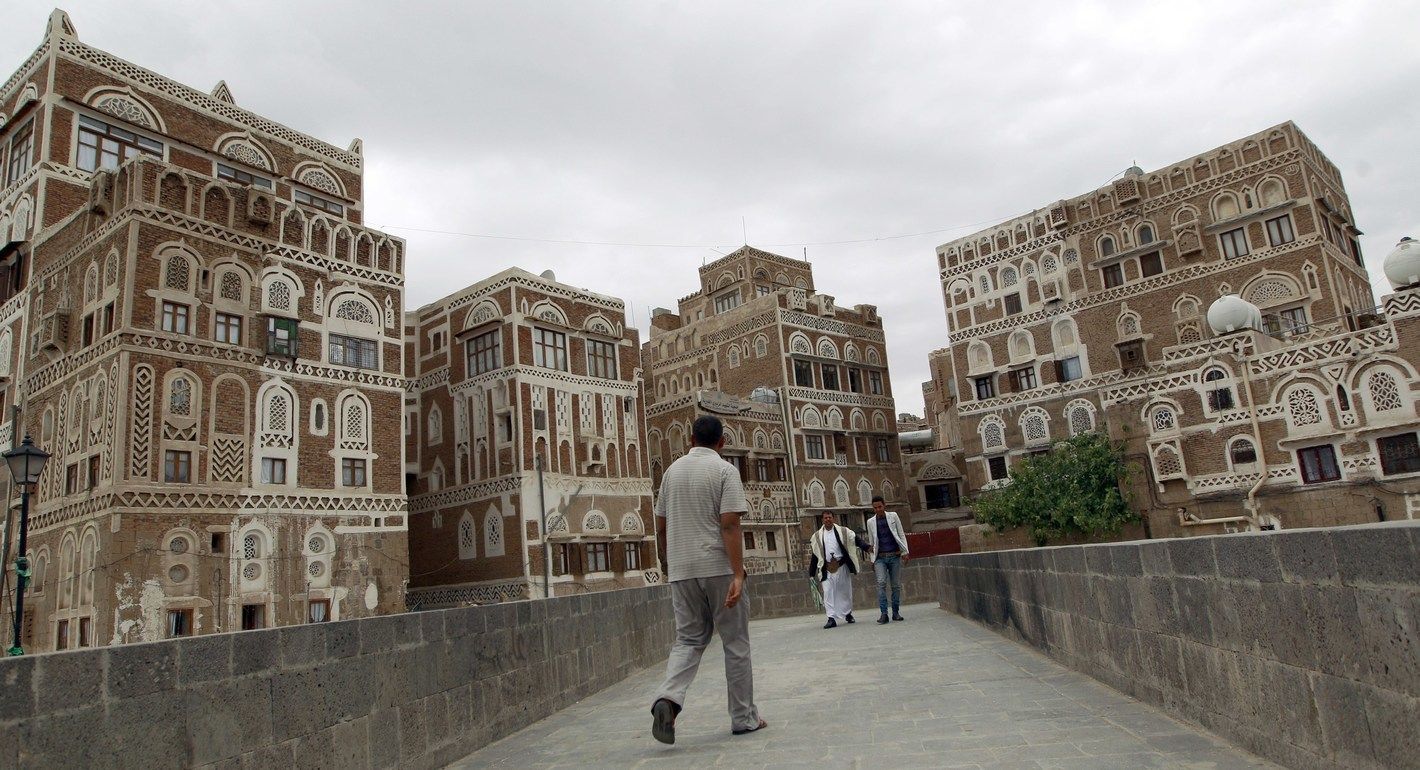
The chaos of street naming in Sana’a reflects the deep weakness of the Yemeni state and its failure to establish a unified urban identity, leaving residents to rely on informal, oral naming systems rooted in collective memory. This urban disorder is not merely a logistical problem but a symbolic struggle between state authority and local community identity.
Sarah Al-Kbat
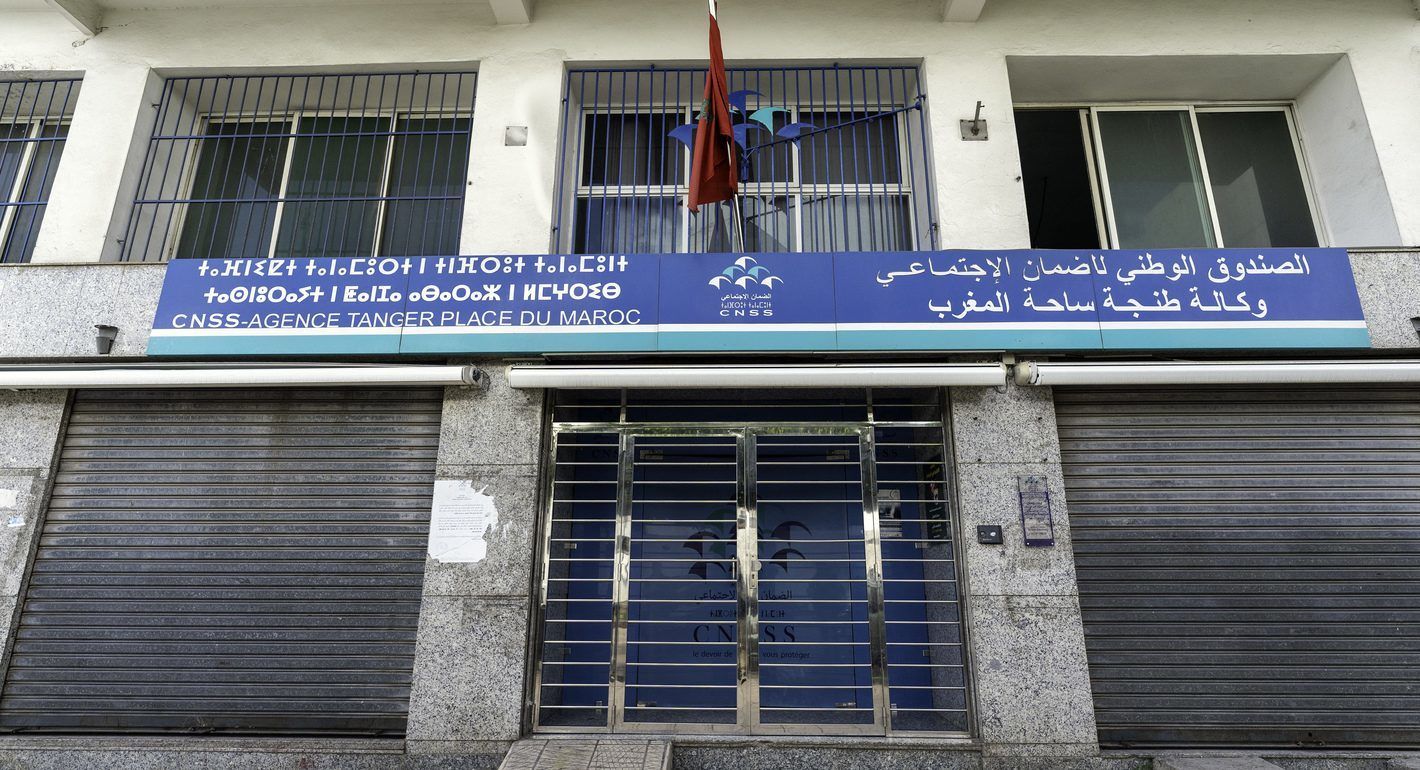
While Morocco’s shift to a digitized social targeting system improves efficiency and coordination in social programs, it also poses risks of exclusion and reinforces austerity policies. The new system uses algorithms based on socioeconomic data to determine eligibility for benefits like cash transfers and health insurance. However, due to technical flaws, digital inequality, and rigid criteria, many vulnerable families are unfairly excluded.
Abderrafie Zaanoun