

Commentary
Syria's transition promised a fresh start. But are old habits of power making a comeback? This analysis looks at the warning signs and what it will take to build a more accountable state.
Sima Beitinjaneh
{
  "authors": [
    "Kyle McEneaney"
  ],
  "type": "commentary",
  "blog": "Sada",
  "centerAffiliationAll": "",
  "centers": [
    "Carnegie Endowment for International Peace"
  ],
  "collections": [],
  "englishNewsletterAll": "",
  "nonEnglishNewsletterAll": "",
  "primaryCenter": "Carnegie Endowment for International Peace",
  "programAffiliation": "",
  "programs": [],
  "projects": [],
  "regions": [
    "North Africa",
    "Morocco"
  ],
  "topics": [
    "Political Reform"
  ]
}

REQUIRED IMAGE
Although you are not a party, how do you see your political role?
Justice and Charity is a proactive evangelical group dedicated to the renewal of Islamic thought. What is at stake for us is the human being, whom we seek to prepare through a proper religious foundation. Our mission is to show people that what they have heard about Islam is simply one interpretation favored by the powerful—no more, no less—and to present them with another interpretation. We do not believe in violence as a means of change but instead advocate using political means. Observers have drawn a parallel between our methods and those of Chairman Mao, but his revolution was violent whereas we have embarked on a long-term grassroots project using the existing political system.
Has the participation of the Party of Justice and Development [PJD] in the political and legislative process affected the ideology or goals of your group?
There was no influence at all on Justice and Charity's work plan or methods, as we rely on a firmly-grounded idea, rather than emotions, to achieve our goals. The enormous numbers of educated young people who have joined the group's ranks prove that it is proceeding on the right track. The greatest evidence of this is that we have an overwhelming majority of supporters on the ground, whereas the PJD has very few.
What are your group's priorities on the question of applying the sharia (Islamic law)?
First we need to understand what sharia means; is it only the divinely-ordained penalties or is it dynamic and in need of rediscovery? The problem with Muslims is that they have come to understand the sharia as set texts. We envision the sharia as a spirit that the heart must discover. This is why our charitable educational programs, which are related to Sufi (Islamic mystic) schools, are so important.
Thus, the most important thing in this field is the preparation of a new generation to acquire the essential tools of intellectual ijtihad (interpretation) in all fields—particularly women, who have been consistently wronged when ijtihad was performed before. The group's general leader Abessalam Yassine emphasizes that the tragedy of Muslims is due largely to the lack of female knowledge of ijtihad, or, more precisely, the exclusion of women from ijtihad. We are now seeing a renaissance of thought relating to women, who are returning to studies generally and particularly to ijtihad in order to acquire real skills.
The door of ijtihad is open in Islam. We have no ecclesiastical structure as in Christianity, but we must limit the channels for ijtihad. It should take place under the auspices of a real, democratically chosen parliament that springs from the will of the people, unlike the current parliament.
Where are your strongholds of support in Morocco?
We represent all echelons of Moroccan society—from computer scientists to cobblers—but really most members are from the intelligentsia. Only those who are qualified can push through a program or intellectual vision, including on the economic level. And so we represent the middle class, because the rich, fearing for their fortunes, would never join a revolutionary political group.
How are relations between the group and the government?
Justice and Charity is moderate and has brought balance to the Moroccan scene. This is actually fortunate for the regime, because the group's members are young people—he average age is between 30 and 35 years—who are living through very tough times economically, which could lead to an explosion. We take this anger and try to channel it into organized political action, so the regime actually welcomes us as opposed to other movements that believe in nothing but violence.
In fact, when young men are arrested at demonstrations and police learn that they are members of the Justice and Charity, they let them go. So the regime has cooperated with us for thirty years and knows full well that we are a group that believes in political action, not in violence as do the Salafi Jihadists, for example. (Editor's note: This interview was conducted before the arrest of a number of Justice and Charity activists in June.)
What is your position regarding the personal status law (Mudawwana)?
We were the first to demand that the old Mudawwana be abolished, because we see personal status laws in all Arab and Muslim countries as a reflection of the regimes' power. The autocratic and dictatorial system perpetuates this crisis, in which power and judgment are in the hands of the man within the ruling family itself, as though the Arab regimes wanted to relieve themselves of 50 percent of the population they rule—i.e. women. So the Mudawwana gave power to men in the name of religion. In fact it is not part of religion at all, being only one interpretation introduced by the Ummayids and the Abbasids, who revolted against the true sharia and returned instead to the heathen patriarchal system upon which the Prophet Muhammad had declared war.
How can you, as a group, affect change without political participation?
We are practicing something like guerrilla warfare against the regime—not in a bloody sense, but rather symbolically with hit-and-run tactics. We try to spread political and intellectual awareness, which weakens the regime's grip on power. Justice and Charity has been made possible by the emboldening of a civil society founded by the regime, but which has now moved beyond its control. For example, when I declared in public that I was in favor of a republican system I knew I had five years of jail waiting for me. Since that time the press has begun to criticize the King, whom the constitution reveres as sacred.
Justice and Charity will only participate in the political process after the current constitution is changed to one appropriate to the times in which we live and the old one is thrown into the dustbin of history—especially parts that sanctify the King and ensure he holds all the levers of power. The alternative we put forth to the constitution is an Islamic Covenant (mithaq), which will serve as the basis for a real civil society to replace the façade that the regime has built.
What form of government do you advocate?
To a great extent, the Western democratic model is the one we wish to implement. We believe that the community of the Prophet was not like the complex society of today, and that Western democracy developed many principles similar to the concept of consultation (shura) in Islam. We call for the separation of powers, a free and independent parliament, an independent judiciary, and, most importantly, interest in reforming the individual human being, who has become corrupt. We began our revolution thirty years ago with the goal of reforming and preparing Moroccans after the destruction we have suffered under the current system, which has brought us ignorance, unemployment, illiteracy, poverty, anger, and tyranny.
We will not import a carbon-copy of Western democracy because it, too, suffers from its own problems. Instead, we will take from it whatever can benefit us and make it conform to our circumstances so that we can avert the crises experienced by Western democracy.
This interview was conducted by Kyle McEneaney and translated from Arabic by Judd King.
Kyle McEneaney
Carnegie does not take institutional positions on public policy issues; the views represented herein are those of the author(s) and do not necessarily reflect the views of Carnegie, its staff, or its trustees.
Syria's transition promised a fresh start. But are old habits of power making a comeback? This analysis looks at the warning signs and what it will take to build a more accountable state.
Sima Beitinjaneh
From anime heroes to online gaming communities, Morocco’s Gen Z is building a new protest culture. What does this digital imagination reveal about youth politics, and how should institutions respond?
Abdelilah Farah
Is Morocco’s migration policy protecting Sub-Saharan African migrants or managing them for political and security ends? This article unpacks the gaps, the risks, and the paths toward real rights-based integration.
Soufiane Elgoumri
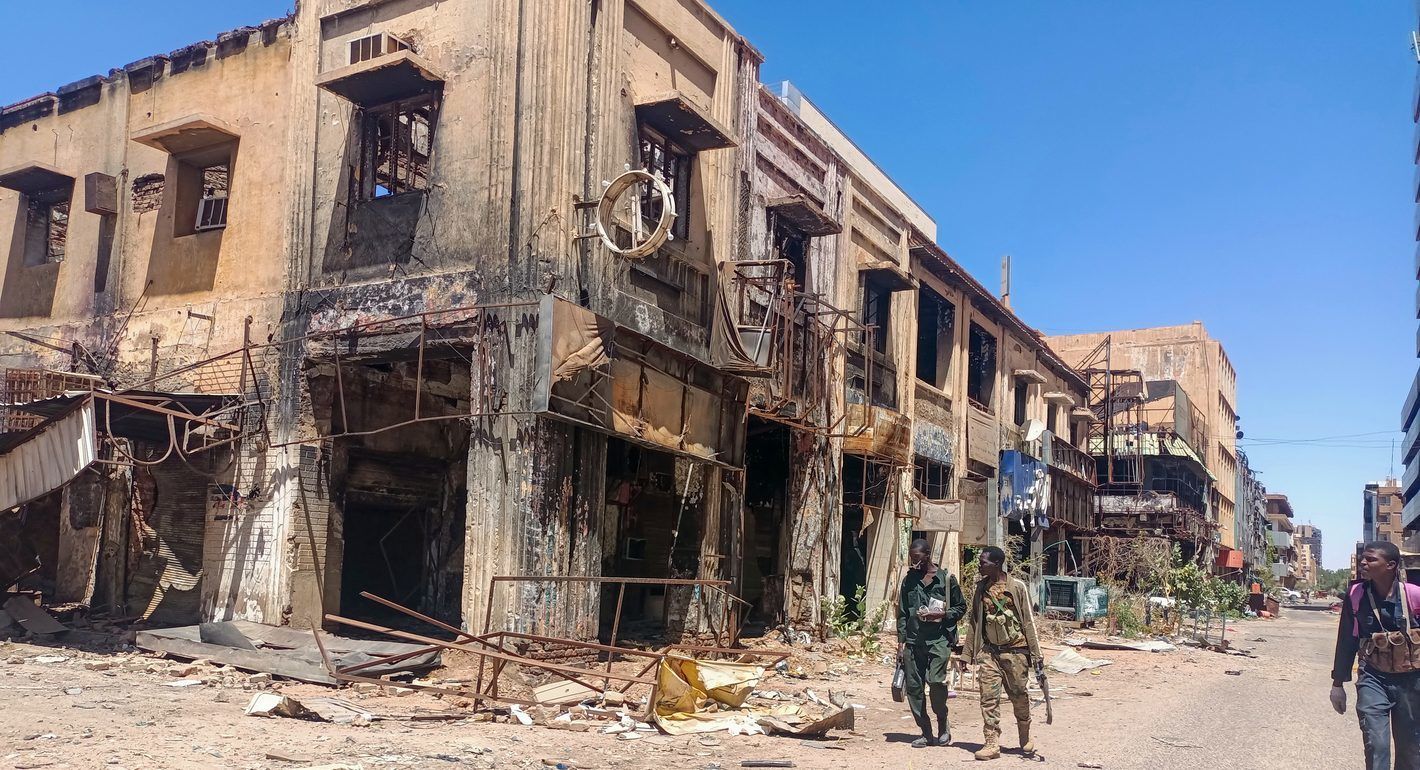
Hate speech has spread across Sudan and become a key factor in worsening the war between the army and the Rapid Support Forces. The article provides expert analysis and historical background to show how hateful rhetoric has fueled violence, justified atrocities, and weakened national unity, while also suggesting ways to counter it through justice, education, and promoting a culture of peace.
Samar Sulaiman
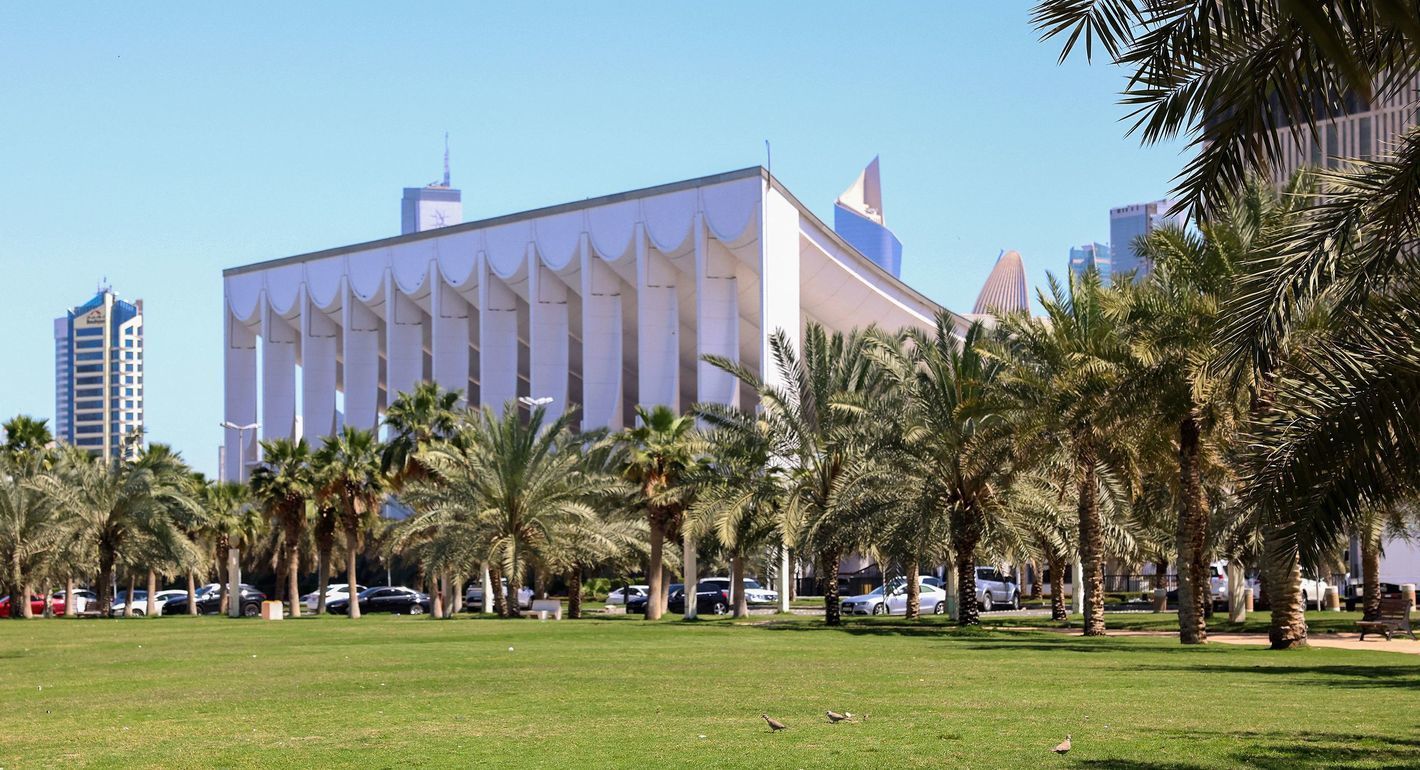
Kuwait’s government has repeatedly launched ambitious reforms under Kuwait Vision 2035, yet bureaucratic inefficiency, siloed institutions, and weak feedback mechanisms continue to stall progress. Adopting government analytics—real-time monitoring and evidence-based decision-making—can transform reform from repetitive announcements into measurable outcomes.
Dalal A. Marafie