
• Research
  • Emissary
  • About
  • Experts
Carnegie Global logoCarnegie lettermark logo
DemocracyIran
  • Donate
{
  "authors": [
    "Gregory Johnsen"
  ],
  "type": "commentary",
  "blog": "Sada",
  "centerAffiliationAll": "",
  "centers": [
    "Carnegie Endowment for International Peace"
  ],
  "collections": [],
  "englishNewsletterAll": "",
  "nonEnglishNewsletterAll": "",
  "primaryCenter": "Carnegie Endowment for International Peace",
  "programAffiliation": "",
  "programs": [],
  "projects": [],
  "regions": [
    "Yemen"
  ],
  "topics": [
    "Political Reform",
    "Democracy",
    "Security"
  ]
}

Attribution logo

Source: Getty

Commentary
Sada

Electoral Game of Chicken in Yemen

The principal opposition coalition is threatening to boycott April parliamentary elections.

Link Copied
By Gregory Johnsen
Published on Feb 3, 2009
Sada

Blog

Sada

Sada is an online journal rooted in Carnegie’s Middle East Program that seeks to foster and enrich debate about key political, economic, and social issues in the Arab world and provides a venue for new and established voices to deliver reflective analysis on these issues.

Learn More

Parliamentary elections in Yemen tend to be raucous events, unlike the country’s presidential elections, which are largely scripted coronations. But parliamentary elections scheduled for April 2009 threaten to be unusually quiet, as the government’s only competitor—the Joint Meeting Parties (JMP) —is threatening to boycott. The government has responded that the elections will go ahead as planned with or without the JMP, pointing out that most political parties are willing to participate. The thirteen other parties to which the government is referring, however, currently have no seats in parliament and are widely considered to be loyal to the government.

In the nearly 20 years since Yemen’s unification, 24 different parties have participated in three sets of parliamentary elections. But as with many statistics regarding Yemen, these numbers are misleading. While 21 different parties took part in the 2003 elections, for example, only four of them received more than one percent of the vote and the ruling General People’s Congress (GPC) won nearly 76 percent of the vote. The vast majority of Yemeni parties function as democratic window dressing rather than as real rivals for power.
 
Since the creation of the JMP in November 2005, it has become common to speak of an opposition in Yemen, but this journalistic shorthand glosses over the fact that the coalition is a fractured movement with little in common save an opponent. Its two leading parties, the Yemeni Socialist Party (YSP) and Islah, spent much of their time prior to 2005 demonizing each other, while the other members of the coalition are electorally inconsequential. Part of the JMP’s problem has been crises of leadership in both Islah and the YSP. Islah is in the midst of a leadership crisis following the December 2007 death of Sheikh ‘Abdullah al-Ahmar, who had headed the party since it was established in 1990.  The new nominal leader, Muhammad al-Yadumi,  has yet to consolidate his control of all factions. For its part, the YSP has lost scores of its best leaders, initially through a series of assassinations prior to the 1994 civil war and then to exile following the war. The last fifteen years have been no kinder, with periodic defections and asylum applications as well as the high-profile assassination of Jarallah ‘Umar in 2002.
 
The government has taken advantage of the JMP’s current paralysis to force through controversial legislation. In August 2008, the GPC pushed through a vote to maintain the 2001 election law for the April 2009 elections, discarding a draft law sponsored by the JMP. The JMP draft included amendments recommended by the European Union  following the 2006 presidential election, including a requirement that voters cast ballots in their home districts rather than at work, so that government officials cannot press subordinates to vote a particular way. Such changes would have eliminated large swaths of GPC support in the south, currently exercised through military garrisons and government offices.
 
The GPC was able to drop the JMP draft electoral law, to which it had agreed in principle, after the JMP refused to honor its part of the bargain by nominating fifteen candidates to the Supreme Elections Commission, which will oversee the elections. The JMP took that stance to protest the continued detention of political prisoners, many of whom were YSP members  arrested on charges of instigating unrest in the south. The result was a political stalemate that allowed the GPC to uphold the old law, which will give it an advantage in the April elections. In a move aimed to ease tensions and encourage JMP participation in the elections, President Ali Abdullah Saleh subsequently released twelve high profile political prisoners on September 11. Then, in late November, local elections were pushed back four years until 2013. Some in the JMP fear that the postponement sets a precedent that could be repeated in pushing back the presidential election that is also scheduled for that year in order to prolong the rule of Saleh (in power since 1978).
 
Al-Ghad, a weekly independent Yemeni newspaper, reported in early January that an agreement between the GPC and JMP to delay the elections for four to six months was imminent. But so far no such agreement has materialized, while the rhetoric on both sides continues to escalate.
 
Boycotting elections has never worked well for opposition parties in Yemen. The YSP boycotted the 1997 elections, but managed only to marginalize itself, winning only seven seats when it returned to the fold in 2003 (as compared to the 56 seats it won in 1993). The JMP is hoping that this time will be different. JMP leaders believe that if they can maintain a united front in the threatened boycott, no one will be able to accept the parliamentary elections as legitimate. The Eropean Union has already said it would refuse to monitor the elections if the JMP declines to participate. It is a risky political maneuver, but apparently the only one the JMP knows how to execute.
           
Gregory D. Johnsen is co-editor of the forthcoming Islam and Insurgency in Yemen. He is currently a Ph.D. candidate in Near Eastern Studies at Princeton University.

About the Author

Gregory Johnsen

Gregory Johnsen
Political ReformDemocracySecurityYemen

Carnegie does not take institutional positions on public policy issues; the views represented herein are those of the author(s) and do not necessarily reflect the views of Carnegie, its staff, or its trustees.
More Work from Sada

  • Commentary
    Sada
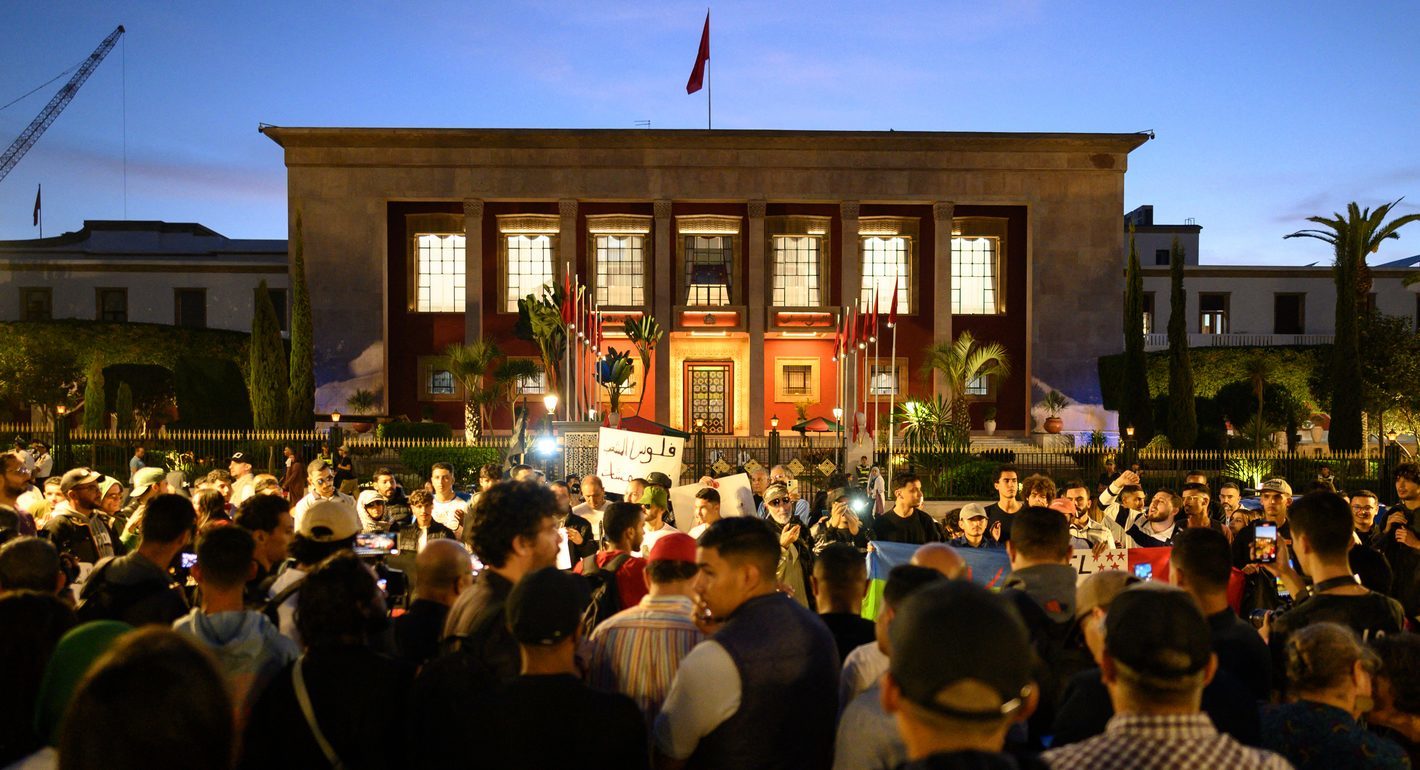
    Digital Dissent in Morocco: A Sociological Analysis of the Generation Z Movement

    From anime heroes to online gaming communities, Morocco’s Gen Z is building a new protest culture. What does this digital imagination reveal about youth politics, and how should institutions respond?

      Abdelilah Farah

  • Commentary
    Sada
    Duqm at the Crossroads: Oman’s Strategic Port and Its Role in Vision 2040

    In a volatile Middle East, the Omani port of Duqm offers stability, neutrality, and opportunity. Could this hidden port become the ultimate safe harbor for global trade?

      Giorgio Cafiero, Samuel Ramani
  • Commentary
    Sada
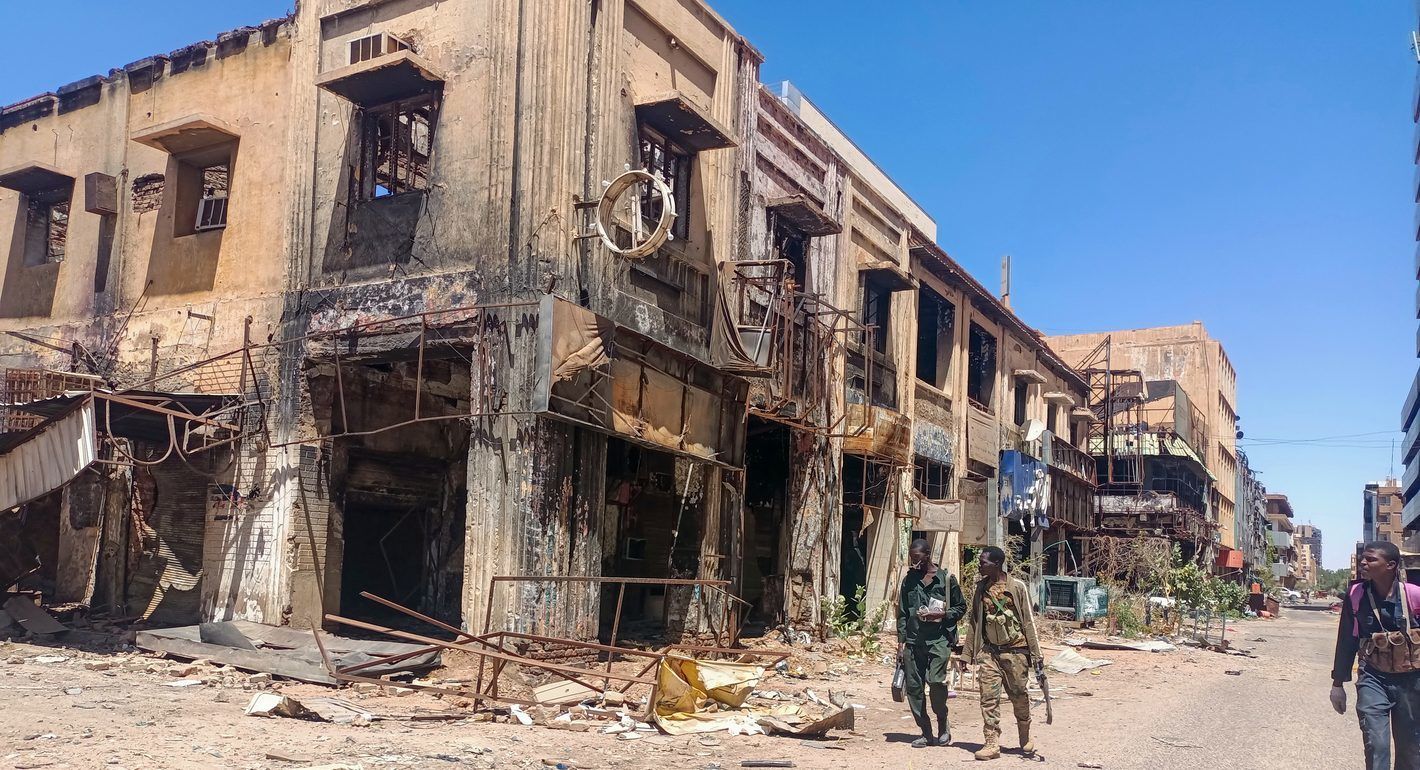
    A War Fueled by Hate Speech: Sudan’s Fall into Fragmentation

    Hate speech has spread across Sudan and become a key factor in worsening the war between the army and the Rapid Support Forces. The article provides expert analysis and historical background to show how hateful rhetoric has fueled violence, justified atrocities, and weakened national unity, while also suggesting ways to counter it through justice, education, and promoting a culture of peace.

      Samar Sulaiman
  • Commentary
    Sada
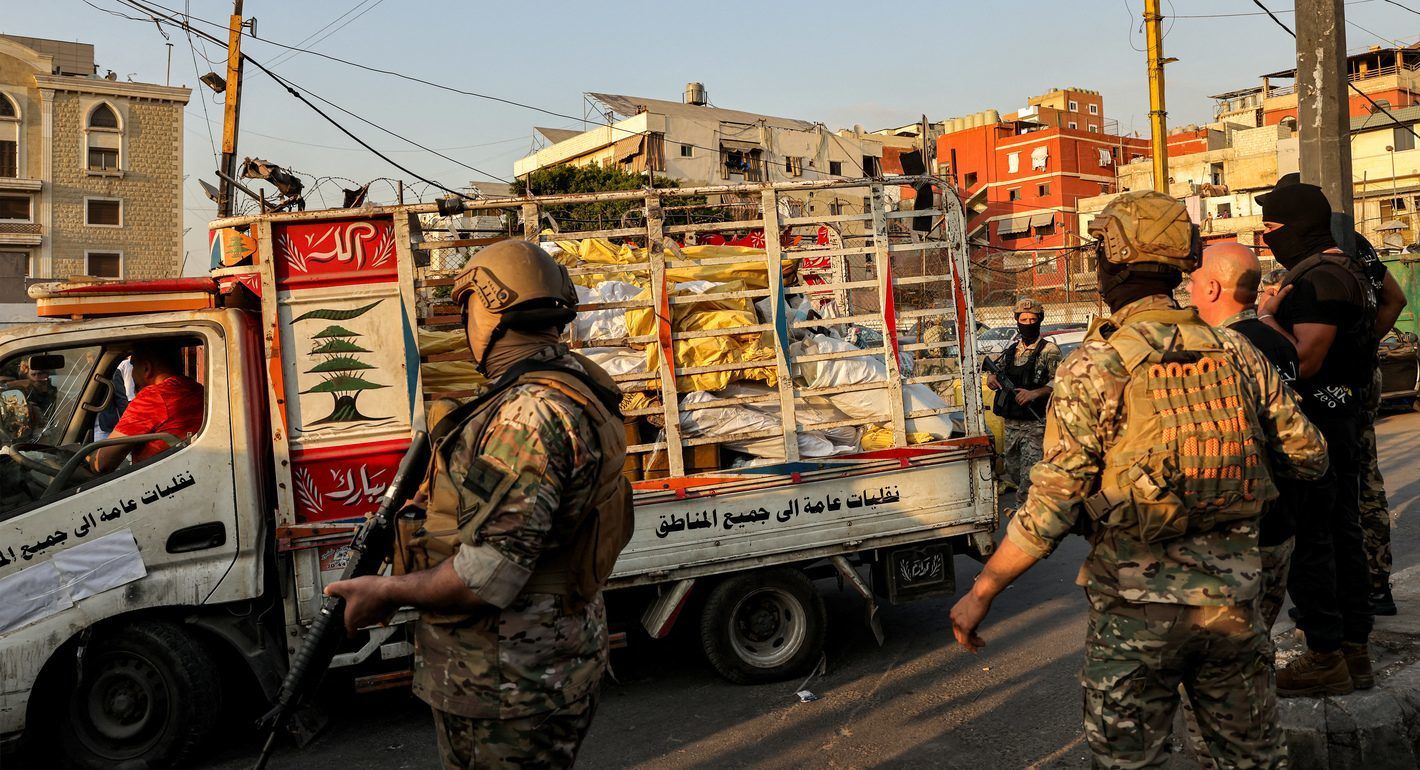
    Disarming Palestinian Factions in Lebanon: Can a Security Experiment Evolve into Sovereign Policy?

    The August 2025 government decision to restrict weapons to the Lebanese state, starting with Palestinian arms in the camps, marked a major test of Lebanon’s ability to turn a long-standing slogan into practical policy. Yet the experiment quickly exposed political hesitation, social gaps, and factional divisions, raising the question of whether it can become a model for addressing more sensitive files such as Hezbollah’s weapons.

      Souhayb Jawhar

  • Commentary
    Sada
    Kuwait’s Bureaucracy at a Crossroads: Why Government Innovation Stalls and How Analytics Can Reignite Reform

    Kuwait’s government has repeatedly launched ambitious reforms under Kuwait Vision 2035, yet bureaucratic inefficiency, siloed institutions, and weak feedback mechanisms continue to stall progress. Adopting government analytics—real-time monitoring and evidence-based decision-making—can transform reform from repetitive announcements into measurable outcomes.

      Dalal A. Marafie

Get more news and analysis from
Carnegie Endowment for International Peace
Carnegie global logo, stacked
1779 Massachusetts Avenue NWWashington, DC, 20036-2103Phone: 202 483 7600Fax: 202 483 1840
  • Research
  • Emissary
  • About
  • Experts
  • Donate
  • Programs
  • Events
  • Blogs
  • Podcasts
  • Contact
  • Annual Reports
  • Careers
  • Privacy
  • For Media
  • Government Resources
Get more news and analysis from
Carnegie Endowment for International Peace
© 2026 Carnegie Endowment for International Peace. All rights reserved.