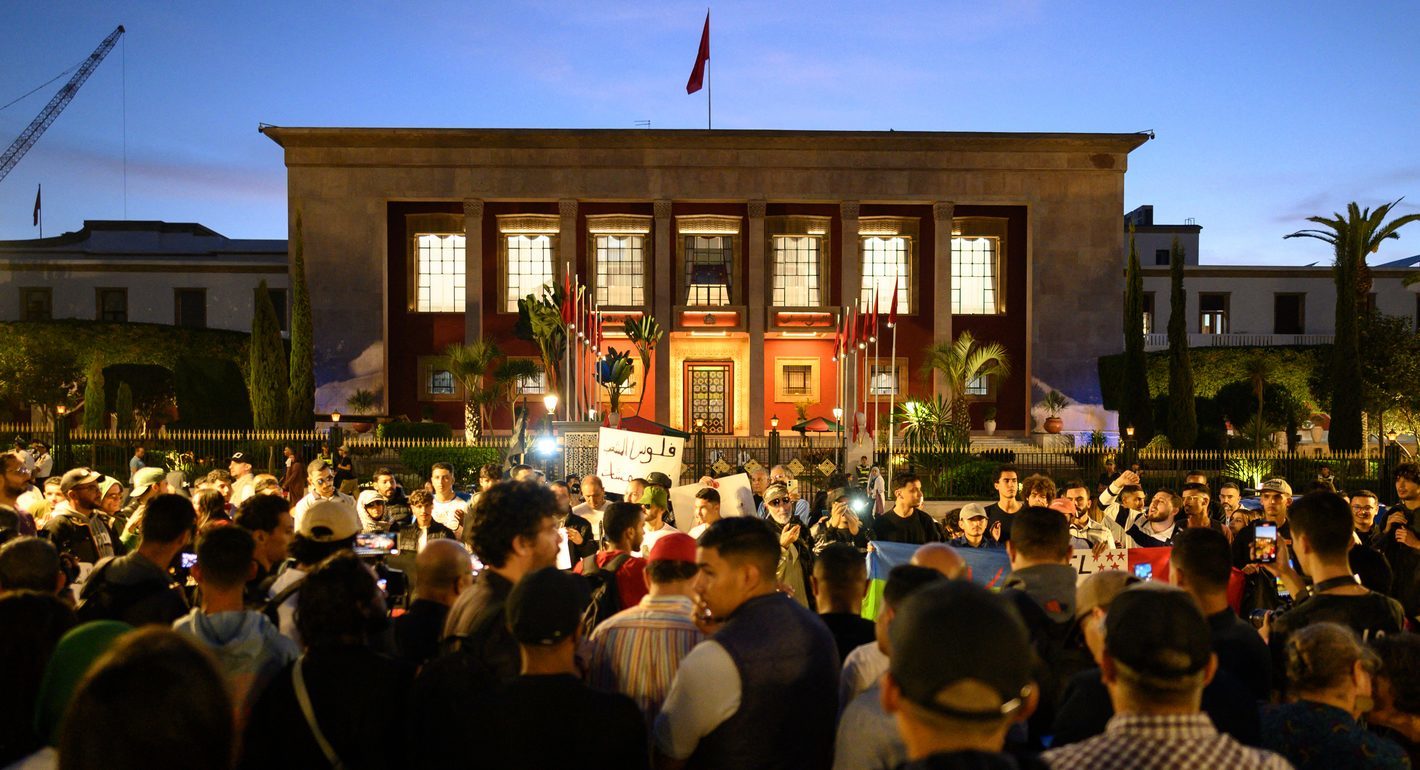
The late American Congressman Tip O’Neill once opined that all politics is local; in Lebanon all politics is sectarian. Unlike in previous years, a few days ahead of the legislative elections on June 7 it is difficult to predict whether the opposition (known as March 8, which includes Hizballah) or the loyalists (known as March 14) will win. The electoral competition this time around is not only fierce and unnerving but worryingly polarizing along sectarian lines. Never before have legislative elections in Lebanon been so divisive, with discourse on both sides of the political divide focusing on what separates rather than unifies the Lebanese. Regardless of who emerges the victor on June 8, the Lebanese public will require some time to recover from relentless divisive campaigning.
Despite the fact that the new electoral law regulates election advertising and spending, the national commission supervising the electoral process has pointed out in its latest report 543 violations of media coverage and spending by candidates. It is unclear through what mechanism the recently-formed constitutional council, that is supposed to vet and rule on these violations, will deal with them on a case by case basis. Though it is a victory for democracy that the much-awaited council was formed ahead of election day, it will need to establish its credibility and seriousness in swift and decisive action that will first take into consideration the violations in spending and advertising. It remains to be seen whether the council will rule over appeals submitted on accusations of sectarian incitement which has been a major complaint by civil society in this election.
The elections will serve as a referendum—which is a rare occurrence in Lebanese history—on which political camp commands the larger following. While the country’s political landscape is largely divided between March 8 and March 14, a curious group of candidates calling themselves independent is emerging to punctuate this distinction and form a new political force in the country following the elections. It is this independent group that will tip the balance on June 7 if it succeeds in advancing a number of candidates. Regardless of the election’s outcome, however, Lebanon will still be under the tight grip of the opposition movement in the country.
In May 2008, armed followers of the opposition took to the streets and subdued West Beirut and areas under the control of loyalists. The armed standoff resulted in a mediated agreement in the capital city of Doha which entailed granting the opposition veto rights in government. Prior to the Doha agreement, the opposition speaker of parliament had for a year and a half prevented the national assembly from legislating in an unprecedented paralysis of parliament. With the assured control of the executive and legislative branches of government, the opposition tightened its grip on the Lebanese system of governance, a situation unlikely to change after the June elections. Who actually wins on June 7 will remain largely irrelevant as long as both political camps cannot reach a negotiated understanding on how to govern the country without using a blocking minority vote in government or threats to close down the parliament.
Examining the candidates’ campaigns, one is pressed to distill coherent issue-based political programs. Instead, most campaigns are dominated by either anti-Syria messages or pro-resistance slogans which indicate that neither March 8 nor March 14 has transformed its message since the 2005 elections. Whichever coalition dominates as a result of the elections, neither will have a decisive majority as to advance constitutional changes that would change the face of Lebanon. A post-election coalition government remains the most probable option.
If the opposition succeeds in clinching a majority—most likely a slim one—it will be able to designate the next prime minister and perhaps keep control of a few cabinet posts between its key pro-Syria actors (Hizballah, Shi’i Amal Movement, and Michel Aoun’s Christian Free Patriotic Movement). If the current majority retains its slim lead, it will likely be unable to form a coalition government without again granting to the opposition veto power over cabinet decisions. In either case, the influence and political power of the March 8 opposition is likely to increase after the elections.
A strong showing by March 8 forces would translate into a restoration of Syrian influence in Lebanese politics, particularly as most opposition candidate lists include longtime Syrian allies. This will mean that Lebanese politics will be once again heavily influenced by policies friendly to Syria including, among others, curtailing cooperation between Lebanon and the Special International Tribunal set up to investigate the assassination in 2005 of former Prime Minister Rafik Hariri. Among other implications, there will be a slowdown of the process of reforms that President Michel Suleiman plans to advance as well as cooperation with the international community on the implementation of UNSCR Resolution 1701 in south Lebanon.
As Lebanese politics are closely associated with regional dynamics, another election in the region to be watched closely is the one taking place five days later in Tehran. Whoever wins there—reformist or conservative—will weigh heavily on the direction that the Lebanese opposition plans to take in the future.
Oussama Safa is general director of the Lebanese Center for Policy Studies based in Beirut.