

Commentary
Ahmed Morsy
{
  "authors": [
    "Ahmed Morsy"
  ],
  "type": "commentary",
  "blog": "Sada",
  "centerAffiliationAll": "dc",
  "centers": [
    "Carnegie Endowment for International Peace",
    "Malcolm H. Kerr Carnegie Middle East Center"
  ],
  "collections": [],
  "englishNewsletterAll": "menaTransitions",
  "nonEnglishNewsletterAll": "",
  "primaryCenter": "Malcolm H. Kerr Carnegie Middle East Center",
  "programAffiliation": "MEP",
  "programs": [
    "Middle East"
  ],
  "projects": [],
  "regions": [
    "North Africa",
    "Egypt"
  ],
  "topics": [
    "Political Reform"
  ]
}

REQUIRED IMAGE
In the aftershocks of Midan Tahrir, al-Azhar declares its support for democracy, pluralism – and its independence from a government that has long manipulated it.
Grand Sheikh of al-Azhar Ahmed al-Tayeb presented on June 20 what has been dubbed “The Al-Azhar Document,” an eleven-point program addressing many of the issues Egypt has faced since the January revolution. Based on a broad consensus of the eminent Islamic institution’s religious figures, the document advocates “a modern democratic state based on a constitution” which would guarantee citizens’ equal rights and the separation of powers. Al-Tayeb frames democracy as “the modern formula for the Islamic precept of shura (consultation),” which he explains as the true guarantor of pluralism and accountability to the people.
The resulting blueprint sketches out post-revolutionary priorities: reforming education and anti-corruption efforts, reducing unemployment, and maintaining international treaties. The document also presses for independence of al-Azhar from state control. Most important is the document’s treatment of the relationship between religion and the state; it supports “the people’s representatives endowed with the power of legislation in accordance with the precepts of true Islam—a religion which has never throughout its history experienced a religious or a theocratic state.”
Al-Azhar represents one of the most respected sources of religious scholarship and guidance in the Muslim world, and rulers have tapped into the institution’s credibility for political purposes since its founding in 970 AD. Muhammad ‘Ali, who ruled Egypt from 1805 to 1848, laid the modern groundwork for manipulation of the university by forcibly nationalizing 623,000 acres of land that had been endowed to mosques in order to gain additional state revenue. Under this model more than a century later, President Gamal Abdel Nasser not only placed all waqf (religious endowment) land under the purview of a Ministry of Religious Endowments, but added to al-Azhar University’s unique Islamic model European-style degrees and salaries for professors and imams—effectively rendering them government employees. Nasser also claimed appointment of the Grand Sheikh as a prerogative of the Egyptian president, replacing the university’s system of internal election. By 1963 al-Azhar had become a full-fledged state institution, allowing Nasser to remove or discredit his opponents on the inside.
Given this context, it is not surprising that following the January revolution al-Azhar should try to regain independence. Coalitions of imams have formed to advocate for independence, resulting in a March 13 rally that went largely unnoticed in the shadow of Tahrir Square’s mass protests. Over a thousand imams marched from the Nour Mosque in Abbassiya to the offices of the Supreme Council of Armed Forces (SCAF). They called for investigation of corruption charges leveled at the Ministry of Religious Endowments and the reversal of Nasser's 1961 law that put al-Azhar’s budget under state control and made the Grand Sheikh a presidential appointee. Since then, imams have continued protesting. For example, a group of imams joined the July 8 sit-in at Tahrir Square, where they distributed fliers for a mass rally in support of al-Azhar’s independence to be held on July 23, the anniversary of the 1952 coup d’état.
While the al-Azhar Document criticizes “the abuse of religion to disunite and otherwise pit citizens against each other,” it also emphasizes the 1980 constitutional amendment stating Islam is Egypt’s official religion and shari’a is the primary source of legislation. The responses to this inherent contradiction are divided as ever, even within the Muslim community. Deputy Muslim Brotherhood Guide Rashad Bayoumi welcomed the formula, remarking that it “demonstrates accurately the meaning of a secular state in Islam.” In contrast, Sheikh Gamal Qotb (former head of al-Azhar's Fatwa Committee) called it “window-dressing,” saying that the document fails to recommend mechanisms for reform. Others still, such as Mamdouh Ismail, the Salafi founder of the Egyptian Renaissance Party, refuse to comment on “anything issued by al-Azhar as long as it is headed by a National Democratic Party member,” a reference to al-Tayeb’s appointment by former President Mubarak.
Ismail’s reaction illustrates the conflict between al-Azhar, the bastion of Sunni Islamic orthodoxy, and the Salafis—despite their common interest in the university’s independence. Al-Azhar was used for decades to combat those the government viewed as extremists, particularly during Egypt’s period of Islamist terrorism in the 1990s. With the al-Azhar Document, al-Tayeb effectively rejects Salafi demands for a theocratic state, leading some to decry the document as lukewarm or secular. The Salafi Liberation Party even presented an “advisory memorandum” to al-Tayeb on July 6, calling on him to abolish the document, which they found to be “contrary to God’s law.”
Despite Salafi objections (or in some cases because of them), many prominent Egyptians have offered their support for the document. Literary critic Salah Fadl said the document “confirms al-Azhar's respect for others’ values and ideals. The institution has been regarded as a symbol of enlightenment and moderate Islam throughout history...and the document will help it regain its former prominence.” Deputy Prime Minister Yehia El Gamal commended it as “one of the most important charters issued to date,” and Rifaat al-Saeed (head of the leftist Tagammu’ Party) voiced similar support alongside Christian business tycoon Naguib Sawiris (head of the Free Egyptians Party)—both confirmed anti-Islamists. Spokespersons of the Coptic Church, though skeptical of any religious intervention in politics, welcomed the document as an illustration of the institution’s commitment to equality for all citizens.
Human rights activists and other secularists are less enthusiastic. Advocacy organizations express concern over the document’s “vagueness,” pointing out that safeguards needed to prevent rights abuses are noticeably absent. Others are dissatisfied by the continued support for Islamic law as the basis for legislation; secularist writer Salah Elissa argues that “if new laws need the consent of al-Azhar, then that immediately means we are in a religious (not civil) state.” Ikram Lamie, spokesman for the Evangelical Church in Egypt, reiterated a similar concern, stressing that religious figures should not interfere in political matters. But spokesmen for the drafting committee have remarked that al-Azhar would have only an advisory role in legislation, as before, and a secular Supreme Constitutional Court would be responsible for approving new laws.
Supporting a democratic state in the new Egypt will require institutions truly independent of a government stranglehold, and al-Azhar’s role in the coming days could prove a vital example for other nationalized institutions long oppressed by the Egyptian government’s intervention, particularly the judiciary and public university system. As noted by Nabil Abdel Fattah, a political analyst and one of the drafters, “This statement was established through calm dialogue to establish an agenda to unite the people, separate from slogans and propaganda.” As such it represents an attempt to deal with an explosive issue seriously and peacefully—a positive step in itself.
Ahmed Morsy holds an MA in Political Science from the American University in Cairo; Amirah Ismail also contributed to writing this article, and has an MA in Middle East Studies from George Washington University.
Former Nonresident Associate, Democracy and Rule of Law Program
Morsy was a nonresident research associate in the Democracy and Rule of Law Program at the Carnegie Endowment for International Peace.
Recent Work
Ahmed Morsy
Ahmed Morsy
Carnegie does not take institutional positions on public policy issues; the views represented herein are those of the author(s) and do not necessarily reflect the views of Carnegie, its staff, or its trustees.
Syria's transition promised a fresh start. But are old habits of power making a comeback? This analysis looks at the warning signs and what it will take to build a more accountable state.
Sima Beitinjaneh
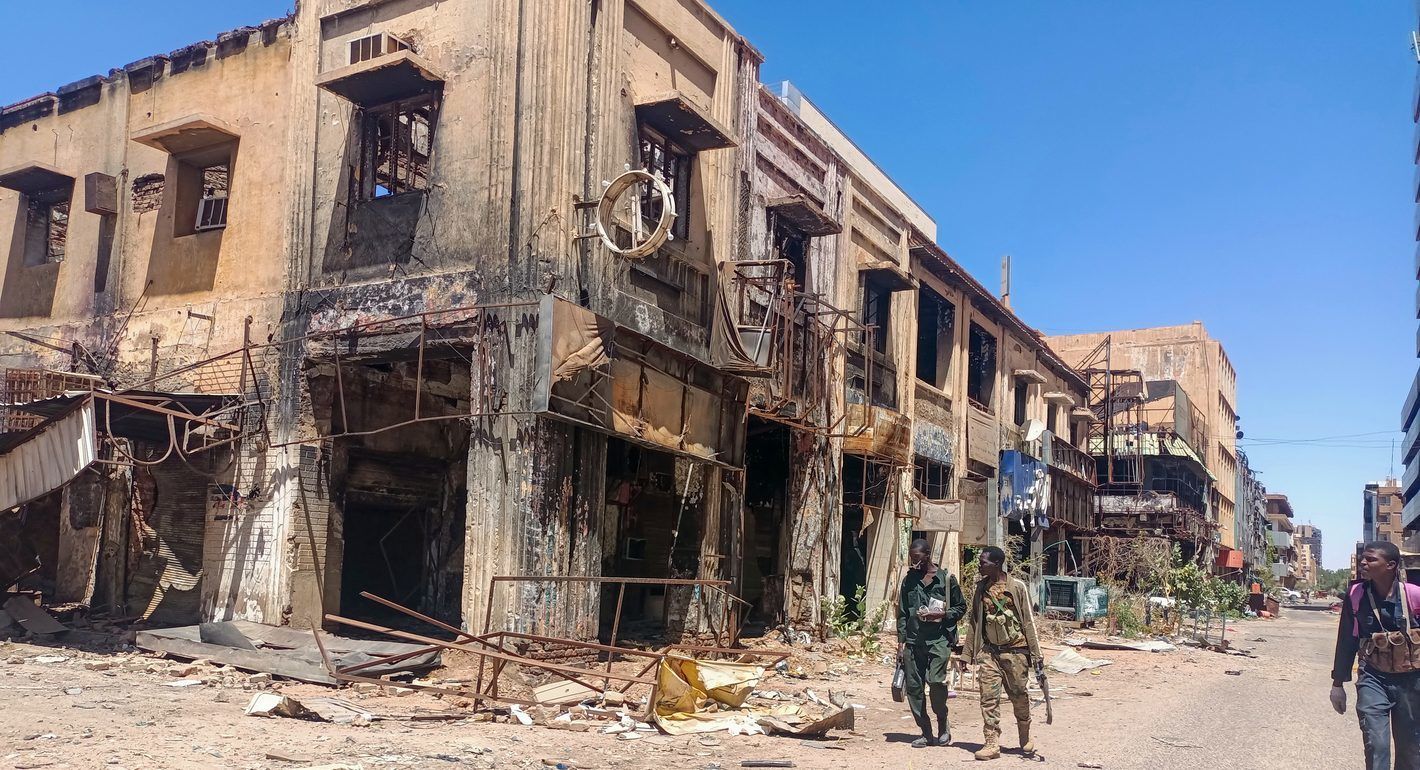
Hate speech has spread across Sudan and become a key factor in worsening the war between the army and the Rapid Support Forces. The article provides expert analysis and historical background to show how hateful rhetoric has fueled violence, justified atrocities, and weakened national unity, while also suggesting ways to counter it through justice, education, and promoting a culture of peace.
Samar Sulaiman
Kuwait’s government has repeatedly launched ambitious reforms under Kuwait Vision 2035, yet bureaucratic inefficiency, siloed institutions, and weak feedback mechanisms continue to stall progress. Adopting government analytics—real-time monitoring and evidence-based decision-making—can transform reform from repetitive announcements into measurable outcomes.
Dalal A. Marafie
The chaos of street naming in Sana’a reflects the deep weakness of the Yemeni state and its failure to establish a unified urban identity, leaving residents to rely on informal, oral naming systems rooted in collective memory. This urban disorder is not merely a logistical problem but a symbolic struggle between state authority and local community identity.
Sarah Al-Kbat
While Morocco’s shift to a digitized social targeting system improves efficiency and coordination in social programs, it also poses risks of exclusion and reinforces austerity policies. The new system uses algorithms based on socioeconomic data to determine eligibility for benefits like cash transfers and health insurance. However, due to technical flaws, digital inequality, and rigid criteria, many vulnerable families are unfairly excluded.
Abderrafie Zaanoun