Reports this past Sunday revealed that Palestinian President Mahmoud Abbas and his aides rejected a compromise offer of a partial freeze on Israeli settlements as an incentive to return to the negotiating table. Nevertheless, following President Barak Obama’s visit to the region, there appeared several highly encouraging signs for the peace talks, and even the new Israeli government (which includes an unprecedented number of settler advocates) offers not only obstacles but also rare opportunities.
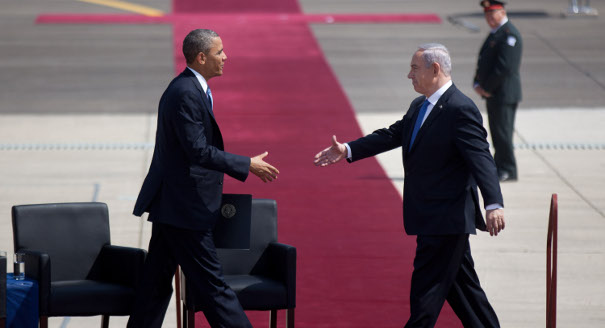
The visit itself was better perceived by the Israelis than the Palestinians; most Palestinian observers were greatly dismayed by the cordiality Obama displayed toward Netanyahu and his toned-down criticism of Israeli settlement activity. “Obama gave a new lifeline to war and conflict by avoiding human rights and international law,” writes Dr. Mazin Qumsiyeh, a Bethlehem-based Palestinian activist and a professor of genetics, in a recent email. Veteran negotiators like Dr. Gershon Baskin, the co-chairman of the Israel Palestine Center for Research and Information who brokered the Gilad Shalit prisoner swap in 2011, saw the visit very differently. Baskin has long argued that public diplomacy is not the appropriate approach to resolving the conflict and that “secret negotiations” could work much better. “It was a very successful visit,” he said. “Obama won the hearts of the Israeli public, which is what he set out to do. . . . [U.S. Secretary of State John] Kerry is staying on and beginning shuttle diplomacy, which is the right thing to do . . . The timing, at the beginning of the Israeli government, is good.”
This trip did much to improve President Obama’s credibility as a broker among the Israelis. What will happen afterward behind closed doors is an entirely different matter. The very fact that Obama empowered his new secretary of state—whose independent positions on the conflict have long rattled many in the pro-Israel camp—to broker the negotiations speaks volumes about his intentions. In fact, Obama’s praise for Israel could also be interpreted as a show of confidence in a once-rocky relationship. It is true that the current Israeli government has the most settlers and settler advocates of any in decades, coming both from the right-wing Habayit Hayehudi (“Jewish Home”) party, and from Netanyahu’s own Likud. However, Netanyahu was considerably weakened by his showing in the elections in January (which was worse than expected) and the harrowing coalition-building process that followed. The two centrist parties in his government (Yesh Atid, “There is Future,” headed by former TV anchor Yair Lapid, and Hatnuah, “The Movement,” headed by former Foreign Minister Tzipi Livni) forced him to include peace negotiations in the coalition agreement. This accounts for Netanyahu’s aides telling the Israeli press that he would probably have to freeze settlement construction in many areas of the West Bank, and the prime minister’s own affirmation of his commitment to the talks and to the idea of two states for two peoples during the presidential visit.
The heavy representation of the settler lobby in government, moreover, is both a blessing and a curse for the settlers themselves. On the one hand, they will have a lot of say in the day-to-day policies of the government and will likely try to kill the peace process by a thousand cuts. On the other hand, settlers will be left in disarray if their own representatives strike a deal with the Palestinians. As a matter of a fact, the party most closely associated with them, Habayit Hayehudi, has already noted that it would not oppose negotiations but would demand a referendum before any significant territorial concessions are made.
Even so, there are many precedents of hawks turning into doves in Israel: Yitzhak Rabin and Ariel Sharon immediately come to mind, but are by far not the only ones. As Amos Yadlin, the former head of Israeli Military Intelligence, recently told veteran journalist Ben Birnbaum that Israeli security chiefs would likely support a peace deal with the Palestinians by an even greater proportion than the public at large “because they have served in the territories and they understand the fact that, if you want a Jewish and democratic state, you should not control 2.5 million Palestinians.” Birnbaum adds that mainstream Israeli discourse has also undergone a leftward shift in the last two decades: “The great paradox of the current moment in Israeli politics is that, even as the right has consolidated its power, the people have drifted to the left when it comes to the concessions they would make for peace.”
By definition, a right-wing government is best placed to sell a peace deal to its own society in a protracted conflict. While it may be true that Abbas is the best peace partner the Israelis could hope for, the current Israeli government is also the most credible peace partner the Palestinians could ask for. Moreover, there has recently been growing international momentum toward negotiations, fueled largely by fears that the two-state solution is on its death bed and that the Palestinians in the West Bank could launch a new intifada any moment. Several intense weeks of indirect three-way diplomacy in Egypt between representatives of Hamas, Israel, and the Palestinian Authority seem to have produced few results, judging by the five rocket strikes in Israel during Obama’s visit and stalled intra-Palestinian reconciliation talks. However, a parallel initiative in Jordan between Israeli and Palestinian Authority leaders—one backed by the EU and now boosted by Kerry—holds considerably more promise.
Most of the action apparently is secret and will likely remain this way for now. In recent weeks, Netanyahu reportedly traveled to Jordan in secret in order to discuss peace talks, while Abbas flew to Riyadh in a surprise visit in order to meet Kerry. Regardless of what the leaders say in public, it appears that a long-anticipated push to find a solution to the thorny Israeli-Palestinian conflict is already underway. Skeptics claim that both Americans and Israelis are too deeply engrossed in their own internal affairs and overwhelmed by the region’s current chaos to put a meaningful effort in the negotiations. However, there is also a sense of great urgency on the ground—and on both sides of the separation wall. Such moments of crisis are traditionally also moments of great opportunity.
Victor Kotsev is an independent journalist and political analyst focusing on the Middle East.