

Commentary
Syria's transition promised a fresh start. But are old habits of power making a comeback? This analysis looks at the warning signs and what it will take to build a more accountable state.
Sima Beitinjaneh
{
  "authors": [
    "Sanaa Karim"
  ],
  "type": "commentary",
  "blog": "Sada",
  "centerAffiliationAll": "",
  "centers": [
    "Carnegie Endowment for International Peace"
  ],
  "collections": [],
  "englishNewsletterAll": "",
  "nonEnglishNewsletterAll": "",
  "primaryCenter": "Carnegie Endowment for International Peace",
  "programAffiliation": "",
  "programs": [],
  "projects": [],
  "regions": [
    "North Africa",
    "Morocco"
  ],
  "topics": [
    "Political Reform",
    "Security"
  ]
}
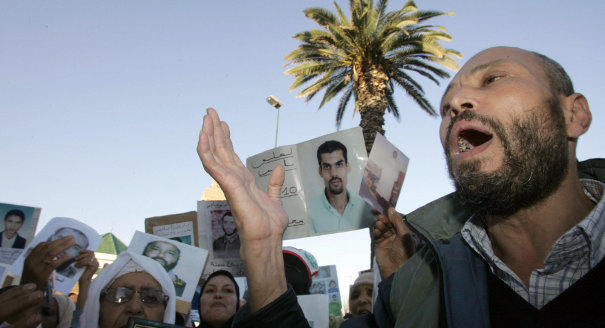
Source: Getty
Morocco’s new dialogue aims to reduce ideological polarizations regarding the rehabilitation of Salafi-jihadis detained under the Anti-Terrorism Law.
March has seen a new turn of events in Morocco on the highly sensitive topic of Salafi-jihadism—one that portends a greater openness and acceptance of Salafi participation in public life. The Karama Human Rights Forum, a group affiliated with the Justice and Development Party (PJD), launched a dialogue in partnership with Adala (Right to a Fair Trial Association) and the Al-Wasit Association for Democracy with support from the Cordoba Foundation of Geneva. This dialogue aims to reduce sharp ideological polarizations within Moroccan society regarding the rehabilitation and integration of Salafis detained under the Anti-Terrorism Law and to create a comprehensive solution to the tensions surrounding this issue.
The first consultative meeting was attended by rights activists, lawyers, and academics alongside representatives from the National Human Rights Council and the Ministerial Human Rights Commissariat and is slated to be followed by a second meeting, the date of which has not yet been set. Also in attendance were the prominent Salafi leaders Sheikh Hassan El-Kettani, Abdelwahab Rafiki (known as Abu Hafs), and Sheikh Umar Al-Hadouchi—all of whom were released from prison by royal pardon after having received heavy sentences for being implicated in the Casablanca bombing of 2003. Other former detainees were also present, along with the Joint Committee for the Defense of Islamist Detainees, which represents most of those still behind bars. Absent from the meeting were the intermediaries who had recently put forward initiatives to resolve terrorism in Morocco, such as Lawyers Mediating for National Reconciliation led by Ahmed Rakez, the Renaissance and Virtue Party—in the person of its secretary-general Mohammed al-Khalidi—the Party of Authenticity and Modernity’s parliamentarian Khadija Rouweissi, and the Islamist detainees’ support group al-Nasir. Sheikh Mohammed al-Fizazi—sentenced to 30 years in jail after the Casablanca bombings but pardoned in April 2011—and representatives from the Higher Council of Religious Scholars and the Islamic missionary groups which were focused on this dialogue, were also absent. These exclusions impacted the course of the discussions and opened the door for political jockeying. Abdulrahim Mihtad, the president of al-Nasir, has started making preparations for an international meeting soon on the same topic to call for the release of prisoners who were wrongly swept up in terrorism cases.
But despite the absence of these actors, the dialogue—the first of its kind in Morocco—represents a new approach to this sensitive topic. During the meeting, discussion of certain issues related to Salafi ideology was surprisingly fearless in the presence of influential civil society groups from across the ideological spectrum—ones who are meeting face to face with sheikhs traditionally demonized by the media and government as “Salafi-jihadi ideologues.” Indeed, a new reconciliatory logic seems to be taking hold—believed in large part due to the atmosphere of the Arab Spring—instead of Morocco’s dominant paradigm since the Casablanca bombing—one focused on uprooting Salafi-jihadism.
The question remains, however: has the state finally realized the need to invest in dialogue as a tool to resolve this problem, which has dragged on for a decade, or will this prove to be a one-off civil society initiative? The second consultative meeting, which is scheduled to include the government agencies involved in counterterrorism, is likely to provide an answer. What is certain today is that besides addressing violence, jihad, and how to peacefully manage differences, the dialogue has also touched on the shift in Salafi attitudes towards pluralism, democracy, human rights, women’s rights, and personal freedoms, as well as the ongoing discussion of integrating detainees and the complexities facing them in and out of prison. Salafi detainees complain of being excluded from social reintegration programs and having their civil rights denied by the prison administration and the government; various participants in the dialogue aired their grievances on human rights violations which have accompanied the handling of terrorism cases (as well as how to deal with them), and discussed other ongoing initiatives attempting a solution. The second meeting provides a golden opportunity to pave the way for meaningful dialogue between the government and detainees, and is necessary for a better understanding of those who it claimed threatened national security—separating the relatively few detainees who do represent genuine threats from the majority that were swept up in the far-reaching raids in the wake of the Casablanca bombings.
Some have been suspicious of the initiative and depicted it as an attempt by the pro-PJD Karama Forum to polish the Islamist party’s image and win more popular support; the PJD has lost steam on this issue ever since it raised hopes by appointing the former president of the Karama Forum, Mostafa el-Ramid, as the minister of justice. The Joint Committee for the Defense of Islamist Detainees, registered as the legal representative of most of the detainees, also expressed its concerns, noting that the meeting was too focused on a set of key ideas aiming to limit the political impact of Salafism, rather than address the neglected human rights situation resulting from blatant violations against a large number of citizens who were thrown into prison. The committee also argued that discussions of politics and ideology were premature.
However, attending inmates took heart that the issue of pardon and release was being rekindled, including reclaiming priority over minor demands such as allowing radios in prison, relocating detainees to prisons closer to their families, and relaxing restrictions on family care packages. On the issue of pardons—royal pardons are only granted if there is “complete repentance”—one group of prisoners led by Hassan Al-Khattab (sentenced to 30 years) and Abdulqadir Bilairj (sentenced to life in prison) favored revising their ideologies and pursuing reconciliation—whereas another faction has joined the National Accord Initiative recently founded within the prisons and argues for pursuing quiet dialogue for a consensus solution. Yet another group of detainees is in agreement with the proposal backed by the Joint Committee for Defense of the Islamist Detainees—namely, that the victims receive justice and rehabilitation from the government agencies that violated their human rights under Moroccan law and international obligations. The first step in this path—according to the committee—is for the state to admit the infractions (arbitrary arrests, abductions, torture) and move towards making a full break with these violations, before releasing detainees as part of a comprehensive amnesty program. Despite a few differences, these approaches share the same objective: releasing those in Moroccan jails whose innocence has been established and who were not involved in acts of terrorism, but were sentenced for their ideas or randomly arrested in following the attacks in 2003.
Morocco is still waiting for the crucial political will to tackle the issue of Salafi-jihadi prisoners. For the sake of the reform option, which Morocco adopted during the Arab Spring, it is important for human rights to take a tangible step forward and continue along the path of “justice and reconciliation” on which Morocco embarked in the late nineties—even if the two experiences are different.
* This article was translated from Arabic.
Sanaa Karim
Carnegie does not take institutional positions on public policy issues; the views represented herein are those of the author(s) and do not necessarily reflect the views of Carnegie, its staff, or its trustees.
Syria's transition promised a fresh start. But are old habits of power making a comeback? This analysis looks at the warning signs and what it will take to build a more accountable state.

Sima Beitinjaneh
From anime heroes to online gaming communities, Morocco’s Gen Z is building a new protest culture. What does this digital imagination reveal about youth politics, and how should institutions respond?
Abdelilah Farah

In a volatile Middle East, the Omani port of Duqm offers stability, neutrality, and opportunity. Could this hidden port become the ultimate safe harbor for global trade?
Giorgio Cafiero, Samuel Ramani
Is Morocco’s migration policy protecting Sub-Saharan African migrants or managing them for political and security ends? This article unpacks the gaps, the risks, and the paths toward real rights-based integration.
Soufiane Elgoumri
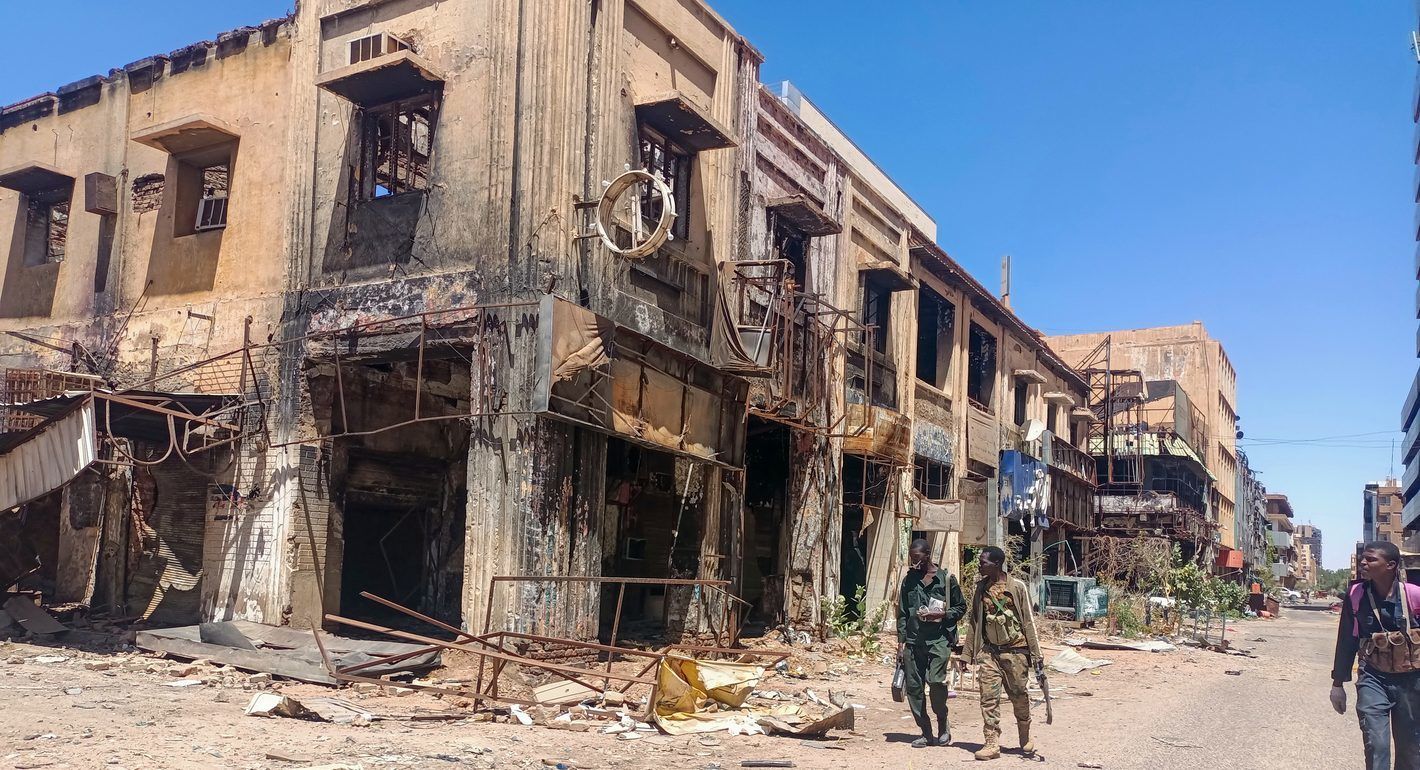
Hate speech has spread across Sudan and become a key factor in worsening the war between the army and the Rapid Support Forces. The article provides expert analysis and historical background to show how hateful rhetoric has fueled violence, justified atrocities, and weakened national unity, while also suggesting ways to counter it through justice, education, and promoting a culture of peace.
Samar Sulaiman