

Article
Dalia Ghanem
{
  "authors": [
    "Dalia Ghanem"
  ],
  "type": "commentary",
  "blog": "Sada",
  "centerAffiliationAll": "",
  "centers": [
    "Carnegie Endowment for International Peace",
    "Malcolm H. Kerr Carnegie Middle East Center"
  ],
  "collections": [],
  "englishNewsletterAll": "",
  "nonEnglishNewsletterAll": "",
  "primaryCenter": "Malcolm H. Kerr Carnegie Middle East Center",
  "programAffiliation": "",
  "programs": [],
  "projects": [],
  "regions": [
    "Maghreb",
    "Algeria",
    "North Africa"
  ],
  "topics": [
    "Political Reform",
    "Security",
    "Military"
  ]
}
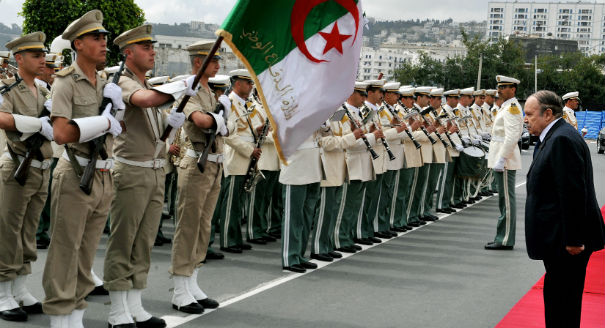
Source: Getty
Regardless of the outcome of Algeria’s upcoming election, power will not escape the strong grasp of the country’s military and its security branch.
With the blessing of the military, Algeria’s president Abdelaziz Bouteflika is all but guaranteed to win a fourth term. But among the Algerian public, speculation continues about the nature of the president’s relationship with the military, in particular its intelligence branch, the Department of Intelligence and Security (DRS). The relationship between the president and the DRS is especially relevant in light of Bouteflika’s fragile health and the uncertainty over who will run the country in his absence and how his successor will be chosen. The recent and unusual public criticism against DRS officials from Bouteflika’s own party is an example of why some believe that throughout his tenure Bouteflika has managed to keep the military and DRS in check. However, despite appearances to the contrary, he never constituted a threat to the military’s strong grip on Algerian politics, and the DRS remains as strong as it has ever been. In his previous three mandates, few serious structural reforms threatened the country’s military and its security apparatus. Even the little restructuring that he did undertake of the country’s main security branch were largely cosmetic and should not be misconstrued for significant change.
The DRS, created in September 1958 as the Ministry of Ammunitions and General Connections, became the country’s main strike force in the Boumediène era. It has since not only worked to maintain stability but has also been heavily involved in politics. Decades later, President Chadli Bendjedid undertook the modernization of the army in 1984, at which point the army’s main mission was to protect the state. Under Bendjedid, in less than three years the nearly 150,000 men with “questionable” operational skills became a conventional army, well organized around several branches dependent on the President of the Republic and Minister of Defense. Over the years, and through its networks, the DRS infiltrated conferences, public debates, the administration, the police, and even the ruling National Liberation Front (FLN). The DRS played a vital role in the cooptation of elites that could be a threat to le pouvoir and in the repression of opponents. In the early 1990s, with the creation and proliferation of armed Islamist groups, the DRS played a leading role in what it called “the total war against terrorism,” thus building a reputation over the years of an all-powerful and feared force protecting the Algerian state. It was then and remains under the control of General Mohamed Mediène, nicknamed “Toufik,” who has continued to lead this department for almost 24 years.
Yet over the past year, the institution, namely its aging generals, have come under criticism after the botched response to the attack on the gas complex in Tiguentourine near In Amenas on January 16, 2013. Prior incidents also called in question the management of the military and DRS, including the kidnapping of three European NGO members in the refugee camp of Tindouf on October 24, 2011, terrorist attacks by the Movement for Unity and Jihad in West Africa (MUJAO) against the territorial branch of the National Gendarmerie of Tamanrasset on March 3, 2012, and the abduction of seven Algerian diplomats in Gao on April 5, 2012. More recent attacks on the police station in Ouargla on June 24, 2012 highlighted the failures of DRS leaders, and rendered it important for the army itself to take some action; this provided the impetus for September’s dismissals.
These criticisms had to be addressed, and in an attempt to show a modicum of accountability and to appease the public, a few members of the DRS leadership were shuffled out, dismissed, or retired. Though it is important to point out that it was the Supreme Council of the Military Office—which was created in 2006 by presidential decree—that finalized the dismissal or reshuffling of these officials during a special session on January 14, 2014. Those included Toufik’s right-hand man and head of the Central Directorate for Army Security (DCSA), Major General Mhenna Djebbar. Djebbar was dismissed last September and replaced by Major General Lakhdar Tirèche. The dismissal is misleading, however, as Djebbar was repositioned to head a sub-department of the DRS called the Bureau d’Organisation. This negotiated dismissal allows Djebbar to lead the important operational structures of the DRS and remain directly under Toufik’s leadership, according to local media reports. Others weren’t as fortunate: Colonel Abdelkader “Fawzi” Lounis, who for a decade had been leading the Communication Center and Distribution (CCD), was let go, as was General Hassan (responsible for counter-terrorism and counter-espionage), who was brought before the military court in Blida on February 5, 2014 for “insubordination.” But age was also a key factor in these dismissals. In the cases of Djebbar, Fawzi, and Hassan, the Supreme Council of the military function applied article 20 of Order No. 06-02 dated February 18, 2006 containing the General Military Service Personnel Act, which sets rank-based age limits for military careers.
Other reshuffles were similarly meaningless, substituting one devoted DRS officer for another. General Athman “Bachir” Tartag and General Rachid “Attafi” Lallali, who were respectively the heads of the Department of Homeland Security (DSI) and the Directorate of Documentation and External Security (DDSE), were replaced by General Abdelhamid Bendaoud and General Mohamed Bouzit. As for General Abdelmalek Guenaïzia, his position as Minister Delegate to the Ministry of National Defense had been moved under the oversight of the president and reconstituted as vice minister of defense; Guenaïzia himself was replaced by the chief of staff of the army, General Ahmad Gaïd Salah, who now also oversees the DCSA under Tirèche. Finally, the DRS branch of the judiciary police, which was created by presidential decree in 2008 and whose purpose was to handle financial scandals, was dissolved. Moving the DCSA and communication departments to the hands of the chief of staff does not show a significant restructuring. The DRS is primarily a unit of the chief of staff of the army; therefore, its directorates have only been transferred and are not undergoing a significant structural change. Even the dissolution of the judiciary police is not a substantive change: the DRS used to informally investigate financial scandals for years before its creation, and there is nothing today to prevent it from continuing these kinds of investigations despite the dissolution of this specific unit. All this has little impact on the influence and strength of army and the DRS. Toufik still heads the DRS, and only once he and his sexagenarian and septuagenarian colleagues are removed will talk of “deep restructuring” become fitting.
The Algerian people and the press often criticize le pouvoir and its apparatchiks as obsessed with power and preserving the status-quo, so when even a superficial change finally occurs, it surprises everyone. If anything, these changes indicate the inextricable hold the military and DRS have over the civilian office of the president. President Bouteflika himself remains at heart a military man, and as such his ability to curb the military and DRS’s role in politics has always been limited. The DRS may play into the speculations, feigning opposition and pretending that Bouteflika’s candidacy and these “restructurings” are indeed a coup de force for the president, but in reality he has their full support.
Algeria’s military is a political force that will remain a prominent player in the country’s politics; once a glorious instrument of the revolution, Algeria’s army remains today a devoted guardian of the country’s power. Keeping President Bouteflika in power gives them enough time to find the “appropriate” replacement—because it is always these two actors (the FLN, the army, and the bureaucracy they created together) who are truly running the country.
Dalia Ghanem-Yazbeck is a research analyst at the Carnegie Middle East Center in Beirut, where she focuses on Islamist and jihadist trends in Algeria and extremist violence, conflict, and terrorism in the Middle East.
Former Senior Resident Scholar, Malcolm H. Kerr Carnegie Middle East Center
Dalia Ghanem was a senior resident scholar at the Malcolm H. Kerr Carnegie Middle East Center in Beirut, where her research focuses on Algeria’s political, economic, social, and security developments. Her research also examines political violence, radicalization, civil-military relationships, transborder dynamics, and gender.
Recent Work
Dalia Ghanem


Frances Z. Brown, Judy Dempsey, Dalia Ghanem, …
Carnegie does not take institutional positions on public policy issues; the views represented herein are those of the author(s) and do not necessarily reflect the views of Carnegie, its staff, or its trustees.
Syria's transition promised a fresh start. But are old habits of power making a comeback? This analysis looks at the warning signs and what it will take to build a more accountable state.

Sima Beitinjaneh
In a volatile Middle East, the Omani port of Duqm offers stability, neutrality, and opportunity. Could this hidden port become the ultimate safe harbor for global trade?
Giorgio Cafiero, Samuel Ramani
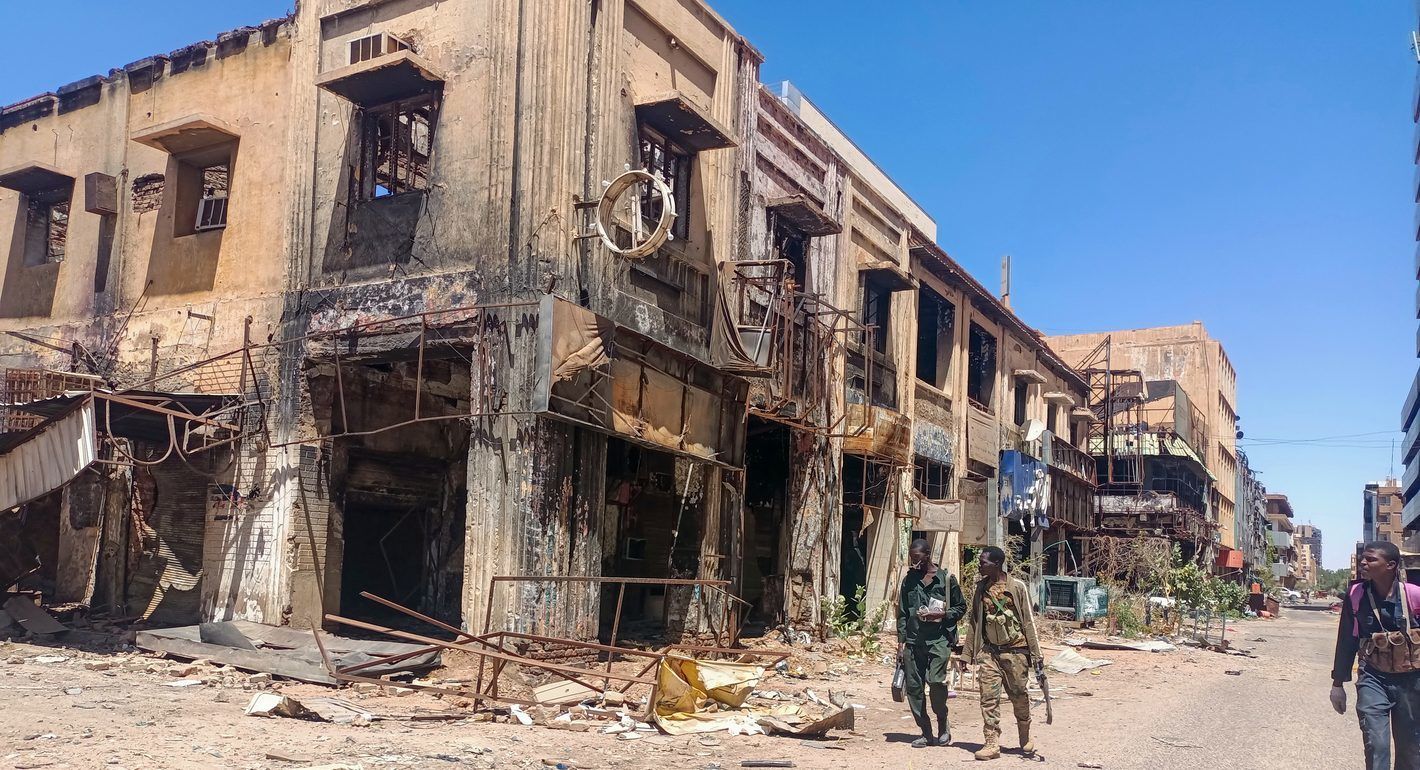
Hate speech has spread across Sudan and become a key factor in worsening the war between the army and the Rapid Support Forces. The article provides expert analysis and historical background to show how hateful rhetoric has fueled violence, justified atrocities, and weakened national unity, while also suggesting ways to counter it through justice, education, and promoting a culture of peace.
Samar Sulaiman
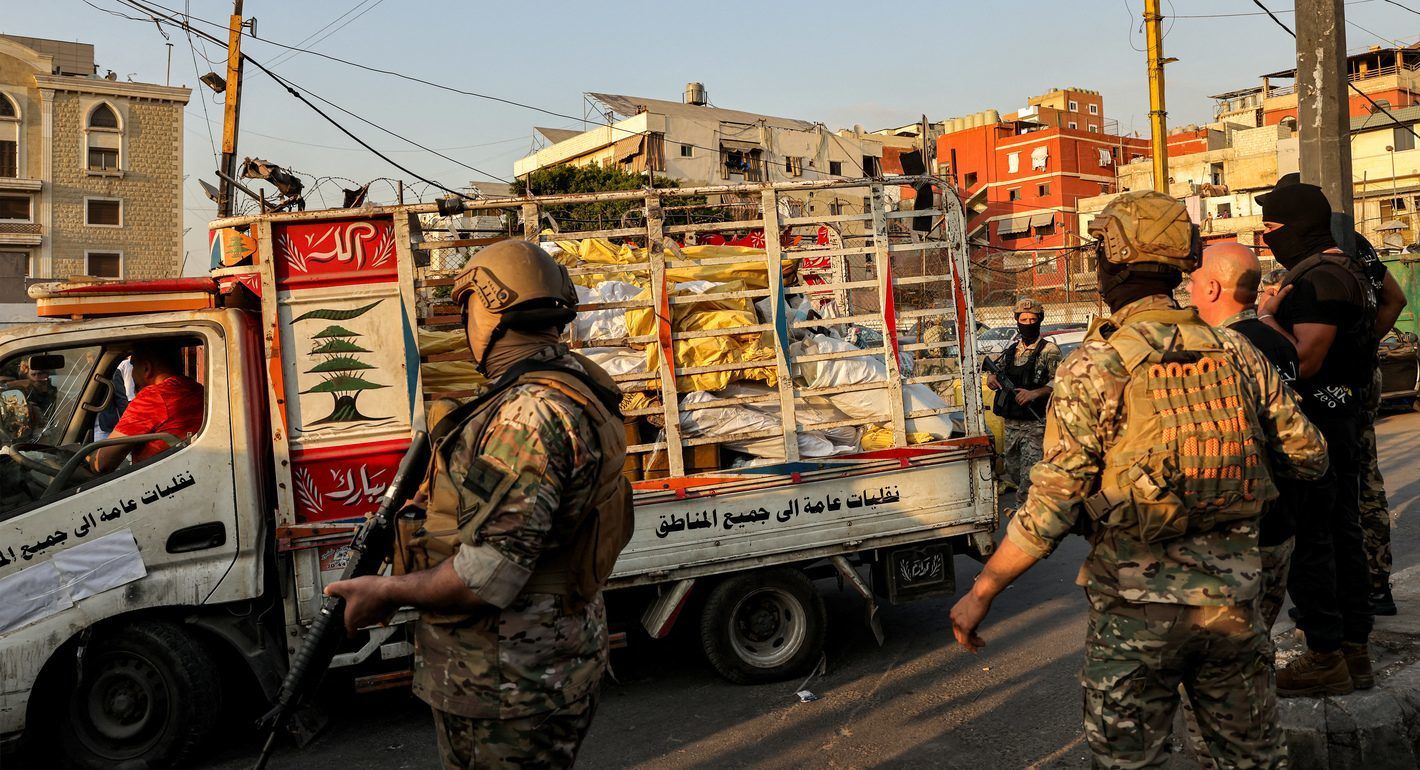
The August 2025 government decision to restrict weapons to the Lebanese state, starting with Palestinian arms in the camps, marked a major test of Lebanon’s ability to turn a long-standing slogan into practical policy. Yet the experiment quickly exposed political hesitation, social gaps, and factional divisions, raising the question of whether it can become a model for addressing more sensitive files such as Hezbollah’s weapons.
Souhayb Jawhar
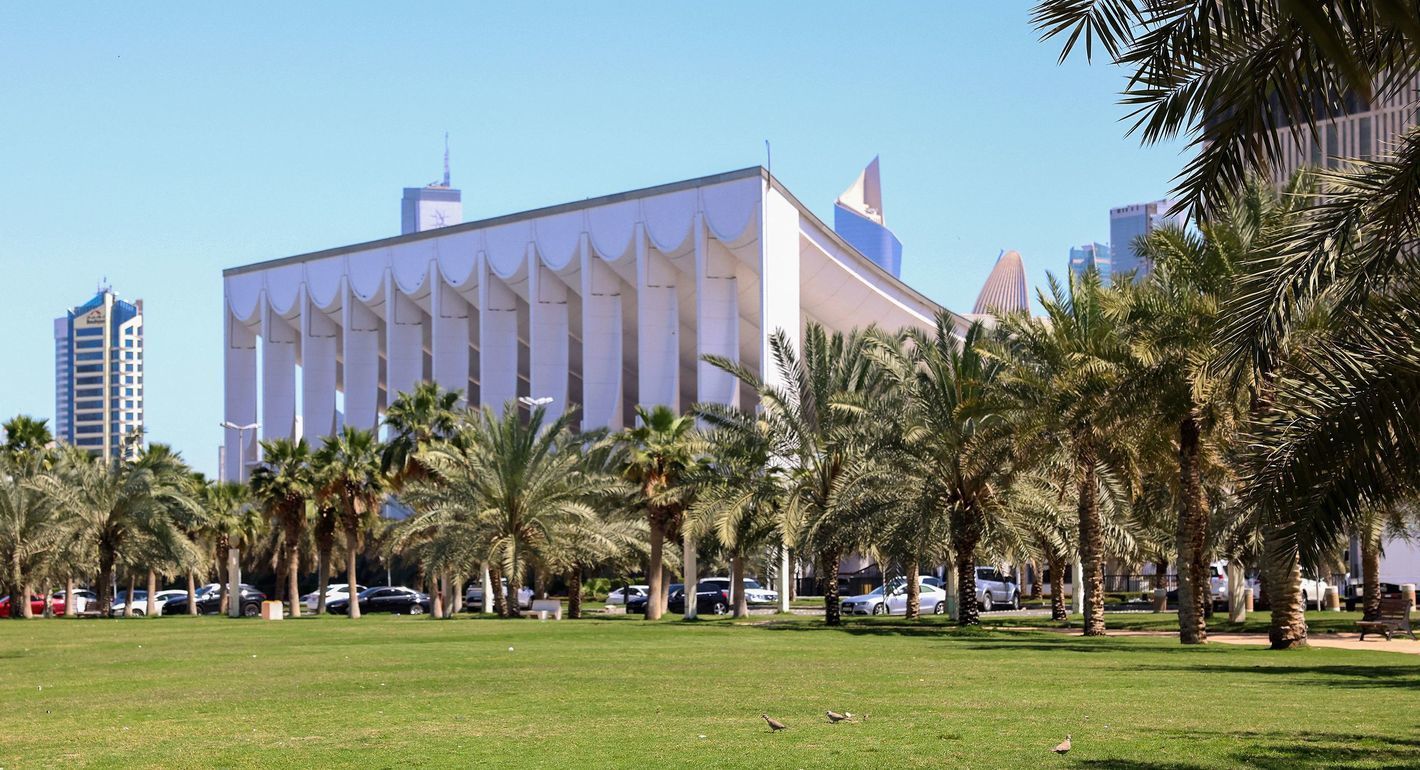
Kuwait’s government has repeatedly launched ambitious reforms under Kuwait Vision 2035, yet bureaucratic inefficiency, siloed institutions, and weak feedback mechanisms continue to stall progress. Adopting government analytics—real-time monitoring and evidence-based decision-making—can transform reform from repetitive announcements into measurable outcomes.
Dalal A. Marafie