

Commentary
In a volatile Middle East, the Omani port of Duqm offers stability, neutrality, and opportunity. Could this hidden port become the ultimate safe harbor for global trade?
Giorgio Cafiero, Samuel Ramani
{
  "authors": [
    "Sharan Grewal"
  ],
  "type": "commentary",
  "blog": "Sada",
  "centerAffiliationAll": "",
  "centers": [
    "Carnegie Endowment for International Peace"
  ],
  "collections": [],
  "englishNewsletterAll": "",
  "nonEnglishNewsletterAll": "",
  "primaryCenter": "Carnegie Endowment for International Peace",
  "programAffiliation": "",
  "programs": [],
  "projects": [
    "Tunisia Monitor"
  ],
  "regions": [
    "North Africa",
    "Tunisia"
  ],
  "topics": [
    "Political Reform",
    "Security",
    "Military",
    "Civil Society"
  ]
}
Source: Getty
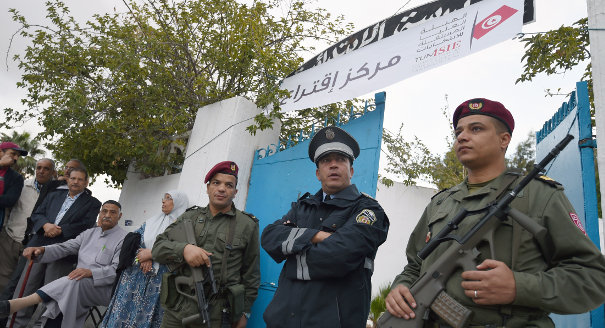
Granting Tunisian security forces suffrage provides police unions greater leverage over politicians, diminishing prospects for security sector reform.
On January 31, the Tunisian parliament lifted an independence-era suffrage ban on the armed and security forces, a contentious decision that had held up the municipal elections law for nearly a year. While the repeal was couched in democratic terms regarding the equality of citizens, the intentions of the police unions pushing for suffrage and the likely ramifications of this decision are anything but democratic. Granting the security forces the right to vote empowers the police unions, increasing their leverage over politicians and dimming any remaining hope of security sector reform.
The suffrage ban dated back to 1956, when Tunisian members of the French army were barred from elections held five days after Tunisian independence. Following the formation of the Tunisian armed forces and national guard, the ban was extended to both institutions, beginning with the 1959 elections. Tunisia’s founding father, President Habib Bourguiba, justified these bans as a necessary means of coup-proofing these security apparatuses by keeping them far from politics. Bourguiba’s successor, President Zine El Abidine Ben Ali, followed suit, expanding the ban in 1988 to cover the police, prison staff, and now-disbanded state security.
In the democratizing spirit after the 2011 revolution, the National Constituent Assembly revisited the ban, though it ultimately decided to retain it for the 2014 elections. Debate was reopened in spring 2016 when parliament began discussing the electoral law for the 2017 municipal elections. In June, an amendment granting security forces suffrage failed to pass but uncharacteristically split the parliament, with 57 MPs in favor, 58 against, and 31 abstaining. After months of public and private deliberation, parliament voted in January to grant security forces the right to vote, with 144 votes in favor.
The debate brought together strange bedfellows, with secular parties and internal security forces in favor of suffrage and Ennahda and the military against it. The driving forces pushing for suffrage were the newly formed police unions. Ahead of the parliamentary debate in June 2016, the National Federation of Tunisian Security Forces’ Syndicates (UNSFST) called suffrage their “constitutional right” and lobbied the parliament to treat them as equal citizens. The 2014 constitution, they pointed out, grants every adult citizen the right to vote.
However, articles 18 and 19 of the constitution also necessitate that the military and internal security forces be “completely impartial,” a clause historically invoked to deny them suffrage. Ennahda MPs reiterated this logic, citing former President Bourguiba’s warnings against politicizing the security institutions, especially before Tunisia’s young democracy has consolidated. During the parliamentary debate, Ennahda MP Badreddine Abdelkafi argued that “we still live in an unstable, transitional period during which we must be vigilant and ensure the neutrality of the armed forces.” Indeed, this denial of suffrage is most common in new democracies and especially developing countries, where the threat of a coup is highest.
As Tunisia has yet to appoint judges for the constitutional court, legislators took it upon themselves to adjudicate the constitutionality of granting suffrage. MP Riadh Mouakhar of Afek Tounes pointed out that judges are also constitutionally mandated to be independent and yet are permitted to vote. For that matter, employees of the public administration, places of worship, and educational institutions are all also constitutionally obliged to remain impartial, yet retain the vote. However, unlike these civilian institutions, the rights of the military and police are limited in other arenas. Members of the armed and security forces are unable to marry or travel outside the country without their ministries’ permission, and are prohibited from going on strike or running as candidates in elections.
The debate over constitutionality reflects deeper political and institutional incentives for each actor to seek or oppose suffrage. The police unions, who have been the most vocal in calling for suffrage, have the most to gain. These unions were created in 2011 and 2012 in part to block revolutionary demands for security sector reform. These syndicates formed links with prominent businessmen to help pressure politicians and judges not to purge or prosecute holdovers from the Ben Ali regime, and also to improve their image in the media. Beyond traditional union demands for higher salaries, these unions have also lobbied for the restrictive 2015 counterterrorism law and a draft law to criminalize denigration of the security forces. For the unions, suffrage represents another means of pressuring the government: politicians will then cater to the police unions’ interests not only for security, but also for their votes.
Retired military officers, by contrast, largely oppose suffrage, viewing it as a threat to military efficacy. While the internal security forces are already politicized and fragmented by their unions, suffrage could undermine the military’s cohesion and discipline. “The time is not appropriate to give the military the right to vote,” argued retired Colonel Major Mahmoud Mezoughi, president of the Association of Former Officers of the National Army (AAOAN). “The political climate is still unstable. Unlike in the United States, in Tunisia today joining one party or another creates friction between people. Just imagine if there is a corporal who is Ennahda and his boss is Nidaa [Tounes].”1 Retired Brigadier-General Mohamed Meddeb similarly called politicizing the armed forces a “virus” breeding “disunity, indiscipline, dispersion of efforts, and inevitable failure in their respective missions.” Retired Brigadier-General Mohammed Nafti concurred, calling it “a trap capable of completely disintegrating the institution.” These statements appear representative of the military more generally: the National Defense Institute hosted a major conference in September to present this view, and in a survey of 94 retired military officers and soldiers, only about 20 percent favored granting the right to vote.2
The decision of whether or not to grant suffrage does not depend entirely on the wishes of the military and police. It is also motivated by expectations of political gain: which parties will these potential new voters support? With about 75,000 internal security forces and another 36,000 in the military, these voters could amount to almost 3 percent of the turnout in the 2014 elections. Especially in light of the military’s decision to accept an additional 12,000 new recruits in 2016, there may be sufficient numbers to sway a close election.
Ennahda likely has the least to gain from these new voters. After a 1991 purge of the military removed officers sympathetic to Ennahda, Islamist-leaning applicants have been informally barred from the military’s ranks. A former director of internal security within the military, who had been in charge of vetting recruits, went so far as to note that an unwritten rule throughout the 1990s and 2000s was to reject applicants who “attended mosque regularly.”3 Similar procedures were applied in the Ministry of Interior, and decades of Ben Ali’s propaganda and repression of Islamists have made the police unlikely to vote for Ennahda either. With little to gain, not a single Ennahda MP voted in June 2016 to grant suffrage. By contrast, secular parties, seeing a political opportunity, voted overwhelmingly in favor.
By January 2017, secular parties were able to bargain with and convince Ennahda to lift the ban. Ennahda’s decision to reverse course, at least at the municipal level, stems from a desire to move quickly toward local elections in which it will likely perform well. In addition, in return for its support, Ennahda received the backing of Nidaa Tounes for a vote the same day to create a parliamentary commission to investigate terrorist recruitment. Crucially, this commission has the power to question any entities it considers relevant to its investigation, including the ministries of defense and interior. For Ennahda, its reversal on suffrage can be seen as yet another strategic compromise: while suffrage empowers the police unions, the new commission could in theory increase parliamentary oversight over the Ministry of Interior.
For the military, the effects of suffrage will depend on how it is implemented. Fears of the military’s fragmentation are likely overblown, given that soldiers and officers are still banned from forming unions or holding strikes, and political parties are unlikely to be granted permission to campaign in or even near military barracks. Soldiers and officers will now simply be able to express their preexisting political preferences at the ballot box.
The internal security forces, however, which have become increasingly politicized and fragmented after the revolution, are another story. With the right to vote, the police unions have now gained additional leverage over politicians: the ability to command their members to vote for certain parties in exchange for preferential political treatment. This empowering of the police unions means that the revolution’s demand for major security sector reform, if there was any prospect of it left at all, will now likely be off the table.
Sharan Grewal is a PhD candidate in politics at Princeton University. Follow him on Twitter @sh_grewal.
1. Author’s interview, June 14, 2016.
2. Author’s survey of 94 retired military officers and soldiers conducted between September 2016 and January 2017 with the help of the Association des Anciens Officiers de l’Armée Nationale (AAOAN) and the Association Tunisienne des Retraités Militaires.
3. Author’s interview with retired Colonel Major who wishes to remain anonymous, June 20, 2016.
Sharan Grewal
Carnegie does not take institutional positions on public policy issues; the views represented herein are those of the author(s) and do not necessarily reflect the views of Carnegie, its staff, or its trustees.
In a volatile Middle East, the Omani port of Duqm offers stability, neutrality, and opportunity. Could this hidden port become the ultimate safe harbor for global trade?
Giorgio Cafiero, Samuel Ramani
Hate speech has spread across Sudan and become a key factor in worsening the war between the army and the Rapid Support Forces. The article provides expert analysis and historical background to show how hateful rhetoric has fueled violence, justified atrocities, and weakened national unity, while also suggesting ways to counter it through justice, education, and promoting a culture of peace.
Samar Sulaiman
The August 2025 government decision to restrict weapons to the Lebanese state, starting with Palestinian arms in the camps, marked a major test of Lebanon’s ability to turn a long-standing slogan into practical policy. Yet the experiment quickly exposed political hesitation, social gaps, and factional divisions, raising the question of whether it can become a model for addressing more sensitive files such as Hezbollah’s weapons.
Souhayb Jawhar
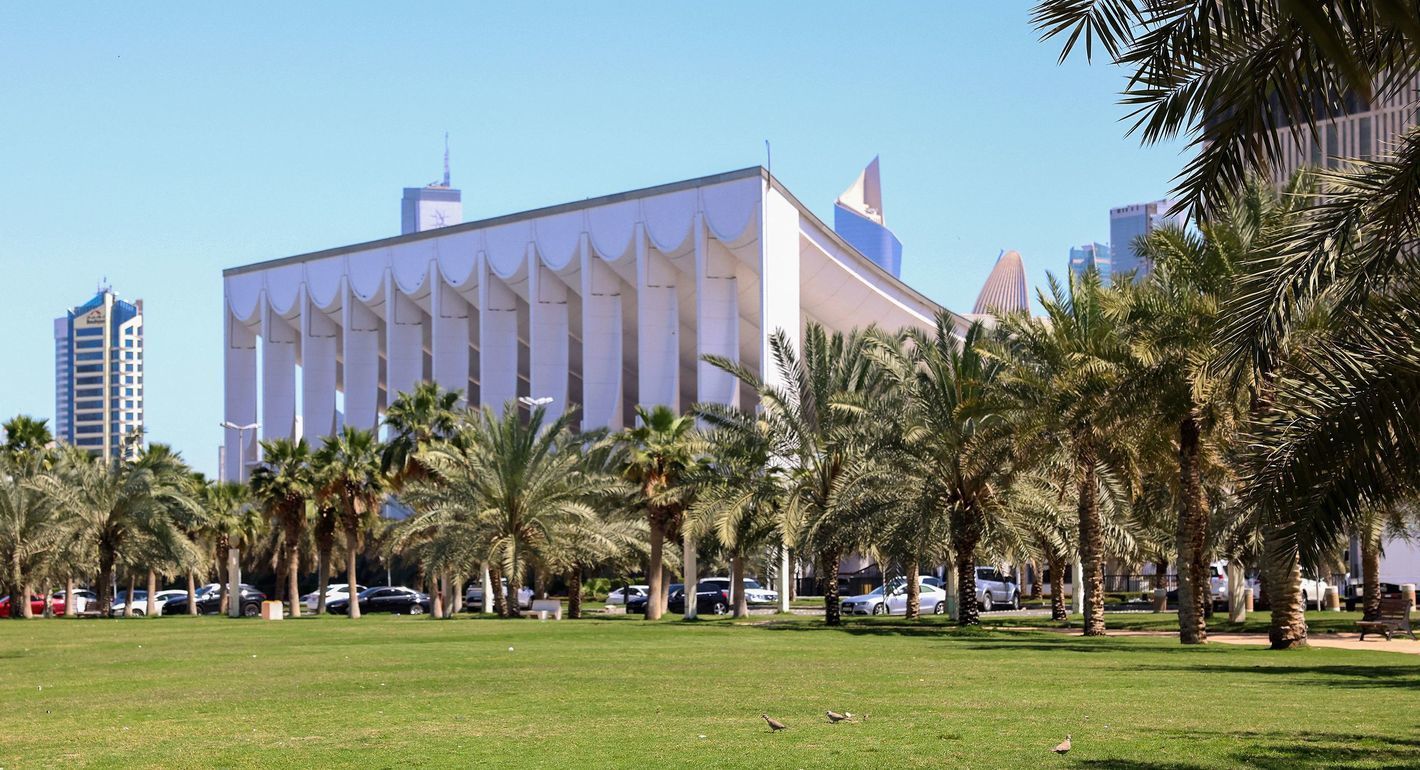
Kuwait’s government has repeatedly launched ambitious reforms under Kuwait Vision 2035, yet bureaucratic inefficiency, siloed institutions, and weak feedback mechanisms continue to stall progress. Adopting government analytics—real-time monitoring and evidence-based decision-making—can transform reform from repetitive announcements into measurable outcomes.
Dalal A. Marafie
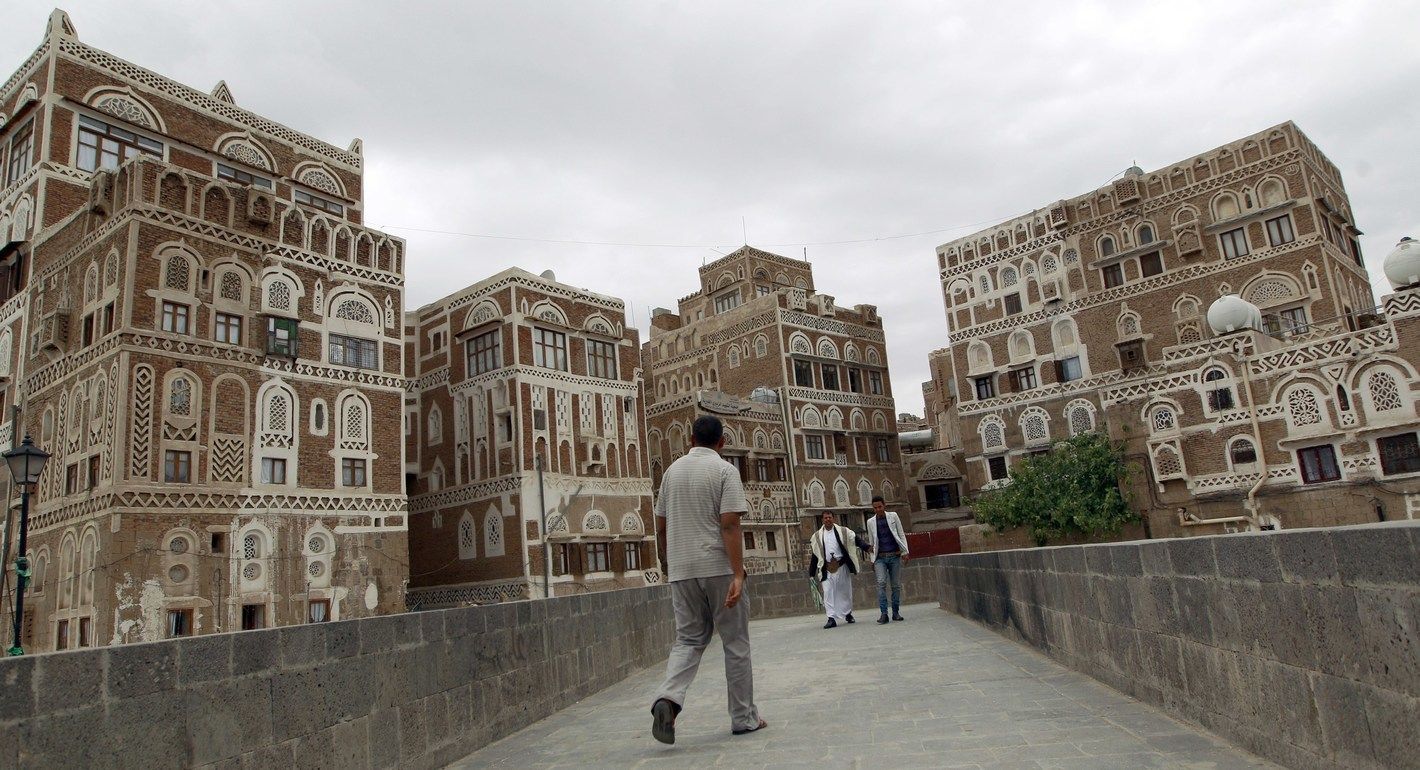
The chaos of street naming in Sana’a reflects the deep weakness of the Yemeni state and its failure to establish a unified urban identity, leaving residents to rely on informal, oral naming systems rooted in collective memory. This urban disorder is not merely a logistical problem but a symbolic struggle between state authority and local community identity.
Sarah Al-Kbat