

Commentary
Syria's transition promised a fresh start. But are old habits of power making a comeback? This analysis looks at the warning signs and what it will take to build a more accountable state.
Sima Beitinjaneh
{
  "authors": [
    "Abdullah Aydogan",
    "A.Kadir Yildirim"
  ],
  "type": "commentary",
  "blog": "Sada",
  "centerAffiliationAll": "",
  "centers": [
    "Carnegie Endowment for International Peace"
  ],
  "collections": [
    "Arab Awakening"
  ],
  "englishNewsletterAll": "",
  "nonEnglishNewsletterAll": "",
  "primaryCenter": "Carnegie Endowment for International Peace",
  "programAffiliation": "",
  "programs": [],
  "projects": [
    "Tunisia Monitor"
  ],
  "regions": [
    "North Africa",
    "Tunisia"
  ],
  "topics": [
    "Political Reform",
    "Economy"
  ]
}
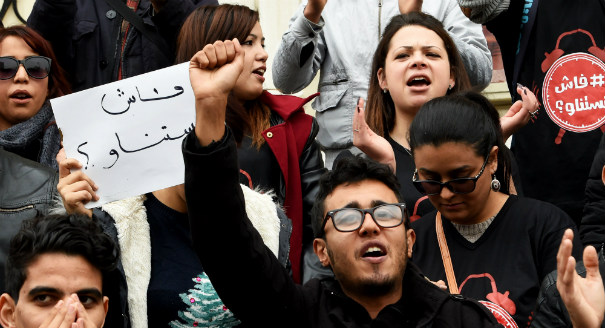
Source: Getty
The continued poor performance of the Tunisian economy and the popular discontent might undermine grassroots trust in democracy across the region.
Tunisia, the birthplace of the Arab Spring, is again going through large-scale street protests more than seven years later. Police have arrested more than 700 protesters, and at least one person has died in clashes with security forces. Early reports indicate that the primary motivation for the demonstrations is the economy, notably the austerity measures included in the 2018 budget and sudden price increases for basic goods and services such as flour and internet access. Reports also show that the protesters are predominantly young Tunisians who are disappointed with their economic conditions, although the government has accused opposition parties of being behind the protests and criminal networks of inciting violence. Public opinion surveys conducted in summer 2017 by the Baker Institute for Public Policy at Rice University1 suggest that recent protests in Tunisia do have economic origins and offer insights on what that implies for the future of democratic reforms in the country.
Economic woes constitute the most important source of discontent among Tunisians. Moreover, such discontent is so pervasive and strong that it threatens to alienate even more Tunisians from the political system and the democratic process. If this public dissatisfaction persists, the region may lose its model democratic country, the Turkish democratic model having already collapsed. The course of Tunisian unrest also shows that the fate of democratization reforms hinges on tangible economic outcomes.
Tunisians of all backgrounds are extremely dissatisfied with their household and national economic situations. As shown in Figure 1, 47 percent of survey respondents said that their household economy worsened in the last year, while 62 percent said the national economy is worse compared to a year prior. The percentage of people who said the household and national economy improved in the past year is only 10 and 6, respectively. To put this in context, based on a similar survey the Baker Institute conducted in Morocco around the same time, only 12 percent of Moroccans thought their household economy was worse compared to a year prior, and only 19 percent thought the national economy was worse. The share of Moroccans who indicated that the household economy improved in the last year is 33 percent, more than three times that of Tunisians.

The dissatisfaction with the economy is shared across demographic and ideological spectrums. The proportion of Tunisians expressing positive views on their household income varies from a high of 15 percent for the 18-24 age group to a low of 6 percent for those older than 64 (Figure 2). The share of those who express negative views on their household income varies between 34 percent for the youngest age bracket and 53 percent for the oldest age group. This trend holds for the perceptions of the national economy as well. This linear negative trend across generations in perceptions of how the economy changed in the last year is somewhat surprising, especially in light of observations that youth have been the most vocal about their dissatisfaction with the economy and the overall direction of the country. If the older generations decide to be equally vocal about their economic discontent or if the younger generations’ perceptions of the economy worsen, future protests could be larger and more impactful.

The level of dissatisfaction with the state of economy stays consistently high even across political affiliations. For example, regardless of which parties they voted for in the 2014 elections, Tunisians hold virtually identical negative views of the economy (Figure 3). Even though the Popular Front is highly involved in promoting and organizing the recent protests in Tunisia, its supporters’ perceptions on the status of the economy do not significantly differ from the views of supporters of Nidaa Tounes, Ennahda, the Free Patriotic Movement, or Afek Tunis.

When asked what the most important problem that Tunisia faces is, 59 percent of survey respondents answered the economy and unemployment, and another 14 percent pointed to corruption or low income. In a follow-up question, survey respondents were asked which political party better handled the problem that they had identified as most important. Of the respondents, 60 percent thought that no political party handled this problem well.
This indicates that Tunisians are dissatisfied with how institutions handle the economy, and their increasing skepticism of the political process may push them further into informal politics and civil society activism—and perhaps an existential crisis for political parties and the democratic process. Whether it leads to a direct assault on the formal political process or to heightened levels of societal polarization and eventual conflict, such a crisis does not bode well for the future of Tunisian democratic process. Put differently, the concern is not dissatisfaction with the poor performance of the current government or some political parties but with the entire political system.
The absence of a legitimate (and democratic) alternative to the existing group of political actors is deeply concerning, especially given the survey respondents’ level of confidence in various political institutions and political parties (Figure 4). Only about 30 percent of Tunisians had “total” or “partial” confidence in liberal political parties, religious parties, their own parliamentary representatives, or the parliament. By contrast, Tunisians expressed high levels of total and partial confidence in the judiciary (56 percent), the police force (72 percent), and the military (92 percent). The greater trust in various bureaucratic actors such as the military, police force, and the judiciary raises serious concerns about the prospects of continued democratization in a country with a history of authoritarian rule. Extremely high levels of confidence in the military can provide military and bureaucratic elites with justification for ruling the country without the involvement of political parties and the parliament, especially if a major political turmoil emerges in the future. And if the discontent with the economy and the political institutions persists, extreme ideologies may tempt more Tunisians then they already do.

Although young Tunisians’ engagement with the civil society remains high, and they are interested in influencing the policymaking process, this comes at the expense of the formal political process—and not just in Tunisia. The continued poor performance of the Tunisian economy and the popular discontent might push many in the region to associate democracy with poor economic development, undermining grassroots trust in democracy and further decreasing the likelihood other countries in the region will experience democratic transitions. As such, international support for the Tunisian economy that leads to economic progress could increase the credibility of political parties and reinvigorate Tunisians’ confidence in the political system to deliver tangible and sustainable benefits. Nonetheless, current economic indicators suggest a bleak future for Tunisia wherein economic and political woes lead to more protests in the near future.
Abdullah Aydogan is a research scholar at Rice University’s Baker Institute for Public Policy focusing on democratization and political institutions in the Middle East. Follow him on Twitter @abdaydgn. A.Kadir Yildirim is a fellow in the Middle East at Rice University’s Baker Institute for Public Policy focusing on religion and politics and Middle Eastern politics. Follow him on Twitter @akyildirim.
1. These surveys are part of a two-year study on the effects of the Arab Spring protests funded by the Carnegie Corporation of New York.
Abdullah Aydogan
A.Kadir Yildirim
Carnegie does not take institutional positions on public policy issues; the views represented herein are those of the author(s) and do not necessarily reflect the views of Carnegie, its staff, or its trustees.
Syria's transition promised a fresh start. But are old habits of power making a comeback? This analysis looks at the warning signs and what it will take to build a more accountable state.
Sima Beitinjaneh
In a volatile Middle East, the Omani port of Duqm offers stability, neutrality, and opportunity. Could this hidden port become the ultimate safe harbor for global trade?
Giorgio Cafiero, Samuel Ramani
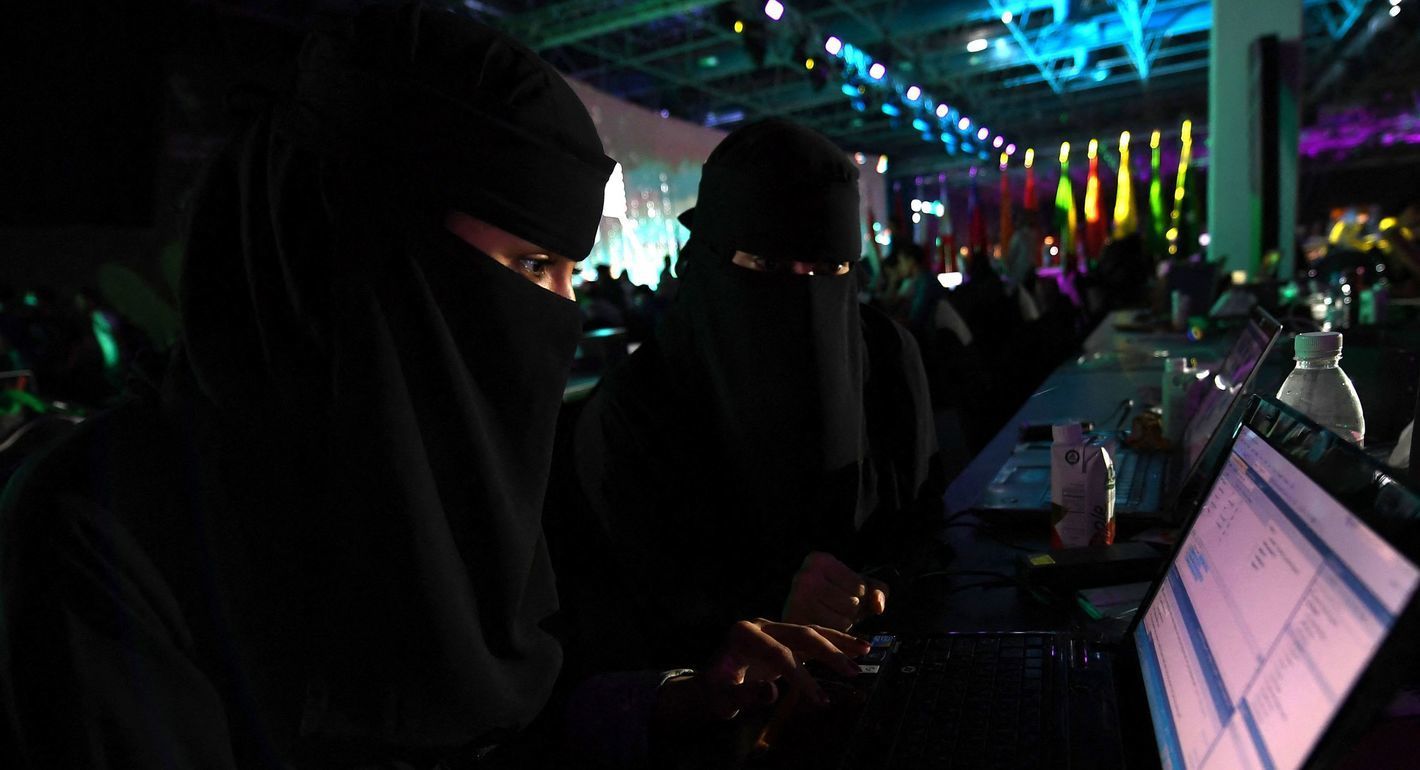
How can Saudi Arabia turn its booming e-commerce sector into a real engine of economic empowerment for women amid persistent gaps in capital access, digital training, and workplace inclusion? This piece explores the policy fixes, from data-center integration to gender-responsive regulation, that could unlock women’s full potential in the kingdom’s digital economy.
Hannan Hussain
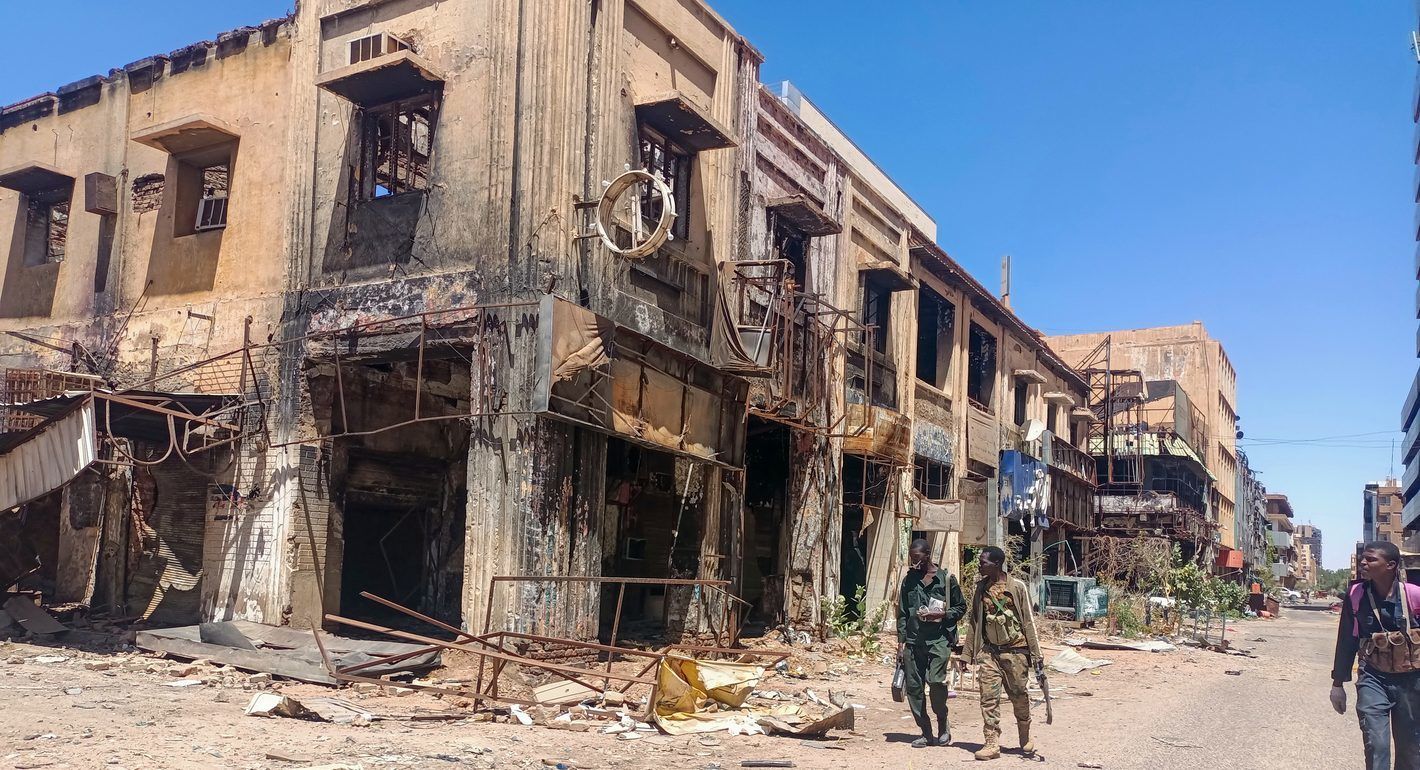
Hate speech has spread across Sudan and become a key factor in worsening the war between the army and the Rapid Support Forces. The article provides expert analysis and historical background to show how hateful rhetoric has fueled violence, justified atrocities, and weakened national unity, while also suggesting ways to counter it through justice, education, and promoting a culture of peace.
Samar Sulaiman
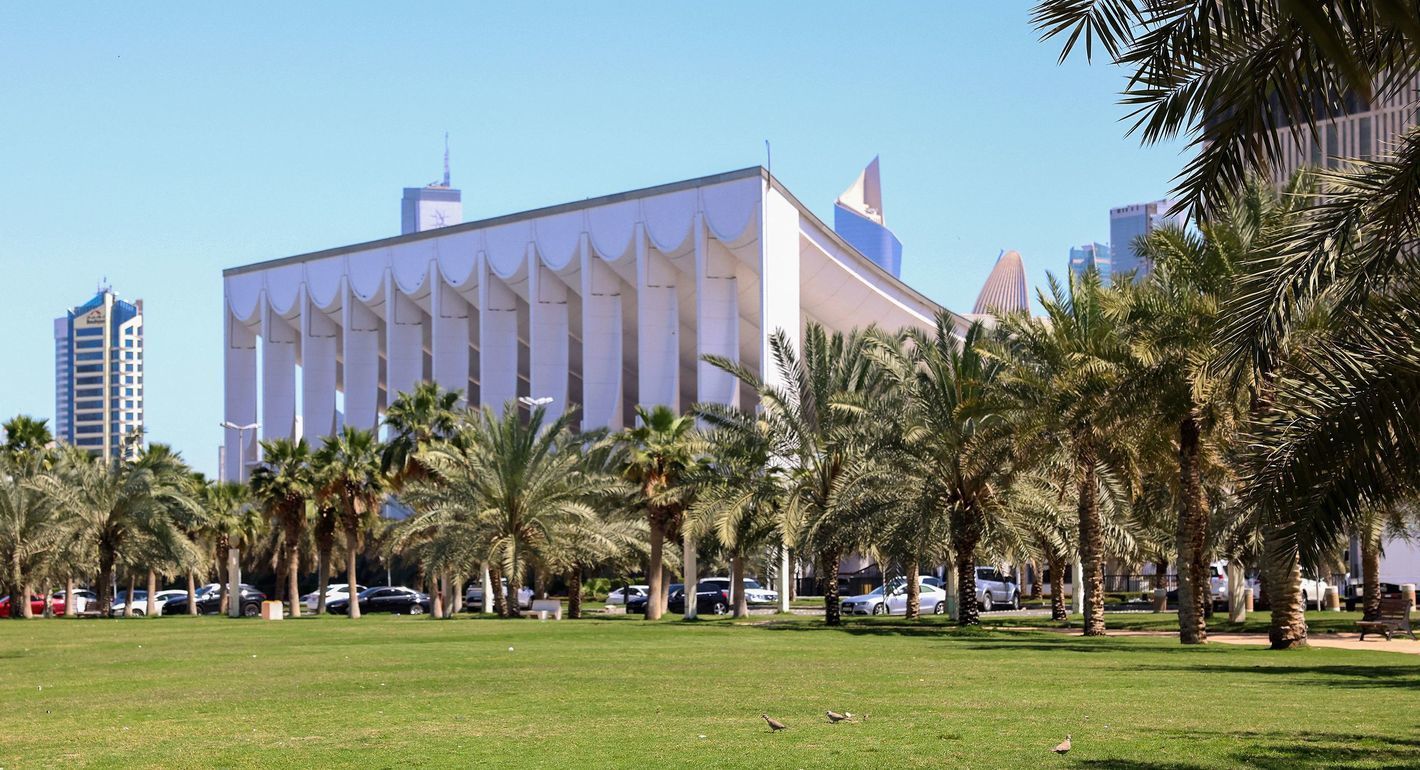
Kuwait’s government has repeatedly launched ambitious reforms under Kuwait Vision 2035, yet bureaucratic inefficiency, siloed institutions, and weak feedback mechanisms continue to stall progress. Adopting government analytics—real-time monitoring and evidence-based decision-making—can transform reform from repetitive announcements into measurable outcomes.
Dalal A. Marafie