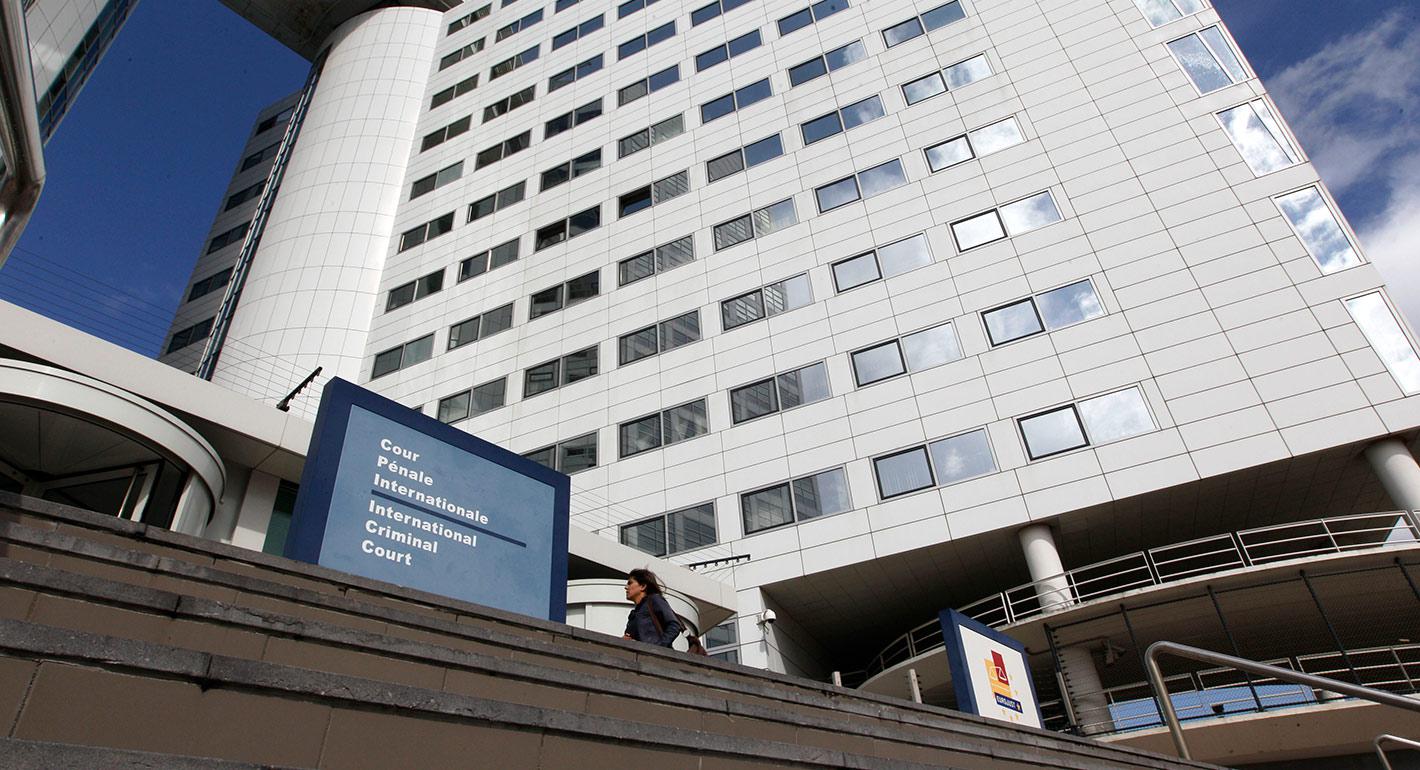
The decision by the International Criminal Court on February 5, 2021, that affirmed the Court’s territorial jurisdiction over the occupied Palestinian territory has provoked a new round of debate, derision, as well as hope. Though its recent decision on Palestine opens the way for the Prosecutor to investigate war crimes and crimes against humanity that have taken place in the occupied Palestinian territory, the ICC is an ambiguously positioned judicial body that relies on political buy-in. The slow pace of its work in Palestine and its dubious legacy is reason to temper expectations that it may soon deliver justice.
For some, the Court’s move represents a positive step towards accountability for people involved in the century-long conflict. This decision alone prompted Palestinian Authority official Hussein al-Sheikh to declare it “a victory for rights, justice, freedom and moral values in the world.” For others, it is a dangerous imposition of multilateralism that violates national sovereignty and the normal political process of negotiations.
Whether in the case of Palestine or elsewhere, the International Criminal Court is something of a Rorschach test, letting its observers see in it their deepest fears and most hopeful fantasies, or dismiss it as a meaningless game. In March 2020 its judges decided to allow the ICC Prosecutor to investigate possible crimes in Afghanistan and related rendition sites since July 2002, then U.S. secretary of state, Mike Pompeo, derided the ICC as “an unaccountable political institution, masquerading as a legal body.” Unsurprisingly, Israel’s Netanyahu pilloried the decision affirming the court’s jurisdiction in the occupied Palestinian territory as “pure antisemitism,” an accusation he has often levelled to discount and delegitimize criticism. Other governments, including Australia’s, discounted the ICC ruling because they do not recognize the State of Palestine.
But for many Palestinians and activists (including civil society organizations like Human Rights Watch and Amnesty International) who desire the end of Israel’s military occupation and settler colonial dispossession of Palestinian lands and rights, the ICC, like international law more generally, have been holding out carrots of hope for years. The ICC is just the latest in a string of international legal innovations that has stoked the (often cautious) optimism of Palestinians and their legal advocates.
Although Palestine was only granted membership to the ICC’s founding treaty in 2015, six years earlier a UN human rights investigation had put prosecution of Israeli officials firmly on the table. The 2009 report of the UN’s Goldstone Mission spurred increased calls for criminal punishment of Israeli violations against Palestinians. The UN Fact Finding Mission on the Gaza Conflict investigated the 2008–2009 fighting in the Gaza Strip that left some 1,400 Palestinians dead. It issued a 452-page report analyzing multiple violent incidents and concluded that “some of the actions of the Government of Israel might justify a competent court finding that crimes against humanity have been committed.” Buoying Palestinian faith in international law, that controversial report focused heavily on war crimes and fore fronted anti-impunity as a theme in its recommendations.
The Goldstone Report is unique among the series of international commissions that have investigated Palestine, headed as it was by a self-defined Zionist Jewish judge and involving regular citizens in providing testimony during public hearings. But like other international investigations of the conflict in Palestine, whether those organized by the UN or dispatched by governments, the Goldstone Mission changed nothing. The fate of this UN mission might provide lessons for those invested in the ICC’s latest pronouncement on Palestine.
As a legal tribunal, the ICC would seem to have more power than a mere investigative commission; its treaty has the ratification of 123 countries. This treaty, the so-called Rome Statute, spells out the tribunal’s grave remit. The ICC Prosecutor’s responsibilities include reviewing and investigating possible crimes, requesting arrest warrants, and prosecuting those on trial. The ICC manages a detention center for those on trial in the Hague and some have been sentenced to many years of imprisonment—with a maximum 30-year sentence handed down in the case of a DR Congo militia leader. If the Court’s record is anything to go by, though, it will be a long while before any Israeli leaders find themselves facing trial.
The forty-six people currently listed as defendants in ICC cases are related to nine contexts, all in Africa—an apparent bias that earned the Court’s first Prosecutor, Argentine lawyer Luis Moreno Ocampo, plenty of criticism. It is worth noting that Ocampo’s application for the position of Prosecutor was co-drafted by Samantha Power, Biden’s choice to lead the US Agency for International Development (USAID). Power has spoken up against UN bias against Israel and abstained from a 14 to 0 U.N. Security Council vote to condemn Israeli settlements when she was U.S. Ambassador to the United Nations in 2016. Ocampo resolutely avoided pursuing cases against the United States in Iraq or Afghanistan while leading the Court, but has pushed for ICC prosecution of the Islamic State for crimes against Yazidis since leaving his role at the tribunal.
However, under the direction of its current Prosecutor, Fatou Bensouda, there are now additional preliminary examinations investigating cases stretching to countries in South America and the Philippines. And her move against the United States in Afghanistan—which earned her financial sanctions and a travel ban issued by Trump—bespoke a possibly greater independence of spirit and objectivity than her predecessor. But Bensouda’s term as Prosecutor runs out on June 15, 2021. It was six years ago, in January 2015, that the Prosecutor opened a preliminary examination into the situation in Palestine in order to establish whether the Rome Statute criteria for opening an investigation are met. And this step followed a preliminary investigation commenced by the ICC in 2009 before Bensouda took over the role.
Given how long the process has been grinding along the Palestine track, nothing is expected to happen before Bensouda departs the Hague this summer. As a lawyer with the Palestinian human rights NGO Al-Haq has observed, the ICC decision itself warns of a “protracted” and “resource-intensive” period for the identification of potential cases and their investigation. The decision also concludes with an apparent caveat that “further questions of jurisdiction” may arise when arrest warrants or summonses are issued.
Whether the incoming ICC Prosecutor, British lawyer Karim Khan, can improve the efficiency of the ICC remains to be seen. In order to maintain a semblance of legitimacy for the ICC, he will have to withstand the political winds that have led to several countries forbidding even academic critical debates of Israeli actions.
With the terse opposition to the ICC decision by the U.S. State Department—on the grounds that Palestine is not a state and Israel is not a party to the Rome Statute—the new administration has made clear that the Court should play no role in holding Israel accountable. Without accountability, though, there will be no resolution to this conflict.
Lori Allen is Professor in Anthropology at SOAS University of London. Her book, A History of False Hope: Investigative Commissions in Palestine, has recently been published by Stanford University Press (2020).