

Commentary
In an interview, Rozina Ali discusses her new book on the rise and manifestations of Islamophobia in the United States.
Michael Young

REQUIRED IMAGE
While the U.S. and its allies and associates are trying to dissuade Iran from developing a nuclear weapons capability, newly declassified documents on U.S.-Taiwan relations during the 1970s show what a successful, mostly secret, campaign against a national nuclear program looks like.
While the U.S. and its allies and associates are trying to dissuade Iran from developing a nuclear weapons capability, newly declassified documents on U.S.-Taiwan relations during the 1970s show what a successful, mostly secret, campaign against a national nuclear program looks like. The lessons from the Taiwan case, unfortunately, provide little encouragement to think that Washington will quickly succeed with Iran. Back in the 1970s, the United States learned that Taiwan, then ruled by the Chiang family and the Kuomintang, was secretly engaged in R&D work at its nuclear installations that looked suspiciously like early steps in an attempt to develop a weapons capability. Convinced of the need to take action, the U.S. government secretly pressed Premier Chiang Ching-kuo for three years in a row—1976-1978—to stop secret activities, such as attempts to purchase reprocessing technology. Even those high-level approaches met with incomplete success.
That Taiwan, facing a hostile China, considered a nuclear weapons option could not have been a surprise. Washington was beginning to normalize diplomatic relations with Beijing, which would eventually require the abandonment of a security treaty with Taiwan and formal diplomatic relations; that could only have made Taiwan, an old Cold War ally, feel even more insecure. Nonetheless, the Nixon and Ford administrations were hypersensitive about Taiwanese nuclear research. Any developments suggesting that the Kuomintang regime was seeking a nuclear capability could cause unwanted tensions in U.S.-China and China-Taiwan relations and, at the worst, put to the test U.S. security guarantees for Taiwan.
During the early 1970s, the CIA opined that Taiwan’s “present intention is to develop the capability to fabricate and test a nuclear device.” Taiwan had already purchased a reactor for peaceful use purposes which was just like the one that the Indians would use to fuel their first nuclear test in 1974. In 1973 U.S. suspicions mounted when the Taiwanese nuclear authorities were in touch with French and Belgian companies to purchase a reprocessing plant that could be used to extract plutonium from spent fuel. After a U.S. team of scientists and diplomats visited Taiwan’s nuclear establishment, key officials there pledged to suspend attempts to purchase reprocessing technology. In the summer of 1976, however, the Ford administration learned that Chiang’s regime was holding talks with European firms about purchasing reprocessing equipment. This triggered Secretary of State Kissinger to approve a demarche (protest) that led Foreign Ministry officials to declare that the regime would “henceforth not engage in any activities relating to reprocessing.”
That was only the beginning. In January 1977, a U.S. nuclear inspection team and an inspector from the International Atomic Energy Agency (IAEA) detected activities at the Institute for Nuclear Energy Research (INER) that raised questions about the direction of Taiwanese nuclear research. For example, Taiwanese officials apparently sought to conceal from the IAEA a secret exit port at the Taiwan Research Reactor’s (TRR) fuel pond, suggesting possible diversion of fuel rods for clandestine reprocessing. Moreover, the Taiwanese had been in touch with a Dutch firm about reprocessing technology. This led the State Department to demand far-reaching changes, such as the shut-down of the TRR, the “reorientation” of nuclear research so that it focused on producing electric power, and mutually agreeable procedures for disposing of spent fuel. While earlier demarches had gone to the Foreign Ministry, this one went to Premier Chiang directly to highlight the importance of the issue. To help Chiang focus on exactly what Washington expected, the State Department provided the U.S. Embassy with a draft response to its demands.
The text of Chiang’s reply is not yet available. In April 1977, Chiang acquiesced in the basic demands, including the TRR shut-down. In the late summer of 1978, another inspection team visited Taiwan, motivated by concerns that remain classified. During the visit, the team picked up signs that Taiwan had a secret uranium enrichment program. This led to even greater pressure, which became so intense that Chiang complained that Taiwan’s vulnerability and its “unique relationship” with the United States made it possible for the latter to deal with Taipei “in a fashion which few other countries would tolerate.” Chiang knew that the Carter administration was negotiating a normalization agreement with Beijing that would end official U.S.-Taiwan ties, but would still leave the island dependent on U.S. security guarantees and arms sales. Thus, he was constrained to issue a more authoritative and unambiguous statement that his government “has no intention whatsoever to develop nuclear weapons or a nuclear device.”
This was not the end of nuclear controversy in U.S.-Taiwan relations. In 1988, ten years after Chiang made this commitment, another controversy over secret reprocessing emerged, not long after the defection of a Taiwanese colonel, since rumored to have been a CIA agent. Then Taipei apparently assented to U.S. requirements, but more needs to be learned about this flap and the secret understandings that ensued.
That Taiwan depended on the United States for its security made it possible for Washington to intervene repeatedly in Taipei’s nuclear affairs. Without that “unique” relationship, demarches to the head of state would not have been quite so effective.
Moreover, that Washington conducted its campaign behind the scenes may also have made a difference; although Chiang was an autocrat, secrecy meant that he would have less reason to worry about public opinion. In the 1970s, a broad international consensus against reprocessing existed, so it was possible to discourage countries from moving in that direction (South Korea is another example). Further, the possibility of angering Beijing may have provided an element of restraint on Taipei’s side.
The repeated U.S. interventions in Taipei’s nuclear affairs show the great difficulty of imposing nonproliferation standards even on friendly client states. Today, the possibilities of success are even less certain. With Iran, for example, Washington has no embassy for delivering messages and certainly has no security relationship with Tehran. While the Taiwanese had to take into account Beijing’s reactions, the Iranians have no powerful neighbor that can significantly constrain them. Moreover, while Iran is far from being a democracy, its highly nationalistic population plays an important role in the current crisis by supporting a right to a nuclear program. Most important, unlike the flap over Taiwan, the current crisis is an international one involving the UN Security Council; the UN’s prestige is at stake in a resolution. Secret U.S. diplomacy with Iran is conceivable, but it is questionable whether the current administration would offer Tehran meaningful security guarantees. And would the Iranians even accept?
William Burr
Carnegie does not take institutional positions on public policy issues; the views represented herein are those of the author(s) and do not necessarily reflect the views of Carnegie, its staff, or its trustees.

In an interview, Rozina Ali discusses her new book on the rise and manifestations of Islamophobia in the United States.

Michael Young

While the EU and European governments are embracing the much-lauded middle-power moment, this entails three difficult conundrums.

Richard Youngs
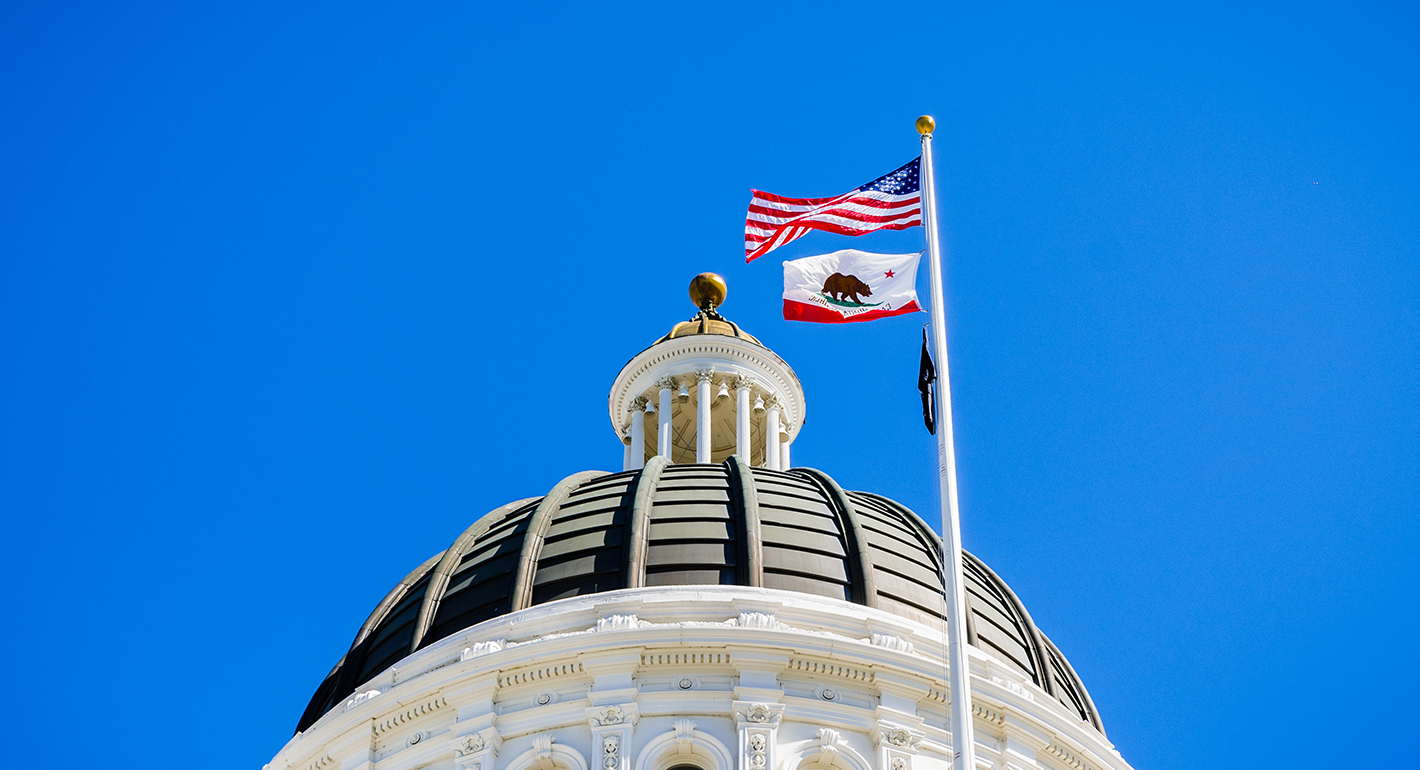
The middle power moment will not be defined by sovereign states alone, and California stands out for its potential contributions to international cooperation.


Ian Klaus, Stewart Patrick

Europe is facing rising populism internally as well as external pressures from Russia, China, Turkey, and the United States.

Dimitar Bechev

Much has been said of the changes Brussels is trying to make to the EU enlargement process. Here’s why gradual integration might—or might not—be the answer.
Dimitar Bechev