Paper
Gilles Dorronsoro
{
  "authors": [
    "Gilles Dorronsoro"
  ],
  "type": "legacyinthemedia",
  "centerAffiliationAll": "dc",
  "centers": [
    "Carnegie Endowment for International Peace"
  ],
  "collections": [],
  "englishNewsletterAll": "ctw",
  "nonEnglishNewsletterAll": "",
  "primaryCenter": "Carnegie Endowment for International Peace",
  "programAffiliation": "SAP",
  "programs": [
    "South Asia"
  ],
  "projects": [],
  "regions": [
    "North America",
    "United States",
    "South Asia",
    "Afghanistan"
  ],
  "topics": [
    "Security",
    "Military",
    "Foreign Policy"
  ]
}
Source: Getty
If it is to make a responsible exit in Afghanistan, the United States must strengthen civilian institutions and empower Afghan partners to take control of national interests.
Source: National Interest Online

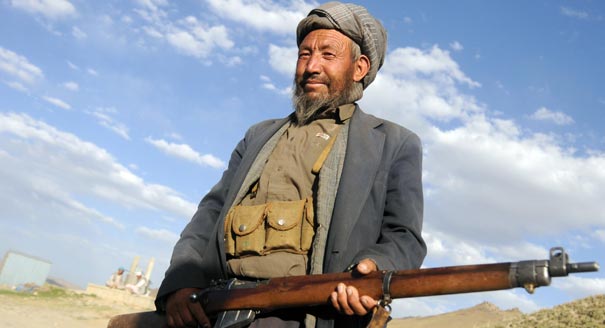
Afghanistan may be the right war, but the United States could very well fight it in the wrong place. Present plans call for most of the new troops to be deployed to the southern and eastern regions of the country, where they could win every battle and still fail to hold the ground. In a land already notoriously averse to foreign invaders, the southern province of Kandahar is particularly hostile to outsiders. In the 1980s, when the Soviets or the Afghan government wanted to punish one of their soldiers, they sent him there. Helmand, the other hot spot in the south, has no cities and few towns—very little of strategic value, except the road to Herat.
In the eastern provinces, it’s important for Obama and his team to recognize that regardless of how the United States revises its strategy, American troops and their NATO allies will still face “hit and run” attacks from across the Pakistani border to the east. There is no quick fix to this situation: even with the full support of the Pakistani government and military (a very optimistic hypothesis) the border will stay out of control for years.
And even if Kandahar and Helmand could be secured, U.S. troops would be stuck there, unable to prevent a stubborn Taliban infiltration and progression in the north. And when U.S. troops inevitably withdraw, what little order had previously existed would dissolve overnight. Regardless of how well U.S. troops there fare, the Afghan National Army forces that eventually replace them will be simply unable to ward off the Taliban. This is the Taliban’s historical base and they understand the political dynamics of these regions better than any foreign forces ever could.
Instead, the United States should concentrate its efforts in and around Kabul, where it can provide security for the people and win a peace it can pass on to the Afghan National Army (ANA). The ANA will most likely never be an offensive army, but it could be trained and built up to provide security for the capital region within two years and then be free to secure other areas. The Afghan population and its elites, most of whom live in and around Kabul, don’t want the Taliban to come back, and they are inherently more supportive of the NATO mission than people in the south and east of the country. True, the United States is sending at least three thousand troops south of Kabul, which is a good start, but not enough to secure the city and the important roads from Kabul to Jalalabad, and Jalalabad to the Pakistani border.
When you’re firing your last bullet, you can’t afford to miss. More resources and casualties mean less time to succeed. It will take at least one year for the United States to build new bases and establish a stable presence for additional troops in Afghanistan, meaning it will be summer 2010 before the Obama administration can assess progress on the ground. If another strategic shift is required at that time, it will be well into 2011 by the time it can happen—ten years after the September 11 attacks.
Meanwhile, as Robert Gates recognizes, U.S. casualties will likely grow significantly. And while the United States might be able to put in another twenty thousand or thirty thousand troops now, it will probably be politically—if not militarily—impossible for Obama to put in another twenty thousand troops two years from now. In addition, the European militaries serving in Afghanistan are already exhausted, and amid the economic downturn they’re even less likely to stay longer if the situation deteriorates.
The strategic calculations are uncertain, but the bottom line is clear: the overconcentration of troops and resources where the Taliban are already dominant is risky and does not lay the necessary groundwork for the Afghanization of the war. If the United States wishes to empower its Afghan partners, it must secure the strategic area around Kabul and the big cities, where civil institutions can be revived.
In a few years, with enough money and enough foreign advisors, the United States can achieve this goal and make a responsible exit.
Gilles Dorronsoro is a visiting scholar in the south Asia program at the Carnegie Endowment for International Peace.
This article first appeared in the National Interest Online on February 9, 2009.
Former Nonresident Scholar, South Asia Program
Dorronsoro’s research focuses on security and political development in Afghanistan. He was a professor of political science at the Sorbonne in Paris and the Institute of Political Studies of Rennes.
Recent Work
Gilles Dorronsoro
Gilles Dorronsoro
Carnegie does not take institutional positions on public policy issues; the views represented herein are those of the author(s) and do not necessarily reflect the views of Carnegie, its staff, or its trustees.
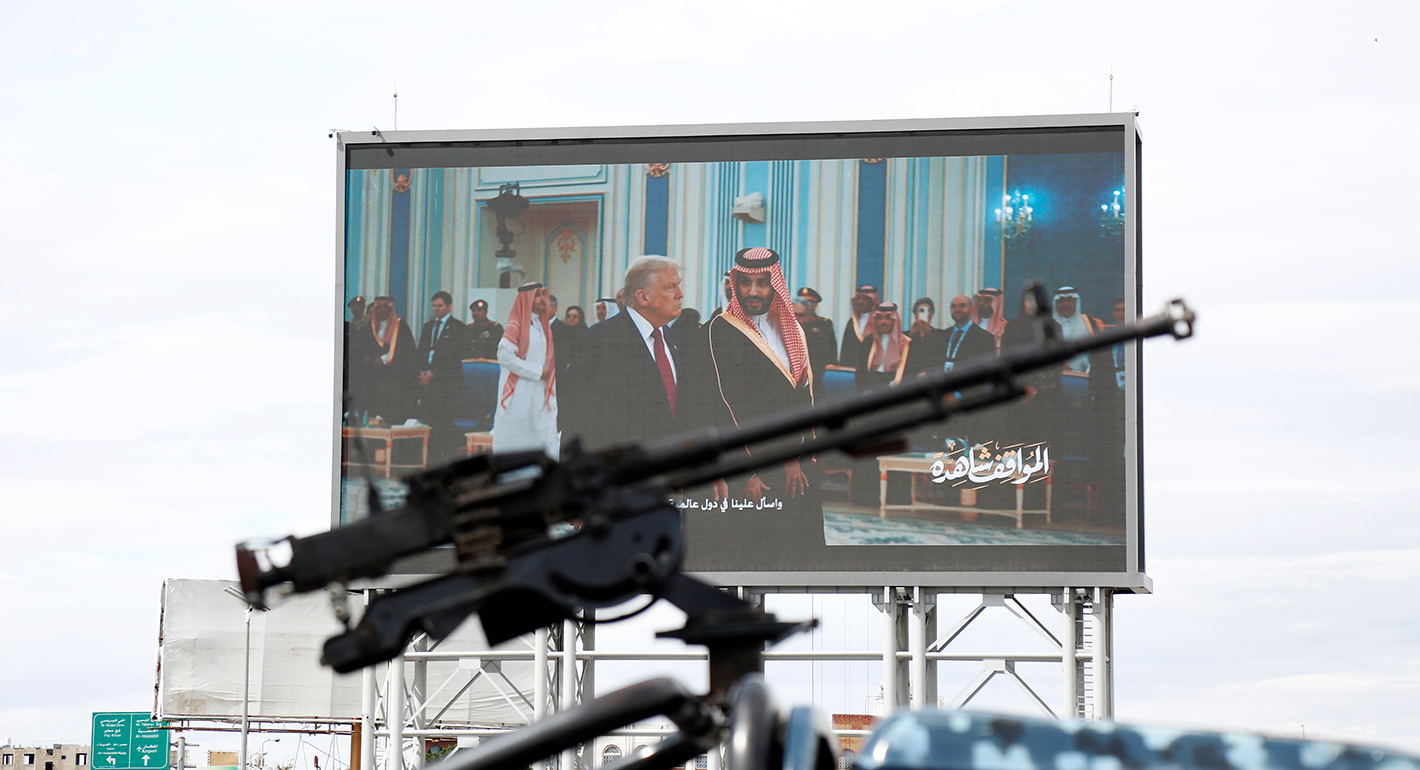
As the war between the United States, Israel, and Iran continues, Carnegie scholars contribute cutting-edge analysis on the events of the war and their wide-reaching implications. From the impact on Iran and its immediate neighbors to the responses from Gulf states to fuel and fertilizer shortages caused by the effective shutdown of the Strait of Hormuz, the war is reshaping Middle East alliances and creating shockwaves around the world. Carnegie experts analyze it all.
The return of war as the organizing factor in Middle Eastern politics has predictable consequences: governments are prioritizing regime stability and becoming averse to political and social reform.


Sarah Yerkes, Amr Hamzawy
Central Asia’s digital ambitions are achievable, but only if policy is aligned with the region’s physical constraints.

Aruzhan Meirkhanova
Donald Trump has repeatedly bashed NATO and European allies, threatening to annex Canada and Greenland and deploring their lack of enthusiasm for his war of choice in Iran. Is this latest round of abuse the final straw?

Rym Momtaz, ed.
The future looks bleak for independent media worldwide, but there is a robust infrastructure of knowledge, organizations, and people to build upon.


Daniel Sabet, Susan Abbott