

Article
Thomas Carothers, McKenzie Carrier
{
  "authors": [
    "Thomas Carothers"
  ],
  "type": "testimony",
  "centerAffiliationAll": "dc",
  "centers": [
    "Carnegie Endowment for International Peace"
  ],
  "collections": [
    "Democracy and Governance"
  ],
  "englishNewsletterAll": "democracy",
  "nonEnglishNewsletterAll": "",
  "primaryCenter": "Carnegie Endowment for International Peace",
  "programAffiliation": "DCG",
  "programs": [
    "Democracy, Conflict, and Governance"
  ],
  "projects": [],
  "regions": [],
  "topics": [
    "Political Reform",
    "Democracy",
    "Foreign Policy"
  ]
}
Source: Getty
Democracy assistance, once a bipartisan initiative, has come under threat in recent years, but the Obama administration has a unique opportunity to effectively promote democracy around the world.
Source: Cornell University
Democracy assistance, once a bipartisan initiative, has come under threat in recent years. After a decade of unprecedented democratic growth in the 1990s, democracy appears to have stagnated in the beginning of the 21st century. Additionally, the Bush administration damaged the reputation of U.S. democracy promotion by associating it with American military interventions and the pursuit of selfish interests. Yet, Thomas Carothers explained at Cornell University’s Einaudi Center for International Studies, it would be a mistake to see the Bush administration’s foreign policy as an expression of excessive democracy promotion. President Bush spoke eloquently on democracy, but the administration in fact pursued a realist policy in the war on terror, maintaining close relationships with authoritarian governments and proving willing to violate human rights.
Despite the inherent difficulties, Carothers asserted, President Obama cannot and should not avoid democracy promotion. The idea of democracy is too intertwined with America’s self-image and too important in the world to be ignored. The Obama administration understandably wants to distance itself from Bush era policies, but the problem was how the Bush administration promoted democracy, not democracy promotion itself. In fact, President Obama has a unique opportunity to effectively promote democracy around the world, Carothers added. Obama’s inspiring personal story and the global excitement surrounding his election, as well as his inclination towards cooperation and moderation, provide him with tools for rallying global support around democracy. The administration has already made encouraging steps in promising to close Guantanamo Bay prison, but Carothers concluded that it will need to go farther and articulate a positive vision for democracy promotion.

Harvey V. Fineberg Chair for Democracy Studies; Director, Democracy, Conflict, and Governance Program
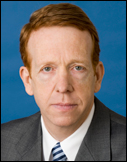
Thomas Carothers, director of the Carnegie Endowment for International Peace’s Democracy, Conflict, and Governance Program, is a leading expert on comparative democratization and international support for democracy.
Recent Work

Thomas Carothers, McKenzie Carrier
Thomas Carothers, McKenzie Carrier
Carnegie does not take institutional positions on public policy issues; the views represented herein are those of the author(s) and do not necessarily reflect the views of Carnegie, its staff, or its trustees.

Although Ukrainian strikes have led to a noticeable decline in the physical volume of Russian oil exports, the rise in prices has more than made up for it.

Sergey Vakulenko

Five problems—and solutions—to make it actually work as a tool of great power competition.

Afreen Akhter
The Russian leadership wants to avoid a dangerous precedent in which it is squeezed out of Iran by the United States and Israel—and left powerless to respond in any meaningful way.

Nikita Smagin
One is hopeful. One is realistic. One is cautionary.

Andrew Leber, Sam Worby
In Ukraine, Gaza, and Iran, AI warfare has come to dominate, with barely any oversight or accountability. Europe must lead the charge on the responsible use of new military technologies.

Raluca Csernatoni