Paper
Gilles Dorronsoro
{
  "authors": [
    "Gilles Dorronsoro"
  ],
  "type": "legacyinthemedia",
  "centerAffiliationAll": "dc",
  "centers": [
    "Carnegie Endowment for International Peace",
    "Carnegie Europe"
  ],
  "collections": [],
  "englishNewsletterAll": "ctw",
  "nonEnglishNewsletterAll": "",
  "primaryCenter": "Carnegie Endowment for International Peace",
  "programAffiliation": "SAP",
  "programs": [
    "South Asia"
  ],
  "projects": [],
  "regions": [
    "North America",
    "United States",
    "South Asia",
    "Afghanistan",
    "Asia"
  ],
  "topics": [
    "Security",
    "Military",
    "Foreign Policy"
  ]
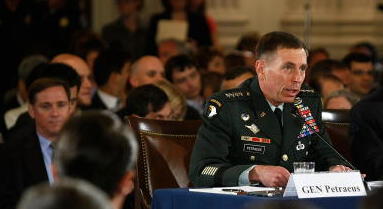
}
Source: Getty
The departure of General McChrystal and arrival of General Petraeus provides a golden opportunity to abandon a failing strategy in Afghanistan.
Source: The New York Times

The coalition’s mounting casualties only increases pressure on the United States and its allies to withdraw quickly.
Progress in Marja is elusive and gains are unlikely to materialize for several years, after the United States is scheduled to begin the draw down of its forces. For Kandahar, the coalition wisely abandoned plans for a major military offensive that were doomed to be a disaster. But with low levels of support for the local government and high levels of corruption, there is virtually no chance for success in the area.
Given the reality on the ground, there is little hope for reversing the situation in Afghanistan over the next 12 to 18 months. The Taliban continue to gain strength and it is unrealistic to try to weaken them before beginning negotiations.
The new U.S. leadership has a chance to design and carry out a more realistic approach. General Petraeus should scale down the current offensive and limit the coalition’s mounting casualties — these casualties only put more pressure on the United States and its allies to withdraw quickly.
Negotiations with the Taliban should begin this winter after the coalition offers a cease fire. As the negotiations move ahead, the United States needs to assume a leadership position as the current Afghan government cannot be trusted to defend the interests of the international community.
The time to rethink U.S. strategy is now and McChrystal’s departure provides an unexpected opportunity to change course.
Former Nonresident Scholar, South Asia Program
Dorronsoro’s research focuses on security and political development in Afghanistan. He was a professor of political science at the Sorbonne in Paris and the Institute of Political Studies of Rennes.
Recent Work
Gilles Dorronsoro
Gilles Dorronsoro
Carnegie does not take institutional positions on public policy issues; the views represented herein are those of the author(s) and do not necessarily reflect the views of Carnegie, its staff, or its trustees.
As the war between the United States, Israel, and Iran continues, Carnegie scholars contribute cutting-edge analysis on the events of the war and their wide-reaching implications. From the impact on Iran and its immediate neighbors to the responses from Gulf states to fuel and fertilizer shortages caused by the effective shutdown of the Strait of Hormuz, the war is reshaping Middle East alliances and creating shockwaves around the world. Carnegie experts analyze it all.
The return of war as the organizing factor in Middle Eastern politics has predictable consequences: governments are prioritizing regime stability and becoming averse to political and social reform.


Sarah Yerkes, Amr Hamzawy

Central Asia’s digital ambitions are achievable, but only if policy is aligned with the region’s physical constraints.

Aruzhan Meirkhanova
Donald Trump has repeatedly bashed NATO and European allies, threatening to annex Canada and Greenland and deploring their lack of enthusiasm for his war of choice in Iran. Is this latest round of abuse the final straw?

Rym Momtaz, ed.

The future looks bleak for independent media worldwide, but there is a robust infrastructure of knowledge, organizations, and people to build upon.


Daniel Sabet, Susan Abbott